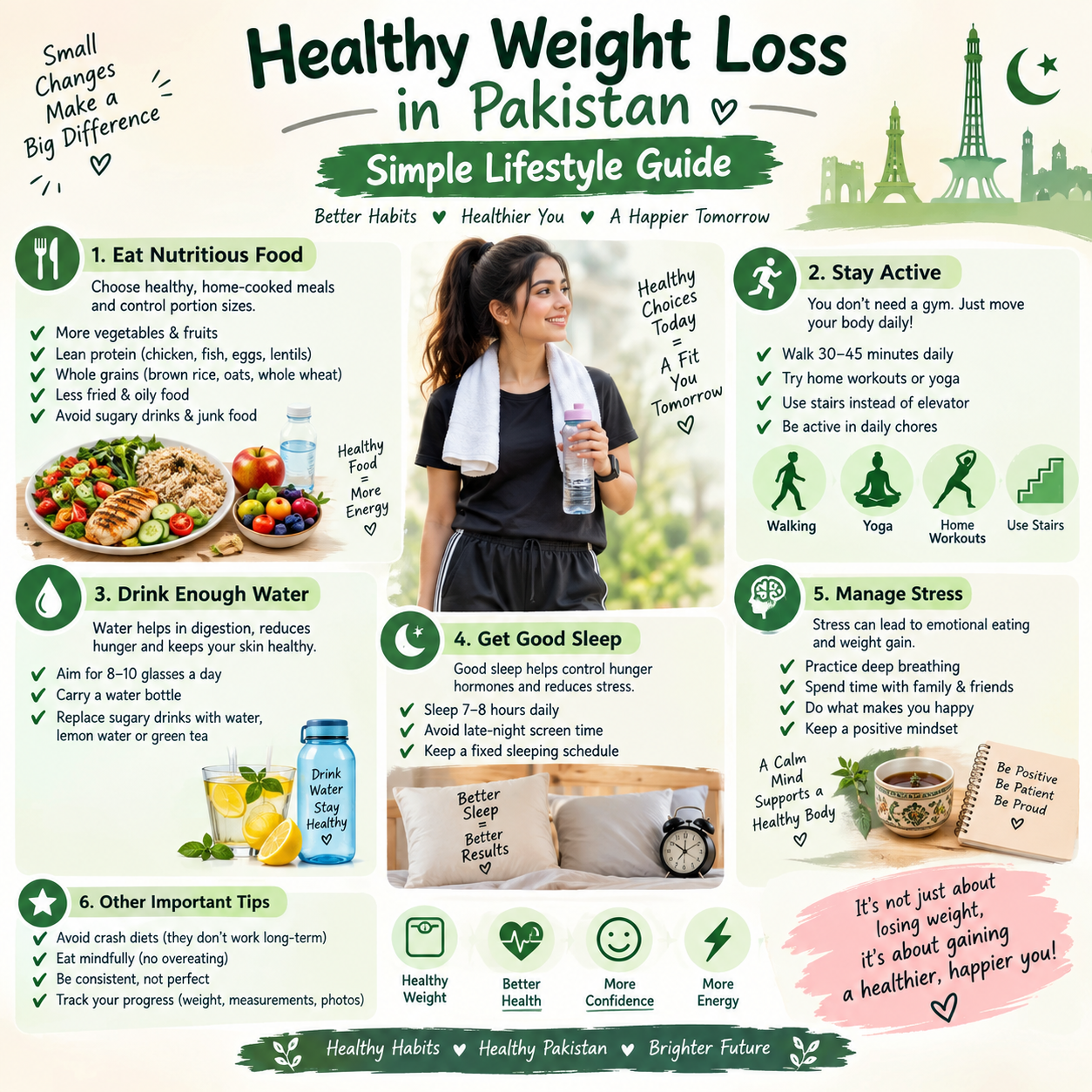
Maintaining a healthy weight is an important part of overall well-being. In Pakistan, people enjoy a wide variety of delicious traditional foods, from biryani and nihari to paratha, karahi, kebabs, sweets, and refreshing drinks. These foods are an important part of Pakistani culture, family gatherings, and celebrations. However, maintaining balance in food choices and daily activities can help people develop a healthier lifestyle.
Weight loss does not necessarily mean following strict diets or avoiding all favorite foods. A healthier approach is to develop realistic habits that can be followed for a long time. Eating balanced meals, staying physically active, drinking enough water, getting adequate sleep, and maintaining a regular routine can all contribute to healthy weight management.
For people in Pakistan, a practical weight management plan can include familiar local foods and simple activities that fit into everyday life.
Understanding Healthy Weight Loss
Healthy weight loss is generally about creating sustainable lifestyle habits rather than looking for quick results. Extremely restrictive diets may be difficult to maintain and can make it harder to develop a healthy relationship with food.
A balanced approach focuses on nutritious foods, regular physical activity, sufficient rest, and reasonable portions. Every person's nutritional needs are different, so a plan that works for one person may not work exactly the same way for another.
The main goal should be better overall health and well-being rather than focusing only on a number on the weighing scale.
Start With a Balanced Pakistani Diet
Pakistani cuisine includes many nutritious foods that can easily be included in a balanced eating pattern. Lentils, beans, vegetables, fruits, yogurt, eggs, fish, chicken, and whole grains can provide important nutrients.
Instead of completely removing traditional foods, people can focus on portions and preparation methods.
For example, a meal could include:
A reasonable portion of roti or rice
Daal or another source of protein
Cooked or fresh vegetables
Yogurt or raita
Fresh fruit when appropriate
This approach allows people to continue enjoying familiar foods while making their overall meals more balanced.
Choose Whole Foods More Often
Whole and minimally processed foods can be useful parts of a healthy diet. Fresh vegetables, fruits, pulses, whole grains, eggs, fish, chicken, nuts, and yogurt can provide a range of nutrients.
In Pakistan, seasonal fruits and vegetables can also make healthy eating more affordable and varied.
Some commonly available choices include:
Apples
Guavas
Oranges
Bananas
Melons
Carrots
Cucumbers
Spinach
Tomatoes
Cauliflower
Peas
Lentils
Chickpeas
The exact foods and portions should depend on individual nutritional needs.
Be Mindful of Portion Sizes
Healthy food can still contribute to excess calorie intake when portions are consistently very large. Learning to recognize reasonable portions can therefore be useful.
For example, instead of filling most of a plate with rice, a person can combine a moderate portion of rice with vegetables and a protein source.
The same principle can be applied to Pakistani foods such as biryani, pulao, karahi, and daal chawal. These foods do not necessarily need to be completely avoided. Portion awareness and overall dietary balance are more practical for long-term habits.
Make Breakfast More Balanced
Breakfast is an opportunity to start the day with nutritious foods. Pakistani breakfast traditions can sometimes include foods that are high in calories, such as fried items and heavily buttered or oily parathas.
Healthier alternatives can include:
Eggs with whole-wheat roti
Plain or low-sugar yogurt with fruit
Oatmeal with fruit
Chickpeas with vegetables
Whole-wheat toast with an egg
A moderate portion of paratha with yogurt and vegetables
There is no single perfect breakfast. The important point is to choose foods that provide useful nutrients and fit the person's overall eating pattern.
Reduce Sugary Drinks
Soft drinks, sweetened juices, energy drinks, and heavily sweetened tea can add significant amounts of sugar to the daily diet.
Water is a simple everyday option. Unsweetened tea or other low-sugar beverages can also be considered.
For people who regularly add several teaspoons of sugar to tea, gradually reducing the amount may be easier than making a sudden change.
Small adjustments can become lasting habits when they are introduced consistently.
Drink Enough Water
Water is essential for normal body functions. Drinking water throughout the day can also be a simple way to support a healthy daily routine.
People who are physically active or exposed to hot weather may need more fluids. Pakistan's climate can become particularly hot during summer, making hydration especially important.
Instead of relying mainly on sugary beverages, keeping a bottle of water nearby can make drinking water more convenient.
Walking: A Simple Activity for Pakistanis
Walking is one of the simplest forms of physical activity. It does not require expensive gym equipment and can be incorporated into many daily routines.
People can consider:
Taking a walk in a safe local area
Walking in a park
Walking short distances instead of always using a vehicle
Taking short movement breaks during study or work
Walking with family members
The amount and intensity of activity should be appropriate for a person's age and health.
Add Movement to Daily Life
Exercise does not always have to mean spending hours at a gym. Everyday movement also matters.
Household activities, walking, recreational sports, cycling, and other enjoyable physical activities can help people remain active.
For beginners, starting gradually may be more realistic than immediately following a demanding workout routine.
The most useful activity is often one that a person enjoys and can continue safely.
Improve Sleep Habits
Sleep is another important part of a healthy lifestyle. Poor sleep habits can make daily routines more difficult and may affect appetite, energy, and motivation.
Students and working adults in Pakistan may have irregular schedules because of studies, jobs, family responsibilities, or late-night screen use.
Creating a regular sleep routine can help support overall well-being.
Some useful habits include:
Keeping a consistent bedtime
Limiting unnecessary late-night screen use
Creating a comfortable sleeping environment
Avoiding very heavy meals immediately before sleeping
Allowing enough time for rest
Manage Fried Foods Wisely
Fried foods are common in Pakistani cuisine, especially during Ramadan, weddings, family gatherings, and social events.
Samosas, pakoras, fried chicken, puris, and other fried foods can be enjoyed occasionally, but eating them very frequently may make it harder to maintain a balanced diet.
People can experiment with cooking methods such as:
Baking
Grilling
Steaming
Roasting
Air frying
These methods can help reduce the amount of added oil in some meals.
Enjoy Pakistani Food Without Extreme Restrictions
One of the biggest challenges of a restrictive diet is that it may make people feel as though they can never enjoy their favorite foods.
A more sustainable approach is moderation.
For example, someone may enjoy biryani at a family gathering while keeping the rest of the meal balanced. Similarly, traditional desserts can be enjoyed occasionally without becoming a daily habit.
Healthy eating is not about making every meal perfect. It is about developing a balanced pattern over time.
Avoid Crash Diets
Very restrictive diets that promise extremely rapid weight loss can be difficult to maintain. They may also fail to provide adequate nutrition.
People should be cautious about plans that recommend:
Completely avoiding major food groups without medical advice
Extremely low food intake
Unverified weight-loss pills
Detox products claiming to remove all body fat
Fasting routines that are inappropriate for the individual
Rapid weight-loss promises
A qualified doctor or registered dietitian can provide individualized guidance, especially when someone has a medical condition or takes medication.
Build a Realistic Daily Routine
A healthy lifestyle becomes easier when it fits naturally into everyday life.
A simple routine might include:
Morning:
Start the day with water and a balanced breakfast.
Daytime:
Choose balanced meals and stay physically active.
Afternoon:
Choose fruit, yogurt, or another nutritious snack if hungry.
Evening:
Have a balanced dinner and include some appropriate physical activity.
Night:
Reduce unnecessary screen time and follow a regular sleep schedule.
The exact routine can vary according to school, university, work, family responsibilities, and personal needs.
Healthy Weight Management for Students
Pakistani students often spend many hours studying, attending college, using computers, or preparing for examinations. Long periods of sitting can reduce daily physical activity.
Students can introduce simple movement into their routine by taking short breaks between study sessions.
For example, after a period of studying, a student can stand up, walk around, stretch gently, or perform another safe movement activity.
Students should also avoid skipping meals simply because they are busy with studies.
Nutritious meals can support energy and concentration throughout the day.
Family Support Can Make Healthy Habits Easier
Food is strongly connected with family life in Pakistan. Meals are often shared with parents, siblings, relatives, and friends.
Family support can therefore make healthy lifestyle changes easier.
Families can try preparing more vegetables, using appropriate amounts of oil, keeping fruit available, and encouraging outdoor activities.
Instead of treating healthy eating as an individual challenge, families can make it a shared lifestyle goal.
Set Small and Practical Goals
Large lifestyle changes can sometimes feel overwhelming. Smaller goals may be easier to maintain.
For example, a person could focus on:
Drinking more water
Adding vegetables to meals
Reducing sugary drinks
Walking regularly
Eating mindfully
Improving sleep habits
Cooking more meals at home
Once one habit becomes comfortable, another can gradually be introduced.
Do Not Compare Your Body With Others
Everyone's body is different. Age, genetics, lifestyle, health conditions, activity levels, and many other factors can influence body weight and shape.
Comparing yourself with friends, celebrities, influencers, or edited pictures online can create unrealistic expectations.
A healthier goal is to focus on personal well-being, strength, energy, and healthy habits rather than trying to achieve someone else's appearance.
When Professional Guidance Is Important
Some people may need individualized advice before making significant changes to their diet or exercise routine.
A healthcare professional can be especially helpful for people with certain medical conditions, nutritional concerns, or other health-related needs.
Children and teenagers should not follow restrictive weight-loss diets without guidance from a qualified healthcare professional. During the growing years, adequate nutrition is particularly important.
A Sustainable Approach to Weight Management
Successful lifestyle changes are usually built through consistency rather than perfection.
There may be days when someone eats more than planned or misses a walk. That does not mean the entire routine has failed.
The next meal or the next day can simply return to normal healthy habits.
A sustainable approach focuses on what a person can realistically continue for months and years.
Conclusion
Healthy weight management in Pakistan does not require giving up traditional foods or following extreme diets. A balanced lifestyle can include familiar Pakistani meals, appropriate portions, regular physical activity, sufficient water, good sleep, and supportive family habits.
Small changes can gradually become part of everyday life. Choosing more nutritious foods, reducing sugary drinks, staying active, and developing a regular routine can support overall health.
The most important goal is not rapid change but building healthy habits that can be maintained over the long term. For people who need personalized guidance, consulting a qualified healthcare professional can help create an approach suited to their individual needs.
FAQs
1. What is a healthy approach to weight loss in Pakistan?
A healthy approach focuses on balanced nutrition, appropriate portions, regular physical activity, adequate sleep, and sustainable lifestyle habits.
2. Can Pakistani food be part of a healthy weight-management plan?
Yes. Traditional foods can be included by paying attention to portions, preparation methods, and overall dietary balance.
3. Is walking useful for weight management?
Walking is a simple form of physical activity that can be included in many people's daily routines.
4. Should sugary drinks be reduced?
Reducing sugary drinks can help decrease added sugar intake and support a balanced diet.
5. Should teenagers follow a weight-loss diet?
Teenagers are still growing and should not follow restrictive diets without guidance from a qualified healthcare professional.