Introduction
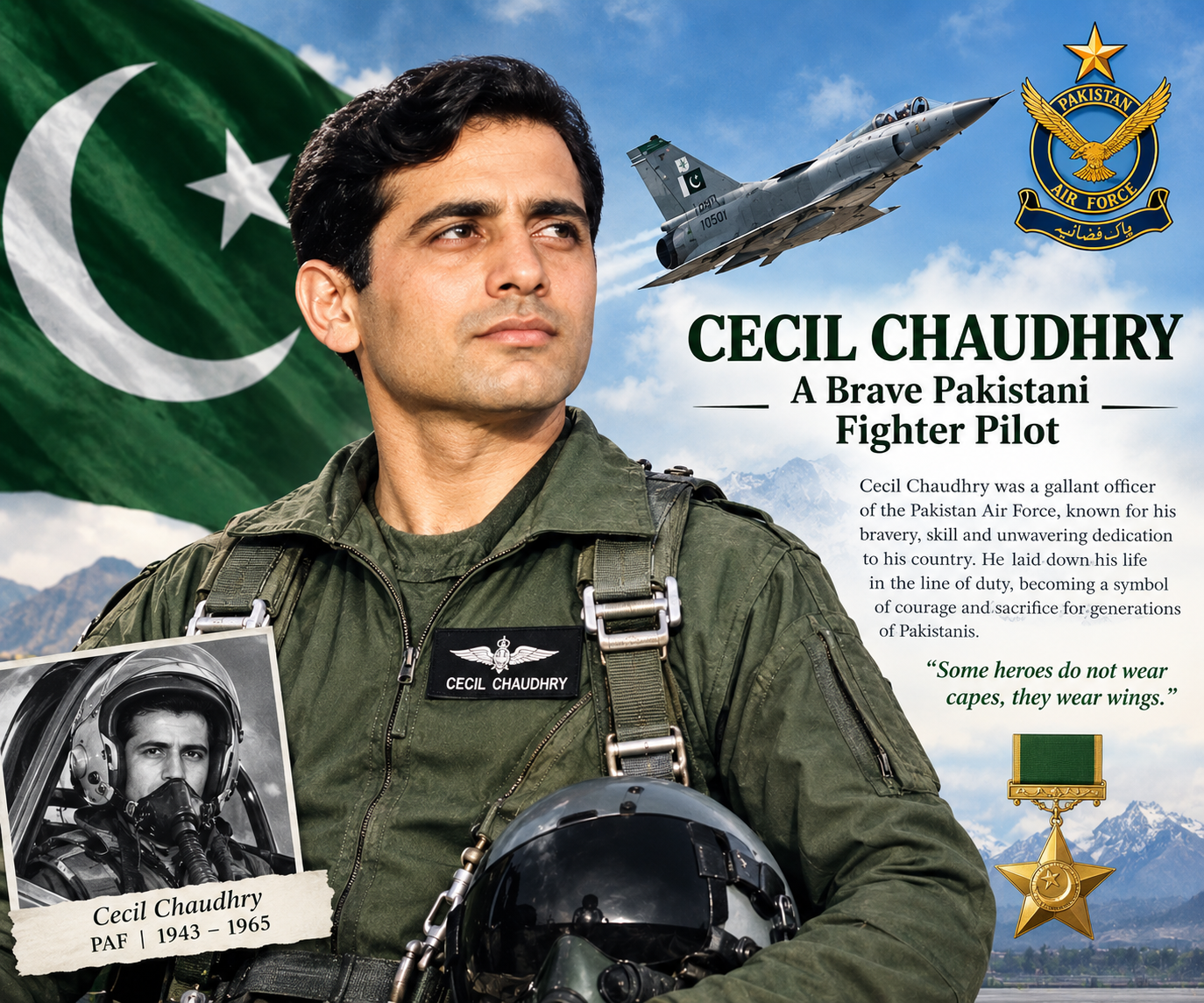
Cecil Chaudhry was one of the well-known fighter pilots and military officers in the history of Pakistan. He served in the Pakistan Air Force (PAF) and became respected for his courage, professional skills, leadership, and dedication to his country. He participated in important aerial operations, particularly during the 1965 and 1971 wars.
Cecil Chaudhry was born on 27 August 1941 in Rangpur, British India. After the creation of Pakistan, his family became part of the new country. He developed an interest in aviation and military service and eventually joined the Pakistan Air Force.
His career was remarkable because he combined flying skills with leadership and a strong commitment to national service. During wartime operations, he performed difficult missions and earned recognition for his bravery. Later in his life, he also became known for his work in education and social service.
Cecil Chaudhry is remembered not only as a fighter pilot but also as a person who continued serving society after his military career. His life provides an example of courage, discipline, responsibility, and dedication.
Early Life of Cecil Chaudhry
Cecil Chaudhry was born in Rangpur, which was part of British India at the time. He grew up in an environment where education and discipline were important. The political situation of the subcontinent was changing rapidly, and the creation of Pakistan in 1947 had a major influence on the lives of people of his generation.
After independence, Cecil became a citizen of Pakistan and developed an interest in the country's institutions and future. Like many young people, he looked for a career through which he could make a meaningful contribution.
Aviation attracted him because it combined technology, skill, discipline, and service. Becoming a fighter pilot was highly demanding, but Cecil accepted the challenge and began preparing himself for a career in the Pakistan Air Force.
His early years helped develop the determination and sense of responsibility that later became important parts of his professional life.
Joining the Pakistan Air Force
Cecil Chaudhry joined the Pakistan Air Force in 1958 as a commissioned officer. His entry into the PAF marked the beginning of a long and distinguished military career.
As a trainee and then as a professional pilot, he had to learn many technical and operational skills. Fighter pilots need to understand aircraft systems, navigation, communication, aviation procedures, weather, and aerial combat techniques.
Training also requires discipline and physical preparation. Pilots must remain focused and make accurate decisions even under pressure.
Cecil successfully completed his training and became a fighter pilot. With time, his experience and skills increased, allowing him to perform increasingly important duties.
His career developed during a period when Pakistan was strengthening its air force and modernizing its military aviation capabilities.
Cecil Chaudhry as a Fighter Pilot
Cecil Chaudhry became known for his ability to perform difficult flying missions. Fighter aviation requires courage, but courage alone is not enough. A pilot must also have technical knowledge, concentration, quick decision-making, and extensive practice.
Cecil gained experience by flying operational missions and working with other members of the Pakistan Air Force. His professionalism earned him respect among fellow officers.
He became particularly well known for his service during periods of war. His wartime experiences contributed greatly to his reputation as a brave and committed pilot.
His career demonstrates that successful military aviation depends on teamwork. A fighter pilot works with ground controllers, engineers, commanders, intelligence personnel, and other pilots. Every part of the system is important.
Role During the 1965 War
The 1965 Pakistan-India War was an important event in Cecil Chaudhry's military career. During the conflict, the Pakistan Air Force took part in numerous combat missions.
Cecil flew operational missions during the war and became associated with the air combat operations of that period. His performance contributed to his reputation as a courageous pilot.
The 1965 war was a major test for Pakistan's armed forces. Air force pilots had to undertake missions under challenging conditions and respond quickly to changing situations.
Cecil's participation showed his willingness to perform his duties in difficult circumstances. His service during the war became an important part of the story of his career.
Courage and Professional Skill
The reputation of Cecil Chaudhry was built on more than wartime service. People who served with him also remembered his professionalism and commitment to his responsibilities.
For a fighter pilot, every mission requires preparation. Pilots must understand their aircraft, the mission objectives, communication procedures, and possible risks.
Cecil's career reflected a strong professional attitude. He continued learning, developing his flying skills, and accepting greater responsibilities.
His story is an example of how technical expertise and discipline can work together with courage. A successful pilot needs all three.
The 1971 War
Cecil Chaudhry also served during the 1971 Pakistan-India War. The war was a difficult period in Pakistan's history and placed enormous demands on the country's armed forces.
During this conflict, Cecil continued performing his military duties. His participation further demonstrated his commitment to the Pakistan Air Force.
The 1971 war brought a different set of military challenges compared with 1965. Air operations were conducted in a changing strategic environment, and pilots had to remain adaptable.
Cecil's continued service during the conflict showed that his commitment to professional duty extended beyond a single war or period.
Leadership in the Pakistan Air Force
With years of experience, Cecil Chaudhry moved beyond the role of a fighter pilot and took on leadership responsibilities.
Leadership within the PAF requires knowledge of aviation, administration, planning, training, and personnel management. Experienced pilots can use their knowledge to guide younger officers and help improve operational readiness.
Cecil's career gave him the opportunity to share his experience and contribute to the development of future air force personnel.
His leadership also reflected the importance of teamwork and responsibility. Military organizations depend on strong coordination, and experienced officers play an important role in maintaining professional standards.
Service Beyond the Cockpit
One of the most interesting aspects of Cecil Chaudhry's life is that his service did not end with flying.
After his military career, he became involved in education and social service. This phase of his life showed another side of his personality and values.
He became associated with efforts to support education and social development, particularly through the work of the National Grammar School in Lahore.
His transition from military service to education demonstrates that national service can take many forms. A person can serve the country through defense, education, community work, and support for future generations.
Contribution to Education
Cecil Chaudhry became involved in education because he believed in the importance of preparing young people for the future.
Education provides students with knowledge and skills that can help them become responsible members of society. Schools also play an important role in developing discipline, confidence, and leadership.
Through his educational activities, Cecil contributed to the development of students and helped promote the value of learning.
His work in education was particularly meaningful because he brought the discipline and leadership experience of his military career into another field.
This combination of military experience and educational service made his life different from that of many other fighter pilots.
Work for Young People
Cecil Chaudhry was also remembered for his interest in young people and their development.
Young people need opportunities to learn, develop skills, and understand their responsibilities. Teachers and educational leaders can influence students by providing guidance and positive examples.
Cecil used his experience to encourage students to value education, discipline, and service.
His message was relevant because the qualities required of a successful pilot—focus, preparation, responsibility, and confidence—can also help students succeed in their own lives.
Cecil Chaudhry and National Service
National service can take many forms. For Cecil Chaudhry, it began with military aviation and later continued through education and social work.
His life demonstrates that serving a country does not necessarily mean remaining in one profession throughout life. A person can continue contributing to society through different forms of work.
During his years in the PAF, Cecil served in the defense of Pakistan. During his later years, he contributed to society by working in education.
This broad understanding of service became an important part of his legacy.
Recognition and Respect
Cecil Chaudhry received recognition for his military service and courage. His achievements during wartime contributed significantly to his reputation.
However, his legacy was not based only on awards. The respect he received from colleagues, students, and members of the public also reflected the wider influence of his life.
Military personnel who serve during wartime often become part of national history because their experiences are connected with major events. Cecil Chaudhry's service during the 1965 and 1971 wars placed him within important chapters of Pakistan's history.
His later educational work expanded that legacy and allowed him to influence people outside the military.
A Christian Pakistani Serving His Country
Cecil Chaudhry was a Christian Pakistani who served in the Pakistan Air Force. His career is often discussed as an example of the contribution made by minority citizens to Pakistan's national institutions.
Pakistan has citizens from different religious and cultural backgrounds, and many have served the country in important professional roles.
Cecil's career demonstrated that dedication to the country can be expressed through professional excellence and public service.
His story is also remembered because he continued contributing to Pakistan in both military and educational fields.
Character and Discipline
Cecil Chaudhry's life reflected the value of discipline. Military aviation leaves little room for carelessness, and pilots must follow established procedures carefully.
Discipline is also valuable outside the military. Students who manage their time, prepare regularly, and remain focused on their goals are better prepared to face challenges.
Cecil's career can therefore be viewed as an example of disciplined professional life.
His transition from aviation to education also showed adaptability. He was able to use the skills developed in one career to contribute meaningfully in another.
Lessons for Students
Students can learn several important lessons from the life of Cecil Chaudhry.
One important lesson is preparation. Aviation requires extensive training before a pilot can take on serious responsibilities.
Another lesson is discipline. Regular effort and careful attention to responsibilities are essential for success.
A third lesson is courage with responsibility. Courage is most useful when it is combined with sound judgment and preparation.
Another lesson is service. Cecil served his country first through the Pakistan Air Force and later through education.
Finally, his life demonstrates the value of continuous contribution. Retirement from one profession does not mean that a person has to stop helping society.
His Role in Pakistan’s Aviation History
Cecil Chaudhry occupies an important position in the history of Pakistan's military aviation.
The early decades of Pakistan's existence required the development of professional military institutions. The Pakistan Air Force grew through the service of officers, pilots, engineers, and support personnel.
Cecil's career formed part of this development. His participation in two major wars made him a recognizable figure in PAF history.
His experiences also helped preserve the memory of an earlier generation of Pakistani fighter pilots who operated during a period of rapidly changing aviation technology.
Life After Military Service
After leaving active military service, Cecil Chaudhry devoted significant attention to education.
He became associated with educational institutions and continued working with young people. This stage of his life reflected his belief that the future of a country depends heavily on its children and students.
His educational work allowed him to influence people in a different way from his military service.
Instead of operating aircraft, he worked to help create environments where students could learn, grow, and prepare for their future careers.
This was a significant second chapter in his life.
Death of Cecil Chaudhry
Cecil Chaudhry died on 13 April 2012 in Lahore.
His death was widely noted in Pakistan because of his contributions to the Pakistan Air Force and his later work in education.
After his death, tributes remembered both aspects of his life: his service as a fighter pilot and his contribution to society as an educator.
His story continues to be discussed in accounts of Pakistan's military and educational history.
Lasting Legacy
Cecil Chaudhry's legacy has several dimensions.
The first is his military service. He was part of the generation of pilots who served Pakistan during the 1965 and 1971 wars.
The second is his contribution to leadership within the Pakistan Air Force.
The third is his work in education, especially his involvement in institutions serving young students.
Together, these achievements created a legacy that extended beyond military aviation.
His life is remembered because he continued looking for ways to contribute to Pakistan even after leaving active military service.
Inspiration for Future Generations
The life of Cecil Chaudhry can inspire students interested in aviation, education, leadership, and public service.
His career demonstrates the importance of setting a goal and preparing seriously to achieve it. Becoming a fighter pilot required years of training and discipline, while his later educational work required patience and commitment.
His story also shows the importance of using one's abilities for the benefit of others.
Students can take inspiration from his dedication without copying his profession. The broader lesson is to develop useful skills and use them responsibly.
Conclusion
Cecil Chaudhry was a respected Pakistani fighter pilot, military officer, educator, and social contributor. His service in the Pakistan Air Force made him an important figure in Pakistan's aviation history, particularly because of his participation in the 1965 and 1971 wars.
His career demonstrated courage, discipline, professionalism, and dedication to duty. But his contribution did not end with his military service. He later devoted himself to education and worked with young people, adding another important dimension to his legacy.
Cecil Chaudhry's life reminds us that service can take many forms. A person may serve through defending the country, educating students, developing institutions, or helping communities.
For young Pakistanis, his story offers valuable lessons about preparation, responsibility, teamwork, courage, and continuous contribution to society. His name remains connected with both Pakistan's aviation history and its educational development.
Cecil Chaudhry died in 2012, but his legacy continues through the history of the Pakistan Air Force and the educational work associated with his later years. His life remains an example of a person who used his abilities, experience, and dedication in the service of Pakistan
FAQs
1. Who was Cecil Chaudhry?
Cecil Chaudhry was a Pakistani fighter pilot and military officer who served in the Pakistan Air Force. He was also known for his later work in education.
2. When did Cecil Chaudhry join the Pakistan Air Force?
Cecil Chaudhry joined the Pakistan Air Force in 1958 and went on to build a distinguished aviation career.
3. Which wars did Cecil Chaudhry participate in?
He served during the 1965 Pakistan-India War and the 1971 Pakistan-India War.
4. What did Cecil Chaudhry do after his military career?
After leaving military service, he became involved in education and worked with young people, particularly through educational institutions in Lahore.
5. When did Cecil Chaudhry die?
Cecil Chaudhry died on 13 April 2012 in Lahore, Pakistan.




