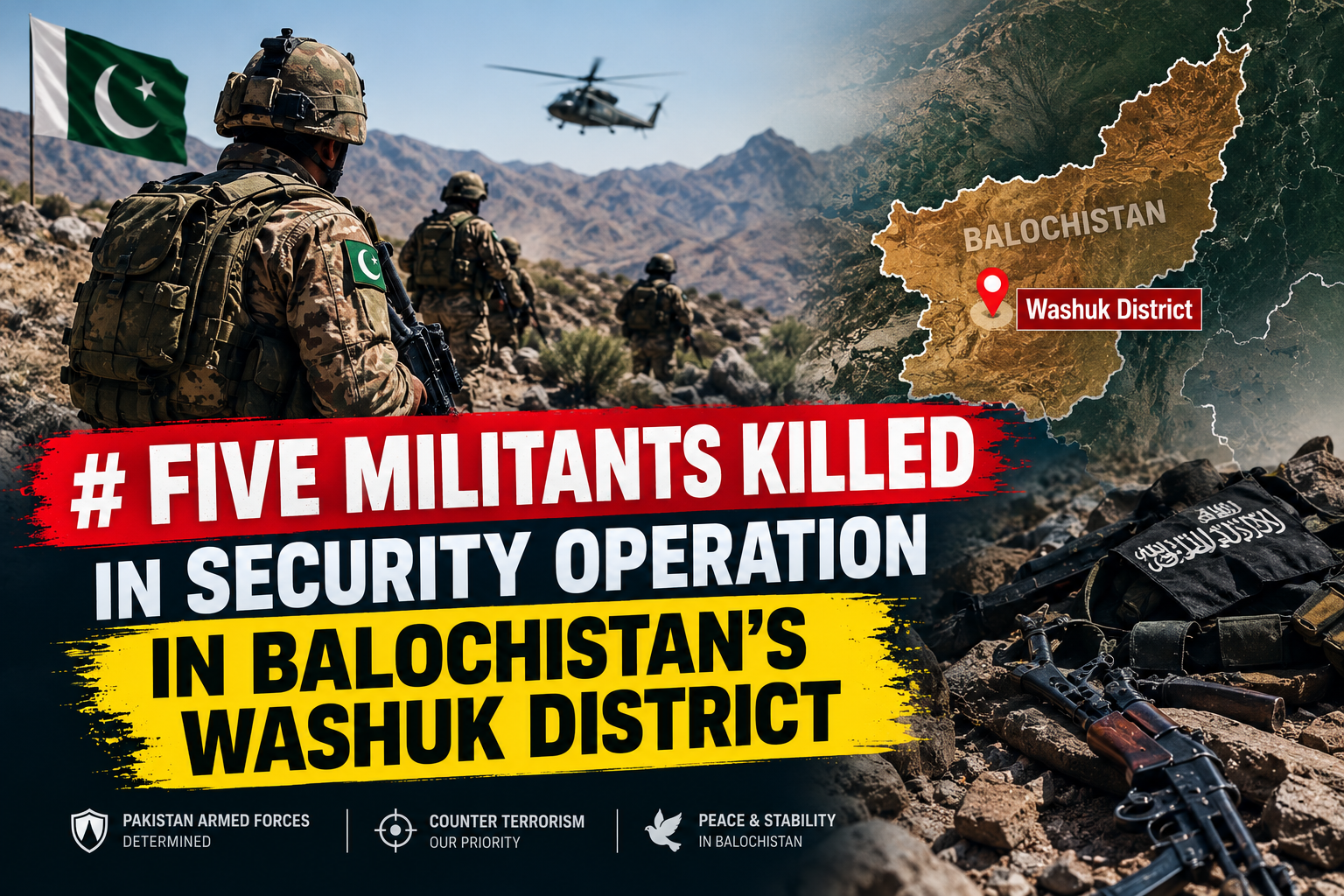
The development highlights the continuing security challenges facing Balochistan, Pakistan’s largest province by area. Authorities have repeatedly emphasised the importance of maintaining peace, protecting local communities and preventing armed groups from disrupting daily life.
According to the reported details, security personnel targeted suspected militant hideouts during the operation. Officials also reported recovering weapons and ammunition from the site. The information was released through Pakistani state media and other news organisations citing security sources.
The operation has attracted national attention because Balochistan has faced persistent security concerns, including attacks on public infrastructure, law enforcement personnel and civilians. The latest incident has once again placed counterterrorism, public safety and regional stability at the centre of national discussion.
While authorities have described the operation as part of their wider security efforts, its broader significance depends on whether sustained measures can improve safety for residents and reduce the threat of further violence.
Details of the Washuk Security Operation
Washuk is a district in Balochistan where security and public administration remain important concerns. The reported operation took place in Palantak, an area identified by security sources as the location of suspected militant hideouts.
According to reports published on October 14, security forces carried out the operation using information gathered through intelligence channels. Five militants were reported killed, while four others were injured. Authorities also stated that weapons and ammunition were recovered during the operation.
An intelligence-based operation generally involves gathering and assessing information before security personnel take action against a suspected threat. The purpose is to direct resources towards specific locations or individuals believed to be connected with armed activity.
However, the public information released about this operation remains limited. A detailed independent account of the intelligence used, the complete sequence of events and the identities of those involved was not included in the initial reports.
For this reason, the reported figures should be attributed to the relevant authorities rather than presented as independently verified findings.
The operation forms part of Pakistan’s wider efforts to address militancy in Balochistan. Authorities have stated that such operations aim to disrupt armed networks, improve local security and prevent further attacks.
The longer-term effectiveness of these efforts will depend on consistent law enforcement, reliable intelligence, coordination between institutions and measures that allow communities to live without fear.
Operation Radd-ul-Fitna 3 and Counterterrorism Efforts
Reports identified the action in Washuk as part of Operation Radd-ul-Fitna 3, an ongoing security initiative associated with counterterrorism operations in Balochistan. Security sources said the operation targeted individuals they identified as members of an armed
Counterterrorism operations are one part of a broader approach to public safety. They may be intended to disrupt armed activity, prevent attacks and recover material that authorities believe is connected with militant networks.
Nevertheless, lasting security usually requires a combination of measures. Intelligence and law enforcement must work alongside effective local administration, functioning courts and protection for civilians.
Authorities also need to communicate responsibly about operations. Clear public information helps residents understand developments without relying on rumours or unverified claims circulating online.
It is equally important to distinguish between an immediate operational result and a lasting improvement in security. An operation may remove an immediate threat, but long-term stability requires continued attention to the conditions that allow violence to persist.
For Balochistan, this means that counterterrorism efforts should be assessed not only through the number of operations conducted but also through their effect on public safety, local economic activity and the ability of residents to access essential services.
Weapons and Other Items Reportedly Recovered
Security sources reported that weapons and ammunition were recovered during the Washuk operation. The official account also listed other items allegedly found at the location, including mobile phones and motorcycles.Authorities may examine recovered material as part of an investigation into suspected armed activity. Such material can potentially help investigators establish ownership, trace connections and determine whether an incident is linked to other cases.
However, the recovery of an item does not automatically establish who owned it or how it was used. Those questions require appropriate investigation and, where relevant, evidence that can be examined through legal proceedings.
The public details available in the initial reports did not provide a comprehensive account of the subsequent investigative process. Further information would be needed to establish whether the recovered items were linked to particular incidents or individuals.
Responsible reporting should therefore distinguish between what officials have said was recovered and what has been conclusively established through investigation.
This distinction matters because accurate information helps the public understand security developments without treating every initial allegation as a final legal finding.
Why Security in Balochistan Matters to Pakistan
Balochistan occupies an important position in Pakistan’s geography, economy and regional relationships. It shares borders with Iran and Afghanistan and contains major transport routes, coastal areas and natural resources.
The province is also home to diverse communities with different economic needs and local priorities. Security conditions can affect access to education, healthcare, employment, transport and commercial opportunities.
When violence disrupts ordinary activities, the consequences extend beyond the immediate incident. Families may become concerned about travel, businesses may face interruptions and public institutions may need additional resources to continue operating.
Maintaining peace in Balochistan is therefore important for both local residents and Pakistan’s wider economic development.
At the same time, the province’s security situation cannot be reduced to a single operation or one explanation. It involves different armed groups, local conditions, political concerns and challenges facing law enforcement.
A comprehensive understanding requires reliable reporting, careful attention to the circumstances of individual incidents and recognition of the experiences of people who live in affected areas.
Security measures are most meaningful when they contribute to a sustained improvement in public safety and enable communities to pursue their everyday lives with greater confidence.
Impact on Local Communities
Residents of Washuk and other parts of Balochistan have a strong interest in developments that affect security in their districts. For local families, the most important question is whether authorities can prevent further violence and ensure that public life continues safely.
Security incidents can create uncertainty even among people who are not directly involved. Residents may become concerned about travelling between towns, attending educational institutions or carrying out routine business activities.
Local authorities can help address these concerns by providing timely, accurate information and maintaining communication with communities. Where restrictions or special security arrangements are necessary, clear explanations can help prevent confusion.
Public services must also remain a priority. Schools, healthcare facilities, local government offices and emergency services play an essential role in maintaining stability during difficult periods.
Community engagement can contribute to better security outcomes. Residents may have information about local concerns, changes in public conditions or difficulties accessing services. Appropriate channels for communicating these issues can help authorities understand what communities need.
At the same time, people should not be expected to take risks or confront suspected armed individuals themselves. Public safety depends on trained authorities responding through lawful procedures.
The long-term objective should be to create conditions in which residents can work, study, travel and participate in community life without persistent fear of violence.
The Economic Importance of Peace in Balochistan
Security and economic development are closely connected. When communities experience prolonged instability, businesses may find it harder to operate, transport can become less predictable and investment decisions may be delayed.
Balochistan has significant economic potential, including opportunities connected with agriculture, livestock, mining, trade, transport and coastal activity. Realising this potential requires infrastructure, skilled workers, effective public services and a secure environment.
Small businesses are particularly important to local economies. Shops, transport operators, agricultural producers and service providers depend on customers being able to move around and conduct ordinary activities.
Security disruptions can affect these businesses through interruptions to travel, uncertainty about operating conditions and additional costs. Even when an incident is geographically limited, concerns about safety may influence economic confidence more broadly.
For this reason, effective counterterrorism measures should be accompanied by attention to economic resilience. Infrastructure maintenance, access to education, vocational training and support for legitimate local businesses can help communities maintain stability.
Economic development is not a substitute for addressing immediate security threats. Rather, it is part of the broader work needed to support lasting peace.
The Washuk operation highlights the immediate security dimension of this challenge. Its long-term significance will be clearer when considered alongside developments in public safety, local governance and economic activity.
The Role of Law Enforcement and Intelligence
Effective law enforcement requires accurate information, appropriate training and coordination among relevant institutions. Intelligence-based operations are intended to help authorities respond to specific threats rather than rely solely on broad, untargeted measures.
The reported operation in Washuk demonstrates the role that intelligence can play in identifying suspected militant activity. However, the information publicly available about this particular incident does not establish every detail of the underlying intelligence or investigative process.
The quality of security operations should be assessed through reliable evidence and their practical results. Relevant considerations include whether threats are disrupted, whether civilians are protected and whether the resulting investigations meet applicable legal standards.
Coordination between law enforcement agencies is also important. Different institutions may hold information about incidents, suspects and local conditions. Appropriate information-sharing can help reduce gaps in investigations and improve the overall response.
Accountability matters as well. Clear procedures for documenting operations, investigating allegations and reporting outcomes help maintain public confidence.
For residents, effective law enforcement means more than the presence of security personnel. It means being able to seek assistance, report concerns safely and trust that authorities will respond according to the law.
National Leadership Responds to the Operation
The Washuk operation also drew responses from Pakistan’s national leadership. According to Radio Pakistan, President Asif Ali Zardari and Prime Minister Shehbaz Sharif praised security forces for the action and reiterated their commitment to combating terrorism.
Such statements reflect the federal government’s emphasis on counterterrorism as a national priority. Balochistan’s security situation has implications for public safety, regional stability and the operation of essential transport and economic networks.
However, public statements of support are only one aspect of the broader response. Sustained progress also requires effective implementation, reliable assessments and continued attention to the needs of affected communities.
National and provincial authorities have different responsibilities, but cooperation between them can help improve security planning and public administration.
The public will also benefit from transparent reporting about the results of operations and the steps being taken to prevent further incidents. Timely information can help residents distinguish confirmed developments from speculation.
What Happens Next?
The immediate operation has been reported as complete, but the broader security situation in Balochistan will continue to require attention.
Several issues will be important in the coming days and weeks.
1. Further investigation: Authorities may continue examining material recovered during the operation and investigating possible links to other incidents.
2. Local security: Residents will be looking for signs that security conditions are improving and that ordinary activities can continue safely.
3. Official updates: Additional statements may clarify investigative findings or provide further information about counterterrorism measures.
4. Public services: Local institutions will need to maintain access to education, healthcare and administrative services.
5. Long-term stability: The wider objective remains reducing violence and creating conditions that support economic activity and public confidence.
These are areas to monitor rather than predictions about specific future developments. Further conclusions should be based on verified information released by relevant authorities and credible reporting.
Conclusion
The reported killing of five militants and injury of four others during the October 14 security operation in Palantak, Washuk district, is another significant development in Balochistan’s continuing security situation.
According to official reports, the operation was conducted under Operation Radd-ul-Fitna 3, and weapons and ammunition were recovered. National leaders subsequently praised the security forces for the operation.
The incident highlights the importance of protecting communities and addressing armed violence through effective, lawful security measures. However, a lasting improvement in Balochistan’s security will require more than individual operations.
Reliable investigations, coordination among institutions, continuity of public services and attention to local economic needs are all important components of long-term stability.
For the people of Washuk and the wider province, the ultimate priority is a safer environment in which families can live, students can study and businesses can operate without persistent fear.
The success of ongoing security efforts should therefore be measured not only by immediate operational results but also by sustained improvements in public safety, community confidence and everyday life.
FAQs
1. What happened in Washuk, Balochistan, on October 14, 2026?
Security forces reportedly conducted an intelligence-based operation in the Palantak area of Washuk district, killing five militants and injuring four others.
2. Where did the security operation take place?
The operation took place in Palantak, an area of Washuk district in Balochistan, Pakistan.
3. Which operation was associated with the Washuk incident?
Reports identified the operation as part of Operation Radd-ul-Fitna 3.
4. What did authorities reportedly recover during the operation?
According to security sources, weapons, ammunition, mobile phones and motorcycles were recovered.
5. Why is security in Balochistan important for Pakistan?
Security is important for protecting residents, maintaining public services, supporting economic activity and creating conditions for lasting peace and development.




