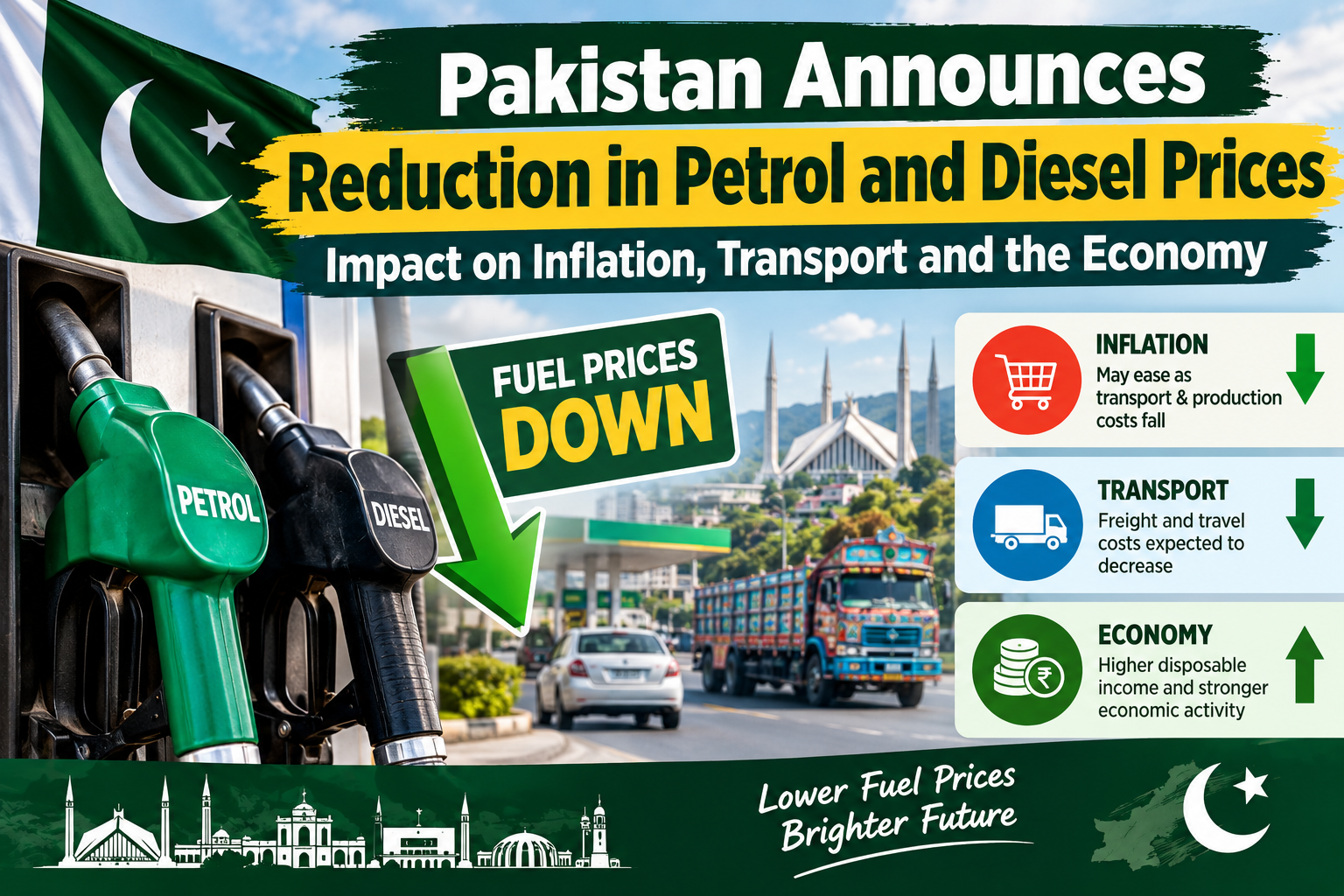
Pakistan’s fuel prices remain an important issue for households, transport operators, farmers and businesses because changes in petrol and diesel costs can influence the prices of goods and services across the country. Any officially announced reduction in petroleum prices can offer relief to consumers, particularly those who depend on motorcycles, cars, public transport and commercial vehicles for their daily activities.
However, an actual reduction in petrol and diesel prices must be confirmed through an official government notification before specific rates or savings can be reported as fact. This article examines the economic significance of a fuel-price reduction, how it may affect Pakistan’s economy, and what consumers and businesses should understand about changes in petroleum prices.
Why Petrol and Diesel Prices Matter in Pakistan
Petroleum products play a major role in Pakistan’s economy. Petrol is widely used by motorcyclists, private car owners and other individual commuters, while diesel is essential for many trucks, buses, agricultural machines and commercial transport operations.
Fuel prices therefore influence much more than the cost of filling a vehicle’s tank. They can affect the transportation of food, construction materials, industrial supplies and consumer products from one location to another.
When petroleum prices fall, transport operators may benefit from lower operating costs. If these savings are passed on to customers, businesses may face less pressure to increase the prices of goods and services.
For households already managing expenses related to food, electricity, education and housing, lower transport costs can provide welcome financial relief.
The size of this benefit, however, depends on the extent of the price reduction, the quantity of fuel consumed and whether other operating expenses remain stable.
A small reduction may offer limited relief, while a substantial and sustained decline can have a more noticeable effect on transport-intensive businesses.
How Fuel Prices Are Determined
Petroleum prices in Pakistan are influenced by several factors, including international oil prices, the exchange rate, government taxes, petroleum levies, distribution expenses and other applicable charges.
International crude oil prices can change because of global supply and demand, geopolitical developments, production decisions and expectations about economic growth.
Pakistan imports a significant share of the petroleum and energy resources it consumes, making international market conditions particularly relevant to domestic fuel costs.
The exchange rate is another important factor. When the Pakistani rupee weakens against the US dollar, imported petroleum can become more expensive in rupee terms, even if international prices remain relatively stable.
Conversely, a stronger rupee can reduce the local-currency cost of imports, although the final retail price also depends on taxes and other components.
Government policy plays a role as well. Changes in petroleum levies, sales taxes where applicable, and other pricing components can influence the final amount paid by consumers.
For this reason, a reduction in international oil prices does not automatically guarantee an equal reduction at Pakistani petrol stations.
The official domestic pricing decision determines the applicable retail rates.
Official Petrol and Diesel Prices in Pakistan on October 20, 2026
The government has officially reduced both petrol and high-speed diesel prices, effective October 20, 2026. The latest notification confirms the following rate.
Petroleum product | Price reduction | New price per litre |
|---|---|---|
Petrol | Rs5.16 | Rs381.14 |
High-speed diesel | Rs7.69 | Rs389.27 |
The reduction provides some relief to consumers after earlier increases in petroleum prices. However, the extent of the benefit will differ depending on how much fuel individuals and businesses consume.
For a motorcyclist purchasing five litres of petrol, the Rs5.16 per-litre reduction represents a saving of Rs25.80 compared with the previous rate. Someone purchasing 20 litres would save Rs103, assuming the same quantity and prices apply.
For commercial operators, the impact can be larger because their vehicles consume greater quantities of fuel. A truck or bus that purchases hundreds of litres over several journeys may experience a more noticeable reduction in operating expenses.
Nevertheless, lower fuel prices do not automatically guarantee an immediate decrease in the prices of food, transport tickets or other goods. Those prices are also influenced by wages, rent, maintenance, financing, taxes and market competition.
Relief for Motorcycle Owners and Daily Commuters
Motorcycles are an important means of transport in Pakistan. Many students, employees, shopkeepers and workers depend on them to travel between home, educational institutions and workplaces.
For these commuters, petrol expenses can represent a significant part of a monthly budget. Even a modest reduction in the price per litre can provide some financial relief when fuel is purchased regularly.
Consider a person who uses 20 litres of petrol each week. At the new reduction of Rs5.16 per litre, the direct saving would be Rs103.20 per week if the previous price remained the relevant comparison.
Over four weeks, that would amount to Rs412.80.
These calculations illustrate the potential benefit, rather than guarantee an individual's actual monthly saving. Fuel consumption, travel distance and subsequent price changes can affect the final amount.
For families with more than one vehicle, the combined savings may be higher. However, households should not expect a fuel-price reduction alone to resolve broader cost-of-living pressures.
Commuters can make their budgets more predictable by tracking actual fuel expenses, combining journeys when practical and maintaining vehicles properly.
How Diesel Prices Affect Food and Essential Goods
Diesel is especially important to Pakistan's supply chains because many heavy vehicles use it to transport agricultural produce, groceries, construction materials and manufactured goods.
A reduction in diesel prices can lower one component of the cost of moving products from farms and factories to wholesale markets, retailers and consumers.
For example, food produced in rural areas may travel considerable distances before reaching urban markets. Transport operators must cover fuel, driver wages, vehicle maintenance, tolls and other expenses during these journeys.
When diesel becomes cheaper, transport companies may have an opportunity to reduce their operating costs. Whether those savings translate into lower delivery charges or retail prices depends on competition, contracts and other expenses.
The same principle applies to building materials, industrial supplies and consumer products.
However, it is important to distinguish between potential cost relief and a confirmed reduction in market prices. A lower diesel price does not mean every product will immediately become cheaper.
Retailers may continue to face higher inventory costs from goods purchased earlier. Other expenses may also remain unchanged or increase.
The long-term benefit will depend on whether lower transport costs persist and whether businesses pass a reasonable share of the savings on to their customers.
Impact on Public Transport Fares
Public transport is essential for people who cannot afford private vehicles or prefer not to drive. Buses, vans, coaches and other commercial vehicles help millions of people travel for work, education, shopping and family responsibilities.
Fuel is an important operating expense for many transport services. A reduction in diesel prices can therefore create an opportunity for transport operators to review their costs.
However, passengers should not assume that bus fares will automatically decrease whenever petroleum prices fall. Transport fares can also depend on vehicle maintenance, spare parts, salaries, route permits, financing expenses and the applicable fare regulations.
In some cases, operators may retain part of the savings to cover previous increases in expenses. In other cases, competitive pressure or government decisions may encourage fare reductions.
Passengers can benefit most when fuel-price changes are accompanied by transparent fare policies and effective oversight.
Provincial and local authorities can help by reviewing transport costs, communicating applicable fare schedules and providing clear procedures for passenger complaints.
Affordable public transport is particularly important for students, daily wage earners and employees who travel long distances. Even modest reductions in travel expenses can make a difference to their monthly budgets.
Benefits for Farmers and the Agricultural Sector
Agriculture is a major component of Pakistan's economy, and fuel is required for several farming and distribution activities.
Farmers may use diesel-powered tractors, water pumps, harvesters and other machinery. Fuel is also consumed when agricultural products are transported to storage facilities, processing units and wholesale markets.
A reduction in diesel prices can lower some of these expenses, potentially improving the financial position of farmers and agricultural businesses.
Small farmers may benefit when lower fuel costs reduce the expense of preparing land, operating machinery and moving crops. Larger farms may also gain from savings across multiple machines and transport vehicles.
Nevertheless, fuel is only one component of agricultural production costs. Fertilisers, seeds, pesticides, labour, irrigation charges and equipment maintenance also affect farmers' earnings.
If these other expenses remain high, a diesel-price reduction may provide only partial relief.
Agricultural productivity can improve further through modern machinery, efficient irrigation, better storage and improved access to markets.
A combination of lower operating costs and stronger productivity can help farmers remain competitive while supporting the supply of food and agricultural raw materials.
Will the Petrol Price Reduction Lower Inflation?
Inflation refers to a sustained increase in the general price level of goods and services. Petroleum prices can influence inflation because fuel is used directly by consumers and indirectly by businesses throughout the economy.
When petrol prices decrease, private motorists and other fuel users may experience immediate savings. When diesel prices fall, transport operators and some businesses may benefit from lower expenses.
These effects can reduce certain cost pressures, but the overall impact on inflation depends on several factors.
First, the size of the price reduction matters. A small change in fuel prices may have a limited effect on total household spending and business expenses.
Second, the duration of the reduction matters. If prices rise again soon afterward, businesses may be reluctant to change their long-term pricing decisions.
Third, other economic conditions influence inflation. Food supplies, electricity charges, exchange rates, wages, taxes and international commodity prices can all affect the cost of living.
Finally, businesses do not always change their prices immediately when costs decline. Some may wait until they can determine whether the reduction will last.
Therefore, the latest fuel-price cut can provide some relief from cost pressures, but it should not be interpreted as proof that inflation across Pakistan will immediately fall.
A sustained improvement in affordability requires attention to multiple economic factors, including domestic production, competition, supply-chain efficiency and household incomes.
How Businesses Can Benefit From Lower Fuel Costs
Businesses throughout Pakistan depend on transportation to receive supplies, distribute products and serve customers.
For manufacturers, cheaper diesel can reduce some freight expenses associated with bringing raw materials to factories and sending finished products to distributors.
Retail businesses may benefit if suppliers pass on lower transportation charges. Delivery companies may also experience savings when operating petrol- or diesel-powered vehicles.
Companies with large vehicle fleets can experience greater cumulative benefits because even a small reduction per litre can add up across thousands of litres of fuel.
However, the financial benefit depends on the proportion of fuel in a company's total operating expenses. A business with limited transportation needs may see less impact than a logistics company.
Businesses should also avoid treating a temporary fuel-price reduction as a permanent improvement in profitability.
Sound financial planning involves monitoring operating costs, reviewing supplier contracts and maintaining sufficient flexibility to manage future changes.
Small businesses can use accurate expense records to identify whether fuel savings are improving their margins and whether any price adjustments are commercially justified.
What the Latest Reduction Means for Pakistan's Economy
The reduction in petrol and diesel prices comes at a time when Pakistan is working to strengthen economic growth, improve household purchasing power and manage the costs faced by businesses.
Lower petroleum prices can support economic activity through several channels.
First, they can reduce direct transportation expenses for consumers and commercial operators.
Second, lower operating costs can provide some relief to businesses that depend heavily on fuel.
Third, reduced transport expenses may help ease distribution costs for food and other essential goods, provided businesses pass on the savings.
Fourth, households may have slightly more money available for other expenses after paying for fuel.
These benefits should nevertheless be considered alongside the broader economic environment.
Pakistan remains exposed to changes in international oil markets and foreign-exchange conditions. A sustained increase in global petroleum prices or a weakening of the rupee can create renewed pressure on domestic fuel costs.
Government revenue considerations also matter because petroleum-related taxes and levies contribute to public finances. Decisions about fuel prices must therefore balance consumer affordability, market conditions and fiscal requirements.
The most effective long-term approach involves improving energy efficiency, diversifying energy supplies, strengthening public transport and encouraging productive economic activity.
International Oil Markets and Pakistan's Fuel Prices
International petroleum markets can change rapidly in response to economic expectations, production decisions, geopolitical developments and supply disruptions.
When global oil prices increase, countries that import petroleum may face higher costs. These increases can affect transport, manufacturing, electricity generation and other activities, depending on the energy sources used.
When international prices decrease, importing countries may have an opportunity to reduce domestic fuel costs, although the final outcome depends on exchange rates, taxes, import premiums and other pricing components.
Pakistan's fuel-price decisions must account for these factors rather than international crude oil prices alone.
The government and relevant authorities assess market information and applicable pricing components when determining domestic rates.
For consumers, the key point is that petroleum prices can change over time. A reduction announced today does not guarantee that prices will remain at the same level in the following review period.
Households and businesses should therefore plan their budgets around actual expenses rather than assuming that the latest price will remain unchanged indefinitely.
The Role of Government Policy
Government decisions are central to the petroleum pricing framework and the management of fuel-related economic pressures.
Transparent pricing announcements allow consumers and businesses to understand the rates that apply and the date on which revised prices take effect.
Clear communication is particularly important because fuel prices influence travel budgets, transport contracts and business planning.
Authorities can also help consumers by monitoring compliance with notified prices and addressing complaints about inaccurate billing or improper practices.
At the same time, longer-term energy policies can reduce vulnerability to international market fluctuations.
Improving public transport, supporting energy-efficient vehicles, strengthening domestic energy infrastructure and encouraging responsible fuel consumption can help reduce unnecessary exposure to petroleum-price volatility.
Any tax or subsidy measures should be assessed carefully to understand their effects on public finances, businesses and households.
Well-designed policies can offer targeted relief without creating avoidable fiscal pressure.
Practical Steps for Households During Fuel-Price Changes
Consumers cannot control international oil prices, but they can take practical steps to manage transportation expenses.
Monitor actual fuel spending. Keeping a simple record of fuel purchases can help households understand how much they spend each week or month.
Plan journeys efficiently. Combining errands into one trip can reduce unnecessary travel where practical.
Maintain vehicles properly. Regular servicing, correct tyre pressure and attention to manufacturer recommendations can support efficient operation.
Compare available transport options. For suitable journeys, public transport or sharing a ride with family members or colleagues may reduce individual expenses.
Avoid assuming that all costs will decline. Fuel prices are only one component of household expenditure, so other expenses should remain part of the budget.
Check official announcements. The government may revise petroleum prices again, so consumers should distinguish confirmed rates from rumours or outdated figures.
These measures cannot eliminate the effects of rising living costs, but they can help households make informed decisions.
Future Outlook for Petrol and Diesel Prices
The future direction of petroleum prices in Pakistan will depend on international oil markets, exchange-rate movements, government pricing decisions and other relevant costs.
If international prices remain favourable and domestic pricing components permit, further relief may be possible. However, future reductions cannot be guaranteed.
Unexpected developments in global supply or demand may reverse earlier declines. Changes in currency values and government taxes can also affect the price paid by consumers.
For this reason, households and businesses should focus on resilience rather than relying on a particular future price.
More efficient transport systems, better logistics, stronger domestic production and diversified energy supplies can reduce the economy's vulnerability to petroleum-price changes.
Pakistan can also benefit from investment in public transportation and other practical measures that give consumers more options for meeting their mobility needs.
The objective should be to make transportation and production more affordable over the long term, not merely to respond to individual price adjustments.
Conclusion
Pakistan's government has reduced petrol by Rs5.16 per litre and high-speed diesel by Rs7.69 per litre, bringing their prices to Rs381.14 and Rs389.27 per litre, respectively, effective October 20, 2026.
The decision provides some relief to motorists, commuters and businesses that depend on petroleum products. Lower diesel prices may also help reduce transport costs for agricultural produce and other goods, although the extent of any savings passed on to consumers remains uncertain.
The reduction is a positive development for fuel users, but its broader economic impact will depend on future prices, inflation, transport charges and other operating expenses.
Pakistan's long-term priorities should include reliable energy supplies, efficient transportation, competitive businesses and transparent economic policies.
For ordinary citizens, the most meaningful outcome will be whether changes in fuel prices translate into manageable travel expenses and improved affordability of essential goods and services.
Frequently Asked Questions (FAQs)
1. What is the petrol price in Pakistan on October 20, 2026?
Petrol is priced at Rs381.14 per litre following a reduction of Rs5.16 per litre.
2. What is the diesel price in Pakistan on October 20, 2026?
High-speed diesel is priced at Rs389.27 per litre after a reduction of Rs7.69 per litre.
3. Will lower petrol prices reduce transportation costs?
They can reduce fuel expenses for motorists and transport operators, although actual transport fares depend on other costs and applicable fare policies.
4. Will the petrol price reduction immediately lower inflation?
Not necessarily. Lower fuel costs may ease some price pressures, but inflation also depends on food prices, electricity charges, exchange rates and other economic factors.
5. Why do petrol and diesel prices change in Pakistan?
Prices are influenced by international petroleum markets, the exchange rate, government taxes and levies, import costs and other components of the official pricing mechanism.