Introduction
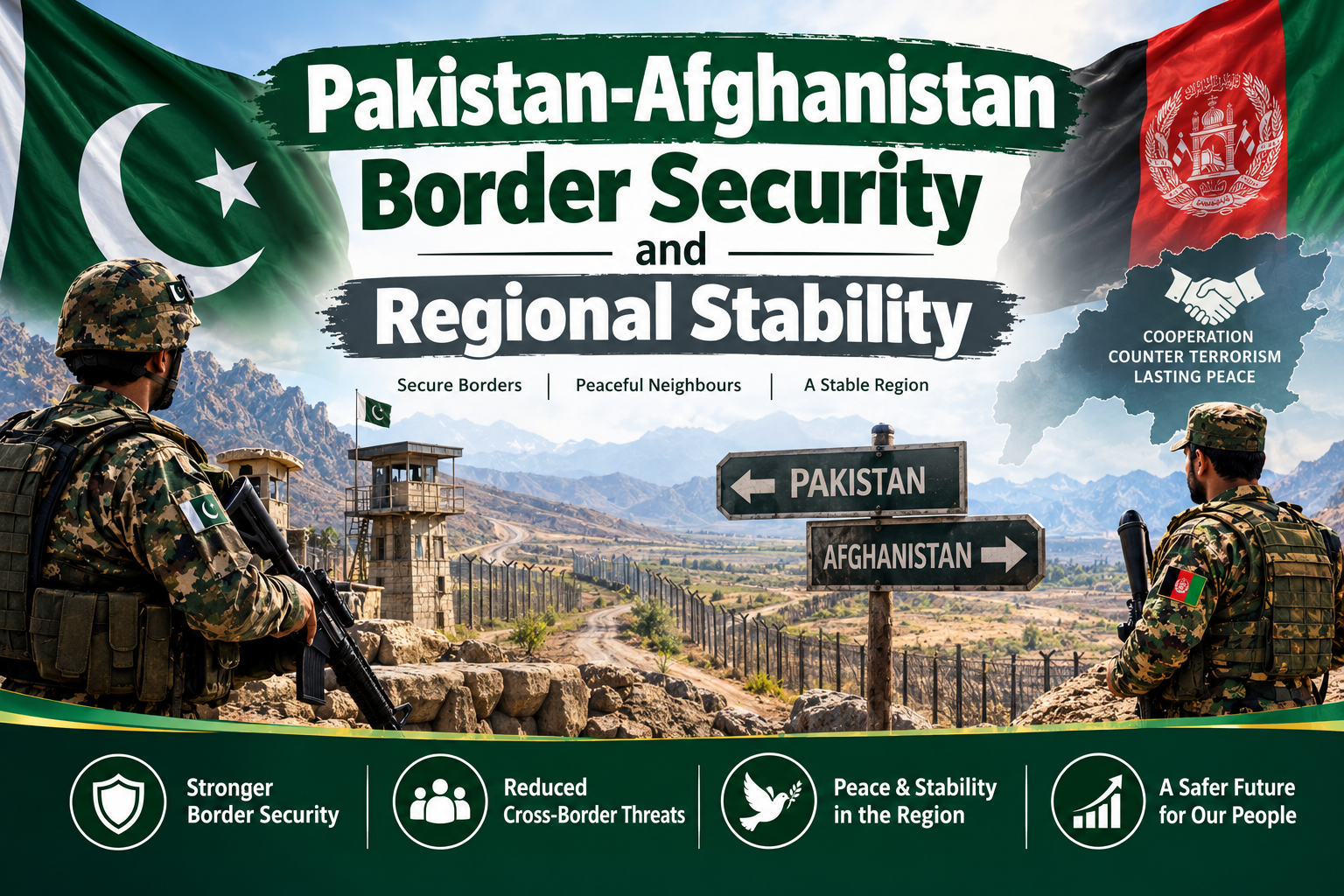
Border security remains an important national priority for Pakistan as the country continues efforts to protect its territory, strengthen security arrangements, and address challenges along its border with Afghanistan. The region has experienced recurring tensions, security incidents, and disagreements involving border management, militant activity, and cross-border movement.
Pakistan and Afghanistan share a long and geographically complex border that connects communities, trade routes, and important regional transport corridors. The border is significant not only for national security but also for economic activity, family connections, transportation, and trade between the two neighboring countries.
Developments along this frontier can influence the daily lives of residents, the movement of commercial goods, and relations between Islamabad and Kabul. For Pakistan, maintaining security while supporting lawful trade and protecting civilians requires coordination among security agencies, government institutions, border authorities, and local communities.
Border security also has wider regional implications. Stability along the Pakistan-Afghanistan frontier can affect trade with Central Asia, regional transportation projects, investment confidence, and efforts to improve economic cooperation across South and Central Asia.
Pakistan has repeatedly emphasized concerns about security threats originating from across the border and the importance of preventing militant groups from using neighboring territory to launch attacks. Afghan authorities have their own concerns regarding sovereignty, border management, and security developments.
Addressing these issues requires effective communication, practical security arrangements, and diplomatic engagement. Sustainable stability depends not only on security operations but also on cooperation, economic opportunities, and measures that protect ordinary people.
1. Why the Pakistan-Afghanistan Border Is Strategically Important
The Pakistan-Afghanistan border is one of the most significant frontiers in South and Central Asia. It connects Pakistan's northwestern regions with Afghanistan and forms part of a wider geographic area linking South Asia with Central Asia.
The frontier includes mountainous terrain, valleys, established crossing points, and communities with longstanding social and commercial connections. These geographic characteristics make border management a complex responsibility.
For Pakistan, the border is important because developments in Afghanistan can affect national security, migration, trade, and regional diplomacy. For Afghanistan, the frontier is equally important for access to Pakistani markets, transportation networks, and international commercial routes.
The two countries also share cultural, linguistic, and family connections across the border. Many communities have relationships that extend across national boundaries, making peaceful movement and predictable border procedures particularly important.
Security arrangements must therefore account for several objectives at the same time.
First, authorities need to prevent unauthorized crossings and address security threats. Second, they must facilitate lawful trade and movement where permitted. Third, they need to reduce the impact of security measures on civilians and local businesses.
These objectives can sometimes create difficult policy decisions. Stricter controls may be necessary during periods of heightened security concerns, but prolonged disruptions can also create economic difficulties for traders, transport operators, and families.
A balanced approach requires clear regulations, effective administration, and communication between the relevant authorities.
2. Pakistan's Security Concerns Along the Frontier
Pakistan has raised concerns about attacks attributed to militant groups operating in or using territory across the Afghan border. Such concerns have contributed to security operations, diplomatic discussions, and demands for stronger cooperation between the two governments.
Pakistan's position has generally emphasized the need to prevent its territory from being targeted by armed groups and to ensure that neighboring territory is not used to plan or support attacks against Pakistan.
Security threats can affect civilians, police officers, military personnel, government employees, and businesses. They can also undermine confidence in transportation routes and disrupt economic activity in affected areas.
Addressing these threats requires accurate intelligence, effective law enforcement, protection of vulnerable communities, and cooperation between institutions responsible for security.
However, individual incidents must be assessed using verified information. Claims about responsibility, casualties, or the location of an attack should not be accepted without reliable evidence.
Clear communication is important because inaccurate reporting can increase public anxiety and complicate diplomatic relations.
Pakistan's security concerns also need to be considered alongside the broader objective of maintaining peaceful relations with Afghanistan. Both countries have an interest in reducing violence, protecting civilians, and preventing instability from spreading across the region.
3. The Role of Pakistan's Security Institutions
Pakistan's security institutions have responsibilities that include protecting national territory, responding to security incidents, monitoring threats, and supporting border management.
These responsibilities involve coordination among relevant military, police, intelligence, customs, and civilian authorities, depending on the nature of an incident and the applicable legal framework.
Effective security arrangements require accurate information, clear responsibilities, appropriate resources, and accountability.
Protecting Border Communities
Residents of border areas can face particular challenges during periods of tension. Security incidents may disrupt transportation, education, access to healthcare, and ordinary commercial activities.
Authorities need to consider the needs of these communities when planning security measures.
Reliable communication can help residents understand restrictions, identify official crossing arrangements, and avoid unnecessary travel during periods of heightened risk.
Preventing Illegal Activities
Border management also involves addressing smuggling, trafficking, document fraud, and other unlawful activities.
Effective enforcement can help protect public revenue, support lawful businesses, and reduce the influence of criminal networks.
However, enforcement measures should be implemented fairly and in accordance with applicable law. Legitimate traders and travelers need clear information about documentation requirements and official procedures.
Supporting Civilian Safety
Protecting civilians should remain a central consideration during security operations and border restrictions.
Public information should be accurate, timely, and easy to understand. Emergency services and relevant authorities also need appropriate arrangements for responding to incidents and supporting affected residents.
A security policy is more effective when it protects communities while maintaining public confidence.
4. Border Management and Cross-Border Movement
Managing a long international border involves more than responding to security incidents. Authorities must also regulate the movement of people, vehicles, commercial goods, and other permitted traffic.
Official crossing points are important because they provide established procedures for checking documents, inspecting goods, and maintaining records.
Clear procedures can make it easier for travelers and businesses to understand their obligations.
Documentation and Immigration Procedures
Travelers may need valid passports, visas, permits, or other documentation depending on their circumstances and the rules in force.
Businesses moving goods across the border must also comply with customs requirements and provide appropriate commercial documentation.
When procedures are unclear or inconsistently applied, travelers and businesses may experience delays and additional expenses.
Improving access to accurate information can help reduce confusion and support lawful movement.
Managing Border Closures
Security concerns can sometimes lead to temporary restrictions or closures at crossing points.
Such measures may be necessary in particular circumstances, but they can also disrupt trade and leave vehicles waiting for permission to cross.
When restrictions occur, businesses need reliable information about their duration, the availability of alternative arrangements, and the requirements for resuming movement.
Predictable communication helps traders manage inventories, transportation schedules, and contractual obligations.
Balancing Security and Trade
Border management requires authorities to balance legitimate security concerns with the economic importance of lawful trade.
Efficient inspections, modern documentation systems, coordination between agencies, and transparent procedures can help achieve both objectives.
The long-term goal should be to maintain secure borders without creating unnecessary obstacles for legitimate commercial activity.
5. Economic Consequences of Border Tensions
Security tensions between Pakistan and Afghanistan can affect more than government relations. They may also influence trade, transportation, employment, and business confidence.
Both countries participate in regional commercial networks, and businesses rely on the movement of goods through established transport corridors.
When crossing points experience disruptions, trucks may be delayed, delivery schedules may change, and traders may face higher operating costs.
Effects on Importers and Exporters
Importers depend on predictable delivery schedules to maintain supplies for retailers, manufacturers, and other customers.
Exporters need to meet contractual deadlines and maintain product quality during transportation.
Delays can create additional storage expenses, increase transport costs, and make businesses less competitive.
Small businesses may be especially vulnerable because they often have limited financial reserves and fewer alternative transportation arrangements.
Effects on Transport Workers
Drivers, freight companies, warehouse operators, customs agents, and other workers may experience reduced activity when cross-border movement slows.
In areas where trade supports a substantial share of local economic activity, prolonged disruptions can affect household incomes and employment.
Providing clear information about border conditions can help businesses and workers plan more effectively.
Effects on Consumer Prices
Transport disruptions can sometimes contribute to higher costs for goods that depend on cross-border supply chains.
The extent of any price effect depends on the product, available inventories, alternative suppliers, transportation options, and the duration of the disruption.
It would be inaccurate to attribute every price increase to border tensions alone. Fuel costs, exchange rates, domestic production, taxation, and other market factors can also influence prices.
Nevertheless, reliable border procedures can help reduce avoidable costs and improve commercial predictability.
6. The Importance of Diplomatic Engagement
Diplomacy is an important tool for addressing disagreements between neighboring countries.
Pakistan and Afghanistan have several issues that may require continued discussion, including security concerns, border procedures, trade, migration, and the treatment of travelers.
Direct communication can help authorities clarify their positions, exchange information, and identify practical arrangements for reducing tensions.
Bilateral Discussions
Regular discussions between relevant officials can provide opportunities to address incidents before they lead to wider disagreements.
Such meetings may focus on security coordination, border management, trade facilitation, or arrangements for communicating during emergencies.
The effectiveness of these discussions depends on whether both sides follow through on commitments and maintain communication when difficulties arise.
Avoiding Escalation
Periods of heightened tension can create pressure for strong public statements and immediate responses.
However, careful verification of information and direct communication can help reduce the risk of misunderstandings.
Diplomatic engagement does not require either country to abandon its security concerns. It provides a channel for addressing those concerns while limiting unnecessary escalation.
Building Confidence
Confidence-building measures may include clearer communication procedures, regular meetings between relevant officials, and practical arrangements for addressing problems at border crossings.
Such measures can help establish more predictable expectations and reduce uncertainty for businesses and communities.
Progress may be gradual, but consistent communication can support a more stable relationship.
7. Afghanistan's Role in Regional Security
Afghanistan's internal security conditions have implications for neighboring countries, including Pakistan.
The two governments have different perspectives on several security and political questions, but both face challenges associated with maintaining stability, supporting economic activity, and addressing threats from armed groups.
Pakistan has called for action against groups it considers responsible for attacks on its territory. Afghan authorities have also expressed concerns regarding sovereignty and the management of bilateral disagreements.
These competing positions can make negotiations difficult.
A constructive approach requires each side to communicate its concerns clearly, examine credible evidence, and identify practical steps that can improve security.
Preventing militant groups from threatening neighboring countries is an important regional objective. At the same time, accusations about specific incidents should be evaluated carefully rather than treated as established facts without supporting evidence.
The international community may also have a role in supporting humanitarian assistance, regional dialogue, and economic development, where appropriate.
Long-term stability in Afghanistan could benefit its own population while also supporting more predictable relations with neighboring countries.
8. Protecting Civilians and Supporting Border Communities
Border communities are often among the first to experience the consequences of security tensions.
Residents may depend on cross-border trade, local markets, transportation, agriculture, or family connections. When movement becomes restricted, these activities can be disrupted.
Protecting civilian welfare should therefore remain an important part of border policy.
Access to Essential Services
During periods of disruption, residents may need information about healthcare, education, transportation, and emergency services.
Local authorities should communicate relevant restrictions and available arrangements clearly.
Where permitted and appropriate, procedures for urgent medical needs and other essential humanitarian circumstances should be handled through established channels.
Supporting Local Businesses
Small businesses may experience difficulties when customers, suppliers, or transport services cannot move as expected.
Providing clear information about crossing procedures and the status of commercial activity can help businesses make practical decisions.
Local economic development programs may also help communities diversify their sources of income and reduce excessive dependence on a single trading route.
Community Engagement
Local residents often understand the practical conditions affecting daily life in border areas.
Consultation with communities can help authorities identify administrative problems, communication gaps, and unintended economic consequences.
Community engagement cannot replace formal security responsibilities, but it can improve public understanding and support more effective implementation of policy.
9. Regional Trade and Connectivity Opportunities
Pakistan and Afghanistan occupy important positions in regional transportation networks.
Pakistan has access to major maritime trade routes, while Afghanistan provides geographic connections between South Asia and Central Asia.
Efficient transportation and predictable border procedures can support the movement of agricultural goods, industrial products, consumer items, and other lawful commercial shipments.
Connecting Markets
Regional connectivity can provide businesses with access to new customers and suppliers.
However, the benefits depend on dependable infrastructure, competitive transportation costs, clear customs procedures, and sufficient commercial demand.
Trade corridors require cooperation among transport operators, border authorities, logistics providers, and businesses.
Opportunities for Central Asian Trade
Improved regional connectivity could support Pakistan's commercial relationships with Central Asian economies.
For exporters, additional transportation options may help diversify routes and reach different markets.
Nevertheless, any particular route must be assessed according to its practical conditions, infrastructure, costs, and applicable regulations.
Political stability and predictable border management can make regional trade planning easier.
Long-Term Infrastructure Development
Infrastructure projects involving roads, railways, storage facilities, and border-processing systems require substantial planning and investment.
Their success depends on realistic demand estimates, transparent financing, competent management, and long-term maintenance.
Security conditions are an important part of these assessments because disruptions can affect both construction and later operations.
10. The Role of Technology in Border Management
Technology can help authorities improve administrative efficiency and the handling of legitimate cross-border movement.
Digital documentation, electronic customs systems, secure databases, and improved communication tools can reduce paperwork and make certain procedures more predictable.
However, technology must be introduced with appropriate safeguards and clear responsibilities.
Digital Customs Procedures
Electronic systems can help businesses submit documents and monitor the progress of shipments.
When implemented effectively, these systems may reduce repetitive paperwork and improve coordination between relevant agencies.
Businesses also need training and accessible technical support to use digital systems correctly.
Information Sharing
Reliable communication between relevant authorities can help clarify documentation requirements, communicate temporary restrictions, and coordinate responses to incidents.
Information-sharing arrangements must comply with applicable law and protect sensitive information.
Maintaining Accountability
Technology should support fair and transparent administration.
Systems need appropriate oversight, data protection, and procedures for correcting errors.
Digital tools cannot resolve every political or security disagreement, but they can help improve the administration of lawful trade and movement.
11. Challenges to Sustainable Border Stability
Several factors can complicate efforts to maintain stable relations along the Pakistan-Afghanistan border.
These include disagreements over security responsibilities, political tensions, militant activity, economic pressures, administrative challenges, and changing regional conditions.
Different Security Priorities
Pakistan and Afghanistan may interpret particular incidents and security threats differently.
Resolving these disagreements requires credible information, direct communication, and practical arrangements for addressing concerns.
Political Uncertainty
Changes in political priorities can influence the pace of negotiations and the implementation of agreements.
Consistent communication between relevant institutions can help maintain essential working relationships even during difficult periods.
Economic Pressures
Border communities and businesses may experience financial difficulties when trade slows.
Measures that improve the predictability of lawful movement can help reduce some of these pressures.
Limited Trust
Repeated disagreements can reduce confidence between governments.
Rebuilding trust generally requires sustained engagement and evidence that agreed procedures are being followed.
Small, practical improvements may provide a foundation for broader cooperation.
12. How Pakistan Can Strengthen Its Border Strategy
Pakistan can pursue several complementary approaches to improving border management and supporting national security.
First, security agencies and relevant civilian institutions need effective coordination and reliable information.
Second, diplomatic channels should remain available for discussing incidents and addressing disagreements with Afghanistan.
Third, border procedures should be clear enough for legitimate travelers and businesses to understand their obligations.
Fourth, authorities should consider the effects of restrictions on civilian communities and lawful economic activity.
Finally, investments in transportation infrastructure and administrative systems should be guided by realistic assessments of costs, risks, and long-term benefits.
These measures are not substitutes for addressing genuine security threats. Instead, they can help create a more comprehensive framework in which security, economic stability, and civilian welfare are considered together.
Policy decisions should be based on verified information and reviewed as circumstances change.
13. Implications for Pakistan's Economy
Border stability can influence Pakistan's economic outlook through several channels.
Predictable transportation arrangements support trade planning, while reduced uncertainty may help businesses make investment decisions.
When goods can move according to established schedules, importers and exporters can manage inventories and fulfill contracts more efficiently.
Regional stability can also support longer-term infrastructure planning and commercial cooperation.
However, the economic effects of border developments vary across industries and regions.
Some businesses depend heavily on cross-border trade, while others rely primarily on domestic customers or alternative international routes.
For this reason, economic assessments should consider specific sectors and available evidence rather than assume that every industry will experience the same impact.
Pakistan's broader economic priorities include export growth, employment, investment, infrastructure development, and improved productivity. Stable regional relationships can support these goals, although they cannot guarantee economic success on their own.
Domestic policies, energy costs, taxation, access to finance, and international market conditions also remain important.
14. Responsible Media Reporting on Border Developments
Accurate reporting is especially important during periods of heightened security tension.
Unverified claims about attacks, casualties, border closures, or diplomatic decisions can spread quickly and create unnecessary concern.
Journalists and news organizations should distinguish confirmed information from allegations and avoid presenting uncertain details as established facts.
Official statements are important sources of information, but significant claims may require independent confirmation when reliable evidence is available.
Reporting should also consider the impact of security developments on civilians and local businesses.
Balanced coverage can help readers understand the broader context without exaggerating risks or assigning responsibility without sufficient evidence.
For the public, checking the date and credibility of a report is a useful way to distinguish current developments from older incidents that may be circulating again.
15. The Future of Pakistan-Afghanistan Border Relations
The future of Pakistan-Afghanistan border relations will depend on how both countries address security concerns, maintain communication, and manage their shared economic and geographic interests.
Security remains an important responsibility for both governments. At the same time, stable trade arrangements and predictable border procedures can benefit businesses and communities on both sides.
A practical approach would combine effective security measures with diplomatic engagement, transparent administrative processes, and attention to civilian welfare.
Regional trade and transportation projects may offer additional opportunities if security conditions and commercial requirements allow them to operate effectively.
Progress will require realistic expectations. Longstanding disagreements may not be resolved quickly, and individual agreements will need sustained implementation.
Nevertheless, regular communication and practical cooperation can help reduce uncertainty and create opportunities for gradual improvement.
The broader objective should be a border environment in which legitimate movement can take place under clear rules, security threats are addressed responsibly, and neighboring communities have opportunities to participate in economic development.
Conclusion
Pakistan's security efforts along the Afghan border remain closely connected to national security, regional diplomacy, economic activity, and the welfare of border communities.
The frontier is strategically important because it connects Pakistan and Afghanistan while also forming part of wider regional transportation and trade networks.
Security concerns, including threats attributed to militant groups, have contributed to recurring tensions and difficult discussions between the two countries.
Addressing these challenges requires reliable information, effective security institutions, clear border procedures, and sustained diplomatic engagement.
At the same time, the economic effects of border disruptions should not be overlooked. Traders, transport workers, local businesses, and ordinary residents may face additional difficulties when movement is restricted.
A comprehensive strategy should therefore seek to protect national security while supporting lawful trade, improving administrative efficiency, and safeguarding civilians.
Regional cooperation cannot eliminate every disagreement, but practical communication and predictable procedures can help reduce uncertainty.
Ultimately, sustainable stability will depend on the ability of Pakistan and Afghanistan to address legitimate concerns, prevent violence, and develop arrangements that support security and economic well-being over the long term.
FAQs
1. Why is the Pakistan-Afghanistan border important?
The border is important for national security, regional transportation, cross-border trade, migration, and the social connections between communities in both countries.
2. What security concerns has Pakistan raised?
Pakistan has raised concerns about militant attacks and the use of Afghan territory by groups it considers responsible for violence inside Pakistan.
3. How can border tensions affect Pakistan's economy?
Disruptions may delay shipments, increase transportation costs, affect traders and transport workers, and create uncertainty for businesses that depend on cross-border commerce.
4. Why is diplomacy important for border stability?
Diplomatic engagement provides a channel for exchanging information, addressing disagreements, coordinating procedures, and reducing the risk of further escalation.
5. How can Pakistan and Afghanistan improve border management?
Both countries can work toward clearer procedures, reliable communication, lawful trade arrangements, effective security coordination, and measures that protect civilians.
Reduce repetition across sectionsStrengthen the opening with key takeaways




