Introduction
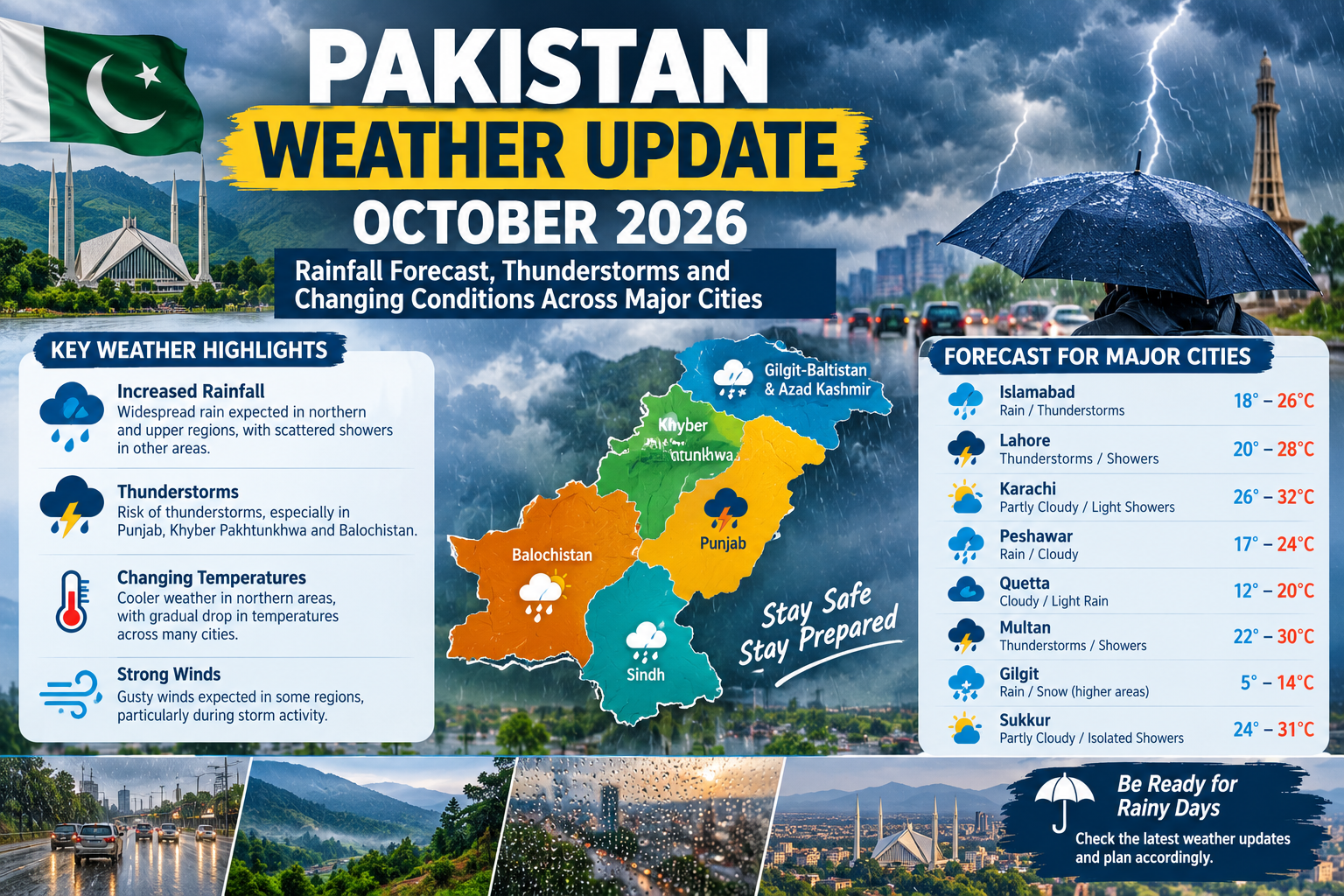
Pakistan’s weather is expected to change across several regions during October 2026, as a new weather system brings the possibility of rainfall, thunderstorms and strong winds to parts of the country. The Pakistan Meteorological Department has forecast unsettled conditions in northern and central areas, with rain expected in several districts of Punjab, Khyber Pakhtunkhwa, Kashmir, Gilgit-Baltistan and Islamabad.
According to the weather outlook issued on October 9, a westerly weather system is expected to affect the upper parts of Pakistan from October 10 and may continue influencing conditions until October 15, with occasional breaks. Some areas may also experience hailstorms, while southern parts of the country are generally expected to remain warmer and drier.
The forecast is important for residents, farmers, commuters, students and businesses because changing weather can affect everyday activities. Rain may provide relief from warm conditions in some locations, but thunderstorms and strong winds can also disrupt travel, damage crops and create temporary difficulties.
Weather conditions will not be identical throughout Pakistan. Some cities may receive rainfall, while others may experience partly cloudy skies or continued dry weather. The intensity and timing of rain may also vary from one district to another.
This article examines Pakistan’s latest weather outlook for October 2026, the regions most likely to experience rain, expected conditions in major cities, possible effects on agriculture and transportation, and precautions residents should consider during unsettled weather.
1. Latest Pakistan Weather Update for October 10–15
The Pakistan Meteorological Department has forecast a spell of rain, wind and thunderstorms across several upper and central regions of the country between October 10 and October 15.
The expected weather system is likely to affect areas of Punjab, Islamabad, Khyber Pakhtunkhwa, Kashmir and Gilgit-Baltistan. Some locations may experience isolated hailstorms alongside thunderstorms.
The forecast indicates that rainfall will occur with occasional gaps rather than continuously across every affected region. This means one district may receive rain while a nearby area experiences cloudy skies or little precipitation.
Punjab is among the regions expected to experience changing weather conditions. Several northern and central districts, including Lahore, Faisalabad, Gujranwala, Sialkot and Sargodha, are included in the forecast.
Islamabad and Rawalpindi may also experience rain and thunderstorms. In Khyber Pakhtunkhwa, the forecast covers numerous districts, including Peshawar, Swat, Abbottabad and Mansehra.
Kashmir and Gilgit-Baltistan may experience rain and thunderstorms at isolated locations, particularly in mountainous areas.
Meanwhile, much of Sindh is expected to remain hot and dry. Balochistan is also generally expected to experience dry conditions, although isolated rain is possible in selected districts.
Residents should remember that a weather forecast describes expected conditions rather than guaranteeing that rain will occur at every location. Local weather updates remain important as the system develops.
2. Punjab Weather Forecast: Rain Expected in Several Districts
Punjab is expected to experience changing weather conditions during the forecast period, with rain, thunderstorms and strong winds possible in numerous districts.
The Meteorological Department has included Lahore, Faisalabad, Gujranwala, Sialkot, Sargodha, Sheikhupura, Kasur, Jhang, Toba Tek Singh and several other locations in its forecast.
Rain and thunderstorms are expected on October 10 and 11, with another possible spell on October 13 and 14 in several upper and central Punjab districts. Southern districts may experience rain on October 10, 11 and 13.
These conditions could bring temporary relief from warm weather, although temperatures and humidity will vary by location.
Thunderstorms may also affect daily travel. Drivers and motorcyclists could face wet roads, reduced visibility and gusty winds during periods of heavy rain.
Farmers should pay attention to local forecasts, particularly where crops are nearing harvest or where strong winds and hail could cause damage.
Not every district will necessarily receive the same amount of rainfall. Residents should use district-specific forecasts instead of assuming that a prediction for Lahore or Faisalabad applies equally to every part of Punjab.
Lahore Weather Update
Lahore is among the cities included in the forecast for rain and thunderstorms during the October weather system.
Cloud cover and rainfall may temporarily change outdoor conditions, particularly during evening or nighttime periods. However, the exact timing and amount of rain can vary.
Wet roads may slow traffic and affect commuters travelling between residential areas, workplaces and educational institutions.
People planning outdoor activities should check local updates before leaving home. Motorcyclists should be especially careful during strong winds and rainfall, while drivers should allow additional time for journeys when roads are wet.
Rainfall may also help settle dust in some locations, although its effect on air quality depends on local conditions and other environmental factors.
Faisalabad Weather Update
Faisalabad is also included in the forecast for possible rain, wind and thunderstorms during the October 10–11 period, with another chance of unsettled conditions on October 13–14.
The changing weather may affect people working in markets, factories, agricultural areas and other outdoor environments.
Rain can create temporary challenges for traffic, deliveries and daily commuting. Strong winds may also affect temporary structures and unsecured outdoor materials.
Residents should follow local forecasts to understand whether rainfall is expected in their particular area. Conditions can differ between the city centre and nearby rural locations.
Farmers in the surrounding agricultural region should consider the possibility of rain and gusty winds when planning field activities.
Gujranwala and Sialkot Weather Update
Gujranwala and Sialkot are among the northeastern Punjab districts included in the forecast.
Rain and thunderstorms may occur during the predicted spells, with possible interruptions to normal outdoor activities.
People travelling between cities should be prepared for changing road conditions. Businesses that depend on deliveries may also need to account for temporary delays during periods of heavy rain.
In agricultural areas, the potential for strong winds or isolated hailstorms makes local monitoring important.
The exact impact will depend on rainfall intensity, wind strength and the condition of local roads and drainage systems.
3. Islamabad and Rawalpindi Weather Outlook
Islamabad and Rawalpindi are expected to experience changing weather conditions during the approaching weather system.
The forecast includes the possibility of rain, gusty winds and thunderstorms. Some nearby areas may receive more rainfall than others, depending on how the weather system develops.
For residents, the main effects may include wet roads, temporary traffic delays and interruptions to outdoor activities.
People travelling to offices, schools, colleges or markets should check weather updates before setting out, especially when thunderstorms are expected.
Rainfall in Islamabad and Rawalpindi may also influence conditions in nearby hilly areas. Residents travelling towards Murree or other elevated locations should pay attention to local forecasts because weather can change quickly in mountainous terrain.
Strong winds may affect loose outdoor objects, temporary structures and overhead materials. Residents should take reasonable precautions before a storm arrives.
Although rainfall can improve outdoor comfort in some circumstances, it is important not to assume that every shower will be light. Thunderstorms can produce sudden changes in wind and visibility.
4. Khyber Pakhtunkhwa Weather Forecast
Khyber Pakhtunkhwa is expected to experience intermittent rain, thunderstorms and strong winds during the forecast period.
The Meteorological Department has included districts such as Dir, Chitral, Swat, Abbottabad, Mansehra, Peshawar, Kohat, Mardan, Swabi and several other locations in its outlook.
The expected conditions may vary considerably between plains, valleys and mountainous areas.
Peshawar
Peshawar may experience rain and thunderstorms during the approaching weather system. Changing conditions could affect traffic, outdoor work and daily travel.
Residents should monitor local forecasts, particularly if strong winds or heavy showers are expected.
Swat and Dir
The mountainous areas of Swat and Dir may experience unsettled weather, including rain and thunderstorms at isolated locations.
Travellers should be aware that wet roads and changing visibility can make journeys more difficult in hilly terrain. People planning trips should check local conditions before travelling.
Abbottabad and Mansehra
Abbottabad and Mansehra are also included in the forecast for intermittent rain and thunderstorms.
The surrounding mountainous terrain means conditions may change over short distances. Some areas may receive rainfall while others remain relatively dry.
Residents should avoid relying solely on general regional predictions when planning travel through mountain roads.
Potential Effects in Khyber Pakhtunkhwa
Rain can support soil moisture and vegetation, but heavy showers may also create drainage problems in low-lying urban locations.
Strong winds and hail, where they occur, may affect crops, weak structures and outdoor equipment.
Local authorities and residents should pay attention to official weather warnings and respond appropriately if conditions deteriorate.
5. Kashmir and Gilgit-Baltistan Weather Update
Kashmir and Gilgit-Baltistan are expected to experience unsettled weather during the forecast period.
The outlook includes possible rain and thunderstorms at isolated locations, with occasional breaks between spells.
In Kashmir, areas mentioned in the forecast include Muzaffarabad, Neelum Valley, Rawalakot, Poonch, Bagh and several surrounding districts.
In Gilgit-Baltistan, locations include Gilgit, Skardu, Hunza, Astore, Diamir and other areas.
Weather in mountainous regions can differ significantly from conditions in the plains. Elevation, local geography and wind patterns can influence rainfall and temperature.
People travelling for tourism, work or family visits should check updated forecasts before beginning their journeys.
Rainfall can make mountain roads slippery, while poor visibility may affect travel in elevated areas. In locations where thunderstorms develop, conditions may change quickly.
Visitors should avoid assuming that clear skies at the start of a journey mean the weather will remain stable throughout the day.
Local advice is especially important when travelling through remote areas where access to assistance may be limited.
6. What Is the Weather Outlook for Sindh?
Sindh is generally expected to remain hot and dry during the current forecast period.
Unlike northern and central Pakistan, most of the province is not expected to experience widespread rainfall from the approaching weather system.
Karachi and other parts of Sindh may therefore continue to experience relatively warm conditions, although actual temperatures and humidity will depend on local weather patterns.
Residents should continue taking sensible precautions during hot weather, including drinking sufficient water and avoiding unnecessary exposure to intense afternoon heat.
People who work outdoors may need to adjust their schedules where possible and take regular breaks in shaded or cooler locations.
Even when rainfall is not expected, local weather conditions can change. Residents should therefore consult updated forecasts rather than treating a general provincial outlook as a guarantee for every city.
For businesses, transport operators and agricultural communities, continued dry weather may mean that routine outdoor activities can proceed with fewer rain-related interruptions. However, heat and water availability may remain important considerations.
7. Balochistan Weather Forecast
Much of Balochistan is expected to remain hot and dry, but isolated rainfall is possible in selected districts.
The forecast identifies Zhob, Barkhan and Musakhel among the areas that may experience rain, wind or thunderstorms during parts of the October 10–13 period.
The province’s large size and varied terrain mean that weather conditions can differ substantially between districts.
Some locations may receive showers while others remain dry. Residents should therefore check forecasts for their particular area.
In places where thunderstorms develop, strong winds may affect outdoor work, temporary structures and travel conditions.
Farmers and livestock owners should monitor local updates and consider how changes in rainfall may affect agricultural activities and water availability.
Dry conditions across much of the province also make it important for residents to remain aware of local heat conditions, especially during the warmest part of the day.
8. Why Is Pakistan Experiencing Changing Weather Conditions?
Pakistan’s weather is influenced by several atmospheric processes, including westerly weather systems, moisture movement, temperature differences and regional geography.
A westerly disturbance is a weather system that generally moves from west to east and can bring cloud cover, rainfall, snowfall in colder or elevated locations, and thunderstorms under suitable conditions.
The current forecast indicates that a westerly wave is likely to affect the upper parts of Pakistan during the October 10–15 period.
When such a system interacts with available moisture and local atmospheric conditions, clouds may develop and produce rainfall or thunderstorms.
The effect is not uniform across the country. Northern and mountainous areas may experience different conditions from the southern plains, while coastal locations may be influenced by separate weather patterns.
Pakistan’s diverse landscape also plays a role. Mountains can influence how air moves and where precipitation develops, while large plains may experience different temperature and wind patterns.
This is why a single national forecast cannot describe the exact weather for every district.
Meteorological forecasts are updated as new observations and weather-model information become available. Residents should use the latest local information when making decisions that depend on weather conditions.
9. How Could the Rain Affect Agriculture?
Agriculture is a major part of Pakistan’s economy, and weather conditions can influence planting, harvesting, irrigation and the movement of agricultural products.
Rainfall can provide moisture to soil and may reduce the need for irrigation in some circumstances. However, the benefits depend on rainfall amounts, crop requirements and the condition of the land.
Light or moderate rain may be useful in certain agricultural areas, while intense showers, hail or strong winds can create problems.
Possible Benefits
Rain can increase soil moisture and support vegetation where conditions are suitable. It may also help reduce dust and temporarily improve outdoor conditions for agricultural workers.
In areas experiencing dry weather, rainfall may provide some relief to crops that need additional moisture.
Possible Risks
Strong winds and hailstorms can damage standing crops, fruit and other agricultural produce. Heavy rainfall may also delay harvesting, interfere with field operations or affect the movement of goods.
The effect depends on the type of crop, its stage of growth and local soil conditions.
Farmers should consult district-level weather information before scheduling activities that could be affected by rain or strong winds.
They should also follow advice from relevant agricultural authorities when available.
A balanced approach is important because rainfall can be beneficial in one location and disruptive in another.
10. Impact on Roads, Traffic and Public Transportation
Rain and thunderstorms can influence transportation across affected parts of Pakistan.
Wet roads may reduce tyre grip, while heavy showers can lower visibility. Strong winds may also create difficulties for motorcycles and other vehicles, particularly on exposed roads and bridges.
Urban areas may experience traffic delays if rainfall affects drainage systems or reduces road visibility.
People travelling between cities should allow additional time during unsettled weather and check local road conditions when severe rain is expected.
Motorcyclists should use particular caution during heavy showers and avoid rushing through waterlogged sections of road.
Public transport services may also experience delays when roads become congested or visibility deteriorates.
For long-distance journeys, checking the forecast for both the departure point and destination can be helpful. Conditions may be different along the route.
Businesses that depend on deliveries may need to prepare for temporary disruptions and communicate with customers if travel conditions worsen.
Following traffic regulations and official weather advisories can help reduce avoidable risks during periods of rain and strong winds.
11. Possible Effects on Daily Life and Education
Changing weather can affect the everyday routines of students, workers and families.
Rain may make travel to schools, colleges and workplaces more difficult, especially when roads become slippery or traffic slows down.
Outdoor events, sports activities and community gatherings may also need to be adjusted if thunderstorms are expected.
Families can reduce inconvenience by checking the weather before leaving home and keeping reasonable flexibility in their plans.
Students travelling long distances should pay attention to official announcements from their educational institutions if severe weather affects transportation or local conditions.
Workers who spend much of their day outdoors may need to prepare for sudden showers and strong winds.
However, a weather forecast does not automatically mean that schools or offices will close. Such decisions depend on announcements from the relevant authorities or institutions.
Residents should avoid spreading unverified claims about school closures or emergency situations.
Accurate communication helps people make practical decisions without creating unnecessary confusion.
12. Weather Safety: Important Precautions for Residents
During rain and thunderstorms, basic precautions can help residents reduce exposure to weather-related risks.
Follow Official Forecasts
Check the latest updates from the Pakistan Meteorological Department and relevant local authorities. Forecasts can change as a weather system develops.
Be Careful on Wet Roads
Reduce speed in rainy conditions, maintain a safe distance from other vehicles and avoid sudden manoeuvres.
Secure Outdoor Items
Strong winds can move unsecured objects. Where practical, secure loose items before a storm arrives.
Avoid Exposed Locations During Thunderstorms
If thunder is heard, move indoors to a substantial building or an enclosed vehicle. Avoid open fields, isolated trees and exposed elevated areas until the storm has passed.
Take Care Around Flooded Roads
Do not attempt to cross a flooded road when the depth or strength of the water is uncertain. Water can be deeper or move faster than it appears.
Protect Important Belongings
Where heavy rainfall is possible, keep important documents and electronic devices away from areas prone to water entry.
Pay Attention to Local Warnings
People in mountainous or low-lying areas should follow local advice if authorities issue warnings about dangerous conditions.
These precautions are particularly relevant when thunderstorms develop quickly or rainfall becomes heavier than expected.
13. What Should Residents Expect After October 15?
The current outlook covers the period through October 15, 2026. Beyond that date, conditions will depend on subsequent weather systems and updated forecasts.
If the current system weakens or moves away, many areas may return to drier conditions. However, this outcome should not be assumed without a newer forecast.
The Meteorological Department may issue further updates as fresh information becomes available.
Residents should therefore distinguish between the current forecast window and longer-term expectations.
Weather forecasts generally become less certain the further into the future they extend. A prediction for a specific day may change as atmospheric conditions develop.
For farmers, travellers and event organisers, it is sensible to review forecasts again closer to the planned activity.
This approach provides more useful information than relying on a single forecast published several days earlier.
14. The Importance of Accurate Weather Information in Pakistan
Reliable weather information helps people prepare for changing conditions and make decisions that affect their safety and daily routines.
Farmers use forecasts to plan agricultural work, transport operators consider weather when organising journeys, and households prepare for rain or warm conditions.
Accurate information is particularly important in a country with diverse climates and geography. Conditions in northern mountain regions can differ greatly from those in southern plains and coastal areas.
The Pakistan Meteorological Department plays an important role by publishing weather forecasts and advisories for different regions.
Local authorities may also issue additional instructions when particular districts face severe weather risks.
Citizens should be cautious about social media posts that claim a storm, flood or other weather event is certain without reliable confirmation.
Sharing outdated forecasts can create confusion, particularly when people are making travel or safety decisions.
Checking the publication date and the affected locations helps people understand whether a forecast remains relevant.
Clear communication between weather authorities and the public can improve preparedness and reduce unnecessary disruption.
Conclusion
Pakistan’s weather outlook for October 10–15, 2026, points to a period of changing conditions across several upper and central regions. The Pakistan Meteorological Department has forecast rain, thunderstorms and strong winds in parts of Punjab, Islamabad, Khyber Pakhtunkhwa, Kashmir and Gilgit-Baltistan, with isolated hailstorms possible in some locations.
Lahore, Faisalabad, Gujranwala, Sialkot, Islamabad, Rawalpindi and several other districts are among the areas included in the forecast. Southern parts of Punjab may also receive rainfall during selected days, while much of Sindh and Balochistan is expected to remain predominantly hot and dry.
The changing weather may provide temporary relief from warm conditions, but it can also affect transportation, agricultural work and outdoor activities. The impact will depend on local rainfall intensity, wind strength and the condition of roads and drainage systems.
Residents should follow updated forecasts, exercise care during thunderstorms and avoid relying on general predictions as guarantees for their individual locations.
Farmers, travellers, students and businesses can all benefit from checking local conditions before making weather-sensitive plans.
Ultimately, accurate forecasting and sensible preparation can help people respond effectively to Pakistan’s changing weather conditions throughout October.
er Weather, Weather Update, Pakistan Meteorological Department
Frequently Asked Questions (FAQs)
1. Which parts of Pakistan may receive rain in October 2026?
Parts of Punjab, Islamabad, Khyber Pakhtunkhwa, Kashmir and Gilgit-Baltistan may receive rain and thunderstorms during the October 10–15 forecast period.
2. Will Lahore and Faisalabad receive rain?
Both cities are included in the forecast for possible rain, wind and thunderstorms. The exact timing and intensity may vary.
3. How long is the current weather system expected to affect Pakistan?
The Pakistan Meteorological Department expects the westerly weather system to influence parts of the country from October 10, potentially continuing until October 15 with occasional breaks.
4. Is rain expected across Sindh and Balochistan?
Widespread rain is not expected across most of these provinces under the current outlook. Much of Sindh and Balochistan is expected to remain hot and dry, although isolated rain is possible in selected areas.
5. What precautions should people take during thunderstorms?
Residents should follow official weather updates, take care on wet roads, move indoors when thunder is heard, secure loose outdoor items and avoid crossing flooded roads.
Make the article less repetitiveAdd a concise city-by-city forecast table




