Introduction
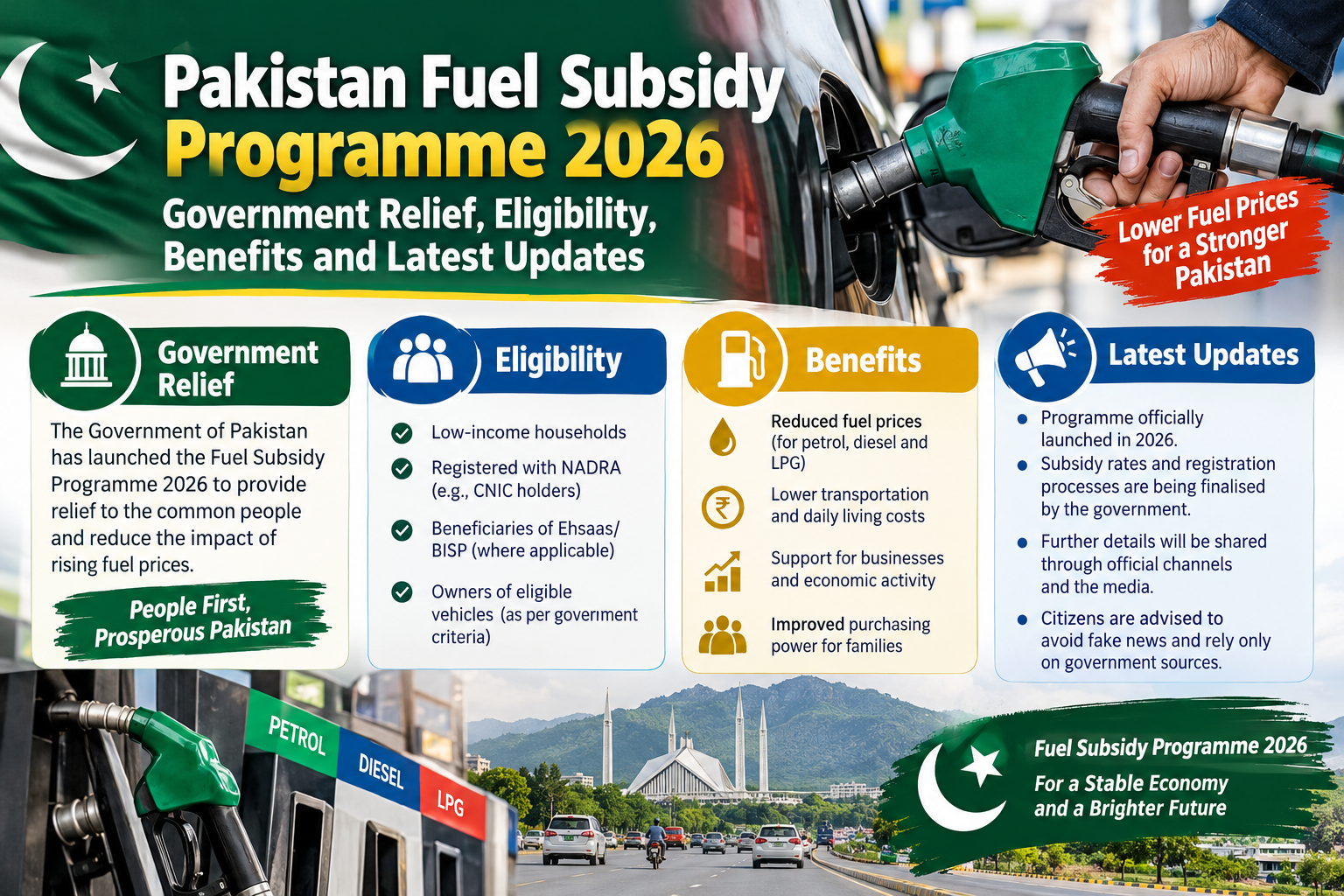
Pakistan’s fuel subsidy programme has become an important economic development as households, workers and businesses continue to face pressure from rising fuel and transportation costs. The government introduced targeted financial assistance to help eligible citizens manage petrol expenses, particularly those who depend on motorcycles, rickshaws and small cars for their daily activities.
Fuel prices affect almost every part of the economy. Workers need transportation to reach their jobs, students travel to educational institutions, shopkeepers transport goods, and farmers depend on vehicles to move agricultural products to markets. When fuel prices increase, these activities can become more expensive, creating additional financial pressure on households and businesses.
The government’s fuel relief initiative is designed to provide targeted assistance to eligible vehicle users. The programme reportedly has a budget allocation of Rs75 billion and has reached millions of beneficiaries. Its digital token system is intended to help eligible citizens receive fuel discounts through participating petrol stations.
However, the initiative has also raised questions about public spending, eligibility, transparency and the long-term sustainability of government subsidies. Discussions with the International Monetary Fund have added further importance to the issue, as Pakistan continues to balance economic reforms with the need to protect vulnerable households.
Understanding the programme requires examining its purpose, eligibility conditions, benefits, digital registration process and potential impact on the wider economy.
1. Why Did Pakistan Introduce the Fuel Subsidy Programme?
Pakistan introduced the fuel relief initiative to help selected groups manage the impact of rising petrol prices. Fuel is an essential expense for many households, particularly those whose members travel regularly for employment, education or small business activities.
When petrol prices rise sharply, people who depend on motorcycles and rickshaws can face additional pressure on their monthly budgets. These expenses can reduce the money available for food, education, electricity bills and other household necessities.
Transportation costs also influence the prices of goods and services. Businesses often use vehicles to transport raw materials, deliver products and move supplies between cities. If their fuel expenses increase, they may need to adjust their prices or accept lower profits.
The government’s targeted subsidy is intended to provide some relief to eligible citizens rather than offering the same benefit to every fuel consumer.
The programme is particularly relevant to people who depend on affordable transportation to earn an income. Motorcycle riders, rickshaw operators and owners of eligible small cars may receive assistance under the applicable rules.
Nevertheless, the subsidy addresses only part of the wider cost-of-living challenge. Food prices, electricity tariffs, housing costs, taxes and other expenses also influence household financial conditions.
2. Latest Update: Millions of People Benefit
One of the most significant developments is the reported number of people who have benefited from the initiative.
In October 2026, Prime Minister Shehbaz Sharif reportedly stated that more than 10 million people had benefited directly from the fuel subsidy programme. The government allocated Rs75 billion to finance the initiative.
The programme was designed to provide targeted discounts to selected vehicle users, including motorcycle riders, rickshaw operators and eligible small-car owners. A larger number of people may benefit indirectly when the financial relief received by one household member helps support the family.
The distinction between direct and indirect beneficiaries is important. Direct beneficiaries are those who receive assistance under the programme, while indirect beneficiaries may include family members who benefit from reduced transportation expenses.
The reported progress suggests that the initiative has reached a substantial number of people. However, the number of recipients alone does not establish whether the programme is sufficient to offset higher fuel costs.
Its effectiveness also depends on the value of the discount, how frequently beneficiaries use it, the accessibility of participating petrol stations and the duration of the assistance.
Authorities will need to monitor these factors to determine whether the programme is delivering meaningful relief to the people it is intended to support.
3. How Much Money Has the Government Allocated?
The government has allocated Rs75 billion for the fuel subsidy programme. The initiative was designed as a targeted relief measure intended to operate over an initial three-month period.
The funding represents a substantial public expenditure. For this reason, the government must balance immediate relief with responsible management of public finances.
A subsidy can reduce expenses for eligible recipients, but the money used to finance it must be accounted for within the government’s overall financial plans.
It is also important to distinguish between the total amount allocated and the amount actually spent. An approved budget establishes the funding available for a programme, while actual expenditure depends on how many eligible people receive assistance and how often they redeem their benefits.
Transparent reporting can help citizens understand how much money has been disbursed, how many people have received support and whether the programme is operating within its financial limits.
These details are particularly important when a country faces pressure to control public spending while protecting vulnerable households.
4. Who Is Eligible for Pakistan’s Fuel Subsidy?
The programme focuses on selected categories of vehicle users. Reported eligible groups include motorcycle riders, rickshaw and Qingqi operators, and owners of small cars with engine capacities of up to 800cc.
Eligibility depends on the programme’s applicable rules and verification procedures. Citizens should not assume that every vehicle in one of these categories automatically qualifies.
Motorcycle riders represent an important group because motorcycles are widely used for everyday transportation. Many workers rely on them to reach employment, while others use them for educational journeys, household responsibilities and small business activities.
Rickshaw operators may also benefit because their vehicles are used to provide local transportation services. Fuel is an important operating expense for these workers, and changes in petrol prices can affect their earnings.
Owners of eligible small cars may receive assistance under separate limits. The programme’s conditions determine how much support is available and how frequently it can be claimed.
Some citizens who face high transportation expenses may not qualify. For example, people who rely entirely on public transport or use vehicles outside the eligible categories may receive no direct benefit from the scheme.
This limitation is important when assessing the programme’s overall reach. A targeted subsidy can support particular groups without necessarily covering every household affected by higher fuel prices.
5. How Much Fuel Relief Can Beneficiaries Receive?
The programme provides different levels of assistance according to vehicle category and the applicable redemption limits.
Reported arrangements have included weekly assistance for motorcycle riders and rickshaw operators, as well as a per-litre discount for eligible small-car owners. The precise amount available to each person depends on the official rules, vehicle category and applicable limits.
These benefits are intended to reduce the amount eligible recipients pay for a limited quantity of fuel. They do not mean that all fuel purchases are free or that every vehicle owner receives the same amount of assistance.
For motorcycle riders and rickshaw operators, a regular allowance can provide a predictable level of support. For eligible small-car owners, the benefit depends on the amount of fuel purchased within the specified limits.
The actual value to an individual depends on how much fuel they use and whether they can access the programme successfully.
A worker who travels long distances each day may continue to face considerable fuel expenses even after receiving the subsidy. Someone who uses a vehicle for shorter journeys may find the same assistance more helpful relative to their needs.
For this reason, the value of the programme should be assessed in relation to real household expenses rather than the headline discount alone.
Beneficiaries should check the latest official announcements for confirmed rates, redemption limits and any changes to the scheme.
6. How Does the Digital Token System Work?
The fuel subsidy programme uses a digital token system to help verify eligible beneficiaries and record fuel assistance transactions.
Under the reported arrangements, eligible recipients receive tokens through text messages. These tokens are presented at participating petrol stations, where staff verify the information before applying the discount.
Digital delivery can provide several advantages. It may reduce paperwork, make verification easier and help authorities maintain records of assistance distributed through the programme.
The system can also help the government monitor how many tokens have been issued and redeemed. This information can support financial reporting and help identify administrative problems.
However, a digital system is effective only when beneficiaries can access and understand it.
People may encounter difficulties if their registration details are incorrect, their vehicle information does not match official records or they have problems receiving messages. Technical issues at participating petrol stations can also create inconvenience.
Authorities therefore need to provide clear instructions and accessible support for eligible citizens.
People should verify information through official government channels and avoid sharing sensitive personal details with unknown callers or unofficial services.
A successful digital subsidy system requires accurate records, reliable technology, clear communication and appropriate safeguards against misuse.
7. How Can Fuel Subsidies Help Low-Income Households?
Fuel expenses can have a considerable impact on households with limited incomes. When transportation becomes more expensive, families may need to adjust their spending on other necessities.
A targeted subsidy can help reduce some of this pressure by lowering the cost of eligible fuel purchases.
For example, a worker who uses a motorcycle to travel to a workplace may be able to use part of the savings for food, electricity or educational expenses. A rickshaw operator may benefit from lower operating costs, helping to protect some of the income earned through daily passenger journeys.
However, the effect varies between households. Families that do not own eligible vehicles may not receive direct assistance, even if they face higher transportation or food prices.
Similarly, the subsidy may not fully offset the increase in fuel expenses experienced by people who travel long distances or use their vehicles extensively.
The programme should therefore be understood as one form of targeted support rather than a complete solution to financial hardship.
Other measures, including effective social protection, affordable public transportation and reliable public services, may also be necessary to help households manage rising living costs.
8. Impact on Small Businesses and Workers
Small businesses are an important part of Pakistan’s economy. Shops, delivery services, independent workers, local distributors and many other enterprises rely on transportation to carry out their activities.
Higher fuel costs can increase the expense of collecting supplies, delivering goods and travelling between different locations.
When businesses face these increases, they may raise prices, reduce other operating expenses or accept lower profits. Each option can create additional challenges, especially for small enterprises with limited financial reserves.
Fuel assistance may help eligible business owners and workers manage some of these costs. However, the benefit depends on whether the person or vehicle qualifies under the programme.
Businesses that rely on vehicles outside the eligible categories may continue to face higher expenses without receiving direct support.
The wider economy can also be affected through changes in delivery charges and the prices of transported goods.
For example, a retailer may pay more to move products from a wholesale market to a local shop. Depending on market conditions, some of that additional cost may eventually be passed on to customers.
A fuel subsidy can help eligible recipients, but broader business support, efficient transport networks and stable economic policies are also important for controlling operating costs.
9. The Relationship Between Fuel Prices and Inflation
Inflation refers to a general increase in the prices of goods and services over time. Fuel prices can contribute to inflation because energy and transportation are used across many economic activities.
When petrol prices increase, businesses may experience higher expenses for deliveries, travel and distribution. These costs can affect the prices of some goods and services.
Food distribution is one example. Agricultural products must be transported from farms to storage facilities, wholesale markets and retail shops. Higher transportation expenses can contribute to the final cost of delivering these products.
However, fuel is not the only factor affecting food prices. Agricultural production, weather conditions, storage capacity, taxes, supply shortages and market competition can also influence prices.
Similarly, the cost of manufactured goods depends on raw materials, labour, electricity, transportation and other production expenses.
A fuel subsidy may help reduce the direct transportation burden for eligible recipients. It does not automatically lower the prices of every product in the economy.
To evaluate inflation properly, policymakers must consider a range of economic indicators, including consumer prices, energy costs, exchange-rate movements and the availability of essential goods.
Long-term price stability requires a wider approach than fuel assistance alone.
10. IMF Concerns About the Fuel Subsidy Programme
Pakistan’s fuel subsidy programme has also become part of a broader discussion about economic stability and public spending.
In October 2026, Pakistan and the International Monetary Fund reportedly reached a staff-level agreement on reviews under the country’s existing lending arrangements. The agreement involved approximately $1.2 billion in potential financing, subject to the required approval process.
Discussions surrounding the agreement also highlighted concerns about the fuel subsidy’s cost and targeting. The IMF has reportedly called for the current scheme to be phased out promptly and indicated that any future fuel assistance should be limited, time-bound and directed towards people most in need.
This creates a policy challenge for Pakistan.
On one hand, targeted assistance can help eligible households manage higher fuel expenses. On the other hand, subsidies require public funds and can place pressure on the government’s budget if they are expensive or continue for longer than planned.
The government must therefore consider the immediate needs of citizens alongside its broader financial commitments.
A targeted and temporary programme may be easier to manage than a permanent, broadly available subsidy. However, its effectiveness depends on whether assistance reaches the intended recipients and whether the available funding is sufficient.
The future of the scheme will depend on government decisions, the programme’s financial performance and the country’s wider economic conditions.
11. What Challenges Could Affect the Programme?
Several practical challenges can influence the success of Pakistan’s fuel subsidy initiative.
Registration Difficulties
Citizens may experience problems if their personal details or vehicle information do not match official records. An accessible correction process can help eligible people resolve these issues.
Unequal Access
People living far from participating petrol stations may find it more difficult to use the programme. Authorities need to consider geographic access when evaluating the scheme.
Limited Assistance
The available discount may not fully cover the increased expenses of people who travel long distances or depend on vehicles for work.
Fraud Prevention
Digital verification needs safeguards to prevent unauthorised claims and protect beneficiaries’ information.
Financial Sustainability
The government must monitor actual expenditure and ensure that the programme operates within its approved budget.
Clear Public Communication
Citizens need accurate information about eligibility, registration, redemption limits and the programme’s duration. Confusing or outdated information can make it difficult to access assistance.
Addressing these challenges can help improve transparency and make the programme more effective.
12. What Citizens Should Know Before Applying
People interested in the fuel subsidy should check the latest official government guidance before attempting to register or redeem benefits.
They should confirm whether their vehicle qualifies, whether additional verification is required and what limits apply to their category.
Citizens should also verify the official method for receiving tokens and identify participating petrol stations through reliable sources.
The rules and procedures may change as the programme develops, so information published earlier should not automatically be treated as current.
People should be cautious of unofficial messages promising guaranteed approval in exchange for money. Sensitive information should be shared only through verified official processes.
If an eligible applicant encounters a problem, they should use the relevant official support or complaint procedure.
Clear information can help reduce confusion and ensure that eligible people understand how to access the available assistance.
13. Long-Term Solutions to Pakistan’s Fuel Challenges
Although fuel subsidies can provide temporary relief, Pakistan also needs long-term measures to reduce the impact of energy price fluctuations.
Improving Public Transportation
Reliable and affordable buses and other public transport services can help reduce the need for private vehicle use. Better connections between residential areas, workplaces and educational institutions can make daily travel easier.
Promoting Energy Efficiency
Businesses can improve fuel efficiency by maintaining vehicles, planning delivery routes carefully and reducing unnecessary journeys.
Supporting Renewable Energy
Investment in appropriate renewable energy projects can help diversify the country’s energy sources. Such projects require suitable infrastructure, financing and long-term planning.
Strengthening Domestic Production
Improving agricultural productivity and supporting local industries can help the economy become more resilient. Efficient supply chains may also reduce unnecessary transportation costs.
Protecting Vulnerable Households
Government assistance should be evaluated regularly to determine whether it reaches people facing the greatest financial pressure. Coordination with existing social protection programmes may help improve targeting.
These measures cannot eliminate every economic risk, but they can complement temporary relief and support greater long-term resilience.
14. What Could Happen to the Fuel Subsidy in the Coming Months?
The future of the fuel subsidy programme will depend on several factors, including international energy prices, public spending, government policy decisions and discussions with the IMF.
If fuel prices remain high, households and businesses may continue to face financial pressure. At the same time, the government will need to consider the affordability and duration of the subsidy.
The IMF’s reported position that the scheme should be phased out promptly indicates that the programme’s continuation cannot be assumed.
Citizens should therefore follow official announcements for updates about eligibility, funding and the possible end of the initiative.
The most useful indicators of progress will include the number of beneficiaries served, the amount of money actually spent, the reliability of digital verification and the effectiveness of the complaint process.
Regular reporting can help the public understand whether the programme is delivering meaningful relief and operating within its financial limits.
The government will also need to consider how vulnerable households can be supported if the fuel subsidy ends.
A carefully planned transition can help avoid unnecessary confusion and allow citizens to understand what assistance, if any, may remain available.
Conclusion
Pakistan’s fuel subsidy programme is an important government initiative intended to help eligible citizens manage rising transportation expenses. The reported allocation of Rs75 billion and the announcement that millions of people have benefited demonstrate the scale of the programme.
Through targeted discounts and digital tokens, the initiative aims to provide assistance to eligible motorcycle riders, rickshaw operators and small-car owners. For some households, this support can help reduce part of the financial pressure created by higher fuel prices.
However, the programme also faces challenges involving eligibility, access, financial accountability and long-term affordability. The IMF’s reported call for the scheme to be phased out promptly has added another important consideration to the government’s economic decisions.
Fuel assistance can provide short-term relief, but it cannot independently solve inflation or every challenge facing Pakistan’s economy. Affordable public transportation, efficient supply chains, responsible fiscal policies and sustainable energy planning remain important long-term priorities.
Ultimately, the programme’s success should be judged by how effectively it reaches eligible citizens, how transparently public funds are used and whether the assistance provides meaningful support to households facing higher costs.
As Pakistan continues to respond to changing energy prices and economic pressures, accurate public information and responsible policy decisions will be essential to protecting vulnerable citizens while supporting long-term economic stability.
Frequently Asked Questions (FAQs)
1. What is Pakistan’s fuel subsidy programme?
It is a government relief initiative designed to reduce fuel expenses for eligible citizens through targeted discounts.
2. How much funding has been allocated to the programme?
The government has allocated Rs75 billion for the fuel relief initiative, according to reported announcements.
3. Who can receive fuel subsidy benefits?
Reported eligible categories include motorcycle riders, rickshaw and Qingqi operators, and owners of small cars with engine capacities of up to 800cc, subject to official rules.
4. How does the digital fuel subsidy system work?
Eligible recipients may receive digital tokens that can be verified at participating petrol stations under the programme’s procedures.
5. Will Pakistan’s fuel subsidy programme continue?
The programme’s future depends on government decisions and economic conditions. Citizens should follow official announcements for confirmed updates about its duration and eligibility rules.
Tighten repetitive sections and paragraphsAdd a clear eligibility and benefits table