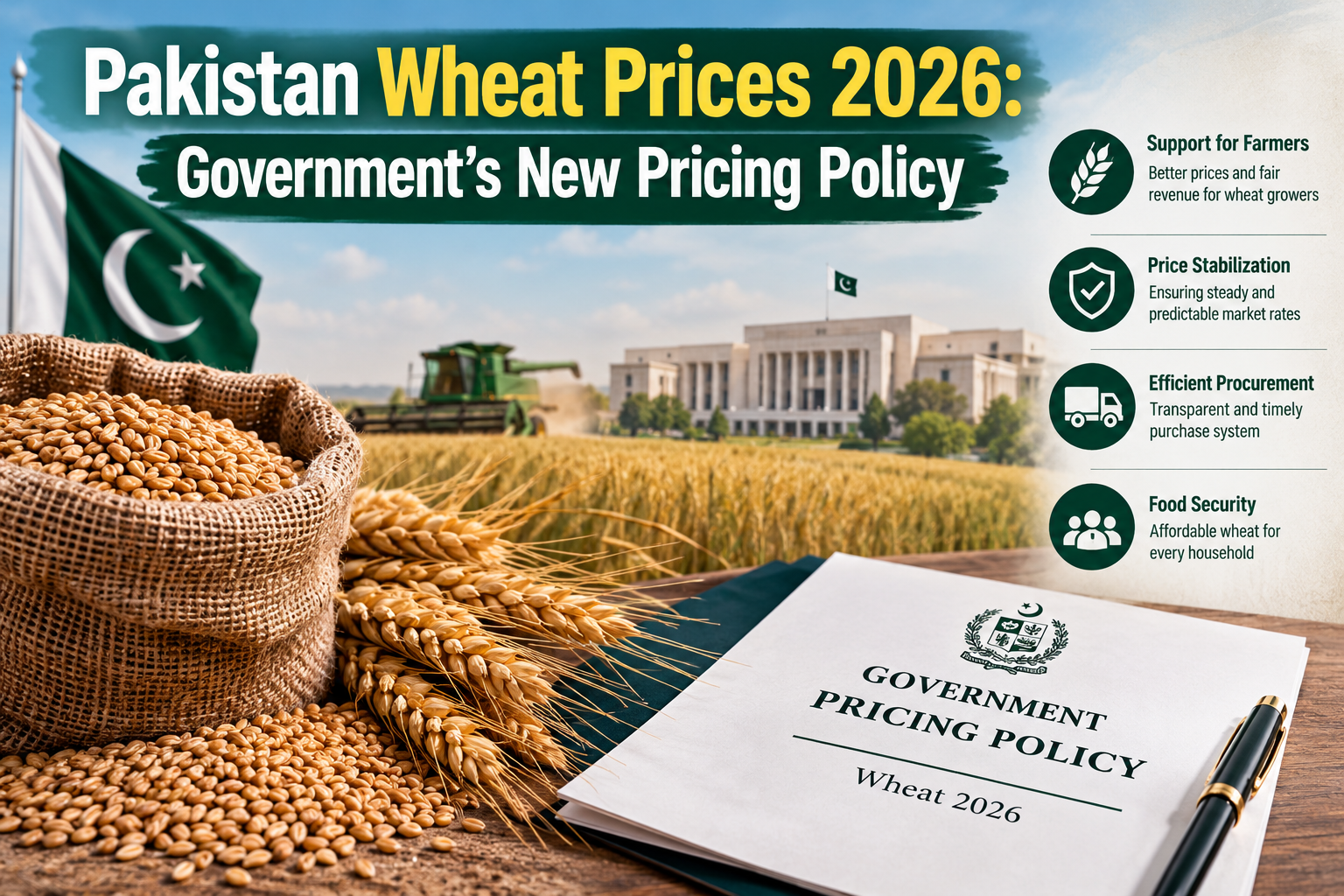
Pakistan, October 14, 2026 — Pakistan's wheat pricing policy has become a major issue for farmers, flour mills, traders and consumers as the government prepares to announce a price for the upcoming sowing season. Prime Minister Shehbaz Sharif has said that the decision will be made after consultations with provincial governments, with the aim of ensuring a fair return for farmers while keeping wheat and flour affordable for households.
The prime minister made the announcement during the first meeting of the National Agriculture and Food Security Council in Islamabad on October 13. He also stated that available wheat stocks were sufficient to meet the country's domestic requirements and warned against hoarding. The government has emphasised the need to announce the wheat price before sowing begins so farmers can make informed decisions about the next crop.
The issue is particularly important for Pakistan because wheat is a staple food for millions of people. Its price influences flour costs, household budgets, agricultural income and the wider food supply chain. A well-designed policy must balance the interests of farmers, who face rising production expenses, with those of consumers, who need affordable food.
Introduction: Why Wheat Pricing Matters in Pakistan
Wheat plays a central role in Pakistan's food system. It is used to produce flour for roti, chapati, naan and numerous other everyday foods. Millions of households depend on wheat-based products as a regular part of their diets.
The crop is also important for farmers, agricultural workers, transport businesses, storage facilities, wholesalers and flour mills. Changes in wheat production or pricing can therefore affect several parts of the economy at the same time.
For farmers, the expected selling price is an important factor in deciding whether to cultivate wheat and how much to invest in the crop. Before sowing, farmers need to estimate the cost of seeds, fertilisers, irrigation, machinery, labour and transportation. They must compare those expenses with the income they expect to receive after harvesting.
For consumers, the price of wheat affects the cost of flour and other staple foods. Households with limited incomes are particularly sensitive to increases in essential food prices because they have less flexibility to absorb additional expenses.
The government must therefore consider both sides of the market. A price that is too low for farmers may discourage investment and reduce the attractiveness of wheat cultivation. A price that pushes flour beyond the reach of consumers may increase financial pressure on households.
The current consultation process aims to establish a policy that recognises these competing needs while supporting food security and agricultural development.
Government Plans to Announce Wheat Price After Provincial Consultations
Prime Minister Shehbaz Sharif has said that the government will determine the wheat price after consultations with the provinces. The decision is expected to be announced once those discussions are completed.
The prime minister stressed that the price should be established before the start of the sowing season. Timely information allows farmers to make better decisions about crop selection, input purchases and investment.
Agricultural decisions often involve expenses that cannot easily be reversed once the season begins. Farmers may purchase seed, arrange irrigation and hire machinery well before they know the final market conditions at harvest.
If pricing arrangements are announced too late, growers may have difficulty estimating whether the crop will provide an adequate return. This uncertainty can influence how much land they allocate to wheat and how much they spend on inputs.
Provincial consultation is also important because farming conditions differ across Pakistan. Water availability, production costs, transport expenses, local market arrangements and agricultural practices can vary by region.
The federal and provincial governments therefore need to consider the wider agricultural situation before finalising a policy.
As of October 14, 2026, the government had not announced a final nationwide wheat price through the cited official statements. Farmers and consumers should distinguish between recommendations, proposed prices and a formally announced government decision.
Wheat Stocks and Pakistan's Food Security
The prime minister has stated that sufficient wheat stocks are available to meet domestic requirements. Maintaining adequate supplies is essential for reducing the risk of shortages and supporting a stable food market.
Food security involves more than the total amount of wheat in the country. Authorities also need to consider where stocks are held, how they can be transported, whether they are suitable for use and whether they can reach markets when required.
Wheat may be stored in government facilities, private warehouses, commercial supply chains or other approved storage locations. Effective inventory management helps authorities understand how much wheat is available and where it is needed.
Transport is another important factor. Even when sufficient stocks exist nationally, delays in moving supplies between regions can contribute to local shortages or price differences.
Storage quality matters as well. Poorly maintained facilities can expose wheat to moisture, pests and deterioration, reducing the amount that remains suitable for consumption.
The government must therefore coordinate procurement, storage, distribution and monitoring. Reliable information about available stocks can help officials respond to regional supply problems before they become more serious.
Consumers also benefit when the market receives clear and consistent information. Confusion about supply can encourage panic buying, while rumours about shortages can create unnecessary pressure on prices.
Maintaining food security requires accurate stock records, effective distribution and a pricing policy that supports both producers and consumers.
Why Farmers Need a Fair Wheat Price
Farmers face several expenses before wheat reaches the market. These may include land preparation, seed, fertiliser, pesticides where necessary, irrigation, machinery, labour, harvesting and transportation.
The total cost depends on the size of the farm, local conditions, access to water, input prices and the methods used for cultivation. Small farmers may face additional difficulties because they have fewer financial resources and less bargaining power when purchasing supplies or selling their crops.
A fair wheat price should take these production costs into account. If the selling price does not adequately cover expenses, farmers may struggle to recover their investment or maintain their farms.
Low returns can affect future agricultural decisions. Farmers might reduce spending on quality inputs, postpone equipment repairs or consider growing alternative crops. Such changes can influence productivity and future wheat availability.
However, a higher announced price does not automatically guarantee higher profits. Farmers must also be able to sell their produce at that price, and they need access to markets, storage and transport.
A useful policy should therefore combine appropriate pricing arrangements with practical support for growers. Affordable fertilisers, reliable seed supplies, improved irrigation and better access to agricultural advice can help reduce production costs.
The government has identified support for small and medium-sized farmers as an important priority. These growers can benefit from policies that improve access to inputs and ensure that agricultural assistance reaches the intended recipients.
A sustainable wheat policy should encourage farmers to continue producing the crop without placing an unreasonable financial burden on consumers.
Rising Costs of Agricultural Inputs
The cost of agricultural inputs is a major concern for wheat growers. Fertiliser, quality seed, irrigation, machinery and labour all influence the amount farmers must spend before harvesting.
When input prices rise, the cost of producing wheat can increase even if the farmer's land area and expected yield remain unchanged.
Fertiliser is particularly important because appropriate nutrient management supports crop development. Farmers need access to suitable products at affordable prices, together with guidance on using them correctly.
Quality seed is equally significant. Suitable seed varieties can contribute to better crop performance when matched with local conditions and supported by appropriate cultivation practices.
Water availability is another major factor. Wheat production depends on suitable irrigation and weather conditions, and inefficient water use can increase costs while placing additional pressure on water resources.
Machinery can help farmers complete operations on time, but purchasing and maintaining equipment may be difficult for smaller farms. Shared machinery services and accessible rental arrangements can help address this problem.
The government has said that affordable fertilisers, quality seeds, modern machinery and technical expertise for efficient water use are among its priorities.
Effective implementation will be important. Announcements need to be followed by practical arrangements that help farmers obtain suitable inputs when they need them.
Reducing avoidable production expenses can improve farm profitability while helping maintain a stable supply of wheat for the domestic market.
Small and Medium-Sized Farmers Need Special Attention
Small and medium-sized farmers form an important part of Pakistan's agricultural economy. Many operate with limited financial reserves and depend on the income generated by each harvest.
Unlike larger agricultural businesses, smaller growers may have less access to storage, specialised machinery, low-cost financing and direct relationships with major buyers.
These limitations can affect their ability to negotiate prices. A farmer who needs money immediately after harvesting may have little choice but to sell quickly, even when waiting could produce a better return.
Access to affordable credit can help reduce this pressure, provided that borrowing terms are clear and repayment obligations are manageable.
Storage facilities may also help farmers avoid having to sell their entire crop immediately. However, storage needs to be safe, affordable and accessible, and farmers must understand the costs involved.
Agricultural cooperatives and shared services may provide additional opportunities. Farmers can sometimes reduce expenses by coordinating the purchase of inputs, renting equipment collectively or arranging transportation together.
Government support should be designed so that smaller growers can understand the requirements and access assistance without unnecessary administrative difficulties.
A fair pricing system should also consider whether farmers have practical access to buyers who will pay the announced price. Without effective purchasing arrangements, a support price may not deliver the expected benefit.
Supporting small and medium-sized farmers is important not only for their livelihoods but also for maintaining a diverse and resilient agricultural sector.
Keeping Flour Affordable for Consumers
While farmers need fair returns, consumers need wheat and flour at prices they can afford. These objectives must be considered together because wheat is a basic food item for many households.
An increase in wheat prices can affect flour mills' raw-material costs. Mills may then face pressure to adjust their selling prices, depending on other operating expenses and market conditions.
Flour prices are not determined by wheat alone. Electricity, fuel, labour, packaging, transport, milling costs and distribution expenses can also influence the final price paid by consumers.
Retail prices may differ between cities and regions because of transportation distances, local supply conditions, competition and differences in operating costs.
Households with limited incomes are especially vulnerable to higher food prices. When essential food expenses rise, families may have less money available for education, transport, healthcare and other needs.
The government therefore needs to monitor the entire supply chain rather than focusing exclusively on the price paid to farmers.
Affordable food policies can include effective market monitoring, reliable public supplies, targeted assistance for eligible households and measures to reduce unnecessary distribution costs.
Subsidies may provide relief, but they need clear funding arrangements and safeguards to ensure that benefits reach the intended people.
The long-term objective should be to improve agricultural productivity and market efficiency so that farmers receive reasonable returns while consumers have dependable access to essential food.
Wheat Hoarding and Market Monitoring
The prime minister has warned that the government will not show leniency towards those involved in hoarding wheat.
Hoarding concerns can arise when supplies are deliberately withheld from the market in ways that contribute to artificial shortages or unfair price increases. However, authorities must distinguish illegal conduct from legitimate commercial storage and ordinary inventory management.
Wheat storage is necessary for maintaining supplies between harvests and ensuring that grain remains available when demand rises. Traders and millers may hold stocks as part of normal business operations.
The key question is whether storage complies with the law and whether market conduct involves prohibited practices.
Effective monitoring requires accurate information about stock levels, movement of supplies, purchases and sales. Authorities need to investigate credible evidence of illegal activity rather than relying on rumours or unsupported accusations.
Transparent procedures can help protect consumers while avoiding unnecessary disruption to legitimate businesses.
If officials identify unlawful hoarding, enforcement should follow the applicable legal process. Clear rules and consistent implementation can improve confidence in the market.
The government also needs to communicate supply information accurately. When people understand that stocks are available and distribution arrangements are functioning, the risk of unnecessary panic buying may be reduced.
A reliable wheat market depends on a combination of adequate supplies, lawful trading, transparent information and effective enforcement.
Provincial Coordination and Differences in Agricultural Conditions
Pakistan's agricultural sector spans several provinces and regions, each with its own production conditions and administrative arrangements.
Punjab is a major wheat-producing region, while Sindh, Khyber Pakhtunkhwa, Balochistan and other territories also have distinct agricultural needs.
Differences in irrigation, rainfall, land conditions, input availability and transport can influence production costs and expected yields.
Provincial governments also manage important aspects of agricultural support, food distribution and market administration. Coordination between the federal and provincial authorities is therefore necessary when developing a national wheat policy.
The current consultation process reflects the importance of reaching an arrangement that considers different regional circumstances.
Effective coordination can help align procurement, storage, transport and market monitoring. It can also improve the exchange of information about expected production and local demand.
Without reliable coordination, one region may face distribution difficulties even when supplies are available elsewhere.
A consistent national approach does not necessarily mean ignoring regional differences. Instead, it should establish clear objectives and responsibilities while allowing authorities to respond to local conditions.
Regular communication among provinces can help identify potential problems early and reduce uncertainty for farmers and traders.
A coordinated wheat policy can support national food security while recognising the practical differences between agricultural regions.
Wheat Imports and Supply Management
Pakistan's wheat supply strategy may include domestic production, existing stocks and imported supplies where necessary.
On October 13, the government reviewed progress on wheat imports for the 2026–27 food year. Officials said sufficient supplies had been arranged according to provincial demand, with the first shipment scheduled to reach Karachi before the end of October.
Imported supplies can contribute to market stability when domestic production or available stocks are insufficient in particular circumstances. However, imports also involve costs, including the purchase price, transportation, handling and storage.
The timing of imports matters because supplies need to arrive when they can support market requirements. Poorly timed shipments may increase storage pressure or arrive after the most urgent demand has passed.
The government must therefore compare expected domestic production, existing inventories, consumption requirements and the cost of imported wheat.
Reliable forecasting can help avoid both shortages and unnecessary purchases. The objective should be to ensure sufficient availability without creating avoidable financial burdens.
Import arrangements also need to be coordinated with the movement of existing government stocks and supplies already allocated to provinces.
If public supplies are released effectively, they can contribute to price stability and improve access to wheat in areas facing supply pressure.
The long-term goal should be a food-supply system that uses domestic production efficiently while maintaining the ability to respond to unexpected shortages.
Punjab's Measures to Support Farmers and Consumers
Punjab plays a significant role in Pakistan's wheat production and food distribution system. Decisions taken in the province can influence agricultural investment, flour availability and the cost of essential food items.
The provincial government has introduced agricultural support initiatives, including assistance through the Kisan Card programme. Such programmes can help eligible farmers access financial support for agricultural expenses, subject to the applicable rules and conditions.
The wider effectiveness of farmer assistance depends on whether the support reaches eligible growers on time and helps address genuine production needs.
Punjab has also faced pressure to keep flour affordable for consumers. In response to rising flour prices, the provincial government announced measures to increase the supply of subsidised wheat to flour mills and approved a subsidy intended to support affordable flour availability.
These measures illustrate the challenge of managing agricultural prices while protecting household purchasing power.
Subsidies can provide short-term relief, but their long-term effectiveness depends on appropriate targeting, transparent administration and sustainable financing. Authorities need to monitor whether assistance reaches consumers who need it and whether it creates unintended market distortions.
Support for farmers should also be coordinated with the availability of quality inputs and the development of storage and distribution infrastructure.
Better planning can help reduce sudden disruptions and provide more predictable conditions for both agricultural producers and consumers.
Sindh's Wheat Supply and Flour Affordability Measures
Sindh has its own wheat procurement, storage and distribution requirements. Its agricultural conditions, population distribution and transportation needs differ from those of other provinces.
The provincial government has taken steps to manage wheat supplies and support flour affordability. A measure announced for October 15 provides for the release of government wheat at a stated rate of Rs12,500 per 100-kilogram bag to help stabilise flour prices and maintain availability.
The effectiveness of such a measure depends on the amount of wheat released, the distribution arrangements and the response of flour mills and retailers.
Authorities need to ensure that public stocks move efficiently through the supply chain. If distribution is delayed or concentrated in limited areas, consumers may not experience the intended benefit.
Market monitoring can help officials determine whether the release of government wheat is improving availability and whether flour prices are responding appropriately.
Sindh's experience also highlights the importance of cooperation between agricultural departments, food authorities, storage operators and flour mills.
Public intervention can help address temporary supply pressures, but long-term affordability also depends on production costs, transport efficiency and competition within the market.
Livestock and Agricultural Exports
The government's agricultural agenda extends beyond wheat. The prime minister has also highlighted the potential of Pakistan's livestock sector to increase exports, including halal meat.
Livestock supports many rural households and contributes to food production, employment and agricultural income. Related businesses include animal feed suppliers, veterinary services, transport operators, meat processors and cold-storage facilities.
Expanding exports requires attention to product quality, animal health, processing standards, traceability and compliance with the requirements of destination markets.
Reliable cold chains are particularly important for products that need controlled temperatures during storage and transportation. Weak infrastructure can reduce product quality and increase losses.
Producers and exporters also need dependable access to markets and information about certification requirements.
If the livestock sector becomes more productive and export-oriented, it could provide additional sources of income for farmers and businesses.
However, export development should be planned carefully to ensure that domestic food needs are considered alongside international demand.
The broader agricultural strategy can benefit from diversification because different products may provide income opportunities at different times of the year.
Improving livestock services, veterinary facilities, processing capacity and export standards could help Pakistan make better use of its agricultural resources.
Water Management and Modern Farming
Water availability is essential to Pakistan's agricultural productivity. Farmers need dependable irrigation and efficient water-use practices to manage crops under varying weather conditions.
Inefficient irrigation can increase costs and place unnecessary pressure on water resources. Inadequate drainage or poorly managed water supplies can also damage crops and reduce productivity.
The government has identified technical expertise and equipment for more efficient water use as important priorities for farmers.
Modern irrigation methods may help improve efficiency when they are suitable for local conditions and properly maintained. Farmers also need guidance on irrigation scheduling, soil conditions and crop requirements.
Investment in water infrastructure can support agriculture, but infrastructure projects need careful planning and maintenance to remain effective.
Climate variability adds another challenge. Heat, irregular rainfall and other extreme weather conditions can influence planting decisions and crop development.
Agricultural research and reliable weather information can help farmers prepare for changing conditions. Access to suitable seed varieties and practical technical advice can also contribute to resilience.
Water management is therefore connected to both wheat pricing and long-term food security. Improving productivity can reduce the pressure to expand cultivation simply to maintain supply.
A more efficient agricultural system can help farmers manage expenses while supporting a dependable food supply for the country.
What Farmers Should Watch Before the Next Sowing Season
The upcoming wheat sowing season makes timely policy information especially important for growers.
Farmers should watch for the formal government announcement on wheat pricing rather than treating recommendations or preliminary statements as a final decision.
They should also pay attention to information about eligible agricultural assistance, the availability of quality seed, fertiliser prices, irrigation arrangements and local weather conditions.
Farm planning should take account of the costs that apply to each individual farm. Production expenses can differ considerably, so a decision that works for one grower may not be suitable for another.
Where possible, farmers can maintain records of input purchases, labour expenses, irrigation costs and previous harvests. Such records can help them assess the financial performance of their operations.
Reliable local agricultural advice may also help farmers select suitable seed varieties and manage inputs according to their land and water conditions.
Farmers should be cautious about making financial commitments based on unverified claims about future wheat prices or guaranteed returns.
Clear government announcements and accessible agricultural guidance can help reduce uncertainty and support better planning.
What Consumers Should Know About Wheat Prices
Consumers should understand that an announcement about wheat pricing does not necessarily mean retail flour prices will change immediately or by the same amount.
The final cost of flour also reflects milling, transportation, storage, energy, packaging and distribution expenses. Regional market conditions can produce differences in retail prices.
Government supply measures may help stabilise prices, but their impact depends on the scale and timing of distribution and on the wider market.
Consumers can benefit from checking reliable local price information and official announcements rather than relying on rumours about shortages.
Authorities should communicate clearly about the availability of wheat and flour, the distribution of public supplies and any assistance programmes for eligible households.
Where targeted support is available, transparent eligibility requirements can help people understand whether they qualify and how to apply.
The long-term objective is to ensure that essential food remains accessible without undermining the ability of farmers to produce it sustainably.
Conclusion
Pakistan's wheat pricing decision is an important economic and agricultural issue because it affects farmers, consumers, traders and the country's food security.
As of October 14, 2026, the federal government has said that it will announce the wheat price after consultation with the provinces. The prime minister has stressed the importance of setting the price before sowing begins, ensuring fair returns for growers and keeping wheat affordable for consumers.
The government has also stated that sufficient wheat stocks are available to meet domestic requirements and has warned against illegal hoarding. Meanwhile, authorities are working on supply arrangements, agricultural support and measures to improve productivity.
The success of the policy will depend on effective implementation. Farmers need reliable prices, affordable inputs, access to markets and practical support. Consumers need dependable supplies and food prices that remain within reach of household budgets.
Provincial coordination, efficient storage, better water management and transparent market monitoring can all contribute to a stronger food system.
Ultimately, a sustainable wheat policy must balance agricultural profitability with consumer welfare. Timely decisions and consistent implementation can help reduce uncertainty for farmers, support food availability and strengthen Pakistan's agricultural economy.
FAQs
1. When will Pakistan announce the new wheat price for 2026?
As of October 14, 2026, the government had said the price would be announced after consultations with provincial governments. A final price had not yet been confirmed in the cited statements.
2. Why is the government consulting provincial governments on wheat prices?
Consultations help authorities consider regional agricultural conditions, production costs, supply requirements and the need to provide fair returns to farmers while keeping wheat affordable for consumers.
3. Are wheat stocks sufficient in Pakistan?
The prime minister stated on October 13 that sufficient wheat stocks were available to meet domestic requirements. Actual availability also depends on storage, distribution and the movement of supplies between regions.
4. How could the new wheat price affect flour prices?
The wheat price can influence flour mills' raw-material costs, but retail prices also depend on energy, transport, milling, storage and distribution expenses. The final effect will depend on market conditions and government supply measures.
5. What support does the government plan to provide to farmers?
The government's stated priorities include affordable fertilisers, quality seeds, modern machinery, improved water-use practices, fair crop prices and coordination with provincial authorities to support agricultural development.




