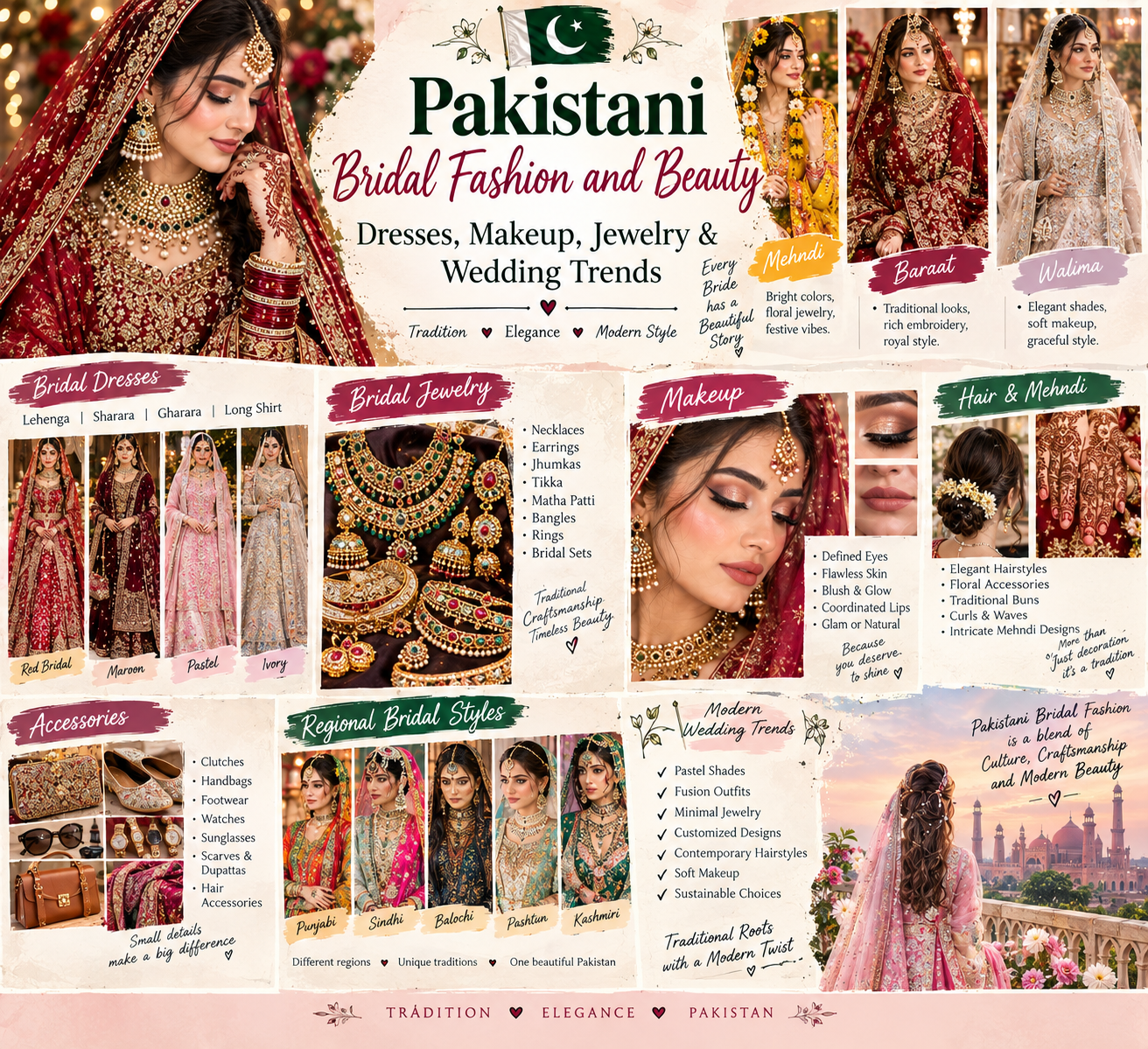
Pakistani bridal fashion and beauty are an important part of the country's cultural and fashion identity. Pakistani weddings are known for their colorful celebrations, traditional clothing, detailed embroidery, jewelry, mehndi, hairstyles, and carefully planned beauty looks. Bridal fashion combines cultural heritage with modern design, creating a wide variety of styles for different wedding events.
A Pakistani wedding may include several functions, such as the engagement, dholki, mehndi, baraat, nikah, and walima. Each event can have its own clothing, colors, jewelry, makeup, and hairstyle. Some families follow traditional customs, while others prefer modern and simplified celebrations.
Over the years, Pakistani bridal fashion has evolved significantly. Traditional red bridal dresses remain popular, but modern brides also choose shades such as maroon, pink, gold, ivory, peach, green, silver, and pastel tones. Designers continue to experiment with silhouettes, embroidery techniques, fabrics, and jewelry combinations.
Pakistani bridal beauty is equally diverse. Some brides prefer traditional glamorous makeup, while others choose softer and more natural-looking styles. The growing influence of social media, fashion designers, makeup artists, and online shopping has given brides more options than ever before.
The Cultural Importance of Pakistani Bridal Fashion
Bridal clothing in Pakistan is closely connected with cultural traditions. A wedding dress is not simply an outfit; it can represent family customs, regional identity, craftsmanship, and celebration.
Traditional bridal dresses often include detailed embroidery, embellishments, handwork, beads, sequins, threadwork, and decorative borders.
Different regions also have distinctive wedding traditions. Punjabi, Sindhi, Balochi, Pashtun, Kashmiri, and other Pakistani communities have their own clothing and jewelry traditions.
Modern bridal fashion brings these cultural influences together with contemporary designs. A bride may choose a traditional silhouette with modern embroidery or combine regional jewelry with a contemporary dress.
Traditional Red Bridal Dress
Red has traditionally been one of the most recognizable colors associated with Pakistani bridal fashion.
Red bridal dresses can range from bright red to deep maroon and burgundy. They are often decorated with gold or silver embroidery.
A traditional red bridal outfit may include a lehenga, sharara, gharara, or long embroidered shirt with a matching dupatta.
Although red remains popular, Pakistani bridal fashion is no longer limited to one color.
Modern Bridal Colors
Modern brides have a wide range of color choices.
Popular bridal shades can include:
Maroon
Burgundy
Deep red
Emerald green
Gold
Champagne
Ivory
Peach
Pink
Rose tones
Silver
Pastel shades
The choice of color often depends on the bride's personal preference, the wedding event, jewelry, and overall theme.
Some brides prefer traditional dark colors, while others choose softer combinations for a contemporary appearance.
Bridal Lehenga
The lehenga is one of the most recognizable Pakistani bridal outfits.
A bridal lehenga generally includes a decorated skirt, blouse or choli, and dupatta.
The skirt may feature extensive embroidery, borders, motifs, sequins, stones, and traditional patterns.
The choli can be heavily embellished or designed with a comparatively simple structure depending on the overall outfit.
A bridal lehenga can create a formal and traditional appearance, making it particularly popular for wedding ceremonies.
Bridal Sharara
Sharara outfits have a strong place in Pakistani wedding fashion.
A sharara consists of wide-legged trousers that can be heavily decorated with embroidery and borders.
It is often paired with a short or medium-length shirt and dupatta.
Sharara designs can range from traditional heavily embellished outfits to lighter contemporary versions.
They are particularly popular for mehndi and other wedding celebrations.
Gharara Bridal Fashion
Ghararas are another traditional Pakistani outfit style.
They feature trousers that are fitted around the upper leg and become wider below.
Ghararas can be decorated with lace, embroidery, borders, and traditional motifs.
Modern designers have adapted the gharara into contemporary wedding collections, making it suitable for both traditional and modern bridal looks.
Long Shirts and Formal Bridal Dresses
Some brides prefer long shirts with trousers, palazzos, or other bottoms.
This style can provide a more streamlined alternative to a traditional lehenga or sharara.
Long embroidered shirts are especially popular for formal wedding events and walima celebrations.
They can be paired with statement jewelry and an embellished dupatta.
Bridal Dupatta
The dupatta is an important part of Pakistani bridal fashion.
A bride may wear one or more dupattas depending on the style of the outfit.
Some bridal dupattas are heavily embroidered with borders and decorative motifs. Others may be made from lighter fabrics and feature detailed edging.
The dupatta can be draped over the head, shoulder, or around the body.
Its color and embroidery are usually coordinated with the bridal dress.
Bridal Fabrics
Pakistani bridal dresses are made from a variety of fabrics.
Common options include:
Silk
Velvet
Chiffon
Organza
Net
Jamawar
Brocade
Raw silk
Banarsi-inspired fabrics
The fabric choice depends on the season, design, comfort, and type of event.
Velvet may be popular for winter weddings, while lighter fabrics can be preferred during warmer months.
Pakistani Bridal Embroidery
Embroidery is one of the most important elements of Pakistani bridal fashion.
Traditional techniques can include zari, zardozi-inspired work, dabka, gota, thread embroidery, sequins, beads, and stone embellishment.
Designers may combine several techniques to create detailed bridal outfits.
Floral motifs, geometric patterns, paisley-inspired designs, traditional borders, and decorative elements are commonly seen in bridal collections.
Handcrafted embroidery can require significant time and skill, making craftsmanship an important part of bridal fashion.
Zardozi and Traditional Embellishment
Zardozi-inspired embellishment has a strong association with formal South Asian clothing.
It involves decorative metallic elements and detailed embroidery techniques.
Pakistani bridal designers use similar traditional influences in modern collections.
The result can be a rich and formal appearance suitable for wedding ceremonies.
Gota Work
Gota work is another traditional decorative technique used in Pakistani clothing.
It involves decorative ribbon-like elements that are arranged to create patterns on fabric.
Gota work is particularly popular for festive and wedding outfits.
Modern designers may combine traditional gota-inspired details with contemporary cuts and colors.
Bridal Jewelry
Jewelry is an essential component of many Pakistani bridal looks.
A bride may wear:
Necklace
Jhumkas
Earrings
Tikka
Matha patti
Jhoomar
Bangles
Rings
Bridal bracelets
The jewelry is generally selected to complement the bridal dress.
Traditional gold jewelry remains important, while modern brides also choose artificial, pearl, stone, and contemporary jewelry sets.
Jhumkas for Brides
Jhumkas are among the most recognizable bridal earrings.
Large embellished jhumkas can create a traditional appearance and work particularly well with bridal lehengas and shararas.
They may feature pearls, stones, gold-colored details, or other decorative elements.
Smaller jhumkas can also be used for wedding guests and less formal events.
Tikka and Matha Patti
Tikka is traditionally worn on the forehead and can be a central part of bridal jewelry.
Matha patti is a more elaborate headpiece that extends across the forehead and may connect with earrings or other jewelry.
These accessories can add a traditional character to the bridal look.
Modern designs range from highly detailed pieces to delicate versions.
Bridal Bangles and Chooriyan
Bangles are an important part of Pakistani bridal fashion.
Brides may wear multiple bangles in colors that complement their wedding dress.
Gold, red, green, maroon, and colorful glass bangles are among the styles seen in Pakistani wedding traditions.
Bangles can also be coordinated with mehndi outfits and other festive clothing.
Mehndi and Bridal Beauty
Mehndi is one of the most important beauty traditions associated with Pakistani weddings.
Bridal mehndi designs can cover large portions of the hands and feet and may include floral patterns, geometric details, traditional motifs, and personalized elements.
Mehndi is commonly applied during pre-wedding celebrations and can be an important part of the overall bridal experience.
Modern mehndi artists combine traditional patterns with contemporary designs.
Pakistani Bridal Makeup
Bridal makeup is usually planned according to the wedding outfit, jewelry, hairstyle, and event.
Traditional Pakistani bridal makeup may emphasize defined eyes, carefully shaped brows, foundation, blush, and a coordinated lip color.
Modern bridal makeup includes many different styles.
Some brides prefer a glamorous look, while others choose softer makeup that maintains a more natural appearance.
The final style often depends on personal preference and the makeup artist's approach.
Eye Makeup
Eye makeup is often an important feature of Pakistani bridal beauty.
Eyeliner, eyeshadow, mascara, and other techniques can be used to create defined eyes.
Warm tones such as brown, bronze, gold, and champagne are commonly used with traditional bridal clothing.
However, modern brides can also choose softer or more colorful eye makeup depending on their outfit.
Bridal Lip Colors
Lip color is usually selected according to the bridal dress and overall makeup.
Traditional bridal looks may include red, berry, maroon, or deeper shades.
Modern bridal makeup may use pink, peach, nude, rose, or softer colors.
The goal is generally to create a coordinated appearance rather than simply choosing the strongest possible color.
Bridal Hair Styling
Hairstyling completes the bridal appearance.
Traditional hairstyles can include buns, braids, curls, and structured updos.
A bridal bun can provide a suitable base for jewelry and floral decorations.
Some brides prefer open curls or waves, especially for modern formal events.
The hairstyle is usually selected according to the neckline, dupatta style, jewelry, and overall dress design.
Floral Bridal Hair Accessories
Flowers are often associated with Pakistani wedding celebrations.
Fresh or decorative flowers can be used in bridal hairstyles, particularly for mehndi events.
Floral accessories can complement colorful wedding clothing and create a festive appearance.
Modern brides may choose delicate floral arrangements rather than large decorative pieces.
Bridal Footwear
Footwear is another important part of bridal styling.
Traditional khussas, embellished sandals, heels, and formal shoes can all be used.
Some brides select footwear that matches the color and embroidery of their dress.
Comfort is also important because wedding events can last for several hours.
Bridal Clutches and Handbags
Small clutches can complete a bridal or wedding guest outfit.
Bridal clutches may feature embroidery, pearls, sequins, stones, metallic details, or traditional motifs.
A clutch can be matched with jewelry or footwear to create a coordinated appearance.
For formal events, smaller bags are often more practical than large everyday handbags.
Pakistani Bridal Fashion for Mehndi
Mehndi events are usually associated with bright and festive colors.
Yellow, green, orange, pink, and other vibrant shades are commonly seen.
Brides may choose shararas, ghararas, lehengas, or traditional embroidered outfits.
Floral jewelry, colorful bangles, and lighter makeup are often suitable for mehndi celebrations.
The style can be traditional, modern, or a combination of both.
Pakistani Bridal Fashion for Baraat
Baraat is traditionally one of the most formal wedding events.
Bridal clothing for this event is often heavily embroidered.
Red and deep traditional shades remain popular, although many modern brides choose alternative colors.
The jewelry and makeup may also be more elaborate compared with the mehndi event.
Pakistani Bridal Fashion for Walima
Walima fashion often has a different visual character.
Brides may choose softer colors, lighter embroidery, and more contemporary silhouettes.
Pastel pink, ivory, silver, champagne, peach, and other elegant shades can be popular choices.
Makeup may also be softer, although some brides still prefer a glamorous appearance.
Pakistani Bridal Fashion by Region
Pakistan's regional diversity creates many different bridal traditions.
Punjabi Bridal Fashion
Punjabi weddings are often associated with colorful clothing, elaborate embroidery, bangles, jewelry, and festive celebrations.
Traditional Punjabi bridal fashion can include red, gold, green, and other vibrant colors.
Sindhi Bridal Fashion
Sindhi bridal fashion often features colorful embroidery, mirror work, traditional jewelry, and distinctive regional clothing.
Traditional Sindhi details can be incorporated into contemporary bridal designs.
Balochi Bridal Fashion
Balochi bridal clothing is known for detailed embroidery and cultural motifs.
Traditional embroidery can cover large areas of the dress and create a distinctive visual identity.
Pashtun Bridal Fashion
Pashtun bridal fashion can include traditional embroidered clothing and distinctive jewelry.
Modern designers may adapt regional elements for contemporary wedding outfits.
Kashmiri and Northern Bridal Fashion
Northern Pakistani communities have their own traditional clothing, jewelry, and embroidery styles.
These regional influences add variety to Pakistan's bridal fashion landscape.
Pakistani Bridal Designers
Pakistan has a growing bridal fashion industry.
Designers create collections for brides, wedding guests, and formal occasions.
Many designers combine traditional embroidery with contemporary silhouettes.
Fashion shows and bridal exhibitions also help introduce new trends.
Some designers focus heavily on traditional craftsmanship, while others experiment with modern cuts and minimalist details.
Social Media and Bridal Trends
Social media has transformed bridal fashion.
Instagram, TikTok, Pinterest, YouTube, and other digital platforms allow brides to explore thousands of wedding ideas.
Brides can find inspiration for dresses, makeup, jewelry, hairstyles, mehndi, photography, and wedding decoration.
Beauty artists and designers also use social media to showcase their work.
This has made bridal planning more visual and personalized.
Bridal Makeup Artists
Professional makeup artists play an important role in Pakistani wedding preparation.
Many artists specialize in bridal makeup and offer different styles.
Some focus on traditional glamorous looks, while others specialize in soft and natural bridal makeup.
Brides often select artists based on their previous work, availability, location, and style.
Home-Based Bridal Services
Home-based beauty services have become increasingly popular.
Independent makeup artists and hairstylists can provide bridal services at home or at the wedding venue.
This can be convenient for brides who prefer private preparation spaces.
Social media has made it easier for these professionals to promote their services and display their portfolios.
Modern Pakistani Bridal Trends
Modern bridal fashion continues to evolve.
Some noticeable trends include:
Pastel bridal dresses
Minimalist jewelry
Customized embroidery
Fusion silhouettes
Lightweight bridal outfits
Contemporary hairstyles
Soft makeup
Statement earrings
Personalized mehndi
Traditional designs with modern cuts
These trends do not replace traditional fashion. Instead, they add more choices for modern brides.
Sustainable Bridal Fashion
Sustainability is becoming increasingly relevant in fashion.
Some brides choose outfits that can be reused for other occasions instead of being worn only once.
Family jewelry can also be reused or redesigned.
Choosing high-quality craftsmanship and versatile accessories can help extend the life of wedding items.
Vintage-inspired clothing and jewelry can also provide alternatives to buying completely new pieces.
Bridal Fashion and Personal Expression
Modern bridal fashion gives women more opportunities to express personal preferences.
Some brides want a completely traditional appearance, while others prefer modern designs.
Some choose heavy jewelry, while others prefer simple accessories.
The same applies to makeup, hairstyles, dress colors, and embroidery.
Pakistani bridal fashion is increasingly diverse because there is no requirement for every bride to follow exactly the same style.
The Future of Pakistani Bridal Fashion
The future of Pakistani bridal fashion will likely combine traditional craftsmanship with modern design.
Classic embroidery, regional techniques, jewelry, and cultural clothing will remain important.
At the same time, technology, social media, online shopping, customized fashion, and international influences will continue to introduce new ideas.
Pakistani designers are likely to keep experimenting with colors, silhouettes, fabrics, and accessories while maintaining connections with cultural heritage.
Bridal beauty will also continue to become more personalized, allowing brides to choose styles according to their own preferences.
Conclusion
Pakistani bridal fashion and beauty represent a combination of culture, craftsmanship, celebration, and modern creativity. From traditional red lehengas and gold jewelry to pastel walima dresses and contemporary makeup, Pakistani brides have a wide range of choices.
Mehndi, embroidery, jewelry, hairstyles, footwear, and accessories all contribute to the complete bridal appearance. Regional traditions from Punjab, Sindh, Balochistan, Khyber Pakhtunkhwa, Kashmir, and northern Pakistan add further diversity.
Modern fashion has expanded these choices through new designs, social media, professional makeup artists, online shopping, and independent bridal businesses.
The beauty of Pakistani bridal fashion lies in its ability to preserve cultural traditions while allowing modern brides to create personalized looks. This combination of heritage and innovation continues to make Pakistani bridal fashion an important part of the country's style and beauty industry.
FAQs
1. What is the traditional Pakistani bridal dress?
Traditional Pakistani bridal dresses include lehengas, shararas, ghararas, embroidered shirts, and other heavily decorated formal outfits.
2. What color is traditionally associated with Pakistani brides?
Red has traditionally been one of the most recognizable bridal colors, although modern brides also choose maroon, pink, gold, ivory, green, peach, and pastel shades.
3. What jewelry do Pakistani brides commonly wear?
Pakistani brides may wear necklaces, jhumkas, tikka, matha patti, bangles, rings, and other traditional or contemporary jewelry.
4. What makeup is popular for Pakistani brides?
Both glamorous and softer bridal makeup styles are popular. Eye makeup, coordinated lip color, and carefully styled hair are commonly included.
5. How is modern Pakistani bridal fashion changing?
Modern bridal fashion is becoming more diverse through pastel colors, customized designs, lighter jewelry, fusion outfits, contemporary hairstyles, and personalized beauty looks.