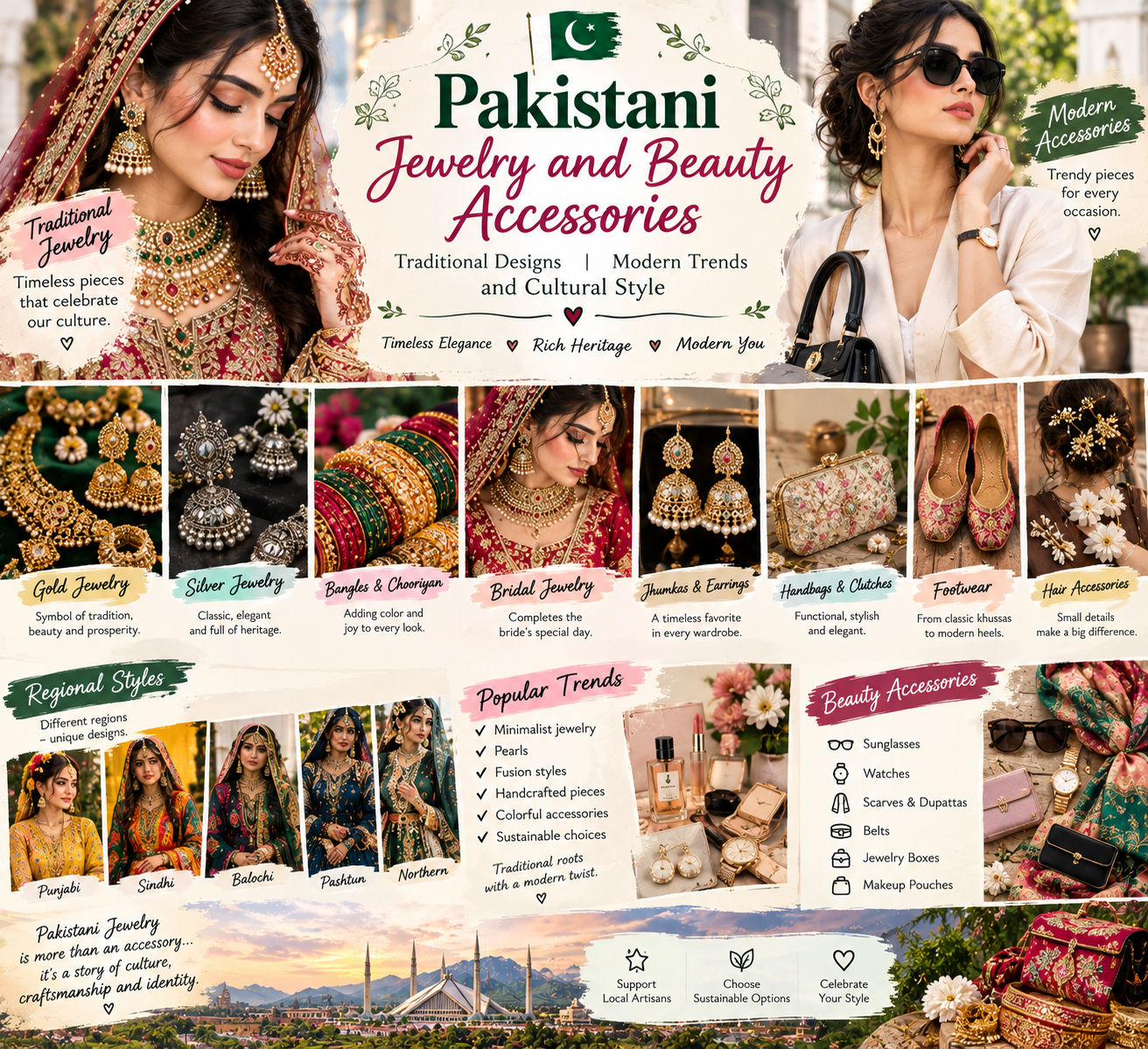
Jewelry and beauty accessories have always been an important part of Pakistani style and beauty culture. From traditional gold jewelry worn at weddings to colorful bangles, jhumkas, hair accessories, handbags, and modern fashion pieces, accessories help complete an outfit and express personal style. Pakistani jewelry is also closely connected with regional traditions, family celebrations, religious festivals, weddings, and everyday fashion.
Pakistan has a diverse cultural background, and every region has its own traditional clothing, embroidery, jewelry, and decorative styles. Punjabi, Sindhi, Balochi, Pashtun, Kashmiri, and northern Pakistani traditions all contribute to the country's rich fashion identity. At the same time, modern Pakistani fashion has introduced new designs that combine traditional craftsmanship with contemporary trends.
Today, Pakistani women and young people have many choices when it comes to jewelry and accessories. Some prefer traditional gold and silver pieces, while others choose artificial jewelry, minimalist designs, pearls, beads, colorful stones, or contemporary fashion accessories. Social media, online shopping, fashion designers, and beauty influencers have also changed the way people discover and wear accessories.
The Importance of Jewelry in Pakistani Culture
Jewelry is more than a fashion accessory in Pakistan. It can represent culture, celebration, family traditions, personal style, and craftsmanship.
During weddings, jewelry is often an important part of the overall appearance. Brides may wear necklaces, earrings, bangles, rings, tikka, jhumkas, and other decorative pieces. Different jewelry combinations can be selected for the mehndi, baraat, and walima events.
Jewelry is also commonly worn during Eid, family gatherings, festivals, and formal occasions. Some people prefer simple pieces for everyday use, while others reserve elaborate jewelry for special events.
Traditional jewelry can also have sentimental value. Family jewelry may be passed from one generation to another, making it connected with memories and family history.
Gold Jewelry in Pakistan
Gold has a long history in Pakistani fashion and wedding culture. Gold necklaces, earrings, bangles, rings, and other pieces are commonly associated with formal occasions.
Traditional gold jewelry can feature detailed craftsmanship, engraved patterns, stones, beads, and cultural motifs.
For weddings, gold jewelry may be selected to match the color and embroidery of the bridal dress. Red, maroon, green, gold, ivory, and other traditional colors can be paired with different gold designs.
Modern gold jewelry is also becoming more varied. Simple chains, small earrings, delicate rings, and minimalist bracelets can be used for everyday fashion.
The popularity of different gold designs can change with fashion trends, but gold continues to hold an important place in Pakistani jewelry culture.
Silver Jewelry
Silver jewelry is another important part of Pakistani fashion traditions.
Silver pieces are especially associated with several regional and traditional styles. They may feature large earrings, necklaces, bracelets, anklets, rings, and decorative ornaments.
Compared with some elaborate gold pieces, silver jewelry can create a different visual style that works well with traditional clothing.
Modern designers also use silver-colored metals in contemporary jewelry, allowing people to combine traditional inspiration with modern fashion.
Jhumkas and Earrings
Jhumkas are among the most recognizable Pakistani jewelry styles.
These traditional earrings have a bell-shaped design and are available in many sizes and materials. They can be made from gold, silver, artificial metals, pearls, beads, or other decorative materials.
Jhumkas are popular with both traditional and modern outfits. They can be paired with a simple shalwar kameez, embroidered dress, saree, lehenga, or formal Pakistani outfit.
Other popular earrings include studs, hoops, chandbali-style earrings, drop earrings, and statement earrings.
For everyday university or workwear, small earrings may be preferred because they are practical. For weddings and parties, larger statement earrings can create a more formal appearance.
Bangles and Chooriyan
Bangles are another important part of Pakistani fashion.
Colorful chooriyan are particularly associated with weddings, Eid, and festive celebrations. They may be made from glass, metal, plastic, or other materials.
Bangles are often selected according to the color of an outfit. A bride or wedding guest may wear several colors together to create a festive appearance.
Gold and silver bangles can provide a more formal look, while colorful glass bangles are often associated with traditional celebrations.
Bangles also have strong cultural associations in South Asian fashion and continue to be popular across generations.
Bridal Jewelry
Bridal jewelry is one of the most elaborate categories of Pakistani accessories.
A Pakistani bride may wear several pieces of jewelry as part of her wedding appearance. Common pieces include necklaces, earrings, tikka, jhumkas, bangles, rings, and sometimes traditional head jewelry.
The jewelry is usually coordinated with the bridal outfit. Designers may create complete sets so that every piece follows a similar color scheme and design language.
Traditional bridal jewelry can feature gold tones, pearls, colored stones, kundan-inspired details, or intricate decorative patterns.
Modern brides also have more choices. Some prefer traditional heavy jewelry, while others choose lighter pieces with a contemporary design.
Tikka and Head Jewelry
Tikka is a traditional decorative accessory worn on the forehead.
It is particularly popular for bridal and formal looks. Tikka designs can range from simple pendants to elaborate pieces connected with other jewelry.
Other head accessories can include jhoomar, matha patti, hair chains, decorative clips, and floral ornaments.
These accessories can create a traditional appearance when paired with bridal clothing.
Modern fashion has also introduced simpler versions of traditional head jewelry for wedding guests and formal events.
Pearls in Pakistani Fashion
Pearls have remained popular in Pakistani jewelry because they can create an elegant and timeless appearance.
Pearl necklaces, earrings, bracelets, and hair accessories can be worn with both traditional and modern clothing.
Pearls can work particularly well with white, ivory, pastel, and soft-colored outfits, although they can also be combined with brighter colors.
Modern jewelry designers often mix pearls with gold-colored metals, gemstones, beads, and contemporary shapes.
Artificial Jewelry in Pakistan
Artificial or fashion jewelry has become increasingly popular because it provides a wide variety of designs.
People can find jewelry inspired by traditional gold pieces without necessarily choosing precious metals.
Artificial jewelry is commonly used for weddings, parties, Eid, university events, and other occasions.
One advantage of fashion jewelry is the variety of colors and designs available. Consumers can select pieces that match a particular outfit without making a long-term investment in precious metals.
Artificial jewelry also allows people to experiment with different styles.
Minimalist Jewelry
While traditional heavy jewelry remains popular, minimalist jewelry has also become a major modern trend.
Minimalist pieces usually have simple designs and can be worn with everyday clothing.
Small hoops, delicate chains, simple rings, thin bracelets, and small pendants are examples of minimalist accessories.
This style is particularly suitable for university students and working women who want accessories that are practical and easy to combine with different outfits.
Minimalist jewelry can also be used with traditional clothing, creating a modern fusion appearance.
Jewelry for Eid
Eid is an important occasion for Pakistani fashion and beauty.
Many people prepare new clothes, footwear, handbags, jewelry, and beauty products before Eid.
Jewelry for Eid can range from simple earrings and bangles to statement necklaces and traditional sets.
The choice often depends on the outfit. A heavily embroidered dress may be paired with simpler jewelry, while a plain outfit can be enhanced with a more noticeable accessory.
Eid fashion has become increasingly diverse because people can now discover styles from different Pakistani cities and regions through social media and online stores.
Jewelry for Pakistani Weddings
Pakistani weddings provide many opportunities for jewelry styling.
The bride's jewelry is usually the most elaborate, but wedding guests also pay attention to accessories.
For a mehndi event, colorful jewelry can complement bright clothing. Floral jewelry, colorful bangles, and statement earrings are common choices.
For a baraat or formal wedding event, gold-toned, kundan-inspired, pearl, or stone jewelry may be selected.
For a walima, some people prefer lighter and more elegant jewelry that works with pastel or formal outfits.
There is no single wedding jewelry style. Personal preference, clothing design, cultural background, and event type all influence the final choice.
Regional Jewelry Traditions
Pakistan's regional diversity is reflected strongly in its jewelry.
Punjabi Jewelry
Punjabi fashion often includes colorful bangles, jhumkas, traditional necklaces, and statement accessories. Jewelry is especially visible during weddings and cultural celebrations.
Sindhi Jewelry
Sindhi jewelry has distinctive traditional designs and can include silver-colored pieces, necklaces, earrings, bangles, and decorative accessories.
Traditional Sindhi clothing and embroidery can be beautifully complemented by regional jewelry.
Balochi Jewelry
Balochi cultural dress is often associated with detailed embroidery and distinctive jewelry. Large decorative pieces and traditional ornaments can contribute to the overall appearance.
Pashtun Jewelry
Pashtun jewelry traditions include distinctive necklaces, earrings, bracelets, and decorative pieces. Traditional jewelry can be an important part of cultural clothing.
Kashmiri and Northern Jewelry
Northern Pakistani communities have their own traditional accessories and jewelry influenced by local crafts and cultural history.
These regional styles show that Pakistani jewelry is not one single fashion category. It includes many different traditions.
Handcrafted Jewelry
Handcrafted jewelry has an important place in Pakistan's fashion industry.
Artisans create jewelry using techniques that may involve metalwork, beadwork, embroidery, stone setting, carving, and other forms of craftsmanship.
Handmade pieces can have a distinctive character because each design may contain small variations.
Supporting traditional artisans can also help preserve local craftsmanship and cultural heritage.
Jewelry and Pakistani Designers
Pakistani fashion designers have helped bring traditional jewelry into modern fashion.
Designers may create accessories specifically to complement their clothing collections. They often experiment with shapes, colors, materials, and traditional motifs.
Some modern collections reinterpret classic Pakistani jewelry in a simpler form, making it suitable for contemporary outfits.
Fashion shows and bridal collections also help introduce new jewelry combinations to consumers.
Handbags as Beauty and Fashion Accessories
Handbags are another important part of Pakistani fashion.
A handbag can be both practical and decorative. Women may choose handbags according to the occasion, outfit, and personal style.
For everyday use, larger bags can provide space for personal items. Smaller handbags and clutches are often selected for weddings, dinners, and formal events.
Traditional embroidered handbags can complement Pakistani clothing, while modern structured bags can create a more contemporary look.
Clutches for Formal Events
Clutches are particularly popular with formal Pakistani outfits.
They can be decorated with embroidery, beads, pearls, sequins, stones, or metallic details.
A clutch can coordinate with jewelry and footwear to create a complete formal appearance.
For weddings, embellished clutches are often paired with heavily decorated dresses.
Footwear and Pakistani Style
Footwear is an important part of a complete fashion look.
Traditional Pakistani footwear includes khussa and other handcrafted styles. Khussas are particularly popular because they can combine colorful embroidery with traditional craftsmanship.
Modern Pakistani fashion also includes sandals, heels, flats, sneakers, and formal shoes.
The choice of footwear depends on comfort, occasion, outfit, and personal preference.
For everyday university life, comfortable footwear may be more practical. For weddings, formal sandals or embellished footwear may be chosen.
Hair Accessories
Hair accessories have become increasingly popular in modern Pakistani beauty culture.
Hair clips, decorative pins, headbands, floral accessories, pearls, and traditional hair ornaments can be used to enhance hairstyles.
For weddings, floral hair accessories can create a traditional and festive appearance.
For everyday use, simple clips and headbands provide practical styling options.
Sunglasses and Modern Accessories
Modern Pakistani fashion has expanded beyond traditional jewelry.
Sunglasses, watches, belts, scarves, handbags, and hair accessories are now common parts of personal styling.
Sunglasses can provide both practical and fashion functions. Different frame shapes can create different visual styles.
Watches are also popular accessories for both casual and formal clothing.
Watches in Pakistani Fashion
Watches can be an elegant addition to a Pakistani outfit.
Traditional metal watches, leather-strap watches, and modern designs are available in many styles.
For professional settings, simple watches may create a polished appearance.
For casual fashion, sporty and contemporary watches can be combined with everyday outfits.
Watches can also be coordinated with other accessories, such as bracelets and rings.
Scarves and Dupattas as Accessories
Dupattas are an essential part of many Pakistani traditional outfits and can also function as major fashion accessories.
Different fabrics and draping styles can completely change the appearance of an outfit.
Silk, chiffon, organza, cotton, lawn, and embroidered dupattas can be styled differently depending on the season and occasion.
A plain outfit can be enhanced with a colorful printed or embroidered dupatta.
Scarves are also used with modern western clothing, showing how traditional Pakistani accessories can become part of fusion fashion.
Beauty Accessories for Everyday Life
Everyday beauty accessories do not have to be elaborate.
Simple earrings, watches, hair clips, handbags, sunglasses, and scarves can make an outfit look complete.
For university and work, practical accessories are often preferred because they are easy to carry and maintain.
The growing popularity of minimalist fashion has also encouraged people to choose fewer but more versatile accessories.
Social Media and Jewelry Trends
Social media has transformed the jewelry industry.
Instagram, TikTok, Facebook, and YouTube allow jewelry designers and small businesses to showcase their products directly to consumers.
Customers can now discover new jewelry styles without visiting a physical market.
Beauty influencers and fashion creators also introduce new ways of styling traditional jewelry.
A traditional jhumka, for example, may be shown with a modern western outfit, creating a fusion look.
Online Jewelry Shopping
Online shopping has made jewelry more accessible to Pakistani consumers.
Customers can explore jewelry collections, compare designs, check product descriptions, and order from home.
Online stores offer everything from simple fashion jewelry to bridal accessories.
However, customers should check seller information, product descriptions, customer reviews, return policies, and material details before purchasing.
When buying valuable jewelry, consumers should also verify authenticity and documentation where appropriate.
Sustainable Jewelry Choices
Sustainability is becoming increasingly relevant to modern fashion.
Some consumers prefer handcrafted pieces, reusable accessories, vintage jewelry, or products made from recycled materials.
Buying versatile jewelry that can be worn with several outfits can also reduce unnecessary purchases.
Traditional handcrafted jewelry can support local artisans and preserve cultural skills.
Sustainable fashion does not require abandoning style. Instead, it encourages more thoughtful purchasing and longer use of products.
Jewelry as a Form of Self-Expression
Accessories allow people to express their personality.
Some people prefer colorful and traditional jewelry, while others like simple and modern pieces.
Someone may choose large jhumkas for a festive outfit, delicate earrings for university, or a traditional necklace for a wedding.
There is no single correct way to style Pakistani jewelry.
Fashion becomes more personal when individuals choose pieces that make them comfortable and reflect their own preferences.
Pakistani Jewelry and International Fashion
Pakistani jewelry has gained visibility beyond the country through fashion designers, diaspora communities, social media, and international Pakistani weddings.
Traditional jhumkas, bangles, embroidered accessories, and bridal jewelry can be seen at Pakistani cultural events around the world.
At the same time, international trends influence Pakistani jewelry design.
This two-way exchange creates new fusion styles that combine traditional Pakistani craftsmanship with contemporary fashion.
Jewelry Businesses and Women Entrepreneurs
The jewelry industry provides opportunities for small businesses and entrepreneurs.
Many businesses sell handmade jewelry, artificial jewelry, bridal accessories, customized pieces, and traditional designs online.
Women entrepreneurs can start small jewelry businesses from home and use social media to promote their products.
Customized jewelry has also become popular because customers can request specific colors, names, designs, or combinations.
This growth supports creativity and entrepreneurship within Pakistan's fashion industry.
How to Choose Jewelry for Different Outfits
Choosing jewelry according to the outfit can create a balanced appearance.
For heavily embroidered dresses, simple earrings or a limited number of accessories may provide a clean look.
For plain outfits, statement jewelry can add visual interest.
Traditional clothing can be paired with traditional jewelry, while modern clothing can be combined with minimalist or fusion accessories.
Color coordination is also important. Jewelry can match the clothing directly or provide a contrasting accent.
The best approach is usually to consider the occasion, outfit, comfort, and personal preference together.
The Future of Pakistani Jewelry and Accessories
The future of Pakistani jewelry is likely to include both traditional craftsmanship and modern innovation.
Traditional pieces such as jhumkas, bangles, tikka, and handcrafted jewelry will continue to have cultural importance.
At the same time, minimalist jewelry, customized accessories, online shopping, and contemporary designs are likely to remain popular.
Digital marketing will continue creating opportunities for small jewelry businesses and independent designers.
Technology may also make customized jewelry and online shopping more convenient for consumers.
Most importantly, Pakistani jewelry will continue evolving while remaining connected to the country's diverse cultural heritage.
Conclusion
Pakistani jewelry and beauty accessories represent a beautiful combination of culture, craftsmanship, fashion, and personal expression. From gold bridal jewelry and colorful bangles to minimalist earrings, handbags, watches, khussas, and modern accessories, Pakistan offers a wide range of styles.
Regional traditions make Pakistani jewelry especially diverse. Punjabi, Sindhi, Balochi, Pashtun, Kashmiri, and northern Pakistani communities all contribute distinctive designs and craftsmanship.
Modern fashion has expanded the choices available to consumers. Social media and online shopping have made it easier to discover new trends, while Pakistani designers and small businesses continue creating innovative accessories.
Whether someone prefers traditional jewelry or modern minimalist pieces, accessories remain an important part of Pakistani style and beauty culture. The combination of heritage and contemporary fashion ensures that Pakistani jewelry continues to evolve while retaining its cultural character.
FAQs
1. What jewelry is popular in Pakistan?
Jhumkas, bangles, necklaces, rings, tikka, earrings, and traditional bridal jewelry are among the popular jewelry styles in Pakistan.
2. Are jhumkas popular in Pakistani fashion?
Yes, jhumkas are widely worn with traditional, formal, festive, and even some modern outfits.
3. What jewelry is commonly worn by Pakistani brides?
Pakistani brides may wear necklaces, earrings, jhumkas, tikka, bangles, rings, and other traditional or contemporary bridal pieces.
4. Is artificial jewelry popular in Pakistan?
Yes, artificial jewelry is popular because it offers many designs, colors, and styles for weddings, Eid, parties, and everyday fashion.
5. How has social media changed Pakistani jewelry trends?
Social media has made it easier for consumers to discover jewelry designs, follow fashion trends, compare products, and purchase accessories from online businesses.