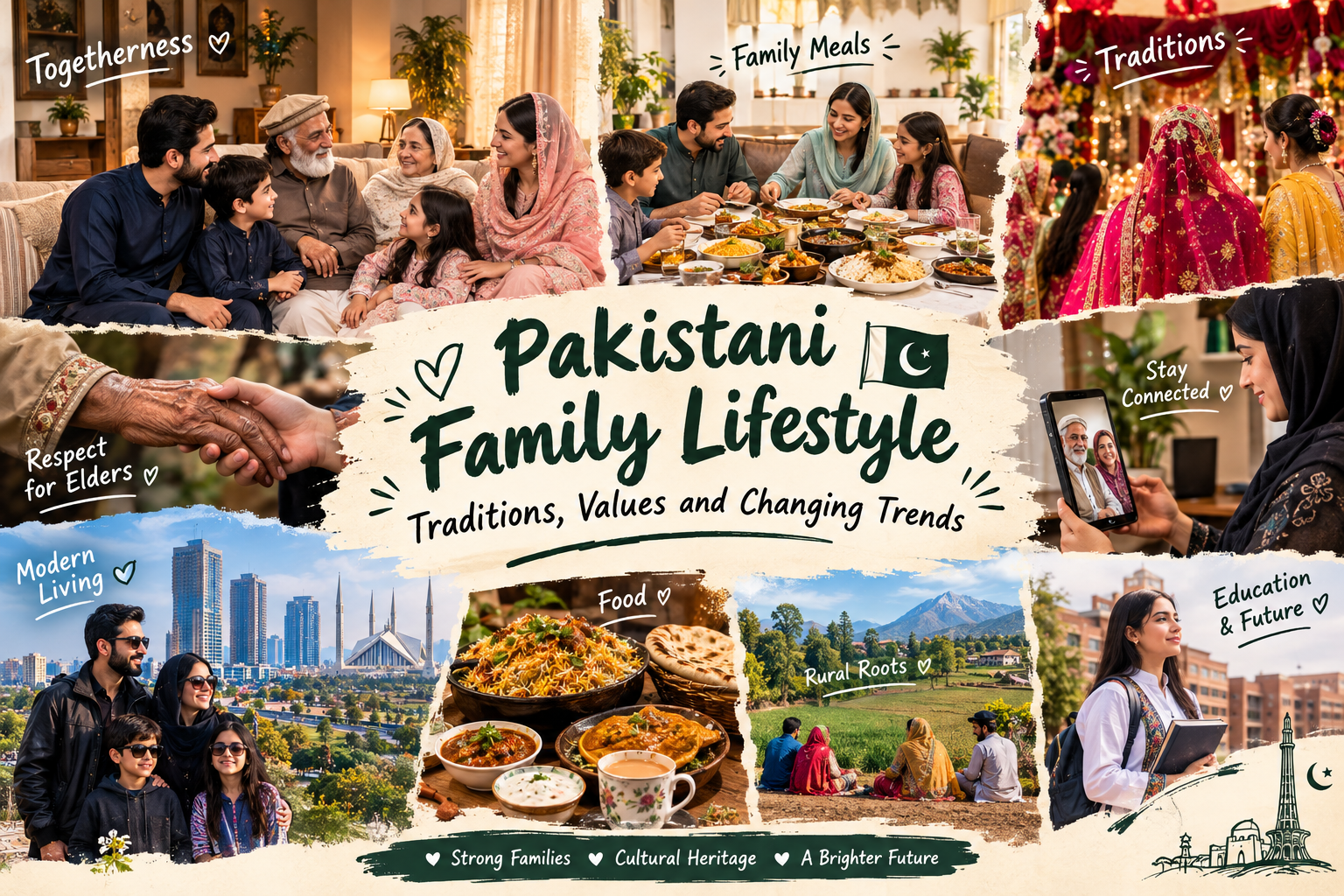
Family is one of the most important parts of life in Pakistan. Pakistani society has traditionally placed a strong emphasis on family relationships, respect for elders, hospitality, shared responsibilities, and spending time together. From childhood to adulthood, family often plays an important role in education, career decisions, celebrations, social relationships, and important life events.
The Pakistani family lifestyle has also changed significantly with time. Urbanization, education, technology, social media, overseas employment, changing work patterns, and economic conditions have influenced how families live and communicate. While some traditional practices remain strong, many families are adopting modern ways of living.
Today, Pakistani families can be found in different forms, including joint families, nuclear families, extended families, and families whose members live in different cities or countries. Despite these differences, family connections remain an important part of Pakistani social life.
Importance of Family in Pakistan
Family provides emotional support, guidance, companionship, and practical assistance. Parents generally play a major role in raising children and teaching them cultural and social values.
Children often learn basic manners, traditions, religious practices, and social responsibilities from their families. Grandparents and other relatives can also contribute to children's upbringing.
In many Pakistani households, family members support each other during difficult circumstances as well as celebrations. Birthdays, weddings, Eid, graduations, achievements, and other important occasions are often celebrated together.
Family relationships may extend beyond parents and children. Grandparents, uncles, aunts, cousins, and other relatives can remain closely connected even when they do not live in the same house.
Joint Family System
The joint family system has traditionally been an important part of Pakistani society.
In a joint family, multiple generations may live together. A household can include grandparents, parents, children, and sometimes uncles, aunts, and cousins.
This arrangement can create close relationships between family members. Children may grow up with grandparents and cousins, while adults can share household responsibilities.
Grandparents can also play an important role in children's lives by sharing stories, cultural traditions, family history, and life experiences.
However, joint family living can also require cooperation and understanding because several people share the same household environment.
Nuclear Family System
The nuclear family system has become increasingly common, particularly in urban areas.
A nuclear family generally consists of parents and their children living independently from the wider extended family.
Urban employment, education, housing arrangements, and changing lifestyles are among the factors that can contribute to this trend.
Nuclear families may have greater independence in their daily routines and household decisions. Parents may also organize their schedules according to their jobs and children's education.
However, living separately does not necessarily mean that relationships with extended family disappear. Many families continue to visit relatives regularly, communicate through phone calls, and gather during important occasions.
Respect for Parents and Elders
Respect for parents and elders is a commonly emphasized value in Pakistani families.
Children are generally taught to speak respectfully to older family members and to consider their advice on important matters.
Grandparents can hold a special place in family life. They may participate in children's upbringing, family gatherings, religious occasions, and household activities.
In many families, younger members visit or call elderly relatives regularly.
Modern lifestyles have changed some forms of communication, but respect for elders remains an important cultural value.
Role of Parents
Parents have a significant influence on children's development.
They are often involved in education, health, social development, religious learning, and career planning.
Parents may encourage children to perform well academically and develop professional skills. As children grow older, discussions about higher education and careers often become more important.
Modern parents may also encourage their children to learn technology, languages, communication skills, and other practical abilities.
At the same time, parenting styles vary considerably between families. Some parents follow traditional approaches, while others use more modern approaches focused on communication and independence.
Children's Role in Pakistani Families
Children are considered an important part of family life.
In many households, children are expected to respect parents, help with household activities, perform well in education, and maintain good relationships with relatives.
As children grow older, their responsibilities may increase.
Older children may help younger siblings with homework, assist parents with household tasks, or contribute to family activities.
Modern families increasingly encourage children to develop independent thinking and practical skills while maintaining family responsibilities.
Family Meals
Sharing meals can be an important part of Pakistani family life.
Breakfast, lunch, and dinner may provide opportunities for family members to sit together and talk about their day.
Traditional foods such as roti, daal, rice, vegetables, meat dishes, and other homemade meals are common in many households.
Tea is also closely connected with family and social life. Family members may sit together for evening tea while discussing everyday matters.
In busy urban households, work and school schedules can make shared meals more difficult. However, many families still make special efforts to eat together during weekends, holidays, and special occasions.
Pakistani Family Gatherings
Family gatherings are common during religious festivals, weddings, birthdays, graduations, and other important events.
Large gatherings can include relatives from different cities.
During such occasions, family members may share meals, exchange gifts, take photographs, and spend time together.
Children often enjoy meeting cousins and participating in family activities.
These gatherings also help younger generations learn about their extended family and cultural traditions.
Eid and Family Traditions
Eid is one of the most important occasions for Pakistani families.
During Eid-ul-Fitr, families prepare special foods, wear new or traditional clothes, offer Eid prayers, visit relatives, and exchange greetings.
Children often receive Eidi from parents, grandparents, and other relatives.
Eid-ul-Adha also brings families together. After the sacrifice, meat is distributed among family members, relatives, neighbors, and people in need.
Families may visit each other during both Eids, making these occasions important periods of social connection.
Weddings and Family Life
Weddings are major family events in Pakistan.
Pakistani weddings can involve several ceremonies and gatherings. Family members often participate in planning, shopping, decorations, food arrangements, invitations, and other preparations.
Relatives may travel from different cities to attend weddings.
Traditional clothing, music, food, photography, and decorations are important elements of many Pakistani wedding celebrations.
Modern weddings may also include professional event planners, themed decorations, digital invitations, photography teams, and social media content.
Despite these modern changes, family participation remains a major feature of Pakistani weddings.
Hospitality in Pakistani Families
Hospitality is strongly valued in Pakistani culture.
When guests visit a Pakistani home, hosts often offer tea, food, snacks, or refreshments.
Family members may make special arrangements when relatives or friends arrive from another city.
Hospitality can also be seen during weddings, Eid celebrations, religious events, and other gatherings.
Children often learn this tradition by observing their parents and grandparents.
Role of Grandparents
Grandparents can have a special role in Pakistani families.
In joint families, grandparents may live in the same household as their children and grandchildren.
They can share family stories, traditional recipes, cultural knowledge, and personal experiences with younger generations.
Grandparents may also help care for children when parents are busy with work or other responsibilities.
In nuclear families, grandparents may live separately but remain connected through regular visits and phone or video calls.
Technology has made it easier for families living in different cities or countries to maintain these relationships.
Cousins and Extended Family
Cousins often have an important place in Pakistani family life.
Children may grow up playing and studying with cousins, especially in extended or joint families.
Family gatherings can bring cousins together even when they live in different cities.
Social media and messaging applications have made it easier for cousins and relatives to stay connected.
Family group chats are now common in many households, allowing relatives to share photographs, greetings, news, and updates.
Education and Family Expectations
Education is highly valued by many Pakistani families.
Parents often invest considerable effort and resources in their children's education.
Students may attend schools, colleges, universities, academies, and professional institutions.
Families may discuss subjects, careers, university choices, and professional opportunities with their children.
The traditional focus on certain professional fields has also started changing. Many young people are now interested in technology, entrepreneurship, digital marketing, design, freelancing, media, and other emerging fields.
This reflects the changing expectations of modern Pakistani families.
Career Decisions and Family
Family involvement in career decisions remains significant in Pakistan.
Parents may advise children about suitable professions based on education, financial stability, interests, and future opportunities.
However, young people increasingly want to participate actively in making their own career choices.
Technology has also expanded the range of careers available to young Pakistanis.
Remote work, freelancing, e-commerce, software development, content creation, and digital services have introduced career options that were less common in previous generations.
This has created new conversations between parents and children about traditional and modern careers.
Changing Role of Women
The role of women in Pakistani families has also evolved.
Women increasingly participate in education, employment, entrepreneurship, healthcare, teaching, technology, law, business, and other professional fields.
Some women work from offices, while others operate businesses or work remotely from home.
This has influenced household responsibilities and family routines.
Many families are adapting by sharing responsibilities and adjusting schedules around education and employment.
The experiences of women differ across regions and households, so there is no single Pakistani family model.
Working Parents and Family Routine
Modern employment has changed family routines.
In some households, both parents work outside the home. This can affect meal times, childcare, transportation, and household responsibilities.
Families may use different strategies to manage these responsibilities. Older children may help with younger siblings, relatives may provide assistance, or families may use childcare and other services where available.
Flexible and remote work have also created new possibilities for some families.
Technology allows certain jobs to be performed from home, reducing the need for daily commuting.
Technology and Family Communication
Technology has transformed family communication.
A family member living abroad can communicate with parents through video calls. Relatives in different cities can share photographs instantly.
Messaging applications allow large family groups to remain connected.
Social media can also help relatives stay updated about birthdays, weddings, graduations, travel, and other events.
However, families also need to maintain face-to-face communication. Spending too much time on phones during family gatherings can reduce direct interaction.
Finding a healthy balance between digital communication and personal interaction is an important part of modern family life.
Social Media and Pakistani Families
Social media has become increasingly visible in family life.
Families often share photographs from weddings, Eid celebrations, birthdays, trips, and other events.
Young people may use social media for entertainment, education, business, and communication.
Parents may also use social media to communicate with relatives and follow news or community information.
At the same time, responsible use of social media is important. Families can encourage privacy awareness, respectful communication, and careful sharing of personal information.
Family Shopping Habits
Shopping is often a family activity in Pakistan.
Families may visit traditional markets, shopping centers, supermarkets, or local stores together.
Clothing shopping becomes particularly important before Eid and weddings.
Families may also shop together for furniture, household appliances, school supplies, groceries, and other necessities.
Online shopping has added another option. People can now order products from home using websites and mobile applications.
Young family members are often comfortable with online shopping, while older family members may prefer traditional markets.
Family Travel
Travel is becoming increasingly popular among Pakistani families.
Families may travel to northern areas, historical cities, beaches, parks, and other destinations.
Domestic tourism provides opportunities for family members to spend time together outside their normal routines.
Popular destinations can include Hunza, Skardu, Swat, Naran, Kaghan, Murree, Lahore, Islamabad, Karachi, and many other locations.
Family trips can also help children learn about Pakistan's geography, history, culture, and natural environment.
Rural Family Lifestyle
Family life in rural Pakistan can differ from urban family life.
In many rural communities, families remain closely connected to agriculture, livestock, local businesses, and community activities.
Extended family relationships can be particularly important.
Village communities may have strong social connections, with neighbors and relatives participating in weddings, religious occasions, and other events.
However, rural lifestyles are also changing. Mobile phones, internet access, education, transportation, and modern agricultural practices are influencing everyday life.
Urban Family Lifestyle
Urban families often have faster-paced routines.
Parents may work in offices, businesses, schools, hospitals, factories, or other workplaces. Children may attend schools and academies.
Traffic and commuting can take considerable time in large cities.
Apartments and smaller houses can also influence family living arrangements.
Despite these changes, urban families continue to maintain traditions through weekend gatherings, family dinners, Eid celebrations, weddings, and visits to relatives.
Financial Responsibilities
Financial management is an important part of family life.
Families must manage expenses related to food, housing, education, healthcare, transportation, clothing, utilities, and other needs.
In many households, parents discuss major financial decisions together.
Young adults may begin contributing financially after entering employment.
The rise of online businesses and freelancing has created additional income possibilities for some households.
Financial planning can help families manage changing costs and prepare for important future needs.
Modern Parenting Trends
Parenting in Pakistan is changing gradually.
Many parents now focus not only on academic performance but also on communication skills, creativity, technology, confidence, and practical abilities.
Parents may encourage children to participate in sports, extracurricular activities, online learning, and skill development.
There is also greater awareness about the importance of listening to children and discussing their concerns.
At the same time, traditional values such as respect, responsibility, honesty, and family relationships continue to be emphasized.
Challenges Facing Pakistani Families
Pakistani families face several challenges.
Economic pressures can affect household budgets and educational opportunities.
Urban traffic, housing costs, work schedules, and long commutes can reduce family time.
Technology can improve communication but may also create distractions.
Different generations may also have different opinions about education, careers, clothing, friendships, technology, and lifestyle choices.
Healthy communication and mutual respect can help family members understand these differences.
Generation Gap in Pakistani Families
The generation gap refers to differences in attitudes and experiences between older and younger generations.
Older family members may have grown up without smartphones, social media, or online education.
Younger people have grown up in a much more digital environment.
These differences can sometimes create misunderstandings.
For example, parents may prefer traditional career paths, while young people may be interested in freelancing or online businesses.
Young people may also have different views about travel, education, fashion, and work.
Open communication can help families understand changing perspectives while maintaining respect for cultural values.
Future of Pakistani Family Lifestyle
The Pakistani family lifestyle will likely continue to change as society becomes more connected and technology develops.
More families may use digital banking, online education, remote work, e-commerce, and digital communication.
Urbanization may continue to influence housing and family structures.
At the same time, traditions such as Eid gatherings, weddings, family meals, hospitality, and respect for elders are likely to remain important.
Future Pakistani families may therefore combine traditional cultural values with modern technology and new ways of working and communicating.
Conclusion
The Pakistani family lifestyle is based on strong relationships, cultural traditions, hospitality, respect, and shared responsibilities. Joint families and extended family networks have historically played an important role, while nuclear families have become increasingly common in many urban areas.
Technology, education, employment, urbanization, and changing social trends are transforming family life. Smartphones and video calls make it easier for relatives to remain connected, while online education and remote work are creating new opportunities.
At the same time, traditional values continue to influence everyday life. Eid celebrations, weddings, family meals, hospitality, respect for elders, and relationships with relatives remain important parts of Pakistani society.
The future of Pakistani family life will likely involve a combination of traditional values and modern lifestyles. As families adapt to new economic, technological, and social realities, maintaining communication, mutual respect, and meaningful relationships will remain an important part of family life in Pakistan.
FAQs
1. What is important in Pakistani family life?
Respect for parents and elders, family relationships, hospitality, shared responsibilities, education, and cultural traditions are commonly important aspects of Pakistani family life.
2. Are joint families common in Pakistan?
Joint families have traditionally been common in Pakistan, although nuclear families are increasingly common, particularly in urban areas.
3. What role does family play in Pakistani culture?
Family provides emotional support, guidance, companionship, and assistance during important life events. It also helps pass cultural and social traditions from one generation to another.
4. How is technology changing Pakistani family life?
Technology allows relatives to communicate through messaging applications and video calls. It has also influenced education, shopping, work, entertainment, and family communication.
5. How is modern life changing Pakistani families?
Urbanization, education, employment, technology, online work, and changing social trends are influencing family structures, daily routines, communication, and career choices.




