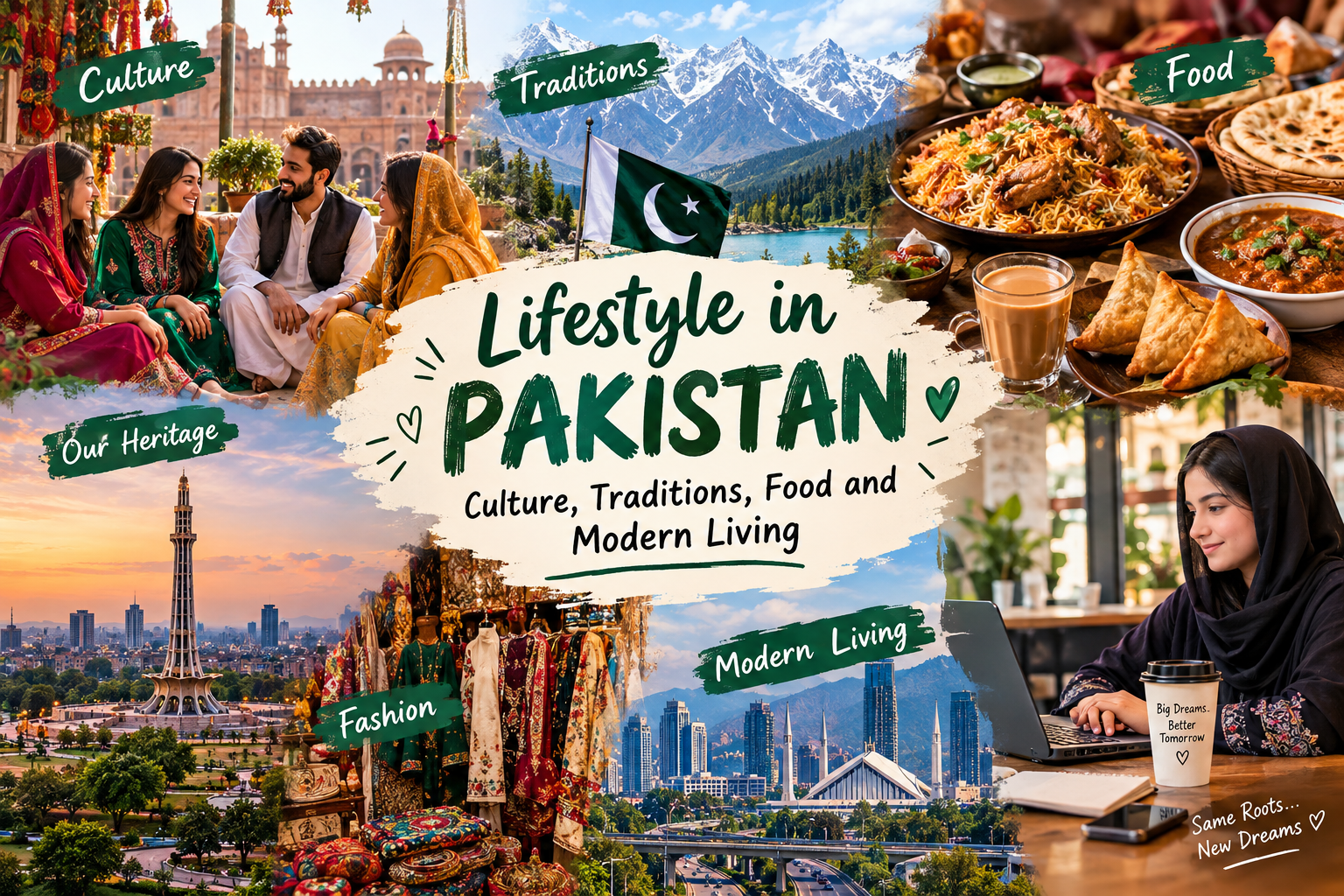
Pakistan is a country with a rich cultural identity, diverse traditions, colorful celebrations, and strong family values. The lifestyle of people in Pakistan has developed through centuries of history and continues to change with modern technology, education, urbanization, and changing social trends. Although lifestyles can be very different between cities, towns, and villages, certain values such as family, hospitality, respect for elders, religion, and community remain important parts of Pakistani society.
From traditional clothing and homemade food to modern shopping malls, smartphones, social media, and online work, Pakistan presents an interesting combination of traditional and modern lifestyles. Young people, in particular, are experiencing a lifestyle that combines cultural traditions with modern ideas.
Cultural Diversity in Pakistan
Pakistan consists of several provinces and regions, each having its own cultural traditions and lifestyle. Punjab, Sindh, Khyber Pakhtunkhwa, Balochistan, Gilgit-Baltistan, and Azad Jammu and Kashmir have different languages, clothing styles, foods, festivals, music, crafts, and customs.
Punjabi culture is well known for its lively celebrations, traditional food, colorful clothing, and strong family relationships. Sindhi culture has a rich history of handicrafts, traditional clothing, music, and regional cuisine. Pashtun culture is associated with hospitality, community traditions, and strong social relationships. Balochi culture has distinctive embroidery, clothing, music, and tribal traditions.
The northern areas of Pakistan also have unique lifestyles influenced by mountainous geography, tourism, local traditions, and indigenous communities.
This diversity makes Pakistani lifestyle more than one single pattern. Instead, it represents many cultures living together within one country.
Importance of Family in Pakistani Lifestyle
Family plays a major role in Pakistani society. In many households, family members remain closely connected and often participate in important decisions together.
Parents usually have a significant role in children's education, career choices, marriage decisions, and other major life events. Respect for parents and elders is commonly emphasized from childhood.
Extended families are also common in Pakistan, although nuclear families are increasingly common in urban areas. In a joint family system, grandparents, parents, children, uncles, aunts, and cousins may live together or maintain close relationships.
Family gatherings are especially common during weddings, Eid, birthdays, religious occasions, and other celebrations.
Even when family members live in different cities or countries, smartphones and video calls allow them to remain connected.
Pakistani Food and Daily Life
Food is one of the most enjoyable parts of Pakistani lifestyle. Pakistani cuisine contains a wide variety of flavors, spices, breads, rice dishes, meat dishes, vegetables, sweets, and beverages.
Popular traditional foods include biryani, nihari, haleem, karahi, pulao, kebabs, chicken tikka, daal, saag, chana, and different types of roti and naan.
Breakfast may include paratha, eggs, chana, yogurt, tea, or other traditional foods. In many households, chai is an important part of everyday life.
Tea is not only a beverage but also a social activity. Guests are often offered tea when they visit a home. Friends and family members may sit together for chai and conversation.
Street food is also an important part of modern Pakistani lifestyle. Samosas, pakoras, chaat, gol gappay, shawarma, burgers, fries, and other snacks are popular, especially among young people.
At the same time, restaurants and cafes have become increasingly popular in major Pakistani cities.
Traditional Pakistani Clothing
Clothing is another important part of Pakistani lifestyle. The shalwar kameez remains one of the most recognizable traditional outfits in Pakistan.
Men commonly wear shalwar kameez, sometimes combined with a waistcoat or other traditional clothing. Women wear a variety of shalwar kameez designs, dupattas, embroidered dresses, and other regional outfits.
Traditional clothing is especially popular during Eid, weddings, cultural events, and family gatherings.
However, modern fashion has also become an important part of everyday life. Young Pakistanis often combine traditional clothing with modern fashion trends.
Women may choose embroidered suits, casual eastern wear, western-style clothing, or combinations of different fashion elements. Men may wear jeans and shirts for casual occasions while choosing shalwar kameez or formal eastern wear for traditional events.
Pakistani fashion designers and clothing brands have also contributed to the growth of the country's fashion industry.
Weddings in Pakistan
Pakistani weddings are famous for their colorful traditions, food, clothing, decorations, and family gatherings.
Wedding celebrations can include events such as mehndi, dholki, baraat, and walima, although the exact traditions vary among families and regions.
Women often wear colorful dresses with embroidery, jewelry, and accessories. Men may wear shalwar kameez, sherwani, waistcoats, or formal suits.
Food is also an important part of weddings. Guests may be served biryani, pulao, kebabs, curries, desserts, and a variety of other dishes.
Modern weddings increasingly include professional photography, themed decorations, event halls, social media content, and customized invitations.
Despite these modern additions, traditional family involvement remains an important part of many Pakistani weddings.
Eid and Religious Celebrations
Religious occasions strongly influence Pakistani lifestyle. Eid-ul-Fitr and Eid-ul-Adha are among the most important celebrations.
Before Eid-ul-Fitr, families often prepare special food, purchase clothes, visit markets, and make arrangements for Eid prayers. Children may receive Eidi from parents, relatives, and elders.
Eid-ul-Adha includes the tradition of animal sacrifice and distribution of meat among family members, relatives, neighbors, and people in need.
Ramadan also changes the daily routine of many Pakistani families. Sehri and iftar become important family moments. Markets and restaurants may have different schedules, while mosques become especially active during prayers.
These occasions bring families and communities together and strengthen social connections.
Hospitality in Pakistani Culture
Hospitality is widely valued in Pakistan. Guests are often welcomed warmly and offered food, tea, or other refreshments.
In many households, people make special arrangements when relatives or friends visit. Serving guests is commonly considered a sign of respect and good manners.
Hospitality also differs from region to region. Rural communities may have particularly strong traditions of welcoming visitors, while urban hospitality can take place through restaurants, cafes, family gatherings, and home visits.
The importance of hospitality can be seen during weddings, religious celebrations, family visits, and cultural events.
Education and Student Lifestyle
Education is an increasingly important part of Pakistani lifestyle. Students attend schools, colleges, universities, and professional institutions across the country.
The lifestyle of students varies according to location, educational institution, family background, and personal interests.
Students in large cities may have access to universities, libraries, academies, training centers, online courses, and extracurricular activities.
Technology has also changed the way students learn. Online lectures, educational videos, digital notes, learning applications, and virtual classes have become part of modern education.
Many young Pakistanis also learn skills outside traditional education, including graphic design, programming, digital marketing, content creation, freelancing, and online business.
Technology and Modern Pakistani Lifestyle
Technology has changed everyday life in Pakistan. Smartphones and internet access allow people to communicate, shop, study, work, and entertain themselves online.
Social media platforms have become particularly popular among young people. People use social media to communicate with friends, share photographs and videos, follow news and entertainment, and promote businesses.
Online shopping has also become more common. Instead of visiting physical markets, consumers can browse products through websites and mobile applications.
Digital payments and mobile banking are another part of modern Pakistani life. People increasingly use digital services for shopping, bill payments, money transfers, and other everyday activities.
Technology has therefore created a lifestyle that is more connected and digitally dependent than in previous generations.
Social Media and Pakistani Youth
Young people are an important part of Pakistan's changing lifestyle.
Social media has created new opportunities for entertainment, communication, education, and business. Many young people create videos, run online stores, develop personal brands, or offer freelance services.
Social media has also influenced fashion, food choices, travel, photography, and entertainment.
At the same time, families and educators often emphasize responsible internet use. Balancing online activities with education, family relationships, physical activity, and personal responsibilities is an important part of a healthy modern lifestyle.
Urban Lifestyle in Pakistan
Cities such as Lahore, Karachi, Islamabad, Rawalpindi, Faisalabad, Multan, and Peshawar have developed rapidly over the years.
Urban residents often have access to shopping malls, restaurants, cinemas, universities, hospitals, offices, gyms, parks, and entertainment facilities.
Life in cities can be fast-paced. People may spend significant time traveling between home, school, university, and work.
Modern apartments, housing societies, commercial centers, and office buildings have also changed the appearance of Pakistani cities.
The growth of urban areas has created new opportunities but has also introduced challenges such as traffic congestion, pollution, rising living costs, and pressure on public services.
Rural Lifestyle in Pakistan
Rural Pakistan has a different lifestyle from major cities. Agriculture remains important in many rural communities.
People may be involved in farming, livestock, small businesses, handicrafts, and other local occupations.
Village life often has strong community relationships. Neighbors may know each other closely and participate together in weddings, religious events, and other social activities.
Traditional customs can also remain stronger in rural areas, although technology and modern communication have reached many villages as well.
Mobile phones, internet services, television, transportation, and education are gradually connecting rural communities with wider society.
Pakistani Entertainment
Entertainment is another important part of daily life. Pakistani television dramas have a large audience both inside and outside the country.
Movies, music, comedy programs, sports, YouTube videos, and social media content are also popular forms of entertainment.
Cricket has a particularly strong place in Pakistani popular culture. Families and friends often watch major cricket matches together.
Young people also enjoy gaming, online videos, music streaming, and other forms of digital entertainment.
The entertainment industry continues to change as audiences increasingly consume content through digital platforms.
Sports and Active Lifestyle
Sports have traditionally been an important part of Pakistani society.
Cricket is the most widely followed sport, while football, hockey, squash, badminton, athletics, and other sports also have dedicated communities.
Children often play cricket, football, badminton, or other games in schools, parks, streets, and playgrounds.
In urban areas, gyms, fitness centers, walking tracks, and sports clubs have become more visible.
There is also growing awareness of physical fitness and the importance of maintaining an active daily routine.
Shopping Lifestyle in Pakistan
Shopping habits have changed significantly because of urban development and online commerce.
Traditional bazaars remain popular for clothing, food, jewelry, shoes, household items, and other products.
At the same time, shopping malls and branded stores have become common in large cities.
Online shopping has added another option. Consumers can order clothes, electronics, groceries, cosmetics, household products, and other items from home.
During Eid and wedding seasons, shopping activity generally becomes especially noticeable.
Travel and Tourism Lifestyle
Travel is becoming an increasingly popular part of Pakistani lifestyle.
Pakistan has mountains, valleys, lakes, historical sites, deserts, beaches, forests, and cultural landmarks.
Northern destinations such as Hunza, Skardu, Swat, Naran, Kaghan, and Gilgit attract visitors because of their natural scenery.
Cities such as Lahore and Multan offer historical and cultural attractions, while Karachi provides beaches, restaurants, shopping areas, and urban entertainment.
Domestic tourism allows families, students, and young people to explore different parts of the country.
Social media has also influenced travel trends because people frequently share photographs and videos of destinations.
Changing Lifestyle of Pakistani Women
The lifestyle of Pakistani women has also changed over time.
Women participate in education, professional careers, entrepreneurship, healthcare, teaching, technology, media, fashion, law, science, and many other fields.
Many women also work from home or operate online businesses.
Technology has created new opportunities through freelancing, e-commerce, digital marketing, online teaching, and content creation.
At the same time, traditional family responsibilities remain important in many households. As a result, women may combine education, employment, family responsibilities, and personal interests in different ways.
The experiences of Pakistani women vary considerably depending on region, family circumstances, education, and economic conditions.
Work and Business Lifestyle
Pakistan's working population is involved in many different industries, including agriculture, manufacturing, retail, education, healthcare, technology, transportation, finance, construction, and services.
Entrepreneurship is also becoming more visible.
Small businesses are an important part of the economy. People operate clothing stores, restaurants, beauty salons, workshops, online shops, food businesses, and many other enterprises.
The growth of freelancing and remote work has created additional opportunities for people with digital skills.
Young people can now work with clients from different cities and countries while remaining in Pakistan.
Modern Home Lifestyle
Pakistani homes are also changing.
Traditional homes may include courtyards, separate sitting areas, bedrooms, kitchens, and family spaces. Modern homes increasingly include contemporary furniture, appliances, smart televisions, air conditioners, washing machines, refrigerators, and internet-connected devices.
Interior decoration has become popular among urban families. People use different furniture styles, wall decorations, lighting arrangements, plants, curtains, and colors to personalize their homes.
Home improvement content on social media has also influenced people's ideas about decoration and organization.
Traditional Values in a Modern Society
Although Pakistan is becoming more connected with the modern world, many traditional values remain important.
Respect for parents and elders, family relationships, hospitality, religious traditions, and cultural celebrations continue to influence everyday life.
At the same time, younger generations often have different ideas about education, careers, technology, fashion, travel, and communication.
This creates a lifestyle where old and new ideas exist together.
For example, a young person may wear traditional clothing at a family event, use modern technology for work, order food through an app, attend university, and communicate with relatives through social media—all within the same day.
Challenges of Modern Pakistani Lifestyle
Modern life also brings challenges.
Urban residents may face traffic, pollution, noise, long working hours, and higher living expenses.
Technology can make communication easier, but excessive screen time may reduce face-to-face interaction.
Social media can provide useful information and opportunities, but people may also spend too much time online.
Economic differences also mean that lifestyles vary greatly across Pakistan. The lifestyle of a person living in a major city may be very different from that of someone living in a rural or remote area.
Understanding these differences is important when discussing Pakistani lifestyle as a whole.
Future of Lifestyle in Pakistan
The Pakistani lifestyle is likely to continue changing as technology, education, urbanization, and digital business expand.
Online education, remote work, digital payments, e-commerce, smart homes, and online entertainment may become increasingly important.
At the same time, traditional food, clothing, festivals, family gatherings, religious celebrations, and cultural customs are likely to remain important parts of Pakistani identity.
The future Pakistani lifestyle may therefore be a combination of cultural heritage and modern technology.
Conclusion
Lifestyle in Pakistan is a combination of tradition, family values, cultural diversity, modern technology, food, fashion, entertainment, education, and changing social trends. From the traditional shalwar kameez and family gatherings to smartphones, online shopping, freelancing, and modern cafes, Pakistan reflects a mixture of old and new ways of living.
The country's different provinces and regions contribute their own traditions and customs, making Pakistani lifestyle diverse and colorful. Urban and rural communities may have different experiences, but family, hospitality, culture, and community remain important themes.
As Pakistan continues to develop, its lifestyle will keep evolving. Modern technology and changing opportunities are creating new ways of working, studying, communicating, shopping, and entertaining. At the same time, traditional customs continue to connect people with their cultural heritage.
This combination of cultural traditions and modern influences makes the lifestyle of Pakistan unique and constantly evolving.
FAQs
1. What is the lifestyle like in Pakistan?
Pakistani lifestyle combines traditional culture, family values, religious traditions, local food, hospitality, modern education, technology, and changing social trends.
2. What is the most common traditional clothing in Pakistan?
Shalwar kameez is one of the most widely recognized traditional forms of clothing in Pakistan for both men and women.
3. What foods are popular in Pakistani lifestyle?
Popular Pakistani foods include biryani, nihari, haleem, karahi, pulao, kebabs, daal, saag, naan, roti, samosas, and various traditional sweets.
4. How has technology changed Pakistani lifestyle?
Technology has changed communication, education, shopping, banking, entertainment, business, and work. Smartphones, social media, online shopping, and digital payments are now common parts of modern life.
5. What role does family play in Pakistani society?
Family plays an important role in Pakistani society. Family members commonly support each other in education, careers, celebrations, important decisions, and everyday life.