Introduction
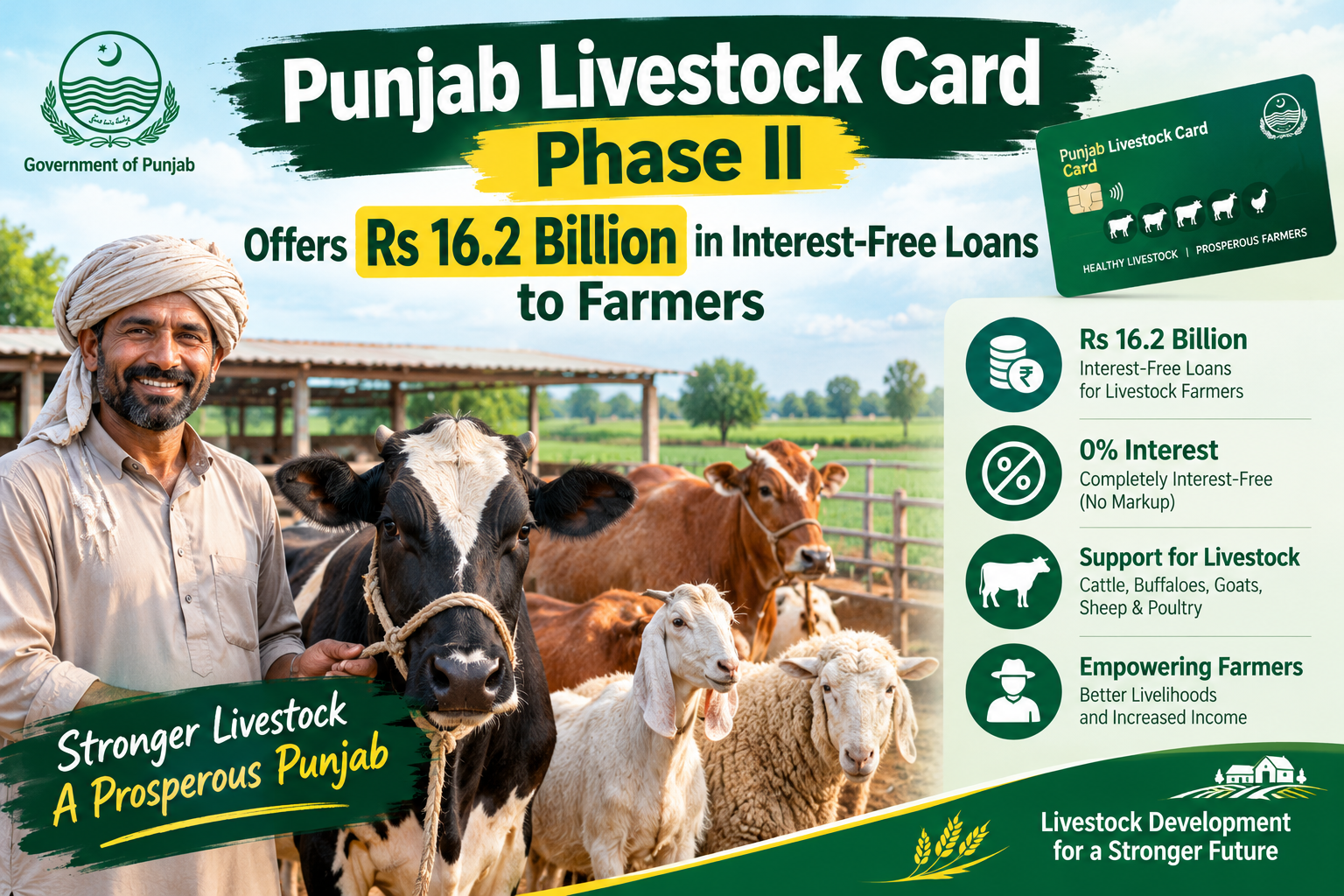
The Punjab government has launched the second phase of its Livestock Card Scheme, introducing an interest-free financing package worth Rs 16.2 billion to support livestock farmers across the province. Announced on October 14, 2026, the initiative aims to improve animal nutrition, strengthen livestock health, increase meat production, and create better economic opportunities for rural communities.
Chief Minister Maryam Nawaz Sharif inaugurated the programme as part of the provincial government's efforts to strengthen agriculture and livestock farming. Under the second phase, eligible farmers will be able to receive financing of Rs 27,000 per animal to purchase essential feed, including wanda, silage, and mineral mixtures. The government will cover the interest costs, while farmers will repay the principal amount.
The scheme also includes free animal tagging and vaccination against foot-and-mouth disease. These measures are intended to improve animal health and productivity while helping farmers manage some of the costs associated with livestock care.
Livestock farming plays an important role in Punjab's rural economy. Many families depend on cattle, buffaloes, and other animals for their livelihoods. By improving access to financing and animal healthcare, the programme seeks to support farmers while contributing to the province's meat production and export potential.
What Is the Punjab Livestock Card Scheme?
The Livestock Card Scheme is a government initiative designed to provide eligible livestock farmers with financial assistance for essential animal-related expenses.
Feed is one of the most important costs in livestock farming. Animals need suitable nutrition to maintain their health, grow properly, and produce milk or meat. However, rising operating costs can make it difficult for small farmers to purchase adequate quantities of quality feed.
The scheme is intended to help address this challenge by providing financing specifically for eligible livestock-related needs. Instead of requiring farmers to bear all their feed expenses immediately, the programme offers financial support under its prescribed conditions.
The first phase established the foundation for the initiative, and the second phase expands the programme's financial commitment. The government has announced a total financing target of Rs 16.2 billion for the new phase.
The programme's success will depend on whether the assistance reaches eligible farmers, whether funds are used appropriately, and whether improved animal nutrition leads to better productivity and income opportunities.
Farmers should confirm the latest eligibility requirements and application procedures with the relevant Punjab Livestock Department authorities before making financial decisions.
Key Features of Livestock Card Phase II
The second phase introduces several measures intended to support livestock owners and strengthen animal production.
Rs 16.2 Billion in Interest-Free Financing
The provincial government has allocated a financing target of Rs 16.2 billion for the second phase. The package is intended to help eligible farmers meet animal-feed expenses and improve livestock management.
The government will cover the interest costs associated with the programme. Farmers will be required to repay the principal amount according to the applicable terms.
Interest-free financing can reduce the borrowing burden compared with loans that charge interest. However, beneficiaries must still understand their repayment responsibilities and use the assistance according to the scheme's rules.
Rs 27,000 Per Animal
Under the announced programme, eligible farmers can receive financing of Rs 27,000 per animal for designated feed purchases.
The assistance is intended to cover essential nutritional products rather than serve as unrestricted financial support. Farmers should therefore review the approved uses and any conditions attached to their Livestock Cards.
The amount available to an individual farmer will depend on eligibility, the number of animals covered, and the programme's applicable limits.
Free Animal Tagging
Animal tagging is another feature of the initiative. Tags can help identify livestock and improve record-keeping, monitoring, and management.
Accurate identification can be useful when maintaining vaccination records, tracking animals, and supporting livestock management programmes.
For farmers, improved records may also make it easier to maintain information about animal health and production. The practical benefits depend on the quality of implementation and the reliability of the records maintained.
Free Foot-and-Mouth Disease Vaccination
The second phase also includes free vaccination against foot-and-mouth disease, commonly known as FMD.
This contagious animal disease can affect cattle and other cloven-hoofed animals. Outbreaks can disrupt livestock production and create financial difficulties for farmers.
Vaccination, appropriate veterinary guidance, and good farm management can help reduce disease risks. Farmers should follow the instructions of authorised veterinary professionals and report suspected disease promptly.
The inclusion of vaccination in the programme is important because financial assistance alone cannot improve livestock productivity if animals remain vulnerable to preventable health problems.
Why Animal Nutrition Matters
Animal nutrition is a central factor in livestock productivity. Cattle and buffaloes need suitable feed to support growth, maintain health, and produce milk or meat.
Poor nutrition can reduce productivity, weaken animals, and make it more difficult for farmers to achieve reliable returns. The effects may be particularly challenging for small livestock owners with limited resources.
Wanda, silage, and mineral mixtures serve different purposes in animal feeding programmes. Their suitability depends on the animal's age, condition, production needs, and overall diet.
Silage can provide stored forage, while mineral mixtures may help address particular nutritional requirements. Concentrated feeds can also contribute energy and nutrients when used appropriately.
However, simply providing more feed does not guarantee better results. Farmers need to select suitable products, store them properly, and follow appropriate feeding guidance.
Veterinary and livestock experts can help farmers develop feeding practices suited to their animals. Better nutrition, combined with disease prevention and appropriate management, can support improved productivity over time.
The Livestock Card Scheme is intended to make some of these essential inputs more accessible to eligible farmers.
How the Scheme Could Help Small Farmers
Small livestock farmers often face financial pressure because they must cover feed, veterinary care, transportation, and other operating expenses while waiting for income from milk or animal sales.
When funds are limited, farmers may struggle to purchase adequate feed or respond quickly to animal-health problems. These difficulties can affect both productivity and household income.
Interest-free financing could help eligible farmers manage designated expenses without paying additional interest on the supported amount. This may provide greater flexibility when purchasing essential feed.
The benefit, however, depends on the programme's implementation. Farmers need clear eligibility rules, accessible registration procedures, timely assistance, and transparent repayment terms.
It is also important that the financing reaches the people it is designed to support. Small farmers may face difficulties accessing digital services or understanding administrative requirements. Appropriate assistance can help them navigate the process.
The scheme should be assessed through practical outcomes, including the number of eligible farmers receiving support, improvements in animal health, repayment performance, and changes in livestock productivity.
The Role of Livestock in Punjab's Economy
Livestock is an important part of Punjab's agricultural economy. Animals provide milk, meat, and other products while supporting the livelihoods of farmers, traders, transport workers, veterinary service providers, and businesses involved in animal feed.
The sector also contributes to economic activity in villages and smaller towns, where livestock-related work can provide income for families with limited employment alternatives.
Improving livestock productivity may help farmers generate more value from their animals. Better nutrition and preventive healthcare can support healthier herds and reduce some avoidable production losses.
The benefits may extend beyond individual farms. Demand for feed, veterinary services, animal transportation, and meat processing can support related businesses when the sector expands.
Nevertheless, productivity improvements require more than financial assistance. Access to veterinary care, reliable markets, suitable infrastructure, disease monitoring, and fair prices also influence farm profitability.
A well-designed livestock policy should therefore combine financing with technical guidance, healthcare services, market access, and long-term rural development.
First Phase Reports a 96 Percent Loan Recovery Rate
During the launch of Phase II, officials reported that the first phase of the Livestock Card Scheme achieved a loan recovery rate of 96 percent.
A strong repayment rate can be an encouraging indicator for a public financing programme. When beneficiaries repay loans according to their agreements, funds can potentially support future programme activities and demonstrate that borrowers are meeting their obligations.
However, repayment figures should be considered alongside other indicators. The number of farmers who benefited, the timeliness of assistance, the effect on livestock productivity, and the financial position of participating households are also important.
For the second phase, transparent reporting can help the public understand how the programme performs over time.
Regular updates should explain how much financing has been distributed, how many farmers have received support, how repayment is progressing, and whether the initiative is meeting its stated objectives.
Independent monitoring and accessible complaint procedures can further strengthen public confidence.
Supporting Meat Production in Punjab
One of the government's stated objectives is to improve meat production through better livestock nutrition and management.
Healthy animals and suitable feeding practices can contribute to improved production outcomes. For farmers, better productivity may create opportunities to earn more from livestock, provided market prices and operating costs remain favourable.
Higher production can also support the meat-processing industry. Businesses involved in slaughtering, processing, packaging, transportation, and distribution depend on reliable supplies of suitable animals.
However, increased production alone does not guarantee higher profits. Farmers also need access to competitive buyers, fair pricing, appropriate transportation, and reliable market information.
The relationship between farmers and buyers is therefore important. When farmers understand quality standards and can reach suitable markets, they may be better positioned to make informed production decisions.
The Livestock Card Scheme is one part of a wider effort to strengthen this chain, from animal care at the farm level to the marketing of meat products.
Expanding Access to Meat Export Markets
Punjab is also seeking to strengthen its access to international meat markets. During the programme briefing, officials highlighted efforts to connect livestock farmers with exporters and develop commercial relationships with buyers in several countries.
These efforts may create opportunities for farmers if they lead to stable demand and reliable purchasing arrangements.
Export markets can require specific standards relating to animal health, food safety, processing, traceability, and documentation. Producers and businesses must meet the requirements applicable to their products and destination markets.
Improving livestock health and farm records may contribute to a stronger supply chain. However, successful exports also depend on processing facilities, cold storage, transportation, certification, and compliance with importing countries' regulations.
For Punjab, a coordinated approach could help connect farmers with processors and exporters while improving the consistency of supplies.
The government has also reported that the province's meat exports increased by $96 million over one year. This figure was presented during the programme briefing and reflects the importance being placed on export development.
Future progress will depend on whether businesses can maintain quality, meet regulatory requirements, and compete effectively in international markets.
Connecting Farmers with Buyers
Access to markets is a major concern for livestock farmers. Even when animals are healthy and well cared for, farmers may struggle to secure favourable prices if they have limited information about buyers.
The Livestock Connect portal is intended to improve links between farmers and meat exporters. Officials reported that approximately 23,000 farmers had been connected with exporters through the platform.
Digital connections may make it easier for farmers to discover potential buyers and understand market opportunities. They can also help businesses identify suppliers and develop commercial relationships.
However, a digital platform is most useful when its information is accurate and farmers can access it easily.
Some rural users may have limited internet access or need help using online services. Providing guidance through local livestock offices and other appropriate channels could help make digital tools more accessible.
The ultimate measure of success is not simply the number of registered users. It is whether farmers can use the service to identify genuine buyers, negotiate clear terms, and improve their access to markets.
Opportunities for Women in Livestock Farming
Women's participation is another important aspect of rural economic development.
Women contribute to livestock-related activities in many rural households, including animal feeding, care, and management. However, they may face barriers when trying to access formal financing, training, veterinary services, and commercial markets.
Officials reported that the number of women farmers benefiting from the Livestock Card initiative increased from 90 to 1,107.
Greater access to financing and support services may help women strengthen livestock-related livelihoods. It can also create opportunities to develop business skills and participate more actively in agricultural markets.
To make these opportunities meaningful, women need access to clear programme information and practical assistance with registration and documentation.
Training in animal health, nutrition, financial management, and market access can further support their participation.
The long-term objective should be to ensure that women can access the programme fairly and use the support to build sustainable livelihoods.
Challenges the Programme Must Address
Although the scheme offers financial support, several practical challenges will influence its effectiveness.
Clear Eligibility Requirements
Farmers need to know who qualifies, which animals are covered, what documents are required, and how the financing is calculated.
If requirements are unclear, applicants may waste time or money preparing incomplete applications. Clear communication can reduce confusion and improve access.
Timely Access to Financing
Feed expenses are ongoing, and delays can limit the usefulness of assistance. The programme needs efficient procedures for processing eligible applications and making funds available under the approved conditions.
Responsible Use of Funds
The financing is intended for specified livestock-related expenses. Clear guidance and suitable monitoring can help ensure that assistance is used for its intended purpose.
Repayment Planning
Even an interest-free loan must be repaid. Farmers should understand the repayment schedule and consider how they will meet their obligations from expected farm income.
Transparent terms can help borrowers make informed decisions and reduce the risk of financial difficulties.
Veterinary Services and Training
Feed financing is only one part of livestock management. Farmers also need access to suitable veterinary advice, vaccination services, disease information, and guidance about animal nutrition.
Combining financial support with technical assistance may produce stronger and more sustainable results.
How Farmers Can Prepare to Apply
Farmers interested in the Livestock Card Scheme should begin by confirming the current rules through the Punjab Livestock Department's official channels.
They should ask about eligibility, the animals covered, the documents required, the approved uses of financing, and the repayment conditions.
Applicants should keep their personal and livestock records accurate and follow the prescribed registration process. They should also be cautious about unofficial intermediaries who promise guaranteed approval in exchange for unexplained payments.
Before accepting financing, farmers should calculate their likely expenses and understand how the repayment obligation fits their expected income.
The scheme may offer valuable support to eligible applicants, but approval should never be assumed before the relevant authorities confirm eligibility.
Farmers who need assistance should seek guidance from authorised officials and use the programme's verified support channels.
Conclusion
Punjab's Livestock Card Phase II represents a significant financial commitment to supporting livestock farmers, improving animal nutrition, and strengthening the province's rural economy.
The Rs 16.2 billion financing target, assistance of Rs 27,000 per eligible animal, free tagging, and foot-and-mouth disease vaccination are intended to help farmers manage important aspects of livestock production.
The programme may also support wider objectives, including increased meat production, improved access to buyers, and the development of export opportunities.
Its long-term impact will depend on transparent implementation, fair access, effective animal-health services, responsible borrowing, and reliable market connections.
For farmers, the most important steps are to understand the eligibility rules, use financing appropriately, maintain healthy animals, and plan for repayment. For the government, clear communication and regular reporting will be essential to demonstrate whether the programme is achieving its objectives.
If implemented effectively, the scheme could become a useful component of Punjab's wider efforts to improve livestock productivity and support rural livelihoods.
FAQs
1. What is Punjab Livestock Card Phase II?
It is a Punjab government initiative offering eligible livestock farmers interest-free financing for designated animal-feed expenses, along with free animal tagging and foot-and-mouth disease vaccination.
2. How much financing can a farmer receive per animal?
Under the announced Phase II scheme, eligible farmers can receive Rs 27,000 per animal, subject to the programme's conditions and limits.
3. Do farmers have to pay interest on the Livestock Card financing?
The Punjab government will cover the interest cost. Farmers must repay the principal amount according to the applicable repayment terms.
4. What additional benefits does the scheme provide?
The announced benefits include free livestock tagging and vaccination against foot-and-mouth disease, alongside financing for approved feed purchases.
5. How can farmers confirm how to apply?
Farmers should contact the Punjab Livestock Department through its official channels to confirm current eligibility requirements, documents, registration procedures, and repayment conditions.