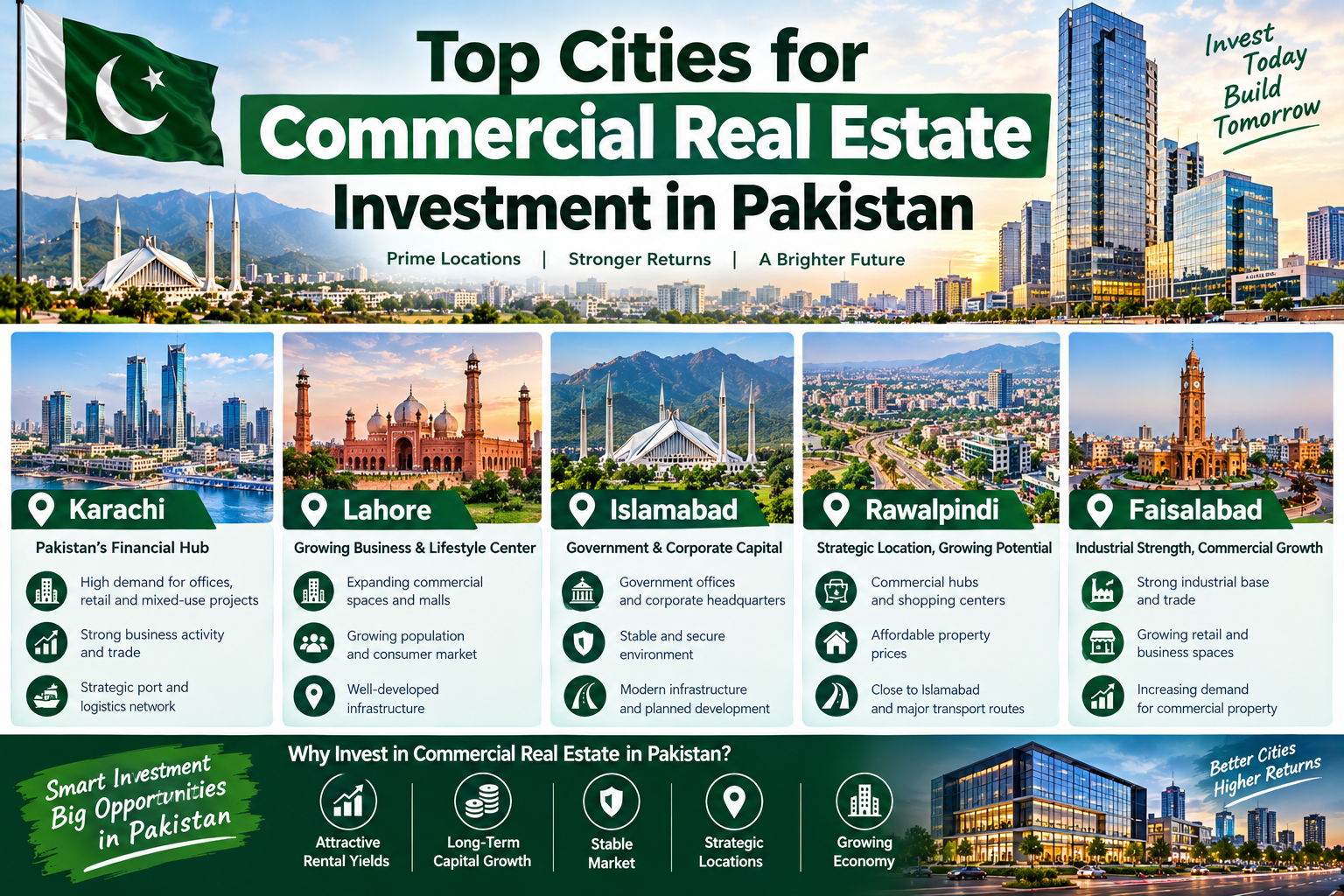
Commercial real estate is an important part of Pakistan's economy. Shops, offices, warehouses, plazas, showrooms, markets, and commercial buildings provide spaces where businesses can operate and customers can access products and services.
Pakistan has several major cities with active commercial property markets. Karachi, Lahore, Islamabad, Rawalpindi, Faisalabad, Multan, Gujranwala, Sialkot, Peshawar, and other urban centers have different types of commercial properties.
However, commercial real estate is highly location-dependent. A commercial property in one part of a city can have very different demand from a similar property in another area. Factors such as population, business activity, road access, customer traffic, infrastructure, parking, and surrounding development can influence a property's use and demand.
For beginners, understanding the commercial real estate environment of different Pakistani cities can make property research easier. This article explores major cities and explains the factors that buyers and investors should consider before purchasing commercial property.
Understanding Commercial Real Estate in Pakistan
Commercial real estate includes property primarily used for business purposes.
Common types include:
Shops
Offices
Commercial plots
Plazas
Showrooms
Warehouses
Business centers
Shopping centers
Mixed-use buildings
A commercial property can be purchased for personal business use, rental income, long-term investment, or future development, subject to applicable laws and approvals.
Why Location Matters in Commercial Property
Location is one of the most important considerations in commercial real estate.
Businesses generally need customers, employees, suppliers, and convenient transportation. Therefore, a commercial property's surroundings can affect its usefulness.
Important factors can include:
Main road access
Customer traffic
Visibility
Parking
Public transport
Nearby residential areas
Nearby offices
Markets
Schools and institutions
Industrial activity
The importance of each factor depends on the type of business.
A retail shop may need customer traffic, while a warehouse may prioritize road connectivity and loading access.
1. Karachi
Karachi is Pakistan's largest city and a major center for trade, finance, industry, transportation, and business.
Its large population and diverse economic activity support a wide commercial property market.
Commercial property in Karachi includes:
Shops
Offices
Warehouses
Showrooms
Commercial plots
Shopping centers
Business buildings
Retail Property in Karachi
Retail activity is spread across many different markets and commercial areas.
Retail property demand can depend on population density, customer traffic, accessibility, parking, and the surrounding business environment.
A buyer should research the specific locality instead of assuming that all parts of Karachi have similar commercial demand.
Office Property
Karachi also has office markets serving companies, professionals, financial businesses, technology firms, and other organizations.
Office buyers and tenants may consider access to major roads, public transport, parking, nearby services, and building facilities.
Warehouse Property
Karachi's role as a major business and trade center also creates demand for storage and logistics spaces.
For warehouse property, road connectivity and access for commercial vehicles can be particularly important.
2. Lahore
Lahore is another major commercial center in Pakistan.
The city has a large population and a diverse economy involving retail, education, healthcare, technology, manufacturing, services, hospitality, and other activities.
Commercial property in Lahore includes shops, offices, plazas, showrooms, and commercial plots.
Retail Opportunities
Lahore has many established markets and newer commercial areas.
Retail property can be influenced by customer traffic, surrounding population, accessibility, parking, and competition.
Businesses often select locations according to their target customers rather than simply choosing the largest available space.
Office Market
The city's expanding business environment creates demand for office spaces.
Office investors may examine:
Building quality
Accessibility
Parking
Nearby businesses
Public transport
Security
Maintenance
Commercial Plots
Commercial plots can be used for future development, subject to applicable approvals and building regulations.
Buyers should verify the plot's legal status, commercial classification, development status, and construction requirements.
3. Islamabad
Islamabad is Pakistan's federal capital and has a planned urban environment.
The city's commercial areas serve residents, government employees, businesses, professionals, and visitors.
Commercial property includes shops, offices, plazas, and mixed-use developments.
Commercial Sectors
Many commercial activities are organized around designated areas.
Location can influence demand because customers generally prefer accessible commercial centers with suitable parking and nearby residential populations.
Office Demand
Islamabad has demand for offices used by businesses, consultants, organizations, and professional services.
Office investors can consider accessibility, building facilities, parking, security, and proximity to major roads.
Retail Property
Shops and commercial units can serve local residents and nearby businesses.
The type of retail activity suitable for a location depends on the surrounding population and customer needs.
4. Rawalpindi
Rawalpindi is a major city in Punjab and is closely connected with Islamabad.
The two cities have strong links in employment, education, transportation, trade, and business.
Rawalpindi has a large commercial market that includes traditional markets, shops, plazas, offices, and warehouses.
Commercial Markets
Established markets can attract customers because of existing businesses and population movement.
However, buyers should consider competition and property condition when evaluating a commercial unit.
Connectivity
Road connections between Rawalpindi and Islamabad can influence commercial activity.
Businesses that depend on customers from both cities may consider accessibility when choosing their locations.
5. Faisalabad
Faisalabad is an important industrial and commercial city in Punjab.
The city's economy has strong links with textiles, manufacturing, trading, and related businesses.
This economic activity supports demand for different commercial properties.
Shops and Markets
Retail shops can serve local residents and businesses.
The performance of a shop can depend on customer traffic, market reputation, accessibility, and surrounding businesses.
Warehouses
Faisalabad's industrial and trading activity creates demand for warehouses and storage facilities.
For warehouse buyers, factors such as road access, loading space, security, utilities, and proximity to industrial areas can be important.
Offices
Businesses and service providers also require office spaces.
Office demand can vary according to the location and type of commercial activity nearby.
6. Multan
Multan is a major city in southern Punjab and an important commercial center for the surrounding region.
Its property market includes residential and commercial developments.
Commercial real estate includes shops, offices, plazas, markets, and warehouses.
Retail Activity
Retail demand can be influenced by population, road access, established markets, and nearby residential areas.
Business Property
Businesses serving the wider region may require offices, storage facilities, and commercial spaces.
Investors should study local demand rather than relying only on general expectations about future property prices.
7. Gujranwala
Gujranwala is a major industrial and commercial city in Punjab.
Its economy includes manufacturing, trading, retail, and small and medium-sized businesses.
Commercial property can include:
Shops
Offices
Warehouses
Showrooms
Commercial plots
Industrial and trading activity can create demand for commercial spaces that support local businesses.
Factors to Consider
Investors can examine road connectivity, industrial areas, market activity, customer traffic, and surrounding development.
8. Sialkot
Sialkot is widely known for manufacturing and export-oriented industries.
Its business environment creates demand for offices, warehouses, showrooms, shops, and other commercial spaces.
Commercial Opportunities
Businesses connected with manufacturing, trade, and exports may require different types of property.
Warehouse locations may benefit from convenient transportation and logistics access.
Retail businesses may focus more on customer traffic and visibility.
The suitability of a commercial property therefore depends on its intended use.
9. Peshawar
Peshawar is a major commercial center in Khyber Pakhtunkhwa.
The city has markets, shops, offices, warehouses, and other commercial properties.
Its regional importance supports business activity serving local and surrounding communities.
Commercial Property Factors
Buyers can consider:
Road connectivity
Market activity
Customer traffic
Security
Parking
Nearby businesses
Property approval
As with other cities, specific locality research is essential.
10. Hyderabad
Hyderabad is an important urban center in Sindh.
The city has residential, commercial, industrial, and trading activity.
Commercial properties include shops, offices, markets, warehouses, and commercial plots.
Investors should compare different localities and understand the demand for the specific type of commercial property they are considering.
Comparing Major Pakistani Cities
There is no single factor that determines whether a city is suitable for commercial property.
Instead, investors can compare cities based on several characteristics.
Population and Customer Base
A large population can create demand for retail goods and services, although actual demand depends on the location and purchasing patterns.
Business Activity
Cities with significant industrial, trading, financial, or service sectors can have demand for different commercial property types.
Transportation
Roads, public transport, highways, and logistics connections can influence accessibility.
Infrastructure
Electricity, water, telecommunications, roads, drainage, and other infrastructure can affect business operations.
Rental Demand
Investors interested in rental income should research actual rents and vacancy conditions.
Property Supply
If many similar commercial units are available, competition for tenants may be greater.
Commercial Property vs Location
A common mistake is focusing too much on the property itself and not enough on the surrounding location.
For example, a modern shop may not perform as expected if it has limited visibility or poor customer access.
Similarly, a simple warehouse may be valuable to a business if it provides excellent road access and suitable loading facilities.
This is why commercial property should always be evaluated in relation to its intended business use.
How to Research a Commercial Location
Before purchasing, investors can follow a simple research process.
Visit the Area
Visit the property personally.
Check Different Times
Visit during different parts of the day to understand traffic and customer activity.
Study Nearby Businesses
Look at the businesses already operating nearby.
Check Parking
Determine whether customers and employees have convenient parking.
Examine Road Access
Check the condition and width of surrounding roads and accessibility for vehicles.
Talk to Local Businesses
Local business owners can sometimes provide useful information about customer activity and rental demand.
Compare Prices
Compare similar properties in the same area.
Legal Verification
Legal verification should be completed before making a significant property payment.
Buyers should check:
Ownership
Title documents
Land records
Commercial classification
Approval status
Building permissions
Outstanding dues
Possession
Transfer requirements
If the property belongs to a housing society or development project, the relevant records should also be checked.
Commercial Property Taxes and Costs
Buying commercial property can involve taxes and other expenses.
Depending on the transaction, these may include:
Taxes
Registration charges
Transfer fees
Legal expenses
Development charges
Maintenance
Renovation
Utility expenses
Brokerage charges where applicable
Current rates should be confirmed before the transaction because government rules can change.
Rental Income Considerations
Commercial rental income can be attractive to some investors, but it is not guaranteed.
Before purchasing a property for rent, investors should research:
Current local rent
Tenant demand
Vacancy periods
Maintenance
Property taxes
Lease terms
Competition
A property with a high asking price does not automatically provide high rental income.
Common Mistakes in Commercial Property Investment
Buying Because of a Rumor
Claims about future roads, projects, or guaranteed price increases should be independently verified.
Ignoring Legal Status
Legal problems can create serious financial difficulties.
Focusing Only on Price
A cheap property may have weak demand or other problems.
Ignoring Parking
Parking can be important for retail and office businesses.
Not Checking Competition
Too many similar businesses in one location can affect commercial demand.
Forgetting Maintenance
Building maintenance can reduce actual rental income.
Conclusion
Pakistan has a diverse commercial real estate market, with major cities offering different types of commercial property opportunities.
Karachi and Lahore have large and diverse business environments, Islamabad has a planned commercial structure, Rawalpindi benefits from its connection with Islamabad, while Faisalabad, Multan, Gujranwala, Sialkot, Peshawar, and Hyderabad also have active commercial markets.
However, choosing a city should not be based simply on popularity. Commercial property is highly location-specific. Investors should examine customer traffic, business activity, accessibility, parking, infrastructure, rental demand, property supply, and legal status.
Before purchasing commercial property, buyers should verify ownership and approvals, calculate taxes and additional costs, physically inspect the area, and compare similar properties.
There is no guarantee that a commercial property will produce a particular rental income or increase in value. A careful research process can help buyers understand the opportunities and risks associated with the property they are considering.
FAQs
1. Which Pakistani cities have major commercial real estate markets?
Karachi, Lahore, Islamabad, Rawalpindi, Faisalabad, Multan, Gujranwala, Sialkot, Peshawar, and Hyderabad have significant commercial property markets.
2. What is the most important factor in commercial property?
Location is an important factor, including accessibility, customer traffic, nearby businesses, parking, and surrounding development.
3. Can commercial property generate rental income?
Yes, shops, offices, warehouses, and other commercial properties can be rented to businesses, although rental income is not guaranteed.
4. What should I check before buying commercial property?
Check ownership, legal documents, commercial approval, development status, property condition, outstanding dues, taxes, and transfer requirements.
5. Is commercial property suitable for beginners?
It can be considered by beginners, but they should first understand the local market, calculate the complete costs, verify documentation, and seek professional advice when necessary.




