Furniture is an important part of every Pakistani home. From traditional wooden beds and carved cabinets to modern sofas, wardrobes, dining tables, and TV units, furniture adds comfort, functionality, and beauty to living spaces. However, choosing furniture is not only about selecting a beautiful design. The material used to make the furniture also plays an important role in its quality, durability, appearance, maintenance, and price.
Pakistan has a rich tradition of furniture making, especially in wooden furniture. Different types of wood and manufactured boards are used by furniture makers across the country. Sheesham, deodar, pine, teak, MDF, plywood, particle board, and other materials are commonly considered for different furniture needs.
The right material depends on the type of furniture, the room where it will be placed, the expected level of use, the available budget, and the preferred style. A dining table may require a different material from a wardrobe, while a decorative cabinet may have different requirements from a bed.
This guide explores some of the most commonly used furniture materials in Pakistan and explains their characteristics, applications, benefits, and considerations for homeowners.
Understanding Furniture Materials
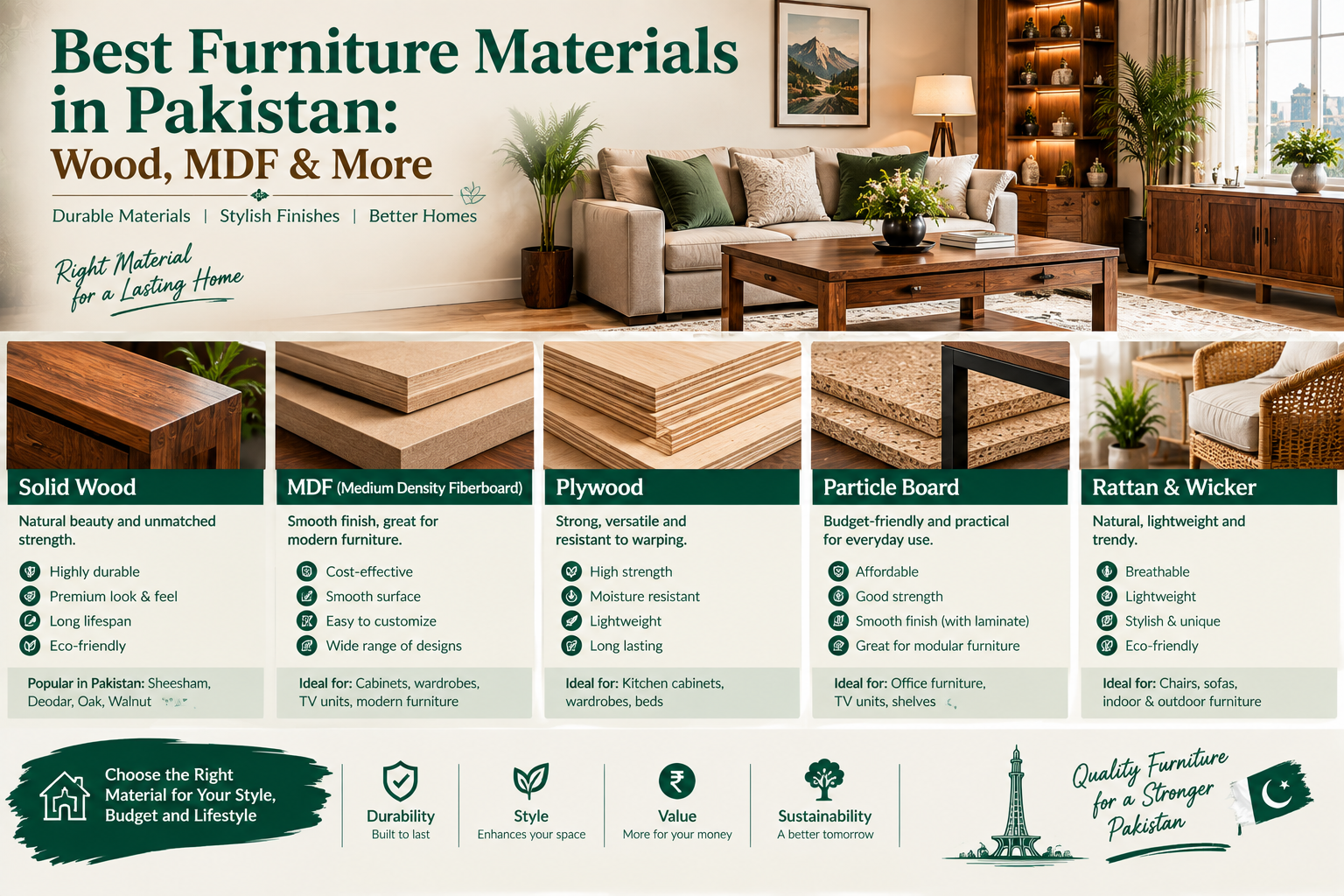
Furniture materials can generally be divided into two broad categories: natural wood and engineered materials.
Natural wood comes from trees and has been used for furniture for centuries. It is valued for its natural grain, strength, appearance, and traditional appeal.
Engineered materials are manufactured by processing wood fibers, particles, veneers, or layers into boards. MDF, plywood, and particle board are examples of engineered materials. These materials are widely used in modern furniture because they can offer consistent surfaces and practical design possibilities.
Neither category is suitable for every situation. The best choice depends on the furniture piece and how it will be used.
Sheesham Wood Furniture in Pakistan
Sheesham is one of the most recognized woods associated with furniture in Pakistan. It is particularly popular for traditional and classic furniture designs.
Sheesham furniture is known for its attractive natural grain and strong appearance. Many Pakistani furniture makers use it for beds, dining tables, chairs, cabinets, coffee tables, doors, and other household items.
One of the major attractions of Sheesham is its traditional character. Its natural patterns can make every piece look slightly different, giving furniture a distinctive appearance.
Features of Sheesham
Sheesham is generally considered a strong and durable hardwood. Properly prepared and maintained Sheesham furniture can remain useful for many years.
Its natural grain also makes it suitable for furniture where the beauty of the wood is intended to remain visible.
Common Uses
Sheesham is frequently used for:
Beds
Dining tables
Chairs
Coffee tables
Side tables
Cabinets
Bookshelves
TV units
Wooden benches
Traditional furniture
Why Pakistani Homes Like Sheesham
Sheesham has a strong connection with traditional Pakistani furniture. Its appearance works well with both classic carved designs and relatively simple modern styles.
For homeowners who want a natural wooden appearance, Sheesham can be an attractive option.
Deodar Wood Furniture
Deodar is another well-known wood associated with Pakistan's furniture and traditional woodwork. It is particularly appreciated for its appearance and distinctive natural character.
Deodar has historically been used in construction and woodwork, and its association with northern areas gives it an important place in Pakistan's woodworking traditions.
Furniture made from Deodar can have a warm and natural appearance. Depending on the design and finishing, it can be used in both traditional and contemporary interiors.
Common Uses of Deodar
Deodar may be considered for:
Cabinets
Beds
Tables
Doors
Decorative furniture
Wall panels
Wooden interior elements
Its natural appearance makes it especially appealing to people who prefer furniture with a strong connection to natural materials.
Pine Wood
Pine is another wood used in furniture production. It is generally lighter in appearance and can be useful for different furniture applications.
Pine furniture can work particularly well for simple designs and interiors where a lighter wooden appearance is preferred.
It can also be finished, painted, or treated in different ways depending on the desired appearance.
Uses of Pine
Pine may be used for:
Shelves
Tables
Beds
Storage units
Chairs
Decorative pieces
Simple household furniture
Its suitability depends on the quality and treatment of the wood as well as the intended use of the furniture.
Teak Wood
Teak is internationally recognized as a valuable hardwood and is sometimes used in high-quality furniture and interior applications.
It has a distinctive appearance and is appreciated for its durability and natural characteristics.
In Pakistan, teak furniture may be considered for premium furniture projects where the buyer wants a classic hardwood appearance.
Teak Furniture Applications
Teak can be used for:
Tables
Chairs
Cabinets
Outdoor furniture
Doors
Decorative woodwork
Because of its qualities and market value, teak furniture can be more expensive than furniture made from many other materials.
MDF Furniture in Pakistan
MDF stands for Medium-Density Fiberboard. It is an engineered wood product made from processed wood fibers combined under pressure.
MDF has become popular in modern furniture because it provides a smooth and consistent surface. This makes it particularly suitable for painted furniture and contemporary designs.
Common MDF Furniture
MDF is frequently used for:
Wardrobes
TV units
Kitchen cabinets
Study tables
Shelves
Dressing tables
Office furniture
Decorative wall units
MDF can be cut into different shapes, allowing furniture makers to create modern designs.
Benefits of MDF
One important advantage of MDF is its smooth surface. It can be painted or finished in a variety of ways.
It is also useful for furniture designs where a completely uniform surface is preferred instead of visible natural wood grain.
However, MDF quality can vary, and its performance depends on manufacturing quality, thickness, finishing, and protection from moisture.
Plywood Furniture
Plywood is made by bonding layers of wood veneer together. The layered structure gives plywood useful strength and stability for many furniture applications.
It is commonly used in cabinets, wardrobes, tables, shelves, and other furniture.
Why Plywood Is Used
Plywood can offer a useful combination of strength and versatility. Different grades and thicknesses are available for different purposes.
High-quality plywood can be particularly useful when furniture needs a strong board structure.
Plywood Applications
In Pakistani homes, plywood can be used for:
Kitchen cabinets
Wardrobes
Shelving
Tables
Storage units
Office furniture
Custom furniture
The quality of plywood is important, so buyers should ask about the board's thickness and construction rather than judging it only by appearance.
Particle Board
Particle board is another engineered wood material. It is manufactured from wood particles combined with adhesive and compressed into boards.
It is often used in affordable furniture and ready-made products.
Particle board can be suitable for furniture where cost is a major consideration and the furniture is not expected to handle extremely heavy use.
Common Applications
Particle board may be used for:
Shelves
Cabinets
Tables
Computer desks
Wardrobes
Ready-made furniture
Moisture protection is especially important because particle board can be affected by excessive moisture.
Solid Wood Furniture
Solid wood furniture is made primarily from natural wood rather than engineered boards.
It remains popular among Pakistani homeowners because of its natural appearance and traditional appeal.
Solid wood furniture can be found in many designs, including both classic carved styles and modern minimalist pieces.
Advantages of Solid Wood
Some commonly appreciated characteristics include:
Natural appearance
Visible wood grain
Strong traditional appeal
Variety of finishing options
Long-term usability when properly made and maintained
However, solid wood furniture may cost more than furniture made from engineered boards.
Veneer Furniture
Wood veneer is a thin layer of natural wood applied over another board or material.
Veneer allows furniture makers to achieve the appearance of natural wood while using a different structural material underneath.
This can be useful for modern furniture designs where a natural wood appearance is desired.
Veneer furniture can be used for:
Cabinets
Tables
TV units
Wardrobes
Office furniture
Decorative panels
The quality of both the veneer and the underlying board affects the final result.
Laminated Furniture
Laminates are commonly used in modern Pakistani furniture because they are available in many colors, patterns, and textures.
A laminate surface can imitate wood, stone, or other decorative finishes.
This gives designers flexibility when creating contemporary interiors.
Common Uses
Laminate finishes are popular for:
Kitchen cabinets
Wardrobes
Study tables
TV units
Office desks
Storage cabinets
Modern bedroom furniture
One advantage is the wide range of visual options available.
Choosing Material for Bedroom Furniture
Bedroom furniture needs to be comfortable, practical, and durable.
For beds, solid wood can provide a traditional and substantial appearance. Sheesham is often considered for classic wooden beds.
For wardrobes and dressing tables, MDF, plywood, laminated boards, and other engineered materials can be practical choices depending on design and budget.
The most important point is to consider how heavily the furniture will be used.
A wardrobe used every day needs strong construction, reliable hinges, good drawer runners, and a suitable board thickness.
Choosing Material for Living Room Furniture
Living room furniture often combines appearance with frequent use.
Coffee tables, TV units, cabinets, and side tables can be made from solid wood, MDF, plywood, veneer, laminate, or combinations of these materials.
For a traditional living room, natural wood can create a warm atmosphere.
For a modern living room, laminated MDF or veneer can create a cleaner contemporary appearance.
Choosing Material for Dining Furniture
Dining tables and chairs experience regular use, so strength and stability are important.
Solid wood is a traditional choice for dining furniture. Sheesham and other hardwood options can provide a natural and substantial appearance.
For modern dining rooms, engineered boards combined with strong structural components can also be considered.
The table legs, joints, and overall construction should be checked carefully.
Choosing Material for Kitchen Furniture
Kitchen furniture has different requirements because it is exposed to moisture, heat, cooking activity, and frequent cleaning.
Plywood, MDF, laminates, and other materials may be used in kitchen cabinets depending on the design and budget.
The surface finish and edge protection are especially important.
Cabinets should be designed to reduce direct exposure to water, particularly around sinks.
Furniture Material for Small Homes
Small homes often benefit from practical furniture that combines storage and style.
MDF, plywood, laminate, and other engineered materials can be useful for customized furniture because they allow designers to create wardrobes, shelves, wall units, and storage cabinets according to available space.
For example, a custom wardrobe can use the height of a room more effectively than a standard piece.
Traditional Pakistani Furniture Materials
Traditional Pakistani furniture has a strong relationship with natural wood.
Many traditional pieces feature carved surfaces, decorative patterns, turned legs, wooden frames, and detailed craftsmanship.
Natural wood can be particularly suitable for these designs because its grain and texture contribute to the traditional appearance.
Furniture traditions vary across different regions of Pakistan, and local craftsmen often develop styles influenced by regional culture and design traditions.
Modern Furniture Materials
Modern Pakistani furniture increasingly combines different materials.
A contemporary wardrobe might combine MDF, laminate, glass, metal handles, and other components.
A modern dining table might combine wood with metal legs.
A TV unit may combine MDF, veneer, glass, and lighting elements.
This combination approach allows furniture designers to create a wide range of styles without depending on a single material.
How to Check Furniture Material Before Buying
Before buying furniture, customers should ask the seller what material has been used.
Do not judge furniture only by its outer appearance.
Check the following:
Ask About the Core Material
A cabinet may look like solid wood from the outside while using engineered board underneath.
Ask whether it is solid wood, plywood, MDF, particle board, or another material.
Check Thickness
Board thickness matters for many furniture applications.
A very thin board may not be suitable for furniture that needs to support significant weight.
Inspect the Edges
Edges can provide useful clues about the construction.
Look for clean finishing, proper edge banding, and secure joints.
Check Joints
For wooden furniture, examine the joints carefully.
Strong and properly finished joints can contribute significantly to furniture stability.
Examine the Finish
A good finish should appear consistent across the furniture surface.
Look for uneven areas, peeling surfaces, rough edges, or visible finishing problems.
Furniture Material and Maintenance
Different materials require different care.
Natural wood furniture can benefit from regular dusting and protection from excessive moisture.
MDF and particle board furniture should be protected from prolonged exposure to water.
Laminate surfaces are generally convenient for regular cleaning, but harsh chemicals should not automatically be used without checking the manufacturer's recommendations.
Proper maintenance can help furniture remain attractive and functional for a longer period.
Furniture Material and Budget
Budget is an important part of furniture selection.
Solid hardwood furniture can require a larger investment, particularly when the design includes detailed craftsmanship.
MDF, particle board, and some laminated furniture options can provide more affordable alternatives.
However, the cheapest furniture is not always the most suitable choice.
Instead of focusing only on the initial price, buyers should consider the expected use, construction quality, material quality, and maintenance requirements.
Custom Furniture in Pakistan
Custom furniture gives homeowners an opportunity to select the material, dimensions, color, finish, and design according to their needs.
This can be especially useful when a home has unusual room dimensions or limited space.
A local furniture craftsman may create a customized wardrobe, bed, bookshelf, dining table, or storage unit according to measurements.
Custom furniture also allows customers to discuss material choices directly with the maker.
Furniture Materials and Interior Design
Furniture material strongly affects the overall appearance of a room.
Natural wood can create warmth and a traditional atmosphere.
White or neutral MDF furniture can create a clean contemporary look.
Dark wood can create a more classic appearance.
Laminate can introduce modern colors and patterns.
Combining materials carefully can create balanced interiors without making the room feel overly busy.
Eco-Friendly Considerations
Furniture buyers are becoming increasingly interested in responsible material choices.
Using furniture for many years can reduce the need for frequent replacement.
Buyers can also ask furniture makers about the source and type of wood being used.
For engineered boards, customers can ask about quality and manufacturing standards where relevant.
Choosing durable furniture and maintaining it properly can contribute to a more sustainable approach to home furnishing.
Pakistani Furniture Craftsmanship
Material is only one part of furniture quality. Craftsmanship is equally important.
Two furniture pieces made from the same material can perform differently depending on construction.
A skilled craftsman pays attention to measurements, joints, finishing, alignment, and details.
Pakistan has a long tradition of woodworking, and craftsmen in different cities and regions continue to produce both traditional and modern furniture.
The combination of suitable materials and skilled craftsmanship can create furniture that is attractive and practical.
Furniture Materials for Offices
Office furniture requires durability, functionality, and a professional appearance.
MDF, laminate, plywood, metal, and other materials are commonly suitable for desks, cabinets, shelves, and workstations.
For office desks, the surface should be easy to maintain and sufficiently strong for computers and everyday work equipment.
Storage cabinets should have reliable hinges and drawer systems.
Furniture Materials for Children's Rooms
Furniture for children's rooms should focus on stability, safe construction, and easy maintenance.
Smooth surfaces and properly finished edges are useful considerations.
MDF, plywood, and solid wood can all be used depending on the design.
Furniture should be appropriately sized and securely constructed for its intended use.
Mixing Different Materials
Modern furniture does not always need to use one material.
A single piece can combine several materials.
For example:
Solid wood frame + upholstered seat
MDF cabinet + laminate finish
Plywood structure + natural veneer
Wood tabletop + metal legs
MDF TV unit + glass shelves
These combinations can provide both visual variety and practical functionality.
Final Tips for Choosing Furniture Material
When buying furniture in Pakistan, keep the following points in mind:
Decide where the furniture will be used.
Consider how frequently it will be used.
Ask about the exact material.
Check board thickness where relevant.
Inspect joints and construction.
Look carefully at the finishing.
Consider moisture exposure.
Compare quality rather than price alone.
Choose a material that suits your interior style.
Consider maintenance requirements.
For custom furniture, discuss material choices with the craftsman.
Choose durable construction for frequently used furniture.
Conclusion
Furniture materials play an important role in the appearance, strength, usability, and maintenance of furniture in Pakistani homes. Sheesham and other natural woods remain popular for traditional and classic furniture, while MDF, plywood, particle board, laminate, and veneer provide practical options for modern interiors.
There is no single material that is perfect for every furniture piece. The right choice depends on the room, purpose, design, budget, and expected level of use.
Whether someone prefers a traditional Sheesham dining table, a modern MDF wardrobe, a plywood kitchen cabinet, or a custom wooden bed, understanding the material helps make a more informed furniture decision.
Pakistan's furniture industry combines traditional woodworking skills with modern design approaches. With careful material selection, good craftsmanship, proper finishing, and regular maintenance, homeowners can choose furniture that adds comfort, functionality, and character to their homes for years to come.
FAQs
1. Which wood is popular for furniture in Pakistan?
Sheesham is one of the commonly preferred woods for traditional and wooden furniture in Pakistan.
2. Is MDF suitable for furniture?
Yes, MDF can be suitable for wardrobes, cabinets, TV units, dressing tables, and many modern furniture designs when properly manufactured and finished.
3. What is the difference between solid wood and MDF?
Solid wood comes directly from natural timber, while MDF is an engineered board made from processed wood fibers.
4. Is plywood good for furniture?
Good-quality plywood can be a practical material for cabinets, wardrobes, shelves, tables, and other furniture applications.
5. How can I choose the right furniture material?
Consider the furniture's purpose, expected use, room conditions, budget, design preference, construction quality, and maintenance requirements.