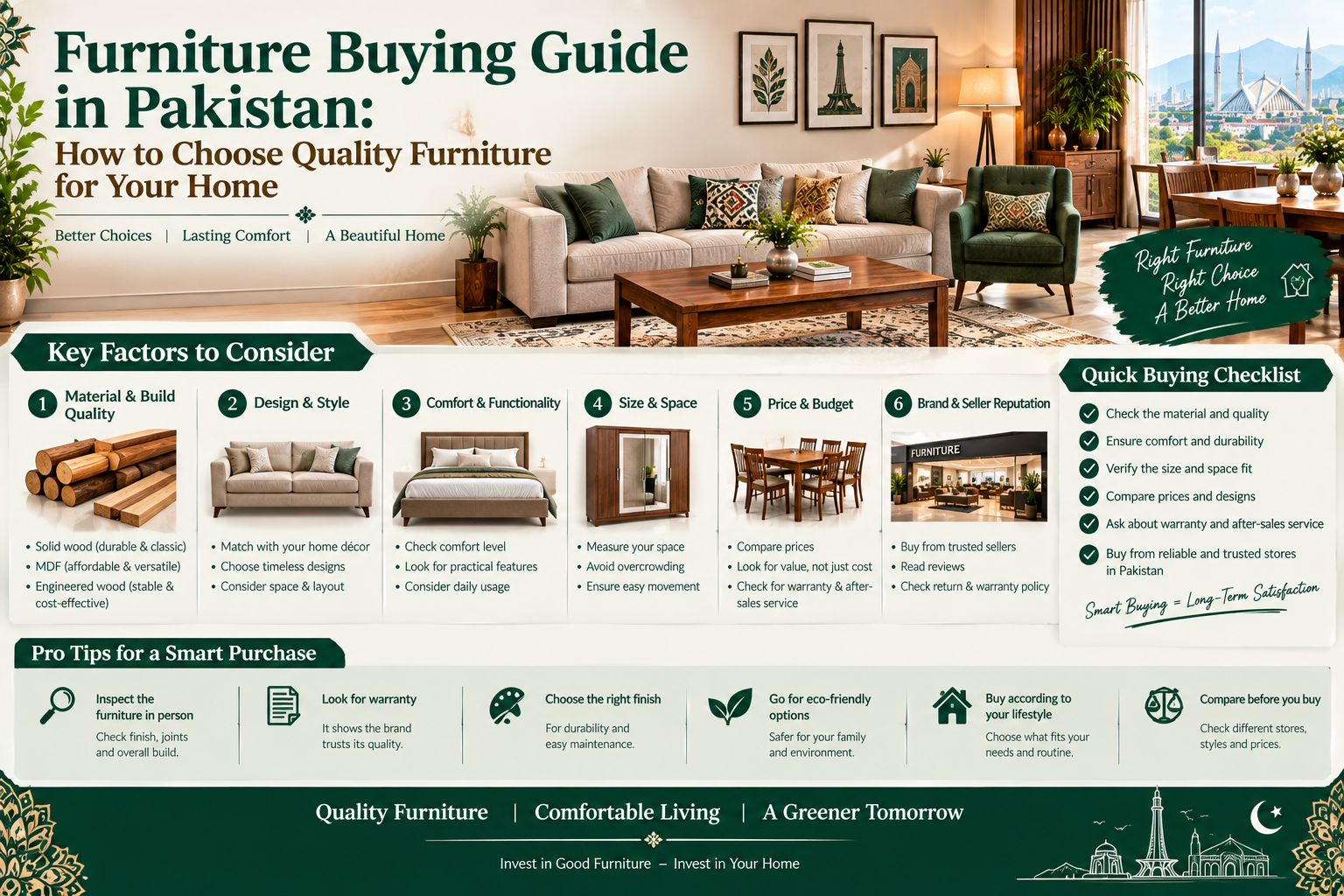
Furniture is one of the most important parts of a home. It provides comfort, storage, functionality, and style while also helping define the overall character of an interior. In Pakistan, people have access to a wide range of furniture, from traditional handcrafted wooden pieces to modern, minimalist, and customized designs.
Buying furniture, however, requires more thought than simply choosing a design that looks attractive. A beautiful sofa may not be comfortable, a stylish wardrobe may not provide enough storage, and a low-priced table may not be suitable for frequent use. Material, construction, dimensions, finishing, maintenance, and budget all matter when selecting furniture.
A good furniture buying decision starts with understanding your actual needs. Whether you are furnishing a new house, renovating a bedroom, upgrading a living room, or buying a single dining table, a little planning can help you choose pieces that work well for your space.
This furniture buying guide explains important factors to consider when purchasing furniture in Pakistan.
Understand Your Furniture Needs
The first step is to identify what you actually need.
Before visiting a furniture market or browsing online stores, make a list of the furniture required for each room.
For example, a bedroom may require:
Bed
Wardrobe
Dressing table
Bedside tables
Storage cabinet
Study table
A living room may require:
Sofa
Coffee table
TV unit
Side tables
Bookshelf
Storage cabinet
Making a list helps prevent unnecessary purchases and makes it easier to manage the overall budget.
Measure Your Room Before Buying
One of the most common furniture mistakes is buying something without checking its dimensions.
A piece may look perfect in a showroom but become difficult to use when placed in a small room.
Before buying furniture, measure:
Room length
Room width
Wall space
Doorways
Windows
Stairways
Available floor space
Also consider how people will move around the furniture.
A sofa should not block an important walkway, and a wardrobe should not interfere with doors or windows.
Consider Furniture Proportions
Furniture should match the size of the room.
Large furniture can make a small room feel crowded, while very small furniture can look out of proportion in a large room.
For a smaller Pakistani home or apartment, practical furniture with built-in storage can be useful.
For larger rooms, larger sofas, wider dining tables, and bigger storage units may create a more balanced appearance.
Choose the Right Material
Material is one of the most important factors when buying furniture.
Pakistan has many furniture options, including:
Sheesham wood
Deodar
Pine
Teak
MDF
Plywood
Particle board
Veneer
Laminated boards
Metal
Glass
Each material has different characteristics.
Natural wood can provide a traditional appearance, while MDF and laminate can be useful for modern designs.
The best material depends on the furniture's purpose, expected use, environment, and budget.
Understand Solid Wood Furniture
Solid wood furniture is popular because of its natural appearance and traditional character.
Sheesham furniture, for example, is commonly associated with classic Pakistani furniture designs.
Solid wood can be used for:
Beds
Dining tables
Chairs
Cabinets
Coffee tables
Bookshelves
Side tables
However, buyers should ask what type of wood has actually been used rather than assuming that every wooden-looking product is made from solid wood.
Check Engineered Wood Furniture
Engineered materials such as MDF, plywood, and particle board are widely used in modern furniture.
They can be useful for wardrobes, cabinets, TV units, study tables, and other furniture.
When purchasing engineered-board furniture, ask about the board type, thickness, finishing, and construction.
The outer appearance alone does not tell you everything about the quality of a furniture piece.
Inspect Furniture Construction
Good construction is just as important as good material.
Look closely at how the furniture has been assembled.
For wooden furniture, inspect:
Joints
Corners
Legs
Frames
Drawer connections
Cabinet doors
Back panels
Furniture should feel stable when handled normally.
A chair should not feel loose, a table should not wobble unnecessarily, and cabinet doors should open and close properly.
Check the Joints
Furniture joints are important because they help hold different parts together.
When purchasing wooden furniture, carefully inspect the joints.
Look for:
Proper alignment
Secure connections
Clean finishing
No visible gaps
No unnecessary movement
Detailed craftsmanship can make a noticeable difference in furniture performance.
Examine Furniture Finishing
Finishing affects both appearance and protection.
A good finish should generally appear consistent across the furniture surface.
Check for:
Uneven polish
Rough areas
Peeling
Scratches
Poorly finished edges
Visible glue marks
Uneven paint
For wooden furniture, the finishing should complement the natural grain rather than hide obvious construction problems.
Test Drawers and Doors
If you are buying a wardrobe, cabinet, dressing table, or chest of drawers, test every drawer and door.
Open and close them several times.
Check whether:
Drawers move smoothly
Doors align properly
Handles are secure
Hinges work correctly
Drawers fit correctly
Nothing gets stuck
Small hardware components can have a major effect on everyday convenience.
Check Furniture Stability
Stability is particularly important for tables, chairs, beds, shelves, and cabinets.
A dining table should sit firmly on the floor.
A chair should remain stable when someone sits on it normally.
A wardrobe should have a secure and stable construction.
Do not judge stability only by appearance. Carefully inspect the structure before purchasing.
Choose the Right Sofa
The sofa is often one of the most frequently used pieces of furniture in a living room.
When choosing a sofa, consider:
Size
Seat depth
Back support
Frame construction
Cushion quality
Fabric
Cleaning requirements
Room layout
A sofa should be comfortable for the people who will regularly use it.
It should also fit the room without making movement difficult.
Selecting a Dining Table
Dining tables are available in many shapes and materials.
Common options include:
Rectangular tables
Square tables
Round tables
Oval tables
The best shape depends on the room.
Rectangular tables can work well in longer dining areas, while round tables can be useful where people want a more compact arrangement.
Before buying, consider the number of people who will regularly use the table.
Choosing a Bed
The bed is one of the most important pieces of bedroom furniture.
Consider:
Room size
Mattress size
Bed frame strength
Storage requirements
Headboard design
Material
Overall height
Storage beds can be particularly useful in homes where additional storage is needed.
A bed should be selected according to the room's dimensions rather than only its appearance.
Choosing a Wardrobe
A wardrobe should provide sufficient storage without overwhelming the room.
Think about what you need to store:
Clothes
Shoes
Bags
Accessories
Bedding
Seasonal items
A wardrobe can include hanging space, shelves, drawers, or a combination of these.
For smaller rooms, a tall wardrobe can make better use of vertical space.
Selecting a Dressing Table
A dressing table should provide enough surface area and storage for its intended purpose.
Consider:
Mirror size
Drawer arrangement
Storage capacity
Material
Height
Available floor space
Make sure the drawers and handles work properly before purchasing.
Buying Furniture for Small Homes
Many Pakistani homes and apartments have limited space, making furniture selection particularly important.
Choose pieces that provide more than one function.
Examples include:
Storage beds
Foldable tables
Wall-mounted shelves
Compact sofas
Multipurpose cabinets
Narrow storage units
Modular furniture
Furniture with built-in storage can help keep rooms organized.
Consider Your Home's Interior Style
Furniture should complement the existing interior.
For traditional interiors, natural wood and carved furniture can create a warm appearance.
For modern interiors, clean lines, neutral finishes, and simple shapes may work well.
For transitional interiors, traditional wooden elements can be combined with contemporary furniture.
The goal is to create a balanced room rather than purchasing every piece in a completely different style.
Think About Color
Furniture color can influence the overall appearance of a room.
Natural wooden shades can create warmth.
White and light colors can make furniture look visually lighter.
Dark furniture can create a more traditional and formal atmosphere.
Neutral colors can be easier to coordinate with changing décor.
When choosing upholstered furniture, consider existing curtains, walls, rugs, and flooring.
Compare Quality Before Price
Price is naturally an important factor, but it should not be the only consideration.
Two furniture pieces may look similar while having significant differences in:
Material
Construction
Hardware
Finishing
Thickness
Craftsmanship
Expected durability
Instead of simply choosing the cheapest option, compare what you are receiving for the price.
Set a Furniture Budget
Create a realistic budget before shopping.
Divide the budget according to priority.
For example, you may decide to spend more on frequently used furniture such as a sofa, bed, or dining table while choosing simpler options for decorative pieces.
A planned budget can prevent unnecessary spending.
Do Not Forget Delivery Costs
Furniture is often large and difficult to transport.
Before finalizing a purchase, ask whether delivery is included in the price.
If delivery costs extra, include them in your total budget.
Also ask about the expected delivery time and whether the furniture will be assembled at home.
Check Furniture Assembly
Some furniture comes fully assembled, while other pieces require assembly.
If furniture needs assembly, ask who will assemble it.
For large wardrobes, beds, and cabinets, proper assembly is important.
Poor assembly can affect stability and functionality.
Ask About Warranty or After-Sales Support
When purchasing expensive furniture, ask whether the seller provides any warranty or after-sales service.
Policies can vary between sellers and products.
Ask about what is covered and for how long.
It is useful to keep receipts and purchase information for future reference.
Buying Custom Furniture
Custom furniture is a popular option for people who want specific sizes or designs.
It can be particularly useful when:
A room has unusual dimensions
Standard furniture does not fit
Extra storage is required
A particular style is desired
A homeowner wants a matching furniture set
Before ordering custom furniture, clearly discuss measurements, material, design, finishing, hardware, price, and expected completion time.
Buying Furniture from Local Craftsmen
Pakistan has many skilled furniture craftsmen.
Local workshops can provide customized designs and traditional craftsmanship.
When choosing a craftsman, examine previous work and discuss the material and construction clearly.
It can be helpful to agree on the design and specifications before production begins.
Buying Ready-Made Furniture
Ready-made furniture can be convenient because customers can see the finished product before purchasing.
It may also save time compared with custom furniture.
However, measurements should still be checked carefully.
Make sure the furniture can fit through doors, corridors, elevators, and stairways if necessary.
Online Furniture Shopping
Online furniture shopping has become increasingly convenient.
Customers can compare different designs, materials, sizes, and prices from home.
However, online buyers should carefully read product information.
Check:
Dimensions
Material
Color
Finish
Delivery information
Return policy
Warranty information
Customer reviews where available
Do not assume that a product described as “wooden” is necessarily made entirely from solid wood.
Visit a Showroom When Possible
For expensive furniture, visiting a showroom can help you evaluate the product physically.
You can:
Sit on a sofa
Open drawers
Check surfaces
Examine joints
Compare colors
Assess furniture size
Feel the material
Physical inspection can provide information that photographs cannot.
Ask Questions Before Buying
Do not hesitate to ask the seller questions.
Useful questions include:
What material is this made from?
What is the board thickness?
Is the wood solid?
What type of finish has been used?
Is delivery included?
Is assembly included?
Is there a warranty?
How long will delivery take?
Can the design be customized?
Clear questions can help avoid misunderstandings.
Consider Maintenance
Different furniture materials require different maintenance.
Natural wood may require careful cleaning and protection from excessive moisture.
Laminate surfaces may be relatively convenient for regular cleaning.
Upholstered furniture may require vacuuming and appropriate fabric care.
Before purchasing, think about whether you can maintain the furniture properly.
Consider the Pakistani Climate
Pakistan has different climatic conditions across its regions, including hot summers and varying humidity.
Furniture should be selected and maintained according to the conditions of the home.
Excessive moisture can be particularly important for wood-based boards.
Direct sunlight may also affect certain finishes and fabrics over time.
Using curtains, blinds, and appropriate placement can help protect furniture from environmental exposure.
Choose Furniture That Can Last
Furniture is a long-term household purchase.
Instead of following every short-lived trend, consider whether the design will remain practical over time.
Classic shapes and neutral finishes can often be easier to use with changing décor.
Durable construction can also reduce the need for frequent replacement.
Sustainable Furniture Choices
Responsible furniture buying can include choosing durable pieces that are intended for long-term use.
Instead of replacing furniture frequently, homeowners can maintain, repair, refinish, or update suitable pieces.
Older wooden furniture can sometimes receive a new finish or updated upholstery and continue serving a useful purpose.
This approach can combine practicality with a more sustainable attitude toward home furnishing.
Common Furniture Buying Mistakes
Avoiding common mistakes can make furniture shopping easier.
Buying Without Measuring
Always measure the available space before purchasing.
Focusing Only on Appearance
A beautiful design does not automatically mean good construction.
Ignoring Material
Ask exactly what the furniture is made from.
Forgetting Storage Needs
Consider what you actually need to store.
Ignoring Maintenance
Choose furniture that fits your ability to maintain it.
Buying Everything at Once
There is no need to purchase every item immediately if the budget does not allow it.
Important pieces can be purchased first, while decorative furniture can be added gradually.
A Simple Furniture Buying Checklist
Before purchasing furniture in Pakistan, check:
Room measurements
Furniture dimensions
Material
Construction
Joints
Finishing
Hardware
Stability
Comfort
Storage capacity
Color
Maintenance requirements
Delivery charges
Assembly
Warranty or after-sales policy
Total cost
This checklist can help make the buying process more organized.
Furniture Shopping for Different Rooms
Every room has different requirements.
Living Room
Focus on comfort, seating capacity, layout, and appearance.
Bedroom
Focus on bed quality, storage, wardrobe capacity, and practical movement.
Dining Room
Focus on table size, stability, seating, and easy maintenance.
Kitchen
Focus on moisture resistance, storage, hardware, and easy cleaning.
Study Room
Focus on desk height, storage, lighting arrangement, and comfortable working space.
Children's Room
Focus on stable construction, practical storage, and suitable dimensions.
How to Balance Traditional and Modern Furniture
Pakistani homes can successfully combine traditional and modern furniture.
A classic wooden dining table can be paired with contemporary chairs.
A traditional carved cabinet can be used alongside a modern sofa.
A modern bedroom can include a natural wooden bedside table.
Combining styles carefully can create an interior that reflects Pakistani cultural character while maintaining a contemporary feel.
Final Thoughts
Buying furniture in Pakistan is an important household decision. The right furniture should not only look attractive but also provide comfort, functionality, stability, and practical value.
Before making a purchase, measure the room, understand the material, inspect construction, compare quality, and consider long-term maintenance.
Whether you choose traditional Sheesham furniture, modern MDF designs, plywood cabinets, customized wooden pieces, or contemporary upholstered furniture, careful planning can help you create a home that is comfortable and visually appealing.
Pakistan's furniture market offers a wide variety of designs and materials. With thoughtful selection, homeowners can find furniture that suits their space, lifestyle, budget, and personal taste while creating a welcoming environment for everyday living.
FAQs
1. What should I check before buying furniture in Pakistan?
Check the material, dimensions, construction, joints, finishing, hardware, stability, comfort, price, delivery, and maintenance requirements.
2. Which material is good for furniture?
The right material depends on the furniture and its intended use. Solid wood, plywood, MDF, laminate, and other materials can all be suitable for different applications.
3. Should I buy custom or ready-made furniture?
Custom furniture can be useful for unusual spaces or specific designs, while ready-made furniture can save time and allow you to see the finished product before purchasing.
4. How can I choose furniture for a small room?
Measure the room carefully and consider compact, multipurpose, vertical-storage, foldable, or built-in furniture.
5. Is it important to inspect furniture before buying?
Yes. Physical inspection can help you check construction, stability, finishing, hardware, comfort, and overall quality before making a purchase.