Introduction
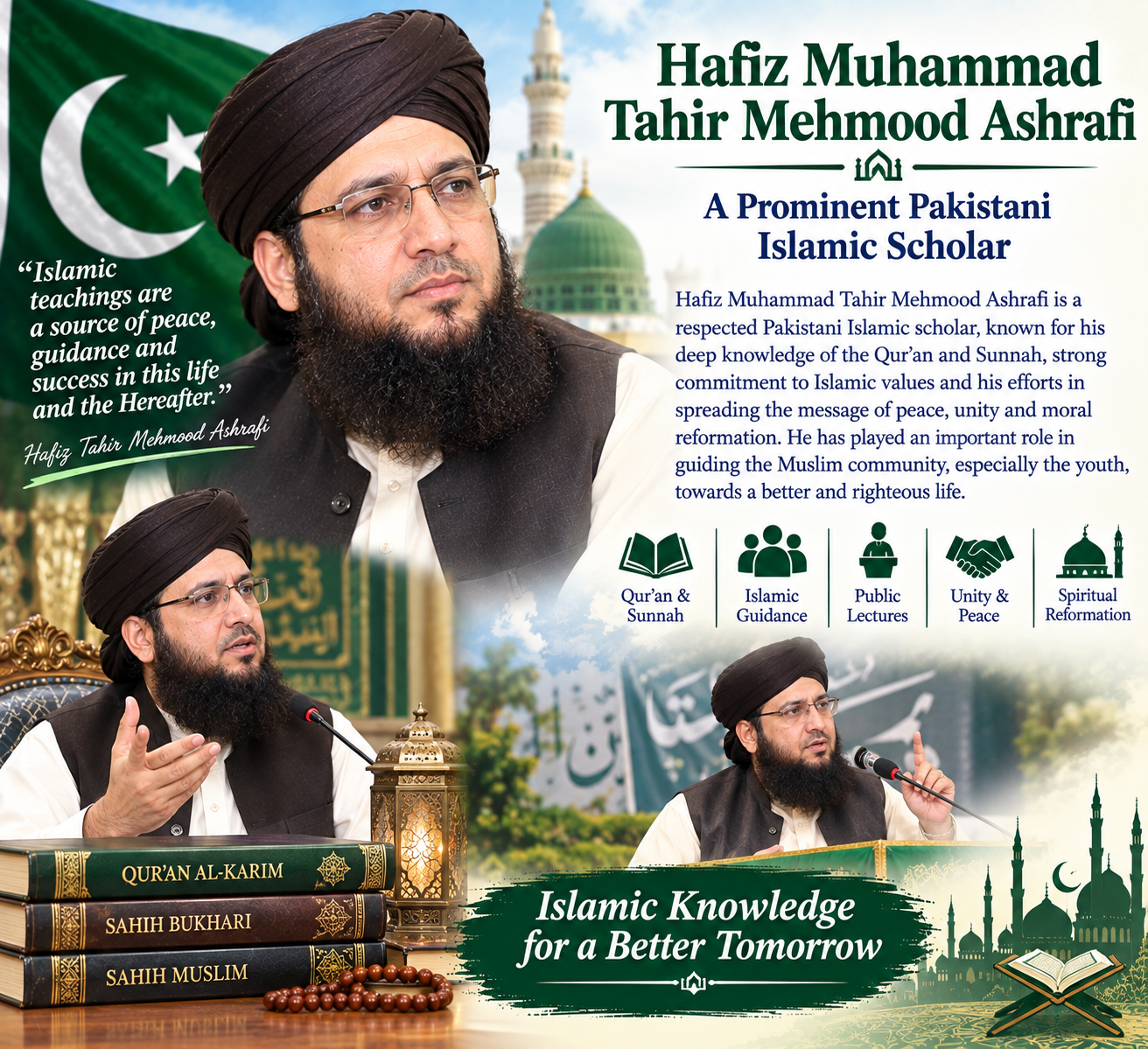
Hafiz Muhammad Tahir Mehmood Ashrafi is a well-known Pakistani Islamic scholar, religious leader, and public figure. He has remained active in religious affairs, interfaith harmony, peace, and communication between religious communities. He is also known for his work through the Pakistan Ulema Council, an organization that brings religious scholars together on important national and religious matters.
The title “Hafiz” is used for a person who has memorized the Holy Quran. Tahir Mehmood Ashrafi is widely known by this title and has spent much of his public life discussing Islamic teachings, religious harmony, peace, and social responsibilities.
His career is not limited to religious speeches. He has also taken part in national discussions and international religious diplomacy. He has represented Pakistan in different religious and diplomatic settings and has worked on issues connected with relations between Pakistan and Muslim countries.
In January 2026, Prime Minister Shehbaz Sharif appointed Hafiz Muhammad Tahir Mehmood Ashrafi as Coordinator for Religious Harmony and the Pakistani Diaspora in the Middle East and Muslim countries. The appointment highlighted his experience in religious harmony, interfaith engagement, and communication with the Muslim world.
Early Life and Education
Hafiz Tahir Mehmood Ashrafi developed his interest in Islamic education from an early stage of his life. His educational background includes religious studies as well as university education. Public sources identify him as a graduate of the University of the Punjab and Jamia Ashrafia in Lahore.
His religious education helped him develop an understanding of the Quran, Islamic teachings, religious traditions, and the responsibilities of religious scholars. His university education also gave him exposure to wider academic and social discussions.
For a religious scholar, education is not only about collecting information. It also involves understanding how religious teachings can guide people in their daily lives. Tahir Ashrafi has used his educational background in speeches, religious discussions, conferences, and public activities.
His journey shows the importance of combining religious knowledge with awareness of society. In modern times, religious scholars often have to discuss issues such as peace, tolerance, social responsibility, interfaith relations, and the role of young people.
Hafiz of the Holy Quran
The word “Hafiz” has a special meaning in Muslim society. A Hafiz is a person who memorizes the complete Holy Quran. Memorizing the Quran requires discipline, regular revision, patience, and strong commitment.
Being known as Hafiz has been an important part of Tahir Ashrafi's religious identity. His connection with Quranic teachings is also reflected in his public discussions about religious education and the importance of understanding Islamic teachings.
The Quran has a central place in the lives of Muslims. It provides guidance about faith, morality, family life, justice, kindness, patience, and responsibility. A person who memorizes the Quran carries a special religious responsibility to respect its teachings and represent them carefully.
Tahir Ashrafi has frequently spoken about religious education and the importance of spreading peaceful and constructive messages through religious platforms.
Role in the Pakistan Ulema Council
One of the most important parts of Tahir Ashrafi's public career has been his association with the Pakistan Ulema Council.
The Pakistan Ulema Council is a platform of religious scholars. Tahir Ashrafi has served as its chairman and has represented the organization in national and international discussions.
The role of such an organization is important because religious scholars can influence public opinion. When religious leaders speak about peace, tolerance, education, and social responsibility, their message can reach a large number of people.
Tahir Ashrafi has used this platform to discuss religious harmony and peaceful coexistence. His public work has included communication with different religious communities and discussions about the role of religious leaders in society.
Religious Harmony
Religious harmony has been one of the major themes of Tahir Ashrafi's public work.
Pakistan is a country with Muslims belonging to different schools of thought as well as religious minorities. A peaceful society requires respect, patience, and responsible communication.
Tahir Ashrafi has spoken about the importance of harmony between different religious communities and schools of thought. His work has included efforts to encourage dialogue and reduce misunderstandings.
In 2024, the government described him as someone who had worked for interfaith and inter-sectarian harmony.
Religious harmony does not mean that everyone must have the same beliefs. It means that people can live together peacefully while respecting differences. This idea is particularly important in a diverse country such as Pakistan.
Work for Peace
Peace has also been an important part of Tahir Ashrafi's public message.
Religious leaders have an important responsibility because their words can influence large audiences. A message of peace can encourage people to avoid hatred, violence, and unnecessary conflict.
Tahir Ashrafi has participated in conferences and public events related to peace and religious harmony. He has also received recognition for his work in promoting peace and inter-religious harmony. In February 2024, the Church of Pakistan presented him with a special award recognizing his services for peace and inter-religious harmony.
Such recognition shows that his work has not been limited to one religious community. Interfaith activities involve communication between people from different faith traditions.
Role as an Islamic Scholar
An Islamic scholar has an important role in educating society. People often turn to religious scholars when they want guidance about religious teachings and social issues.
Tahir Ashrafi has remained active in religious discussions and public communication. His speeches and statements have covered subjects such as Islamic teachings, peace, religious harmony, Pakistan's relations with Muslim countries, and social responsibilities.
He has also written books on different religious and social topics. Available biographical sources list works including Khutbat-e-Akabir, Rwadari Sirat-e-Tayyaba Ki Roshni Mein, Muslim Hukmran Aur Ghair Muslim Raia, and works discussing contemporary issues.
Writing allows religious scholars to present ideas in a form that people can study and revisit. Books can also help students and readers learn beyond public speeches.
Importance of the Mosque
Tahir Ashrafi has also been associated with the Grand Jamia Mosque in Lahore, where he has served as Imam and Khatib.
A mosque is not only a place for prayer. It can also be a place of learning, community discussion, guidance, and social connection.
As a Khatib, a religious speaker who delivers the Friday sermon, he has an opportunity to communicate religious and social messages to a large audience.
The Friday sermon has a special place in Muslim life. It can remind people about honesty, kindness, responsibility, patience, justice, family values, and concern for other people.
Religious Diplomacy
Another important area of Tahir Ashrafi's career is religious diplomacy.
Religious diplomacy involves communication between religious communities, scholars, organizations, and countries. Pakistan has strong religious, cultural, and historical relationships with many Muslim countries.
Tahir Ashrafi has participated in discussions involving Pakistan and the wider Muslim world. He has also held roles connected with religious affairs and relations with Muslim countries.
His work shows how religious scholars can sometimes contribute to international communication. Their role can be different from that of traditional diplomats, but religious and cultural understanding can still be important in international relations.
Government Responsibilities
Tahir Ashrafi has served in government-related religious roles over the years.
During the government of Prime Minister Imran Khan, he was appointed Special Representative on Religious Harmony and the Middle East. His responsibilities included matters related to religious harmony and relations with the Muslim world.
In January 2026, Prime Minister Shehbaz Sharif appointed him Coordinator for Religious Harmony and the Pakistani Diaspora in the Middle East and Muslim countries. The government said that his responsibilities include coordination, promoting mutual understanding, and improving relations with Islamic and Arab states, particularly concerning religious harmony and the Pakistani diaspora.
This role demonstrates that religious harmony can also have importance at the national and international level.
Work with Overseas Pakistanis
Millions of Pakistanis live and work in other countries, particularly in the Middle East. Their welfare and connection with Pakistan are important national concerns.
Tahir Ashrafi's 2026 government role includes coordination related to the Pakistani diaspora in Muslim countries.
Overseas Pakistanis contribute to their families and to the Pakistani economy. They also represent Pakistan in their communities.
Religious and cultural understanding can help overseas Pakistanis maintain positive relationships with the societies where they live.
Interfaith Relations
Interfaith relations are another important part of Tahir Ashrafi's public work.
Interfaith relations mean communication and cooperation between people belonging to different religions. The goal is not necessarily to remove religious differences. Instead, the goal is to encourage peaceful coexistence and mutual respect.
Pakistan has religious minorities who are part of the country's social fabric. Christians, Hindus, Sikhs, and members of other communities have contributed to Pakistan's history and society.
Religious leaders can play a useful role by encouraging people to respect the rights and dignity of others.
Tahir Ashrafi has participated in interfaith conferences and has received recognition for work in this area.
Message of Tolerance
Tolerance is an important quality in any society.
People can disagree about religion, politics, culture, or social issues. However, disagreement does not have to become hatred.
Tahir Ashrafi's public work on religious harmony has often focused on peaceful coexistence. Government sources have described his efforts as promoting tolerance and peaceful coexistence in Pakistan.
For young people, tolerance is especially important. Students meet classmates from different backgrounds and may encounter different opinions. Learning how to disagree respectfully is an important life skill.
Importance of Religious Education
Religious education can help people understand their beliefs and values.
Tahir Ashrafi has emphasized the importance of religious teachings and the role of religious institutions. In a 2024 government statement, he discussed the role of the pulpit and mosque in spreading religious teachings and educating people.
Education should encourage people to become responsible members of society. Religious knowledge can teach values such as honesty, kindness, justice, patience, respect for parents, and care for others.
At the same time, students also need general education and modern skills. A balanced approach can help young people understand both their values and the changing world around them.
Tahir Ashrafi and Young People
Young people are an important part of Pakistan's future.
Religious scholars can influence young people through speeches, educational programs, and social media. This makes responsible communication very important.
Young people today live in a world where information is available very quickly. They may see religious information online without knowing whether it is correct.
For this reason, students should learn to verify information and consult reliable teachers and scholars.
The positive lesson from Tahir Ashrafi's public career is that religious knowledge can be combined with communication, education, and social responsibility.
Public Speaking
Public speaking is one of the major skills needed by a religious scholar.
A speaker must explain difficult ideas in a way that ordinary people can understand. Religious speakers also need to consider the effect of their words on society.
Tahir Ashrafi has spent many years speaking publicly at mosques, conferences, press events, and other gatherings.
His public communication has included discussions about religion, peace, Pakistan, Muslim countries, and social issues.
Good public speaking requires confidence, knowledge, preparation, and the ability to understand an audience.
Books and Written Work
Writing is another important part of scholarly work.
Tahir Ashrafi has been credited with several books and written works. These include subjects connected with Islamic history, religious teachings, tolerance, contemporary issues, and religious guidance.
Books can preserve ideas for future generations. A speech may be heard once, but a book can be studied many times.
For students, reading religious and historical books can provide a deeper understanding of Islamic civilization and Pakistan's religious history.
Recognition for His Services
Tahir Ashrafi has received recognition for his work in religious harmony and peace.
One notable example was the special award presented by the Church of Pakistan in 2024 for his services toward peace and inter-religious harmony.
Such recognition is significant because it came from a Christian organization and related specifically to cooperation between religious communities.
His international and religious connections have also included membership in the Supreme Council of the Muslim World League, according to government information.
Current Role and Responsibilities
As of 2026, Tahir Ashrafi continues to have a public role in religious affairs.
The Pakistani government appointed him Coordinator for Religious Harmony and the Pakistani Diaspora in the Middle East and Muslim countries in January 2026.
His responsibilities involve religious harmony, communication with Muslim countries, and matters concerning overseas Pakistanis.
This role connects religious, social, and international responsibilities. It also shows how religious scholars can participate in wider national discussions.
Lessons from His Life
There are several lessons that students can learn from Tahir Ashrafi's career.
1. Education is Important
His educational background shows the value of learning. Religious knowledge and academic education can both contribute to personal development.
2. Peace Matters
His work in religious harmony shows that peaceful communication is important for society.
3. Respect Others
Interfaith work teaches the importance of respecting people from different religious backgrounds.
4. Communication is Powerful
A responsible speaker can educate people and encourage positive social behavior.
5. Knowledge Comes with Responsibility
People who have knowledge also have a responsibility to use it carefully and constructively.
6. Young People Can Make a Difference
Students should understand that their education and character can influence their families, communities, and country.
Conclusion
Hafiz Muhammad Tahir Mehmood Ashrafi is a prominent Pakistani Islamic scholar and religious leader. His public career has included religious education, Islamic scholarship, public speaking, interfaith relations, religious diplomacy, and work with the Pakistan Ulema Council.
He is particularly known for his efforts related to religious harmony and peaceful coexistence. His association with the Grand Jamia Mosque in Lahore, Pakistan Ulema Council, government religious responsibilities, and international Islamic organizations has given him a significant public role.
His appointment in January 2026 as Coordinator for Religious Harmony and the Pakistani Diaspora in the Middle East and Muslim countries further expanded his responsibilities.
For students, his journey provides lessons about education, discipline, communication, religious understanding, tolerance, and social responsibility. A strong society needs people who can use knowledge positively and encourage others toward peace and responsible citizenship.
Tahir Ashrafi's career also demonstrates that religious scholarship can connect with wider social and national responsibilities. His continued work in religious harmony and communication with different communities makes him a notable Pakistani religious figure.
FAQs
1. Who is Hafiz Tahir Mehmood Ashrafi?
Hafiz Tahir Mehmood Ashrafi is a Pakistani Islamic scholar, religious leader, and public figure known for his work in religious harmony and interfaith relations.
2. What is Hafiz Tahir Ashrafi known for?
He is known for his leadership in the Pakistan Ulema Council, religious scholarship, public speaking, and efforts to promote peace and religious harmony.
3. What government role did Tahir Ashrafi receive in 2026?
In January 2026, he was appointed Coordinator for Religious Harmony and the Pakistani Diaspora in the Middle East and Muslim countries.
4. What is the Pakistan Ulema Council?
The Pakistan Ulema Council is a platform of religious scholars. Tahir Ashrafi has served as its chairman.
5. Why is religious harmony important?
Religious harmony helps different religious communities live together peacefully, with mutual respect, tolerance, and understanding.