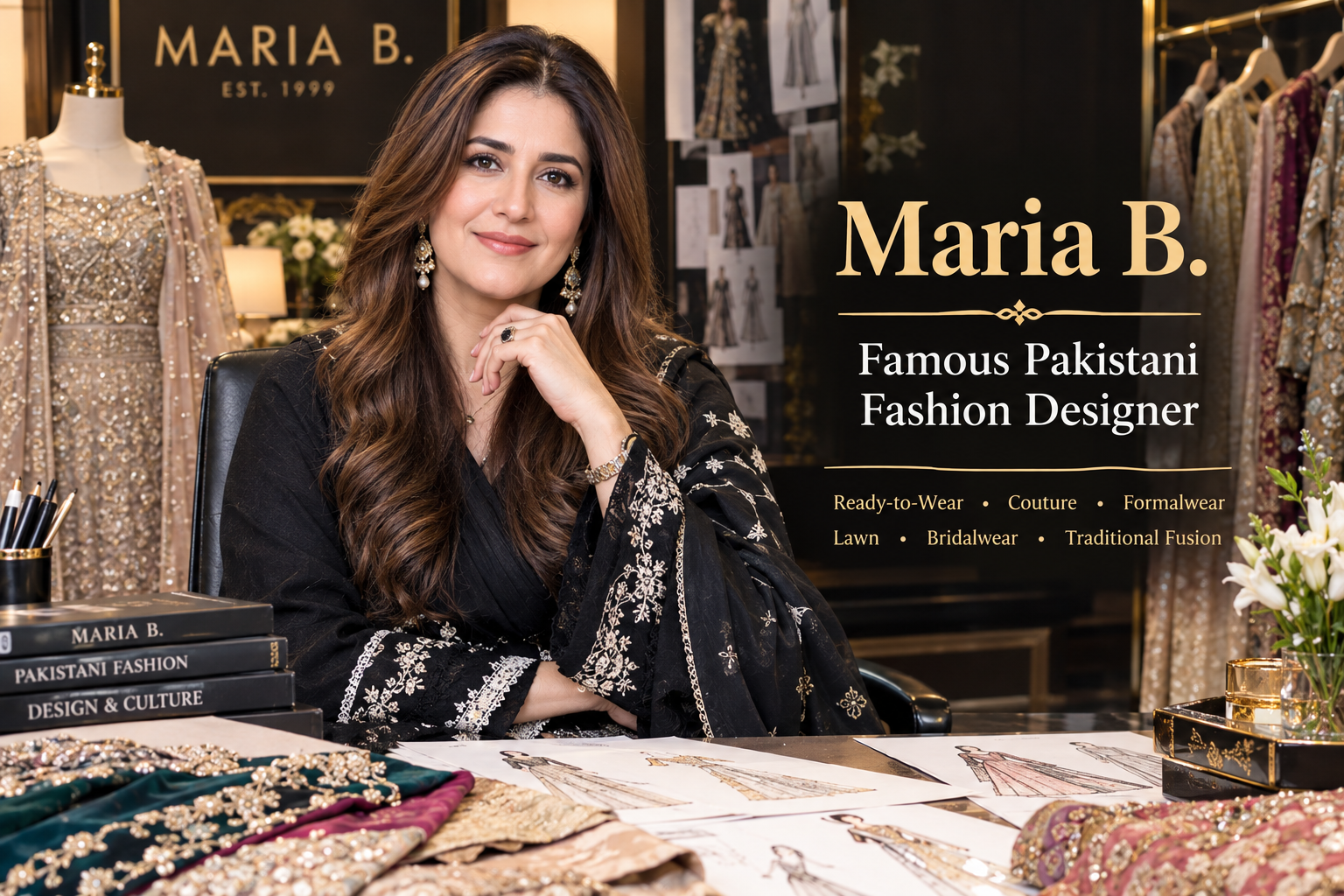
Pakistan has a diverse and creative fashion industry. Pakistani fashion includes traditional clothing, embroidery, textile craftsmanship, bridal wear, lawn collections, formal dresses, ready-to-wear outfits, and modern designs. Over the years, several designers and fashion brands have become recognized for their work in this industry. Maria B. is one of the well-known names associated with Pakistani fashion.
Maria B. is the fashion brand founded by Maria Butt in 1999. The brand developed from a designer label into a wider fashion business offering different types of clothing and accessories. Its current product range includes unstitched suits, ready-to-wear clothing, luxury formals, luxury prêt, bridal collections, couture, jewelry, accessories, perfume, and children's clothing.
Maria B.'s career is also interesting because her approach to fashion has focused strongly on customers and the business side of the industry. In a 2020 interview with Dawn, Maria discussed how she built her customer base and expanded her brand over the years.
Her journey shows how a fashion designer can develop a creative idea into a long-term fashion business.
Early Career
Maria Butt began her professional journey in fashion after graduating from the Pakistan Institute of Fashion and Design (PIFD). According to a 2020 Dawn interview, she started her brand with a retail store and initially worked on East-West fusion clothing.
The beginning of a fashion business can be challenging because a new designer has to establish a recognizable identity while also understanding what customers want.
Maria B.'s career developed during a period when Pakistan's fashion industry was becoming increasingly organized. Fashion shows, designer stores, textile exhibitions, and fashion magazines were creating new opportunities for designers.
Instead of focusing only on fashion events, Maria gradually concentrated on building a customer-oriented business.
Establishment of Maria B.
The official Maria B. brand history states that the brand was founded in 1999 by designer Maria Butt. The brand describes its design philosophy as a combination of traditional Pakistani aesthetics and contemporary designs.
The early brand was focused on establishing itself as a fashion label in Pakistan.
Over time, the business expanded into different categories of clothing.
This expansion allowed the brand to reach customers looking for everyday Pakistani clothing as well as formal and bridal outfits.
Building a Customer Base
One of the important aspects of Maria B.'s career has been her focus on customers.
In a 2020 interview, Dawn reported that Maria had moved away from relying heavily on fashion weeks and instead concentrated on building her customer base.
This approach is significant because fashion businesses depend on customers who repeatedly purchase their products.
A designer may create beautiful clothing, but a sustainable fashion brand also needs to understand customer preferences, pricing, quality, availability, and changing trends.
Maria B.'s business developed around these practical aspects of fashion.
Unstitched Fashion
One of the most recognizable parts of the Maria B. business is its unstitched clothing.
Unstitched fabric is particularly popular in Pakistan because customers can choose how they want the clothing to be stitched.
A typical unstitched suit may include fabric for the shirt, trousers, and dupatta. Customers can then have the outfit stitched according to their preferred style and size.
Maria B. has produced many unstitched collections over the years.
The brand's current website includes categories such as lawn, chiffon, winter fabrics, printed collections, and other unstitched clothing.
Lawn Collections
Lawn is an important part of Pakistan's fashion market, particularly during the spring and summer seasons.
Pakistani designers often create lawn collections featuring printed fabrics, embroidered details, colorful patterns, and coordinated dupattas.
Maria B. became strongly associated with lawn fashion.
In a Dawn report on the lawn industry, Maria described the importance of understanding what Pakistani women want to wear and emphasized product development, design innovation, and appropriate pricing.
Lawn therefore became an important part of the brand's commercial fashion strategy.
Design Development
Designing a successful collection requires continuous development.
Fashion trends change from season to season, so designers need to create new prints, colors, embroidery patterns, fabrics, and silhouettes.
In her 2020 Dawn interview, Maria explained that she continued to create designs for the brand's unstitched collections and worked with a growing team of designers.
The development of a design team allowed the business to produce larger collections while maintaining creative input.
Traditional and Contemporary Fashion
Maria B.'s brand combines traditional Pakistani fashion elements with contemporary designs.
Traditional elements can include embroidery, printed patterns, shalwar kameez styles, dupattas, and fabrics associated with South Asian clothing.
Contemporary fashion can include updated cuts, modern color combinations, new silhouettes, and different styling approaches.
This combination allows Pakistani clothing to remain connected to cultural traditions while also responding to modern fashion preferences.
Ready-to-Wear Clothing
Maria B. also offers ready-to-wear clothing.
Ready-to-wear garments are already stitched and can be purchased in standard sizes.
This category provides convenience to customers who do not want to purchase unstitched fabric and arrange tailoring themselves.
The current Maria B. website lists ready-to-wear products made from fabrics including lawn, velvet, linen, raw silk, net, and other materials.
The ready-to-wear category has therefore become an important part of the brand's product range.
Luxury Formals
Formal clothing is another major area of Pakistani fashion.
People often purchase formal outfits for weddings, dinners, celebrations, Eid, parties, and other special occasions.
Maria B. currently offers luxury formal collections featuring embroidered and embellished outfits.
Formal wear allows designers to use more detailed fabrics, embroidery, decorative work, and sophisticated silhouettes.
Bridal Fashion
Bridal fashion is one of the most important categories in Pakistan's luxury fashion industry.
Pakistani bridal clothing often includes detailed embroidery, embellishment, luxurious fabrics, and traditional silhouettes.
Maria B. has developed bridal collections as part of its wider fashion business.
The current official website includes a dedicated bridal section featuring multiple named collections.
Bridal fashion requires attention to detail because wedding clothing often carries cultural and personal significance for customers.
Couture
Maria B. has also expanded into couture.
Couture refers to highly detailed, luxury fashion that may involve elaborate embroidery, embellishment, specialized fabrics, and careful construction.
The brand's current website has a dedicated couture section with formal and bridal-style pieces.
Couture allows the brand to operate at a more specialized level of fashion while continuing its wider ready-to-wear and unstitched business.
Embroidery and Craftsmanship
Embroidery is an important part of Pakistani fashion.
Different regions of Pakistan have their own textile and embroidery traditions.
Fashion designers use embroidery to add decorative patterns and texture to garments.
Maria B.'s collections frequently include embroidered fabrics and embellished clothing.
The brand's current ready-to-wear and luxury collections include products described as embroidered, showing the continued importance of embroidery within its product range.
Fashion for Different Occasions
One reason for the broad range of Maria B. products is that Pakistani customers need clothing for many different occasions.
Everyday clothing requires practicality and comfort.
Eid clothing may require additional embroidery or special prints.
Wedding events often require formal or bridal outfits.
Work and social events may call for ready-to-wear formal clothing.
By offering several categories, Maria B. has developed products for different customer needs.
Expansion of the Brand
The Maria B. brand grew significantly after its establishment.
A 2020 Dawn profile reported that the brand had around 40 stores across Pakistan at that time and offered unstitched suits, prêt, formal wear, bridal wear, accessories, and jewelry.
The brand has continued to develop its online presence as well.
Today, the official website provides categories for women, men, children, brides, luxury fashion, ready-to-wear clothing, unstitched collections, accessories, and other products.
Digital Presence
The internet has changed the way fashion brands communicate with customers.
Customers can now view collections, compare products, place orders, and learn about new launches without visiting a physical store.
Maria B. maintains an official online store that displays its current collections and product categories.
This online presence allows the brand to communicate with customers in Pakistan and people interested in Pakistani clothing from other countries.
International Customers
Pakistani clothing has an international customer base, particularly among overseas Pakistanis and people interested in South Asian fashion.
Maria B.'s online presence has helped make its collections accessible beyond physical retail locations.
In a 2020 interview, Maria discussed how customers outside Pakistan could access the brand through its online store and how women in different countries were also purchasing and reselling its unstitched suits.
This shows how digital commerce has created new opportunities for Pakistani fashion brands.
Women Entrepreneurs and Resellers
An interesting aspect of Maria B.'s business model has been the role of independent women who resell its clothing.
In her Dawn interview, Maria discussed women who purchased Maria B. suits in bulk and resold them through their own small businesses. She described this as an opportunity through which some women could earn income while managing their homes and families.
This illustrates how a fashion brand can create opportunities beyond its own employees.
A large clothing business can support wholesalers, retailers, tailors, textile workers, photographers, marketers, delivery workers, and other professionals.
Fashion and Entrepreneurship
Maria B.'s career is an example of the connection between fashion and entrepreneurship.
Fashion designing involves creativity, but running a fashion brand also requires business planning.
A designer must consider production costs, fabric sourcing, pricing, marketing, customer service, retail stores, online sales, and inventory.
Maria B.'s long-running business demonstrates the importance of combining creative design with business management.
Product Development
Product development is important in fashion because customers expect new collections.
Maria B. has produced collections for different seasons and occasions.
In her 2020 interview, Maria discussed working on new unstitched collections and training teams of designers to take greater responsibility for different product lines.
The brand continues to introduce new products.
Its current website features new arrivals, luxury pret, luxury formals, stitched clothing, unstitched collections, bridal wear, jewelry, accessories, perfume, and kidswear.
Brand Identity
A fashion brand needs a clear identity.
Maria B. has developed an identity around Pakistani clothing, modern styling, embroidery, printed fabrics, formal wear, bridal fashion, and a wide range of price and product categories.
The brand's ability to offer both everyday clothing and luxury collections allows it to operate across different parts of the fashion market.
This broad product strategy has been a major feature of the brand's development.
Maria B. and Pakistani Culture
Fashion can play an important role in preserving cultural traditions.
Pakistani clothing has a long history of embroidery, textiles, prints, and traditional silhouettes.
Modern designers can reinterpret these traditions for contemporary customers.
Maria B.'s brand describes its approach as combining traditional Pakistani aesthetics with contemporary designs.
This allows traditional elements to remain part of modern fashion.
The Role of Textiles
Pakistan has a large textile industry, and fashion brands depend heavily on locally produced fabrics and textile manufacturing.
Cotton, lawn, silk, linen, chiffon, velvet, raw silk, and other materials are commonly used in Pakistani clothing.
Maria B.'s current collections include several of these fabrics and materials.
The relationship between fashion designers and the textile industry is therefore important to Pakistan's wider fashion economy.
Importance of Customer Preferences
Understanding customers is essential for a commercial fashion brand.
Customers may prefer particular colors, prints, fabrics, cuts, embroidery styles, or price ranges.
Maria B. has spoken about designing according to the needs and preferences of its customer base.
This customer-focused approach helped the brand develop a broad range of products.
It also explains why the company has continued to produce both fashionable and practical clothing.
Maria B. as a Businesswoman
Maria Butt is not only known as a designer but also as a businesswoman.
Her career demonstrates how a creative professional can develop a company with multiple product lines.
The brand now includes clothing for women, men, children, and brides as well as accessories and other products.
Managing such a business requires teams working in design, production, retail, marketing, customer service, logistics, and administration.
Lessons for Young Designers
Young people interested in fashion can learn several lessons from Maria B.'s career.
The first lesson is the importance of education.
Maria studied at the Pakistan Institute of Fashion and Design before establishing her brand.
The second lesson is patience.
Building a recognized fashion business can take years.
The third lesson is understanding customers.
Creative ideas are important, but successful commercial fashion also needs products that customers want to purchase.
The fourth lesson is continuous development.
Fashion changes quickly, so designers need to continue creating new ideas.
Fashion Education in Pakistan
Pakistan has several institutions that offer education in fashion and textile-related subjects.
Students can study fashion design, textile design, fashion merchandising, and related fields.
Such education can provide knowledge of illustration, fabrics, garment construction, design history, pattern making, and business.
A professional fashion career can then develop through internships, practical work, small businesses, fashion houses, and independent brands.
Maria B.'s own educational background demonstrates the connection between formal fashion education and professional work.
The Growth of Pakistani Fashion
The Pakistani fashion industry has grown significantly over the past few decades.
Fashion brands now operate through physical stores, websites, social media, television advertising, fashion campaigns, and online shopping platforms.
Designers work in different categories, from affordable clothing to luxury couture.
Brands such as Maria B. have contributed to the development of this wider fashion market.
Modern Maria B. Brand
The current Maria B. website shows that the brand has a broad product portfolio.
Its categories include unstitched clothing, stitched clothing, luxury formals, luxury prêt, couture, bridal collections, jewelry, perfume, accessories, and kidswear.
This demonstrates how the brand has expanded beyond its original designer-label identity.
It now functions as a larger fashion and lifestyle business.
Conclusion
Maria B. is an established name in Pakistan's fashion industry. Founded by Maria Butt in 1999, the brand has developed from a designer label into a broad fashion business offering clothing and accessories for different customers and occasions.
Maria's professional journey began after studying at the Pakistan Institute of Fashion and Design. She established her brand and gradually developed a strong customer base.
The brand became particularly associated with unstitched clothing, lawn collections, printed fabrics, embroidery, ready-to-wear fashion, formal clothing, and bridal wear. It later expanded into luxury prêt, couture, accessories, jewelry, perfume, and kidswear.
Maria B.'s career also demonstrates the business side of fashion. Her focus on customers, product development, retail, and online accessibility helped her brand develop over many years.
For young people interested in fashion designing, Maria B.'s journey shows the importance of education, creativity, customer understanding, business planning, and continuous development.
Today, Maria B. remains associated with Pakistani fashion through a wide range of traditional and contemporary clothing. Her brand represents the way Pakistani fashion can combine cultural heritage with modern design and commercial fashion.
Frequently Asked Questions
1. Who is Maria B.?
Maria B. is the fashion brand founded by Pakistani designer Maria Butt in 1999.
2. When was Maria B. founded?
Maria B. was founded in 1999 by designer Maria Butt.
3. What is Maria B. famous for?
Maria B. is known for Pakistani clothing including unstitched suits, lawn collections, ready-to-wear clothing, luxury formals, bridal wear, and couture.
4. Does Maria B. offer bridal clothing?
Yes. Maria B. has a dedicated bridal category with multiple bridal collections on its official website.
5. What products does Maria B. currently offer?
The brand currently offers unstitched and stitched clothing, luxury prêt, luxury formals, couture, bridal wear, jewelry, perfume, accessories, and kidswear.