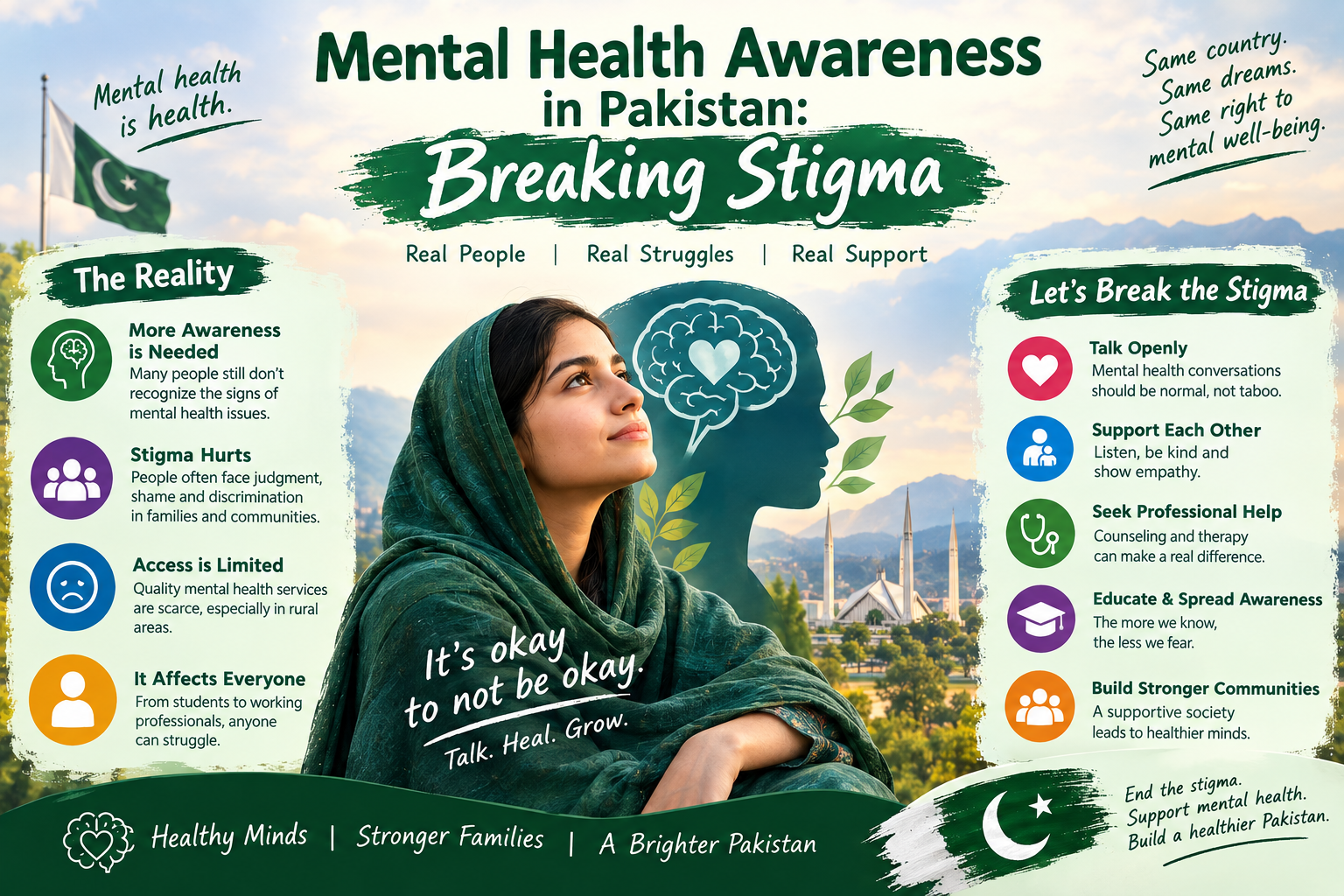
Introduction
Mental health is an important part of a healthy and balanced life. It influences how people manage everyday responsibilities, communicate with others, respond to challenges, make decisions, and experience emotions. Just like physical health, mental wellbeing deserves attention, understanding, and appropriate care.
In Pakistan, mental health has increasingly become a topic of public discussion. Students, families, healthcare professionals, educational institutions, workplaces, and community organizations are paying more attention to emotional wellbeing. However, many misunderstandings and social attitudes can still make it difficult for people to talk openly about mental health.
One of the major challenges is stigma. Mental health stigma refers to negative attitudes, stereotypes, or unfair treatment associated with mental health difficulties. When people fear being judged, they may avoid discussing their concerns or seeking professional support.
Mental health awareness can help change this situation. Accurate information can replace myths with understanding, encourage respectful conversations, and help people recognize when professional support may be appropriate.
What Is Mental Health Awareness?
Mental health awareness means understanding the importance of mental wellbeing and having reliable information about mental health.
Awareness can include learning about:
Emotional wellbeing
Stress and everyday challenges
Mental health conditions
Healthy coping strategies
Professional support
The importance of social connections
Mental health services
The effects of stigma
Awareness does not mean diagnosing yourself or other people. A professional assessment is needed when someone may have a mental health condition.
Why Mental Health Awareness Matters in Pakistan
Pakistan has a large and diverse population, with people living in cities, towns, villages, and remote communities.
People can experience different pressures depending on their circumstances.
Students may face academic pressure. Adults may experience workplace or financial stress. Families may deal with health concerns, responsibilities, or major life changes.
Without accurate information, people may misunderstand these experiences.
Mental health awareness provides an opportunity to discuss wellbeing in a more informed and respectful way.
Understanding Mental Health Stigma
Stigma can appear in different forms.
Sometimes people make jokes about mental health conditions. Sometimes they use insulting labels for people experiencing psychological difficulties. In other situations, families may discourage someone from discussing their concerns because they are worried about social judgment.
These attitudes can create barriers to support.
Reducing stigma does not mean ignoring serious mental health concerns. Instead, it means treating people with dignity while encouraging appropriate professional care.
Common Misunderstandings About Mental Health
Many myths exist around mental health.
One common misunderstanding is that emotional difficulties are always a sign of personal weakness. This is not an accurate way to understand mental health.
Another misconception is that someone can simply decide to stop experiencing a mental health problem. Mental health conditions can be complex and may require professional assessment and treatment.
Another misconception is that talking about mental health always makes problems worse. In reality, respectful conversations can help people feel understood and can encourage them to seek appropriate support.
Mental Health Is Part of Overall Health
Physical and mental health are connected.
A person's emotional wellbeing can influence sleep, concentration, energy, and daily functioning. Physical health problems can also affect emotional wellbeing.
For this reason, healthcare should consider both physical and mental aspects of a person's health.
Mental healthcare should not be viewed as something completely separate from ordinary healthcare.
Mental Health Among Pakistani Youth
Young people can experience many pressures during school, college, and early adulthood.
Academic expectations, examinations, career decisions, friendships, family expectations, and changing responsibilities can all affect wellbeing.
Young people may also spend significant amounts of time online, where they encounter both helpful information and harmful or misleading content.
Providing young people with accurate information can help them understand mental wellbeing and identify appropriate sources of support.
Academic Pressure and Student Wellbeing
Education is important for young people's future, but excessive pressure can affect wellbeing.
Students may worry about examinations, grades, admission requirements, career choices, and expectations from family or society.
Educational institutions can help by creating environments where students can discuss concerns respectfully.
Teachers can encourage students to seek appropriate support when needed.
At the same time, teachers should not be expected to diagnose or treat mental health conditions unless they have the appropriate professional qualifications.
The Role of Parents
Parents and guardians can have an important influence on young people's wellbeing.
A supportive parent can encourage communication and listen without immediately dismissing a concern.
For example, instead of telling a young person that their feelings are meaningless, parents can listen and ask what kind of support would be helpful.
Parents can also help young people access qualified healthcare professionals when necessary.
The Role of Teachers
Teachers interact with students regularly and may notice changes in participation, concentration, attendance, or behavior.
A teacher does not need to diagnose a student to provide support.
They can:
Listen respectfully
Encourage communication
Avoid humiliating students
Suggest appropriate support
Communicate with parents or guardians when appropriate
Help create a respectful classroom environment
A supportive educational environment can make students more comfortable asking for help.
The Role of Friends
Friends can provide social support during difficult periods.
A good friend can listen without making fun of someone and can encourage them to talk with a trusted adult or qualified professional if needed.
However, friends should not be expected to solve complex mental health problems themselves.
Professional support may be necessary when difficulties become persistent or seriously interfere with daily life.
Family Communication and Mental Wellbeing
Communication within families can influence emotional wellbeing.
Families can create healthier communication by giving people opportunities to speak without unnecessary criticism.
This does not mean every family member will agree on everything.
Respectful disagreement is possible while still recognizing someone's feelings and concerns.
Open communication can also make it easier for people to ask for help.
Mental Health in Pakistani Workplaces
Mental health awareness is relevant to workplaces as well.
Employees can experience stress related to workload, deadlines, financial concerns, workplace relationships, job uncertainty, or balancing work and personal responsibilities.
Organizations can promote wellbeing through respectful workplace policies, reasonable communication, appropriate breaks, and access to support where available.
Workplaces should also treat personal health information responsibly.
Social Media and Mental Health Awareness
Social media has made mental health information easier to share.
Educational posts, videos, interviews, and awareness campaigns can introduce people to important concepts.
However, social media also contains misinformation.
People should be careful when reading mental health advice online. A short video or online quiz cannot necessarily determine whether someone has a particular mental health condition.
Reliable information should preferably come from qualified professionals or reputable healthcare organizations.
Digital Mental Health Resources
Technology can expand access to mental health information and services.
Depending on the service, digital options may include:
Online appointments
Telehealth consultations
Educational websites
Mental health information platforms
Digital support programs
Healthcare management systems
Digital services should prioritize privacy, security, professional qualifications, and appropriate clinical standards.
The Importance of Privacy
Privacy is particularly important in mental healthcare.
People may avoid seeking help if they fear their personal information will be shared with others.
Families, friends, teachers, workplaces, and healthcare providers should treat personal information respectfully.
Mental health concerns should not become a subject of gossip.
Respecting privacy can help create a safer environment for people who need support.
Mental Health and Pakistani Culture
Pakistan contains many different cultural and social communities.
People communicate in different languages and follow different family traditions.
Mental health awareness programs can be more effective when they use language and examples that people understand.
Cultural sensitivity is important, but it should not prevent people from accessing appropriate professional care.
Religion and Mental Wellbeing
Religion and spirituality are meaningful sources of support for many people.
Prayer, community relationships, spiritual practices, and religious guidance can provide comfort to people who value them.
However, spiritual support should not automatically replace professional mental healthcare.
When a person may need clinical assessment or treatment, qualified healthcare professionals can provide appropriate guidance.
Mental Health Services in Pakistan
Mental healthcare can involve different professionals.
Depending on the person's needs, services may include:
Psychologists
Psychiatrists
Counselors
Healthcare doctors
Mental health clinics
Hospitals
Educational counseling services
A psychologist and psychiatrist have different professional roles.
Psychologists can provide psychological assessment and therapy, while psychiatrists are medical doctors specializing in mental health and can provide medical assessment and treatment.
Improving Access to Mental Healthcare
Access can be difficult for some people because of cost, distance, limited specialist availability, transportation, or lack of information.
Improving mental healthcare access can involve:
Expanding qualified professional services
Increasing public awareness
Supporting affordable services
Improving healthcare facilities
Developing responsible telehealth options
Providing educational resources
Training healthcare workers
Improving access requires cooperation between different parts of society.
Mental Health Awareness in Rural Communities
People living in rural and remote areas may face additional barriers to healthcare.
Specialist services may not be available nearby, and transportation can create additional difficulties.
Telehealth may provide another option where suitable infrastructure and qualified professionals are available.
Community-based awareness programs can also help people learn where appropriate support may be available.
The Role of Healthcare Professionals
Healthcare professionals play an important role in improving mental health awareness.
They can provide accurate information, assess patients appropriately, explain treatment options, and help reduce misconceptions.
Healthcare professionals can also encourage people to seek support before problems become more difficult to manage.
Mental Health Campaigns
Awareness campaigns can help introduce mental health topics to the public.
Effective campaigns should use respectful language and accurate information.
They can focus on topics such as:
Stress management
Emotional wellbeing
Student wellbeing
Family support
Professional help
Mental health myths
Healthy social connections
Campaigns should avoid sensationalism and should not make unsupported medical claims.
Mental Health and the Media
Media organizations have an important responsibility when discussing mental health.
News reports, television programs, websites, and social media pages can influence public understanding.
Responsible media coverage should avoid stereotypes and unnecessary sensationalism.
It should also distinguish between personal stories, professional medical information, and opinions.
Reducing Harmful Stereotypes
Language can influence attitudes.
Using respectful language helps people understand that a mental health difficulty is not a person's entire identity.
Instead of labeling someone, conversations can focus on the person's experiences and needs.
Respectful communication can help reduce discrimination.
Mental Wellbeing in Schools and Colleges
Educational institutions can support awareness through:
Counseling services where available
Awareness seminars
Student support programs
Teacher training
Anti-bullying policies
Career guidance
Information about professional services
Students should know that asking for help is not something they need to be ashamed of.
Supporting Students During Examinations
Examination periods can be stressful.
Schools and colleges can help by providing clear schedules, reasonable communication, study guidance, and access to support services where available.
Students can also benefit from organizing their study time, taking appropriate breaks, getting enough sleep, and discussing serious concerns with trusted adults.
Mental Health and Community Support
Community organizations can contribute to mental health awareness.
Community centers, educational organizations, healthcare institutions, and welfare groups can provide educational sessions and information about available services.
Community support can be particularly useful in areas where people may have limited access to specialized information.
The Importance of Early Support
People do not always need to wait until a problem becomes extremely difficult before seeking support.
Talking to a qualified professional at an earlier stage may help a person understand what they are experiencing and identify appropriate options.
Early support does not necessarily mean that someone has a serious mental health condition. It can simply be a way of obtaining reliable guidance.
Healthy Ways to Support General Wellbeing
General wellbeing can be supported through healthy daily habits.
These can include:
Maintaining a regular sleep schedule
Eating balanced meals
Staying physically active
Spending time with supportive people
Taking appropriate breaks
Managing responsibilities realistically
Enjoying hobbies
Limiting unhealthy digital habits
Seeking support when needed
These habits support general wellbeing but should not be considered a replacement for professional treatment.
Mental Health and Social Connections
Positive social connections can help people feel supported.
Families, friends, classmates, colleagues, and community groups can all provide opportunities for connection.
People do not need hundreds of friends to have meaningful relationships.
A few respectful and supportive relationships can be valuable.
Encouraging Open Conversations
Open conversations can help normalize mental health discussions.
A person should be able to say that they are having a difficult time without immediately being mocked or dismissed.
This does not mean every concern requires a medical diagnosis.
It means people should have an opportunity to talk, receive accurate information, and seek appropriate support when necessary.
Challenges That Still Need Attention
Pakistan continues to face several challenges in mental health awareness.
These can include:
Social stigma
Limited awareness
Unequal access to services
Financial barriers
Shortages of qualified professionals in some areas
Misinformation
Lack of mental health education
Concerns about privacy
Addressing these challenges requires long-term efforts rather than a single awareness campaign.
The Future of Mental Health Awareness in Pakistan
The future can include stronger mental health education, improved healthcare access, responsible digital services, better professional training, and greater community awareness.
Schools and colleges can introduce age-appropriate wellbeing education.
Workplaces can create healthier environments.
Healthcare institutions can continue improving access to qualified professionals.
Technology can provide additional ways to connect people with information and services.
Conclusion
Mental health awareness is an important part of building healthier communities in Pakistan.
Stigma, misinformation, limited access to services, and fear of judgment can make it difficult for some people to discuss mental health or seek support.
Education can help change this situation.
Families can encourage communication. Teachers can create supportive learning environments. Friends can listen respectfully. Workplaces can promote wellbeing. Healthcare professionals can provide appropriate assessment and treatment. Media organizations can share accurate and responsible information.
Mental health is not something that should be treated with shame or unnecessary stereotypes. At the same time, awareness should not lead people to diagnose themselves based on internet content.
A balanced approach combines understanding, respectful communication, reliable information, and professional support when appropriate.
By continuing to improve mental health education and access to qualified services, Pakistan can create an environment where people feel more comfortable discussing wellbeing and finding appropriate help.
FAQs
1. What is mental health awareness?
Mental health awareness means understanding mental wellbeing, recognizing common challenges, learning about support options, and reducing misinformation.
2. Why is mental health stigma a problem?
Stigma can make people afraid of judgment and may discourage them from discussing their concerns or seeking appropriate professional support.
3. How can families promote mental health awareness?
Families can encourage respectful communication, listen without unnecessary judgment, respect privacy, and support access to qualified professionals when needed.
4. Can schools help improve mental health awareness?
Yes. Schools and colleges can provide awareness programs, supportive teachers, counseling services where available, and information about appropriate professional resources.
5. Is social media a reliable source for mental health diagnosis?
Social media can provide educational information, but posts, videos, and online quizzes should not be used as a substitute for assessment by a qualified mental health professional.