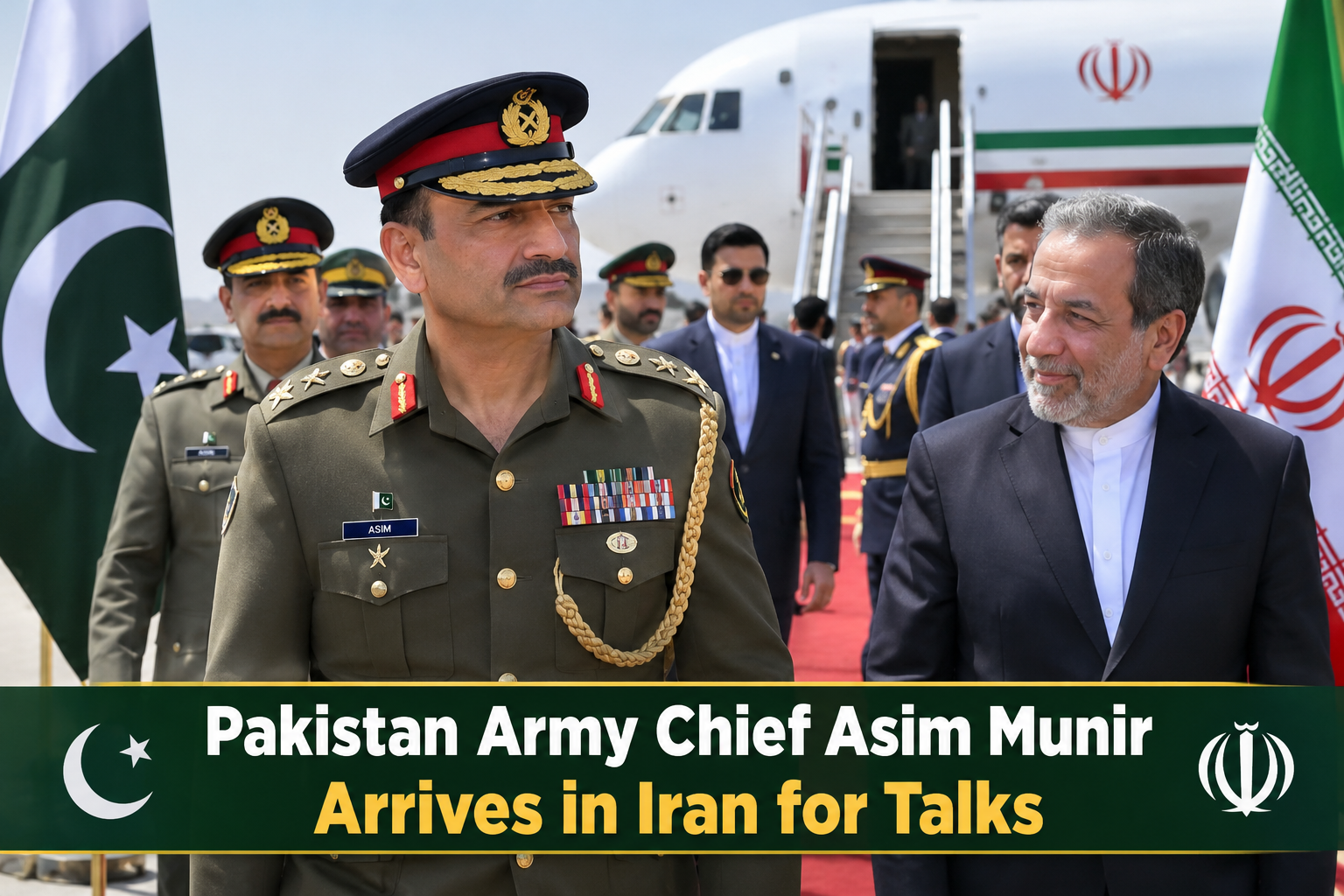
Pakistan’s Chief of Defence Forces and Chief of Army Staff, Field Marshal Asim Munir, arrived in Tehran, Iran, on October 20, 2026, leading a Pakistani delegation for meetings with senior Iranian officials. The visit comes at a significant moment for regional diplomacy, as Pakistan continues its efforts to encourage dialogue between Iran and the United States and support a peaceful resolution to ongoing tensions in the Middle East. Iranian media confirmed his arrival, while Iran’s Foreign Ministry indicated that discussions would address bilateral relations, cooperation, and issues connected to ongoing negotiations.
The visit is important for Pakistan because relations with Iran affect regional security, trade, border management, energy interests, and diplomatic stability. Pakistan shares a long border with Iran and has a direct interest in preventing regional tensions from escalating into a wider conflict. By maintaining communication with Iranian leadership and engaging with other international partners, Islamabad has an opportunity to encourage diplomacy and protect its own national interests.
The latest visit also highlights Pakistan’s growing diplomatic engagement with regional and international stakeholders. However, the precise outcomes of the meetings will depend on the discussions between officials and any formal announcements made after them. The visit should therefore be viewed as an important diplomatic development rather than confirmation that a peace agreement has already been reached.
Pakistan’s Role in Regional Diplomacy
Pakistan’s relationship with Iran is shaped by geography, history, economic interests, and shared regional concerns. Both countries have reasons to maintain constructive communication, particularly when developments in the Middle East affect neighbouring states. Pakistan’s diplomatic engagement with Tehran reflects the importance of keeping communication channels open during periods of uncertainty.
Pakistan has also sought to maintain relations with other major international partners. This position can create opportunities for dialogue when disagreements make direct negotiations difficult. However, diplomatic mediation requires careful communication, mutual trust, and a willingness among the parties involved to consider peaceful solutions.
Field Marshal Asim Munir’s arrival in Tehran provides another opportunity for Pakistani and Iranian officials to exchange views on regional developments. The visit is particularly significant because Pakistan has been involved in efforts to facilitate discussions between Iran and the United States.
According to reporting published on October 20, Iranian officials said that the discussions would relate to ongoing negotiations but would focus mainly on bilateral relations and strengthening cooperation. This distinction matters because the visit has both a direct Pakistan-Iran dimension and a broader regional diplomatic dimension.
For Islamabad, maintaining a constructive relationship with Tehran is important regardless of the outcome of wider international negotiations. Continued engagement can help both countries address shared concerns, discuss practical cooperation, and reduce the risk of misunderstandings.
Why the Visit to Tehran Matters for Pakistan
Pakistan’s geographical position makes developments in Iran particularly relevant to its national interests. The two countries share a border, and their cooperation can influence border security, trade, regional connectivity, and relations with neighbouring countries.
A stable relationship between Islamabad and Tehran can support communication on security concerns and help officials address problems through established diplomatic channels. Regular high-level contact also allows both governments to discuss disagreements directly rather than allowing them to become more complicated.
The visit is also relevant to Pakistan’s wider foreign policy. Islamabad has an interest in regional stability because prolonged conflicts can affect economic activity, energy markets, transportation routes, and investor confidence.
Pakistan’s diplomatic engagement should not be interpreted as evidence that every disagreement between regional powers can be resolved quickly. International negotiations often involve complex political, security, and economic considerations. Even when officials agree on the importance of peace, reaching a lasting settlement can require multiple meetings and difficult compromises.
Nevertheless, direct communication remains a practical way to explore possible solutions. Meetings between senior officials can clarify positions, identify areas of agreement, and establish opportunities for further negotiations.
Iran-US Tensions and the Importance of Dialogue
Relations between Iran and the United States have remained a major concern in international diplomacy. Disagreements involving security, sanctions, regional influence, and strategic infrastructure have created obstacles to a comprehensive settlement.
The situation is especially significant because instability in the Middle East can affect countries far beyond the immediate area of a dispute. Regional tensions can influence international shipping, oil prices, investment decisions, and the cost of transporting essential goods.
Pakistan has an interest in encouraging diplomatic solutions because regional instability can create economic and security challenges at home. Higher international energy prices, for example, may increase the cost of fuel imports and place additional pressure on domestic transportation, electricity production, and household budgets.
Dialogue offers an alternative to further escalation. Negotiations allow governments to communicate their concerns, explore possible arrangements, and discuss measures that could reduce tensions.
However, diplomacy does not guarantee an immediate breakthrough. The positions of the countries involved may differ substantially, and agreements require more than statements expressing support for peace. Any lasting settlement would need to address the concerns of the parties involved and establish arrangements that they are prepared to accept.
Pakistan’s engagement with Iran therefore represents one part of a broader diplomatic process. Its significance will depend on whether continued communication contributes to meaningful negotiations and practical steps towards stability.
The Strategic Importance of the Strait of Hormuz
The Strait of Hormuz is one of the world's most important maritime passages for international energy supplies. It connects the Persian Gulf with the Gulf of Oman and provides a route used by major oil and gas exporters.
Any significant disruption to shipping through this waterway can have consequences for international energy markets. Countries that depend on imported petroleum may face higher costs if transportation becomes more expensive or supplies are delayed.
Pakistan is particularly sensitive to changes in global energy prices because imported fuel plays an important role in its economy. Changes in international petroleum costs can affect domestic fuel pricing, transportation expenses, industrial production, and inflation.
The Strait of Hormuz has featured in diplomatic discussions concerning regional tensions and the future of international shipping. Pakistan has an interest in encouraging arrangements that support maritime safety, predictable commercial transportation, and the peaceful settlement of disputes.
It is important to distinguish between diplomatic discussions and confirmed outcomes. The fact that officials discuss the waterway does not mean that an agreement has been reached or that shipping conditions have returned to normal.
Any substantial improvement would need to be assessed through official announcements and reliable information about maritime activity. For Pakistan, the central concern is that regional developments should not unnecessarily disrupt international trade or increase economic pressure on countries that depend on energy imports.
Pakistan-Iran Bilateral Relations
Although the wider Iran-US situation has attracted international attention, Pakistan and Iran also have their own bilateral relationship to manage.
Both countries have an interest in maintaining diplomatic communication and exploring areas where cooperation can produce practical benefits. These areas include border management, trade, regional connectivity, cultural exchanges, and communication between government institutions.
Geographical proximity creates opportunities for economic interaction, but it also makes coordination important. Border regions can benefit from legitimate commercial activity when appropriate security arrangements and administrative procedures are in place.
Better coordination can help officials address misunderstandings, facilitate lawful trade, and maintain communication on issues affecting communities near the border.
Economic cooperation also requires attention to practical obstacles. Businesses need predictable regulations, effective transportation arrangements, reliable payment mechanisms, and clear procedures for cross-border transactions. Political goodwill can create opportunities, but converting those opportunities into measurable economic benefits takes sustained work.
High-level meetings can help governments identify priorities and review areas where progress may be possible. Follow-up discussions between relevant departments are often necessary to turn broad commitments into practical arrangements.
For Pakistan, a constructive relationship with Iran can complement its engagement with other neighbouring countries. Stronger regional connections may offer economic opportunities, although their success depends on wider political and commercial conditions.
Economic Implications for Pakistan
Regional diplomacy is not limited to political relationships. It can also have direct implications for economic stability.
Pakistan faces the challenge of managing domestic economic needs while remaining exposed to developments in international markets. Energy prices, shipping costs, investor confidence, and currency movements can all be influenced by global uncertainty.
When geopolitical tensions increase, businesses may delay investment decisions because they face greater uncertainty about costs, supply chains, and future demand. Import-dependent industries can be especially vulnerable to sudden changes in energy and transportation expenses.
For households, international developments may eventually affect the cost of fuel, electricity, food distribution, and other essential services. The extent of any impact depends on domestic policies, international prices, exchange rates, and the duration of the disruption.
Diplomatic efforts that reduce uncertainty can therefore benefit countries beyond those directly involved in a conflict. Even without an immediate comprehensive settlement, improved communication can help lower the risk of unexpected escalation.
Pakistan’s engagement with Iran should be considered within this broader economic context. A more stable regional environment could support trade planning, improve confidence, and reduce some of the risks associated with international uncertainty.
However, it would be premature to assume that one diplomatic visit will automatically reduce petroleum prices or improve Pakistan’s economic indicators. Such outcomes depend on multiple factors and would require evidence over time.
The practical benefit of diplomacy lies in helping create conditions in which economic activity can take place with fewer disruptions.
Implications for Pakistan’s Foreign Policy
Pakistan’s foreign policy must account for its geographical location, security requirements, economic priorities, and relationships with a wide range of international partners.
Engagement with Iran is one element of this broader approach. Pakistan also maintains relationships with countries in the Gulf, Central Asia, South Asia, Europe, and other regions.
Managing these relationships requires careful diplomacy, particularly when international partners have conflicting interests. Communication with different governments can provide opportunities to explain national priorities and encourage peaceful engagement.
Pakistan’s ability to contribute to mediation depends on several factors, including the trust placed in it by the parties, the quality of its diplomatic communication, and the willingness of those parties to participate in negotiations.
A mediator cannot independently impose a settlement on countries that disagree. Its role is generally to facilitate communication, identify potential areas of agreement, and help create conditions in which negotiations can continue.
This makes patience and consistency important. Diplomatic initiatives may require repeated meetings and sustained engagement before meaningful results emerge.
The Tehran visit is therefore best understood as part of an ongoing process. Its longer-term significance will become clearer as officials communicate the results of their discussions and indicate whether additional diplomatic steps are planned.
Regional Security and Border Cooperation
Security is another important dimension of Pakistan-Iran relations. Both countries have an interest in maintaining communication about developments along their shared border and addressing concerns through appropriate official channels.
Border management involves several practical responsibilities, including coordination between relevant authorities, the lawful movement of people and goods, and communication when security concerns arise.
Effective cooperation can help reduce misunderstandings and support stability in border communities. It can also help governments address shared challenges while respecting their respective national responsibilities.
High-level engagement can establish priorities, but successful cooperation depends on continued contact between the institutions responsible for implementing decisions.
For local communities, stable conditions can support education, employment, trade, and access to essential services. Businesses are also better positioned to plan their activities when transport arrangements and administrative procedures are predictable.
Security cooperation should therefore be considered alongside broader economic and social priorities. Sustainable regional stability requires not only communication between national leaders but also effective institutions and practical arrangements.
The Tehran visit offers an opportunity for officials to discuss these matters within the wider framework of bilateral relations.
What the Visit Could Mean for the Middle East
The Middle East remains strategically important because of its energy resources, commercial routes, political relationships, and connections to the wider global economy.
Developments in the region can influence international markets and diplomatic priorities. Consequently, efforts to reduce tensions attract attention from countries that may not be directly involved in a particular dispute.
Pakistan’s engagement with Iran reflects the importance of regional communication. If diplomatic contacts help officials better understand one another’s positions, they may contribute to further discussions.
Nevertheless, the possible outcomes should be treated cautiously. The visit alone does not establish that a ceasefire, comprehensive peace agreement, or permanent arrangement has been secured.
Progress would need to be demonstrated through further negotiations, mutually accepted commitments, and practical measures that reduce the risk of renewed confrontation.
Other regional and international actors may also influence the process. Their positions, interests, and willingness to participate in negotiations can affect whether diplomatic initiatives achieve tangible results.
For this reason, the most meaningful indicators will be the substance of official announcements, evidence of continued engagement, and any confirmed agreements that emerge from subsequent discussions.
International Reactions and Diplomatic Expectations
High-level diplomatic visits often attract attention because they can indicate that governments are seeking opportunities to communicate during uncertain periods.
The arrival of a Pakistani delegation in Tehran is relevant to observers following Pakistan-Iran relations and wider efforts to address regional tensions.
However, public expectations should remain grounded in confirmed information. Diplomatic visits may include discussions on several issues, and not every subject raised during a meeting results in an agreement.
Official statements can help clarify the purpose of a visit, the issues discussed, and the areas where further engagement may be required. Subsequent announcements can provide additional information about whether the parties intend to continue negotiations.
International reporting also plays a role in informing the public, although early reports may not contain the full details of private diplomatic discussions.
For Pakistan, transparency about confirmed developments can help the public understand the purpose of diplomatic engagement without creating unrealistic expectations.
The important question is not simply whether senior officials have met, but whether their discussions produce constructive follow-up and contribute to clearly defined objectives.
Challenges Facing Pakistan’s Diplomatic Efforts
Pakistan’s efforts to encourage dialogue face several challenges.
First, the parties involved may have different priorities and assessments of the situation. Even when they agree that further escalation would be costly, they may disagree about the conditions required for a settlement.
Second, diplomatic trust can be difficult to establish when previous negotiations have failed or when governments remain concerned about future security developments.
Third, regional disputes often involve several interconnected issues. Progress on one subject may depend on developments elsewhere, making it difficult to negotiate a comprehensive arrangement quickly.
Pakistan must also balance its diplomatic objectives with its domestic priorities. Economic stability, national security, trade, and relations with other countries remain important considerations.
These challenges do not make diplomacy unnecessary. Instead, they demonstrate why communication, realistic expectations, and sustained engagement are essential.
A successful diplomatic contribution may involve helping parties remain in contact even when a final agreement is not immediately possible. Maintaining channels of communication can preserve opportunities for future negotiations.
Ultimately, the effectiveness of Pakistan’s efforts will depend on the willingness of the countries involved to engage constructively and consider mutually acceptable solutions.
What to Watch After October 20, 2026
Several developments will be important in assessing the significance of Field Marshal Asim Munir’s visit to Tehran.
The first is whether Pakistani and Iranian officials issue a detailed statement describing the meetings and any areas of agreement.
The second is whether the discussions lead to additional diplomatic contacts involving Iran, the United States, or other regional partners.
The third is whether officials report progress on issues connected to regional stability, bilateral cooperation, and international shipping.
The fourth is whether practical steps emerge from discussions about trade, border management, or other matters of direct importance to Pakistan and Iran.
Finally, developments in international energy markets and maritime transportation will remain relevant to Pakistan’s economic outlook. Changes in these areas should be assessed using verified market information rather than assumptions about the immediate impact of diplomatic meetings.
These indicators can help observers distinguish between the announcement of a diplomatic initiative and evidence of measurable progress.
The Importance of a Balanced Approach
The Tehran visit highlights the value of maintaining diplomatic communication during periods of regional uncertainty.
For Pakistan, the objectives include protecting national interests, maintaining constructive relations with neighbouring countries, supporting regional stability, and reducing the risks associated with prolonged tensions.
A balanced approach requires careful assessment of the facts, realistic expectations, and continued engagement with relevant partners. It also requires recognising that international negotiations are complex and that outcomes cannot be guaranteed in advance.
Pakistan’s geographical position gives it a direct interest in developments affecting Iran and the wider Middle East. At the same time, the country's domestic economic priorities make stability in international energy and transportation markets particularly important.
The visit provides an opportunity to discuss these concerns with Iranian officials. Whether it produces significant progress will depend on the substance of the meetings and the actions that follow.
Conclusion
Field Marshal Asim Munir’s arrival in Tehran on October 20, 2026, represents an important development in Pakistan-Iran relations and Islamabad’s continuing diplomatic engagement with regional partners. The visit comes amid wider tensions involving Iran and the United States, making communication between senior officials particularly significant.
The discussions are expected to cover bilateral cooperation and issues connected to ongoing negotiations. For Pakistan, maintaining constructive relations with Iran is important for border stability, regional security, economic interests, and broader foreign policy objectives.
The visit should not be mistaken for a confirmed peace agreement or a guarantee that regional tensions will end immediately. Its importance lies in the opportunity it creates for dialogue, coordination, and further diplomatic engagement.
As developments continue, the most reliable way to assess the visit will be to examine official statements, confirmed agreements, and concrete follow-up measures.
For Pakistan, sustained diplomacy and regional cooperation remain important tools for protecting national interests and encouraging a more stable environment for economic development and international trade.
FAQs
Why did Field Marshal Asim Munir visit Iran on October 20, 2026?
Field Marshal Asim Munir visited Tehran to meet Iranian officials for discussions involving Pakistan-Iran relations, bilateral cooperation, and regional developments connected to ongoing diplomatic negotiations.
2. When did Asim Munir arrive in Tehran?
He arrived in Tehran on Tuesday, October 20, 2026, leading a delegation of Pakistani officials.
3. How could the visit affect Pakistan-Iran relations?
The visit provides an opportunity to strengthen communication, discuss shared concerns, and explore cooperation in areas such as regional security, trade, and diplomatic engagement.
4. What is Pakistan’s role in Iran-US diplomatic efforts?
Pakistan has sought to facilitate dialogue between Iran and the United States. Its role involves diplomatic engagement and encouraging peaceful negotiations rather than imposing an agreement.
5. Will the visit immediately end regional tensions or reduce petrol prices in Pakistan?
There is no confirmed basis for such a conclusion. Any effect on regional stability or energy prices will depend on subsequent diplomatic developments and wider international market conditions.