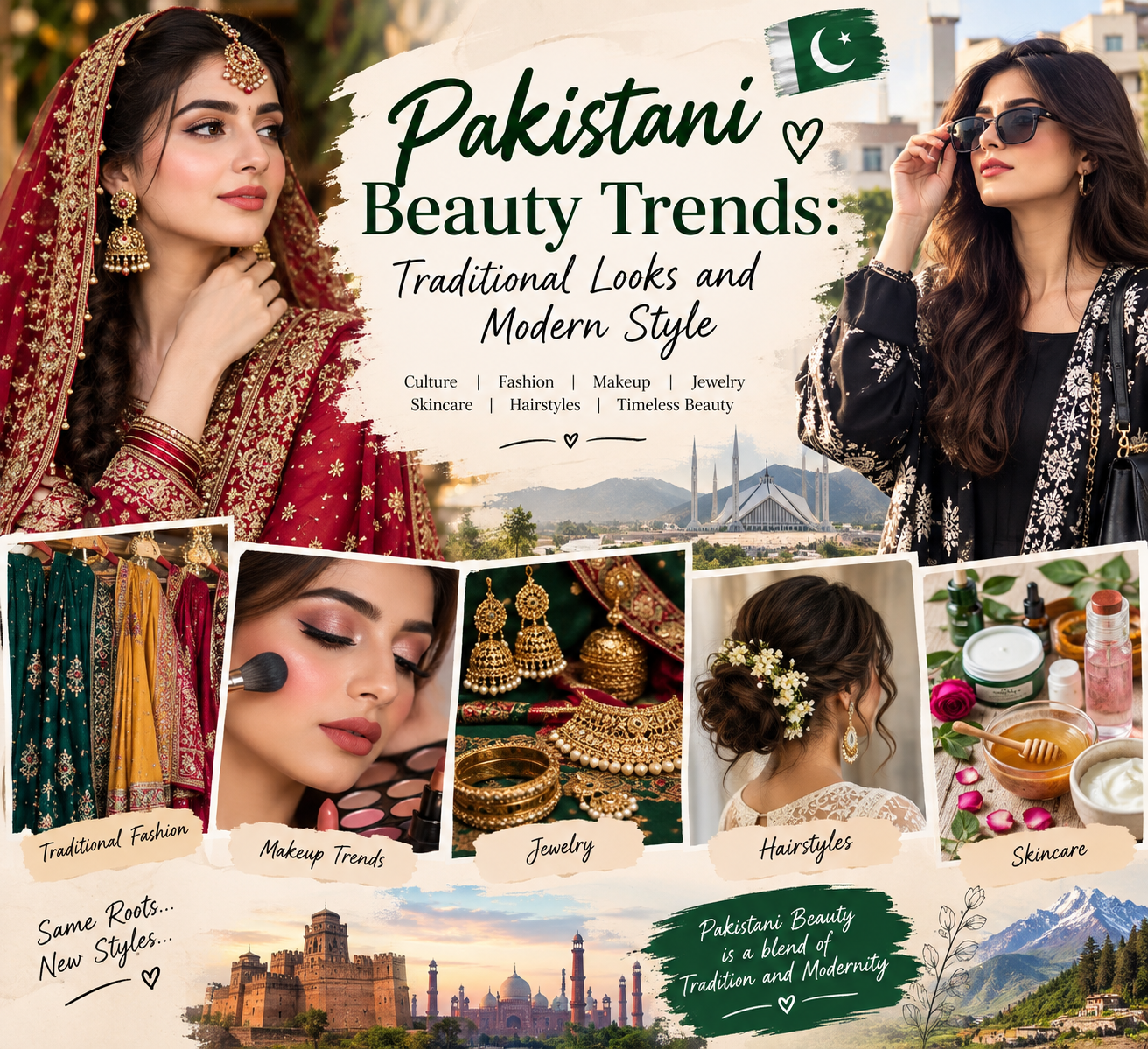
Pakistan has a rich and diverse culture that is beautifully reflected in its fashion and beauty trends. Pakistani beauty is not limited to makeup or clothing. It includes traditional dresses, jewelry, hairstyles, skincare routines, cultural celebrations, and the way people combine traditional elements with modern fashion. Over the years, beauty trends in Pakistan have changed considerably, but traditional influences continue to remain an important part of the country's style.
From elegant shalwar kameez and embroidered dupattas to contemporary western outfits, Pakistani fashion offers a wide range of styles. Similarly, beauty trends have developed from simple traditional makeup to modern techniques influenced by international fashion while still maintaining a distinctly Pakistani character.
The Cultural Influence on Pakistani Beauty
Pakistan consists of different regions, languages, cultures, and traditions. Punjab, Sindh, Balochistan, Khyber Pakhtunkhwa, Gilgit-Baltistan, and other areas have their own distinctive clothing, jewelry, embroidery, and beauty traditions.
Traditional Pakistani beauty often emphasizes elegance rather than following a single style. Cultural events such as Eid, weddings, family gatherings, and festivals provide opportunities for people to wear traditional clothing and experiment with different beauty looks.
The shalwar kameez remains one of the most recognizable elements of Pakistani fashion. It can be styled in many ways depending on the occasion. Simple cotton suits are commonly worn for everyday activities, while embroidered, embellished, and formal outfits are popular for celebrations.
Traditional Pakistani Clothing and Style
Traditional clothing plays a major role in defining Pakistani style. The shalwar kameez is widely worn across the country and is available in countless designs, fabrics, and colors.
For everyday wear, lightweight fabrics such as cotton and lawn are particularly popular during warmer months. These outfits are generally comfortable and can feature simple prints, embroidery, or decorative borders.
For formal occasions, people often choose fabrics such as chiffon, silk, velvet, organza, and net. Detailed embroidery, sequins, beads, threadwork, and traditional motifs can give an outfit a luxurious appearance.
The dupatta is another important part of traditional Pakistani fashion. It can be worn in different ways depending on the outfit and personal preference. Printed, embroidered, and embellished dupattas can add character to a simple dress.
Modern Pakistani Fashion
Modern Pakistani fashion combines traditional elements with contemporary designs. Designers increasingly experiment with cuts, silhouettes, fabrics, and color combinations while maintaining cultural influences.
Long shirts, straight trousers, wide-leg pants, fusion outfits, layered dresses, and contemporary versions of traditional clothing are common examples of modern Pakistani fashion.
Western-inspired clothing is also popular, especially among younger people. Jeans, shirts, jackets, skirts, and other contemporary outfits are often incorporated into everyday wardrobes. At the same time, traditional clothing continues to remain an important choice for family gatherings and cultural occasions.
This combination of old and new has created a distinctive Pakistani fashion identity.
Pakistani Makeup Trends
Makeup trends in Pakistan have evolved significantly. In the past, traditional makeup was often relatively simple, with emphasis on kajal, eyeliner, lipstick, and occasionally heavier eye makeup for weddings.
Today, makeup styles are much more diverse. Everyday makeup may include lightweight foundation or skin tint, subtle blush, mascara, eyeliner, and natural-looking lip colors.
For formal occasions, especially weddings, people may choose more defined eye makeup, contouring, highlighting, and stronger lip colors.
However, makeup preferences differ from person to person. Some people prefer a natural appearance, while others enjoy more dramatic styles for special occasions.
The Popularity of Natural-Looking Makeup
One noticeable trend in modern beauty is the popularity of natural-looking makeup. Instead of creating a very heavy appearance, many people prefer makeup that enhances their existing features.
Soft foundation, natural brows, subtle blush, neutral eyeshadow, and soft lip colors can create a polished appearance without looking overly dramatic.
This approach is especially suitable for daytime events, university, casual gatherings, and everyday activities.
Natural-looking makeup has also become popular because it can be adapted to different personal styles and occasions.
Bridal Beauty in Pakistan
Pakistani bridal beauty is one of the most distinctive areas of the country's fashion and beauty culture. Weddings often involve several events, and each event may have its own outfit, hairstyle, makeup, and jewelry.
Traditional bridal outfits can include lehengas, shararas, ghararas, heavily embroidered shirts, and traditional formal dresses. Red has historically been an important bridal color, although modern brides increasingly explore pink, gold, ivory, maroon, peach, green, and other shades.
Bridal makeup often includes carefully defined eyes, foundation, blush, lipstick, and other techniques designed for photography and formal events.
Jewelry is another major part of bridal styling. Traditional pieces such as jhumkas, necklaces, tikka, bangles, and bridal sets can complement the outfit.
Jewelry and Pakistani Style
Jewelry has a strong connection with Pakistani fashion. Different regions have their own traditional jewelry designs, while modern fashion has introduced many contemporary options.
Jhumkas are particularly popular and can be worn with both traditional and modern outfits. Bangles are another classic accessory, especially for festive and wedding occasions.
Gold jewelry remains culturally significant, but artificial and fashion jewelry are also widely used. These options allow people to experiment with different styles without needing expensive pieces.
Statement earrings, delicate necklaces, rings, bracelets, and hair accessories can all be used to complete a modern Pakistani look.
Pakistani Hair Trends
Hairstyles are an important part of overall beauty styling. Traditional hairstyles such as braids and buns continue to be popular, particularly during formal events.
For weddings, people may choose elaborate buns decorated with accessories, flowers, or jewelry. Loose curls and waves are also frequently seen at formal events.
For everyday life, simple ponytails, braids, buns, and open hairstyles are practical choices.
Modern hairstyles have also introduced shorter cuts, layers, curtain-style fringes, and other contemporary options. Social media and international fashion trends have contributed to the growing variety of hairstyles available to Pakistani consumers.
Skincare and Beauty Care
Beauty trends are not only about makeup. Skincare has become an increasingly important part of personal care in Pakistan.
Many people now focus on basic skincare steps such as cleansing, moisturizing, and sun protection. Products are available for different skin types and concerns, although choosing products according to individual needs is important.
Traditional home-based beauty practices also remain common. Ingredients such as yogurt, honey, rose water, and other household products have historically been used in different beauty routines.
However, natural does not automatically mean suitable for everyone. Skin can react differently to ingredients, so it is sensible to be cautious with homemade mixtures and discontinue anything that causes irritation.
The Influence of Social Media
Social media has had a major influence on Pakistani style and beauty trends. Platforms such as Instagram, TikTok, YouTube, and Pinterest allow people to discover makeup tutorials, hairstyles, clothing ideas, skincare information, and fashion inspiration.
Beauty creators and makeup artists regularly introduce new techniques. Pakistani designers and fashion brands also use social media to showcase collections and connect with customers.
Social media has made international beauty trends more accessible. At the same time, Pakistani creators have helped promote local clothing styles, traditional embroidery, regional jewelry, and cultural fashion.
The Role of Pakistani Designers
Pakistani fashion designers have played an important role in developing the country's modern fashion industry. Designers frequently combine traditional craftsmanship with contemporary cuts and presentation.
Embroidery, handwork, mirror work, threadwork, block printing, and other techniques are often incorporated into modern collections.
Pakistani fashion is also recognized internationally through fashion shows, designer collections, cultural events, and overseas Pakistani communities.
This growing visibility has helped demonstrate that Pakistani fashion can combine cultural heritage with modern design.
Seasonal Beauty and Fashion Trends
Pakistan experiences different weather conditions across its regions, and seasonal changes influence clothing and beauty choices.
During summer, lightweight fabrics such as lawn and cotton are popular. Bright colors, floral prints, and comfortable silhouettes are commonly selected.
Winter fashion allows the use of warmer fabrics such as velvet, wool, khaddar, and linen. Darker shades and layered outfits become more common.
Spring often brings pastel shades, floral designs, and lighter fabrics, while autumn fashion can include earthy colors and transitional fabrics.
Beauty routines can also change with the seasons. People may adjust skincare products and makeup according to weather conditions.
Eid Beauty and Fashion
Eid is one of the most important occasions for Pakistani fashion and beauty. People often prepare special outfits, hairstyles, accessories, and makeup looks for Eid gatherings.
Traditional suits with embroidery, lace, prints, and decorative details are popular. Some people prefer simple outfits, while others select heavily embellished formal dresses.
Eid makeup often ranges from natural daytime looks to more glamorous styles for family visits and celebrations.
Jewelry and matching accessories can complete an Eid outfit. Shoes, handbags, bangles, earrings, and dupattas are commonly coordinated with clothing.
Regional Diversity in Pakistani Beauty
One of the most fascinating aspects of Pakistani style is its regional diversity.
Punjabi fashion is often associated with colorful clothing, embroidery, and traditional jewelry. Sindhi culture is known for distinctive embroidery, ajrak patterns, and regional crafts. Balochi clothing can feature detailed embroidery and unique designs, while Pashtun clothing has its own traditional patterns and accessories.
Northern areas also have distinctive clothing traditions influenced by local history and geography.
This diversity means that Pakistani beauty cannot be represented by one particular dress, makeup style, or hairstyle. Instead, it is a collection of many cultural traditions.
Traditional Crafts and Modern Fashion
Traditional crafts continue to influence modern Pakistani fashion. Hand embroidery, block printing, mirror work, weaving, and other crafts are frequently used in contemporary clothing.
These techniques help preserve cultural heritage while providing opportunities for artisans and craftspeople.
Modern fashion can therefore serve as a bridge between traditional craftsmanship and changing consumer preferences.
A contemporary outfit featuring traditional embroidery can offer a modern appearance while still reflecting Pakistani cultural identity.
Beauty Influencers and Changing Trends
Beauty influencers have become an important part of Pakistan's beauty industry. Through videos, tutorials, reviews, and styling content, they introduce audiences to new products and techniques.
Influencers can also help small beauty and fashion businesses reach larger audiences. Many local brands use social media marketing to showcase their products.
However, online beauty content should be viewed thoughtfully. A product or technique that works for one person may not necessarily work for everyone. Personal skin type, hair type, budget, and lifestyle all matter when choosing beauty products.
Affordable Pakistani Beauty Trends
Style and beauty do not always require expensive products or designer clothing. Many Pakistani fashion trends can be adapted to different budgets.
A simple plain suit can be styled with attractive earrings, a printed dupatta, comfortable footwear, and a neat hairstyle. Similarly, basic makeup products can be used to create several different looks.
Reusing clothing in different combinations is another practical way to create new outfits. Changing accessories, hairstyles, or dupatta styles can make a familiar outfit look different.
This approach makes fashion more accessible and encourages creativity.
The Importance of Personal Style
Although trends can provide inspiration, personal style remains important. Not every trend suits every individual, and people have different preferences.
Some prefer minimal makeup, while others enjoy creative and colorful looks. Some people prefer traditional clothing, while others enjoy modern or western-inspired fashion.
Personal style can develop through experimentation. Trying different colors, fabrics, accessories, hairstyles, and makeup techniques can help individuals discover what they genuinely enjoy.
The goal of fashion and beauty can be self-expression rather than simply following every new trend.
Sustainable Fashion in Pakistan
Sustainability is becoming increasingly relevant in fashion discussions. Fast-changing trends can encourage people to purchase clothing frequently, but choosing durable pieces and using them for longer can reduce waste.
Buying quality clothing, repairing damaged pieces, reusing fabrics, exchanging clothes with family members, and supporting local craftspeople are some ways people can make more thoughtful fashion choices.
Traditional Pakistani clothing can also be versatile. A formal shirt, dupatta, or embroidered piece can sometimes be styled differently for multiple occasions.
Pakistani Beauty in the Digital Age
Technology has changed the way people discover and follow beauty trends. Online shopping, social media, digital fashion shows, beauty tutorials, and product reviews have made fashion information more accessible.
People can now discover local brands from different Pakistani cities without physically visiting those locations.
At the same time, digital platforms have created opportunities for makeup artists, designers, photographers, hairstylists, jewelry businesses, and beauty entrepreneurs.
This digital transformation continues to shape Pakistan's beauty and fashion industry.
The Future of Pakistani Style and Beauty
The future of Pakistani style is likely to continue combining cultural traditions with modern influences. Traditional embroidery, regional crafts, classic silhouettes, and cultural accessories are likely to remain important while designers continue experimenting with new ideas.
Beauty trends may also continue moving between natural-looking everyday styles and more dramatic formal looks.
Technology will probably remain an important influence, particularly through social media, online shopping, digital marketing, and beauty education.
At the same time, cultural heritage will continue to provide inspiration for new generations of designers, makeup artists, hairstylists, and fashion enthusiasts.
Conclusion
Pakistani beauty trends represent a combination of tradition, creativity, culture, and modern influences. From the timeless shalwar kameez and traditional jewelry to contemporary makeup, hairstyles, and fashion designs, Pakistan offers a diverse beauty landscape.
Regional traditions add further richness to Pakistani style, while modern designers, influencers, and digital platforms continue to introduce new ideas.
The most important feature of Pakistani beauty is its diversity. There is no single definition of Pakistani style. It can be traditional, modern, simple, glamorous, regional, or a combination of several influences.
As fashion and beauty continue to evolve, Pakistani culture provides a strong foundation for creating styles that remain connected to heritage while adapting to modern life.
FAQs
1. What are popular Pakistani beauty trends?
Popular trends include natural makeup, traditional jewelry, elegant hairstyles, embroidered clothing, skincare routines, and modern interpretations of traditional fashion.
2. What is traditional Pakistani beauty?
Traditional Pakistani beauty includes cultural clothing, jewelry, hairstyles, makeup, and beauty practices influenced by the country's diverse regional traditions.
3. What makeup styles are popular in Pakistan?
Both natural and glamorous makeup styles are popular. Everyday looks are often simple, while weddings and formal events may feature more defined eyes and stronger makeup.
4. How has social media changed Pakistani beauty trends?
Social media has made beauty tutorials, fashion inspiration, product information, and international trends more accessible to Pakistani audiences.
5. Is Pakistani fashion becoming more modern?
Yes. Pakistani fashion increasingly combines traditional fabrics, embroidery, and cultural designs with contemporary cuts, silhouettes, and styling.