Introduction
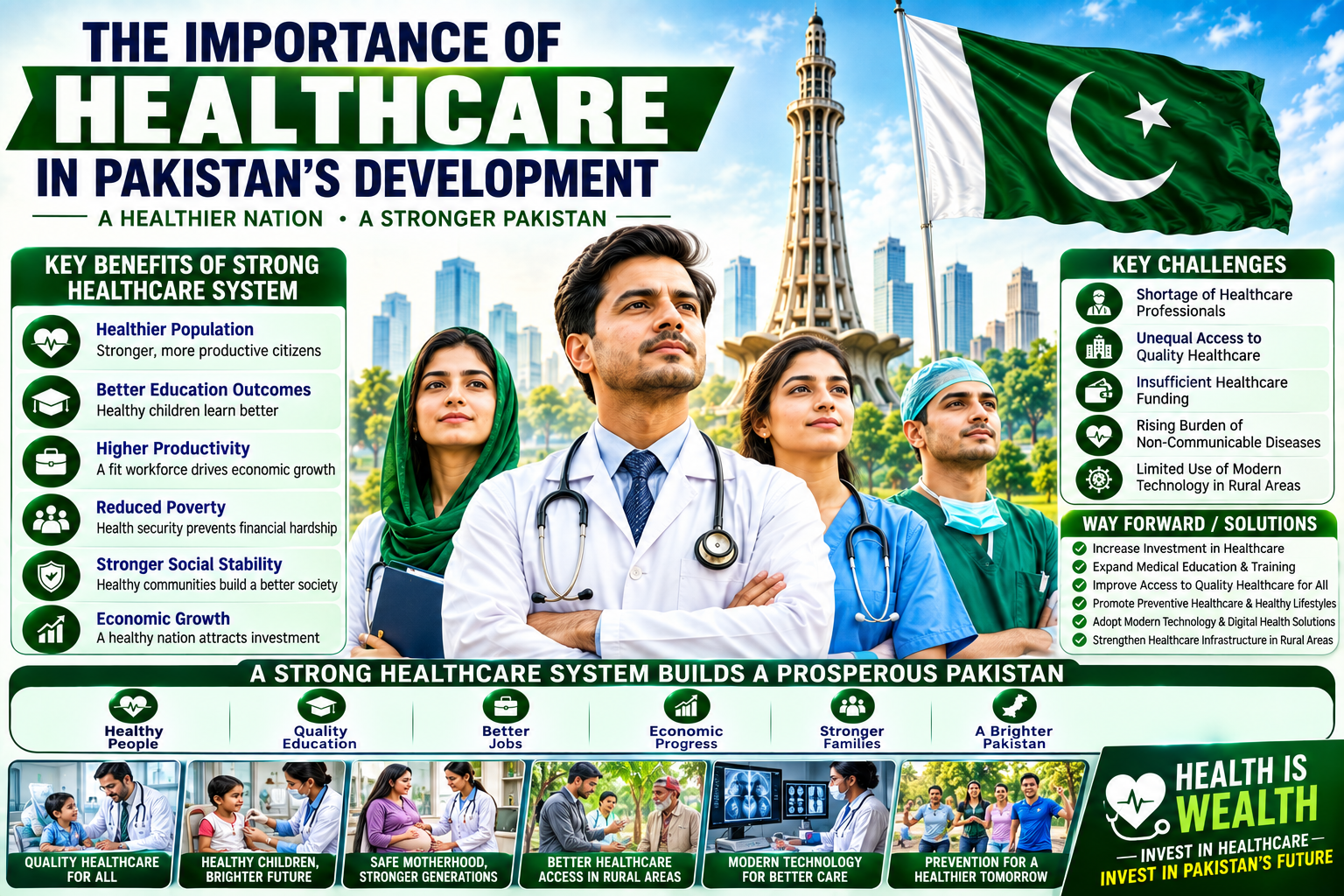
Healthcare is one of the most important foundations of national development. A healthy population can study, work, support families, participate in communities, and contribute to the economy. For Pakistan, improving healthcare is not only a matter of treating diseases; it is also an essential part of building a productive, educated, and prosperous society.
Pakistan has made progress in several areas of healthcare, but challenges remain in access to quality medical services, preventive care, maternal and child health, nutrition, health education, and healthcare infrastructure. These challenges can affect people in both urban and rural communities.
A strong healthcare system should provide accessible, affordable, safe, and quality services while also helping people prevent illness. Government institutions, healthcare professionals, educational institutions, communities, families, and individuals all have roles to play in improving health outcomes.
What Is Healthcare?
Healthcare includes the services and activities designed to protect and improve people's health. It includes prevention, diagnosis, treatment, rehabilitation, health education, and public health programs.
Healthcare can be divided into several broad areas:
Primary healthcare
Hospital and specialist care
Preventive healthcare
Maternal and child healthcare
Public health
Emergency services
Mental health services
Nutrition
Rehabilitation
Health education
A strong healthcare system needs all these areas to work together effectively.
Why Healthcare Is Important for Pakistan
Healthcare directly affects the quality of life of citizens. When people have access to appropriate medical services, they are better able to prevent and manage health problems.
Good healthcare can also contribute to economic development. Healthy workers are generally better able to participate in education, employment, and productive activities.
Healthcare is therefore connected with several areas of national development, including:
Education
Employment
Economic growth
Poverty reduction
Social development
Productivity
Family well-being
Investing in healthcare can provide long-term benefits for individuals and society.
Healthcare and Economic Development
A country's economy depends heavily on its people. Workers, entrepreneurs, teachers, engineers, farmers, doctors, and other professionals all contribute to economic activity.
Poor health can make it difficult for people to work or continue their education. Families may also face financial pressure when serious illnesses require expensive treatment.
A stronger healthcare system can help reduce these challenges by promoting prevention, early diagnosis, and access to appropriate treatment.
Healthcare should therefore be viewed as an investment in Pakistan's human capital rather than simply an expense.
The Importance of Primary Healthcare
Primary healthcare is often the first point of contact between people and the healthcare system.
It can provide services such as:
Basic medical consultations
Vaccination
Health education
Maternal care
Child healthcare
Screening
Treatment of common illnesses
Referral to specialized services
Strong primary healthcare can reduce pressure on major hospitals by helping people receive appropriate care earlier.
For rural and underserved communities, accessible primary healthcare facilities can be particularly important.
Healthcare in Rural Areas
Pakistan has many rural communities where access to healthcare can be more difficult because of distance, transportation, shortages of healthcare workers, or limited facilities.
Improving rural healthcare can involve:
Better-equipped health centers
More trained healthcare professionals
Reliable medicines and supplies
Improved transportation
Telemedicine
Health awareness programs
Bringing basic healthcare closer to communities can make it easier for people to seek help when they need it.
Healthcare in Urban Areas
Cities often have more hospitals and medical specialists, but urban healthcare systems can also face challenges.
Large populations can create pressure on hospitals, emergency departments, and public health services.
Urban healthcare planning should therefore focus on efficient hospitals, accessible primary care, preventive services, emergency preparedness, and public health awareness.
Maternal and Child Healthcare
Maternal and child health is an important part of national development.
Pregnancy and early childhood require appropriate healthcare, nutrition, monitoring, and professional support.
Improving maternal and child healthcare can involve:
Antenatal care
Skilled birth services
Postnatal care
Childhood vaccination
Nutrition support
Health education
Early identification of health problems
Healthy mothers and children contribute to healthier families and communities.
The Importance of Child Healthcare
Children need proper nutrition, vaccination, education, hygiene, and access to medical care.
Good child healthcare can help children grow, learn, and participate fully in education.
Parents and caregivers can contribute by ensuring children receive appropriate healthcare and by learning about healthy habits and preventive measures.
Schools can also support children's health through health education, hygiene facilities, physical activity, and awareness programs.
Preventive Healthcare
Prevention is an important part of a strong healthcare system.
Preventive healthcare focuses on reducing the risk of illness before serious problems develop.
It can include:
Vaccination
Health screenings
Healthy nutrition
Physical activity
Hygiene
Health education
Early diagnosis
Prevention can reduce pressure on healthcare facilities and help people maintain better health.
Health Education and Awareness
People need accurate health information to make responsible decisions.
Health education can teach communities about hygiene, nutrition, vaccination, disease prevention, and when to seek professional medical help.
Schools, hospitals, community organizations, and public health institutions can all contribute to health awareness.
Reliable information is especially important in the digital age, when people may encounter inaccurate or misleading health claims online.
The Role of Healthcare Professionals
Doctors, nurses, pharmacists, laboratory professionals, paramedics, technicians, and other healthcare workers are essential to the healthcare system.
Healthcare professionals need appropriate education, training, equipment, and safe working environments.
Their responsibilities include providing medical care, educating patients, supporting prevention, and working as part of healthcare teams.
Supporting healthcare workers can therefore improve the quality and reliability of health services.
The Importance of Nurses
Nurses play a vital role in healthcare delivery. They often spend significant time with patients and contribute to monitoring, treatment support, education, and recovery.
A strong healthcare system needs well-trained and adequately supported nursing professionals.
Investing in nursing education and professional development can strengthen healthcare services across Pakistan.
Healthcare Infrastructure
Hospitals and clinics need appropriate infrastructure to provide quality services.
Important infrastructure includes:
Medical equipment
Laboratories
Emergency facilities
Clean water
Electricity
Safe buildings
Medicine supplies
Information systems
Healthcare infrastructure should also be maintained regularly. Building a facility is not enough if it lacks staff, equipment, medicines, or proper management.
Affordable Healthcare
The cost of healthcare can be a major concern for families.
When essential medical services are too expensive, people may delay seeking professional care.
Pakistan can work toward greater affordability through stronger public healthcare services, appropriate health financing systems, preventive care, and efficient use of resources.
Affordable healthcare can help ensure that financial circumstances do not unnecessarily prevent people from receiving appropriate medical attention.
Digital Technology and Healthcare
Technology is creating new possibilities for healthcare.
Digital health tools can support:
Electronic health records
Online appointments
Telemedicine
Health education
Remote consultations
Medical data management
Telemedicine can be particularly useful for people who live far from specialized healthcare facilities, although it cannot replace every type of physical examination or treatment.
Digital healthcare should be introduced responsibly, with attention to privacy, security, accessibility, and professional standards.
The Role of Telemedicine
Telemedicine allows certain healthcare consultations to take place remotely.
This can help connect patients with healthcare professionals when distance makes traditional appointments difficult.
For Pakistan, telemedicine may offer useful opportunities for rural communities and areas where specialist services are limited.
However, patients should receive appropriate professional medical advice, and urgent or serious situations may require in-person care.
Mental Health Awareness
Mental health is an important part of overall well-being.
People may experience stress, anxiety, emotional difficulties, or other mental health concerns. Greater awareness can encourage people to seek appropriate professional support rather than ignoring problems.
Mental health education can be promoted through schools, healthcare institutions, communities, and responsible public awareness campaigns.
Reducing stigma and encouraging respectful conversations can also make it easier for people to seek help.
Nutrition and Public Health
Nutrition has a major role in health and development.
A balanced diet provides the body with energy and essential nutrients. Children especially need adequate nutrition to support growth and learning.
Public health programs can promote awareness about healthy eating, safe food practices, clean drinking water, and the importance of seeking professional advice when nutritional concerns arise.
Clean Water and Sanitation
Clean water and proper sanitation are essential for public health.
Communities need access to safe drinking water, appropriate sanitation facilities, and effective waste management.
Poor sanitation can contribute to the spread of infectious diseases and create wider environmental problems.
Improving water and sanitation infrastructure can therefore be an important part of healthcare and community development.
The Importance of Vaccination
Vaccination is an important public health tool for preventing certain infectious diseases.
Pakistan's immunization programs have an important role in protecting children and communities.
Public awareness is essential because families need reliable information about recommended vaccinations and access to appropriate healthcare services.
People should follow guidance from qualified healthcare professionals and relevant public health authorities.
Healthcare and Education
Health and education are closely connected.
Healthy children are generally better able to attend school and participate in learning. At the same time, education can help people understand health information and make informed decisions.
Schools can contribute through:
Hygiene education
Health awareness
Safe drinking water
Clean sanitation facilities
Appropriate physical activity
Access to relevant health services
A healthier population can contribute to stronger educational outcomes.
Healthcare and Women's Development
Women's health is closely connected with family and community well-being.
Access to appropriate healthcare, health education, nutrition, and maternal services can support women's ability to participate in education, employment, and society.
Improving women's healthcare can therefore contribute to broader social and economic development.
Public Health Emergencies
Healthcare systems need to be prepared for emergencies such as disease outbreaks, natural disasters, and other public health threats.
Preparedness requires:
Trained healthcare workers
Emergency plans
Medical supplies
Communication systems
Laboratory capacity
Coordination between institutions
Strong leadership and effective planning can help healthcare systems respond more efficiently during emergencies.
Environmental Health
The environment can influence public health.
Air pollution, unsafe water, poor waste management, and other environmental problems can create health risks.
Healthcare policy should therefore be connected with environmental planning.
Reducing pollution, improving sanitation, and promoting cleaner communities can support healthier lives.
Challenges Facing Healthcare in Pakistan
Pakistan's healthcare system faces several challenges.
Limited Access
Some communities have fewer healthcare facilities and professionals than others.
Resource Constraints
Hospitals and health centers may need additional equipment, medicines, staff, and infrastructure.
Unequal Services
Healthcare quality and availability can vary between different regions and communities.
Health Awareness Gaps
Some people may not have access to accurate health information.
Financial Barriers
Healthcare costs can make treatment difficult for some families.
Workforce Challenges
Healthcare professionals need appropriate training, working conditions, and opportunities for professional development.
How Pakistan Can Improve Healthcare
Pakistan can improve healthcare through coordinated efforts in several areas.
1. Strengthen Primary Healthcare
Basic healthcare facilities should be accessible and capable of providing essential services.
2. Invest in Healthcare Workers
Doctors, nurses, technicians, and other professionals need quality education, training, and appropriate working conditions.
3. Improve Rural Healthcare
Rural communities need better access to healthcare facilities, transportation, medicines, and professionals.
4. Promote Prevention
Public health programs should emphasize vaccination, hygiene, nutrition, screenings, and health education.
5. Use Technology Responsibly
Digital healthcare and telemedicine can help expand access when used appropriately.
6. Improve Health Infrastructure
Healthcare facilities need reliable buildings, equipment, electricity, water, laboratories, and medicine supplies.
7. Increase Health Awareness
Accurate and understandable health information should be available to communities.
The Role of Government
Government institutions have a major role in healthcare planning, financing, regulation, public health programs, and infrastructure development.
Effective health policies should be based on evidence and adapted to the needs of different communities.
Coordination between federal, provincial, and local institutions can also help improve the implementation of health programs.
The Role of Communities
Communities can contribute to better health by participating in awareness programs, supporting cleanliness, promoting healthy practices, and helping vulnerable members access appropriate services.
Community participation can make public health initiatives more effective because local people understand many of the challenges in their own areas.
The Role of Families
Families influence many everyday health behaviors.
Parents and caregivers can encourage children to develop healthy habits, maintain hygiene, eat balanced meals, follow appropriate vaccination schedules, and seek professional medical advice when necessary.
Health education within families can have long-term benefits.
The Future of Healthcare in Pakistan
Pakistan has opportunities to improve healthcare through technology, better education, stronger primary care, improved infrastructure, and greater public awareness.
Digital health services can expand access. Medical education can produce skilled professionals. Public health programs can strengthen prevention.
However, progress requires consistent planning and implementation.
Healthcare development should focus on long-term improvements rather than temporary solutions.
Conclusion
Healthcare is a fundamental part of Pakistan's development. A healthy population can contribute more effectively to education, employment, economic activity, and community life.
Pakistan can strengthen its healthcare system by improving primary care, supporting healthcare professionals, expanding rural services, promoting prevention, improving infrastructure, using technology responsibly, and increasing health awareness.
Healthcare is not only about treating illness. It is about creating the conditions that allow people to live healthier and more productive lives.
By making healthcare a long-term national priority, Pakistan can strengthen its human capital and create a healthier foundation for sustainable economic and social development.
FAQs
1. Why is healthcare important for Pakistan's development?
Healthcare helps create a healthier and more productive population while supporting education, employment, and economic development.
2. What are the major healthcare challenges in Pakistan?
Major challenges include unequal access, limited resources, healthcare infrastructure gaps, financial barriers, and health awareness issues.
3. How can Pakistan improve healthcare?
Pakistan can improve healthcare by strengthening primary care, supporting healthcare workers, improving infrastructure, promoting prevention, and using technology responsibly.
4. What is the role of preventive healthcare?
Preventive healthcare focuses on reducing health risks through vaccination, health education, screenings, hygiene, and healthy habits.
5. How can technology improve healthcare in Pakistan?
Digital records, telemedicine, online services, and other digital tools can help improve access and efficiency when used responsibly.