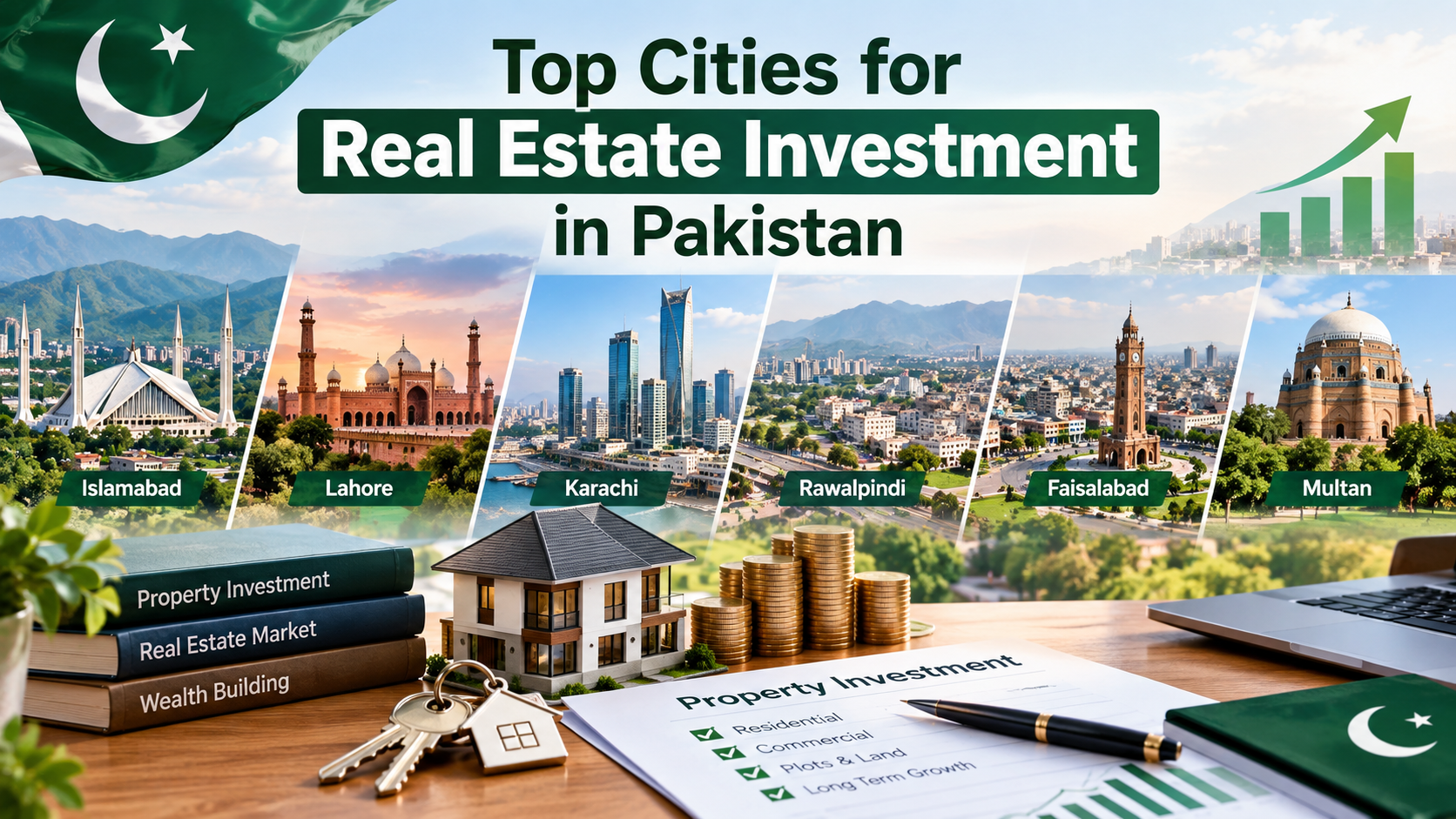
Pakistan's real estate sector is an important part of the country's economy and continues to attract homeowners, businesses, developers, and investors. From large metropolitan cities to rapidly developing urban areas, different parts of Pakistan offer different types of property opportunities.
People interested in real estate often look at cities such as Lahore, Islamabad, Karachi, Rawalpindi, Faisalabad, Multan, Peshawar, and other growing urban centers. Each city has its own characteristics, including population, infrastructure, business activity, housing demand, and property types.
For anyone interested in property investment, choosing a city is an important first step. However, there is no single location that is suitable for every buyer. The right choice depends on the purpose of the investment, available budget, desired property type, investment period, and personal requirements.
This guide explores several major Pakistani cities and explains the factors that can influence their real estate markets.
Understanding Pakistan's Real Estate Market
Real estate markets are different from city to city. A property that attracts strong demand in one city may have different prospects in another.
Several factors influence property markets, including:
Population growth
Employment opportunities
Business activity
Transportation
Road infrastructure
Educational institutions
Healthcare facilities
Commercial development
Housing demand
Availability of utilities
New development projects
Investors should therefore research the specific area rather than judging an entire city based on its general reputation.
1. Lahore
Lahore is one of Pakistan's largest cities and an important center for education, business, culture, and commerce. Its large population creates demand for different types of residential and commercial property.
The Lahore real estate market includes houses, apartments, residential plots, commercial shops, offices, commercial plots, and other property types.
Residential Property in Lahore
Residential areas across Lahore range from established neighborhoods to newly developing housing communities.
Families may look for properties close to schools, hospitals, markets, workplaces, and transportation routes. These factors can influence residential demand.
Apartments have also become an important part of urban housing, particularly for people who prefer lower-maintenance living arrangements.
Commercial Property in Lahore
Commercial areas support shops, offices, restaurants, clinics, educational businesses, and other activities.
The potential of a commercial property can depend heavily on location, visibility, accessibility, surrounding businesses, and customer traffic.
Anyone considering commercial property should study the local business environment rather than relying only on the property's size or appearance.
2. Islamabad
Islamabad is Pakistan's federal capital and is known for its planned urban structure, sectors, green spaces, and organized road network.
The city has an active residential and commercial property market.
Residential Opportunities
Islamabad includes houses, apartments, residential plots, and different housing developments.
People looking for residential property may consider proximity to workplaces, schools, healthcare facilities, markets, and major roads.
The city's planned sectors also make location comparison particularly important. Two properties with similar sizes can have different market conditions because of their exact location and surrounding facilities.
Commercial Opportunities
Commercial property includes shops, offices, commercial buildings, and mixed-use developments.
Businesses may consider factors such as customer access, parking, road connectivity, and nearby residential populations when selecting commercial locations.
3. Karachi
Karachi is Pakistan's largest city and a major center for trade, industry, finance, and business.
Its enormous urban population supports a large and diverse property market.
Karachi's real estate sector includes:
Houses
Apartments
Shops
Offices
Commercial buildings
Industrial property
Residential plots
Commercial plots
Apartments and Residential Property
Due to the city's large population and urban density, apartments are an important part of Karachi's housing market.
Residential demand can vary significantly between different neighborhoods.
When considering an apartment, buyers should examine the building's condition, management, utilities, security arrangements, parking, documentation, and surrounding facilities.
Commercial Real Estate
Karachi's commercial property market is connected to its extensive business activity.
Commercial investors may examine customer traffic, accessibility, nearby businesses, parking, and the type of commercial activity permitted in the area.
4. Rawalpindi
Rawalpindi is another major urban center in Punjab and has strong connections with Islamabad.
The twin-city relationship creates considerable movement between the two cities for employment, education, business, and daily activities.
Rawalpindi's property market includes houses, apartments, plots, shops, and commercial buildings.
Factors to Consider
Property buyers can consider:
Road connectivity
Access to Islamabad
Public transportation
Nearby markets
Schools and hospitals
Development status
Availability of utilities
Because different parts of Rawalpindi have different levels of development, buyers should conduct area-specific research.
5. Faisalabad
Faisalabad is one of Pakistan's important industrial and commercial cities. The city has a significant textile and manufacturing sector, which contributes to economic activity and housing demand.
The property market includes residential houses, plots, apartments, shops, offices, warehouses, and commercial buildings.
Residential Market
Residential demand can be influenced by employment, educational institutions, transportation, and expansion of urban areas.
Families may prefer locations that provide convenient access to schools, markets, healthcare, and workplaces.
Commercial Market
Faisalabad's commercial activity creates demand for shops, offices, warehouses, and other business properties.
Investors interested in commercial property should research the specific business activity and customer demand in the area.
6. Multan
Multan is an important city in southern Punjab and serves as a commercial and administrative center for a large surrounding region.
The city's property market includes residential and commercial developments.
Residential buyers may consider established neighborhoods as well as developing areas.
Commercial property can be influenced by business activity, road access, population density, and nearby markets.
For beginners, studying actual development and local demand is more useful than relying only on general expectations about future price increases.
7. Peshawar
Peshawar is a major city in Khyber Pakhtunkhwa and an important center for trade, education, healthcare, and regional business.
The city has residential and commercial property markets.
Residential buyers may look for houses, apartments, and plots, while commercial buyers may consider shops, offices, warehouses, and business locations.
Infrastructure and road connectivity can be important factors when evaluating property.
8. Gujranwala
Gujranwala is a major industrial city in Punjab and has a growing urban population.
Its economy includes manufacturing, trading, and various small and medium-sized businesses.
The property market includes houses, plots, shops, commercial buildings, and other forms of real estate.
Industrial and commercial activity can influence demand for business-related properties, while residential expansion can create demand for housing.
9. Sialkot
Sialkot is internationally known for its manufacturing and export industries.
The city's economic activity supports demand for residential and commercial property.
Business owners and employees may require housing close to workplaces, while commercial areas can benefit from local business activity.
People considering property in Sialkot should examine employment centers, roads, markets, and local development when comparing locations.
10. Hyderabad
Hyderabad is an important urban center in Sindh with residential, commercial, and industrial activity.
Its property market includes houses, plots, apartments, shops, and commercial buildings.
As with other cities, buyers should study the exact locality, documentation, accessibility, and demand rather than assuming that all parts of the city have similar property conditions.
What Makes a City Attractive for Real Estate?
There are several factors that can make a city or locality attractive to property buyers.
Population Growth
Growing populations can create additional demand for homes, apartments, shops, schools, and other facilities.
However, population growth alone does not guarantee property price increases.
Employment Opportunities
Areas with strong employment opportunities can attract workers and families.
This can influence demand for residential property and rental accommodation.
Infrastructure
Roads, bridges, public transportation, electricity, water, and other infrastructure can influence the usability and attractiveness of an area.
Educational Facilities
Universities, colleges, schools, and training institutions can create demand for housing and rental properties nearby.
Healthcare Facilities
Hospitals and medical centers can influence residential decisions because families often value convenient access to healthcare.
Commercial Activity
Markets, shopping centers, offices, factories, and businesses can influence property demand.
Comparing Established and Developing Areas
One important decision for property buyers is whether to choose an established area or a developing location.
Established Areas
Established areas generally have existing roads, utilities, markets, schools, and other facilities.
The advantages may include immediate usability and established demand.
However, property prices in established areas can be higher.
Developing Areas
Developing areas may offer different price levels and future development possibilities.
However, buyers may face risks such as delayed development, limited facilities, unclear timelines, or weaker immediate demand.
Therefore, buyers should verify the development status and approval of a project before purchasing.
Residential vs Commercial Property
The purpose of investment should guide the choice between residential and commercial property.
Residential property may be suitable for:
Family living
Rental housing
Future personal use
Long-term holding
Commercial property may be suitable for:
Shops
Offices
Business use
Rental business space
Commercial properties can have different risks and costs, so buyers should understand local business conditions before investing.
Importance of Infrastructure Projects
Infrastructure can influence property markets by improving connectivity.
New roads, transport routes, bridges, and other infrastructure can make areas more accessible.
However, buyers should distinguish between officially confirmed projects and rumors.
A statement such as "a major road will come here soon" should not be treated as confirmed without checking reliable official information.
Property Investment and Rental Demand
Rental demand is an important factor for investors interested in income-generating property.
A city with universities, hospitals, business centers, factories, and offices may have demand for rental housing in certain locations.
However, rental demand can vary within the same city.
Before purchasing for rental purposes, investors should research:
Average local rent
Vacancy rates
Tenant demand
Property maintenance
Utility costs
Property taxes
Management costs
The purchase price should also be compared with realistic rental income.
How Beginners Can Compare Cities
A simple comparison framework can help beginners organize their research.
Step 1: Define the Goal
First decide whether the property is for:
Personal residence
Rental income
Long-term investment
Commercial use
Future construction
Step 2: Decide the Budget
Set a realistic budget that includes additional costs.
Step 3: Select Two or Three Cities
Instead of researching every city at once, select a few cities that match the investment purpose.
Step 4: Compare Local Areas
Research specific neighborhoods rather than comparing entire cities.
Step 5: Check Property Documents
Verify ownership, approvals, land records, and transfer requirements.
Step 6: Visit the Area
Online listings can provide useful information, but physical visits can reveal important details about roads, surroundings, traffic, construction, and facilities.
Step 7: Consult Professionals
For major transactions, qualified legal and financial professionals can help buyers understand relevant issues.
Common Mistakes When Choosing a City
Buying Because of a Rumor
Rumors about future development or price increases should not be the primary reason for buying property.
Ignoring Legal Status
A cheap property can become expensive if legal problems appear later.
Focusing Only on Price
Price is important, but it is not the only factor.
Location, documentation, demand, development, and usability also matter.
Ignoring Extra Costs
Taxes, transfer charges, development fees, maintenance, and construction costs can affect the total investment.
Expecting Quick Profits
Property transactions can take time. A buyer should have realistic expectations and understand that prices do not always rise quickly.
The Role of Online Property Platforms
Online property platforms have changed the way buyers search for real estate in Pakistan.
People can now compare property listings, view photographs, check approximate asking prices, and communicate with agents or sellers online.
However, online listings should be treated as a starting point for research.
Before making a payment, buyers should independently verify the property and its documents.
Future of Real Estate in Pakistani Cities
Pakistan's cities continue to evolve through urban expansion, population changes, infrastructure development, and changing housing preferences.
Apartments, gated communities, commercial centers, mixed-use developments, and digital property services are becoming important parts of the modern real estate landscape.
At the same time, issues such as affordability, urban planning, infrastructure pressure, and availability of utilities remain important considerations.
The future of each city's property market will depend on economic conditions, population trends, development policies, infrastructure, and local demand.
Final Thoughts
Pakistan has a diverse real estate market, and major cities offer different property opportunities.
Lahore has a large residential and commercial market, Islamabad has a planned urban environment, Karachi has a huge and diverse property sector, while cities such as Rawalpindi, Faisalabad, Multan, Peshawar, Gujranwala, Sialkot, and Hyderabad also have significant residential and commercial activity.
However, choosing a city should not be based on a simple list of popular locations. The best approach for a buyer is to define their purpose, set a realistic budget, research specific localities, compare properties, verify documentation, and understand the risks.
Real estate is a long-term financial decision. Careful research and proper verification can help buyers make decisions based on facts rather than rumors or promises.
FAQs
1. Which cities have major real estate markets in Pakistan?
Major property markets include Karachi, Lahore, Islamabad, Rawalpindi, Faisalabad, Multan, Peshawar, Gujranwala, Sialkot, and Hyderabad.
2. What factors should be considered when choosing a city for property investment?
Buyers can consider location, infrastructure, employment opportunities, population, rental demand, facilities, development status, and legal documentation.
3. Is residential property different from commercial property?
Yes. Residential property is mainly used for living, while commercial property is used for business activities such as shops, offices, and other commercial purposes.
4. Should beginners invest in established or developing areas?
Both types have different characteristics. Established areas may have existing facilities and demand, while developing areas may have different prices and development risks. Buyers should research the specific location before deciding.
5. Why is legal verification important when buying property?
Legal verification helps buyers confirm ownership, approval status, documentation, transfer requirements, and other important aspects of a property transaction.