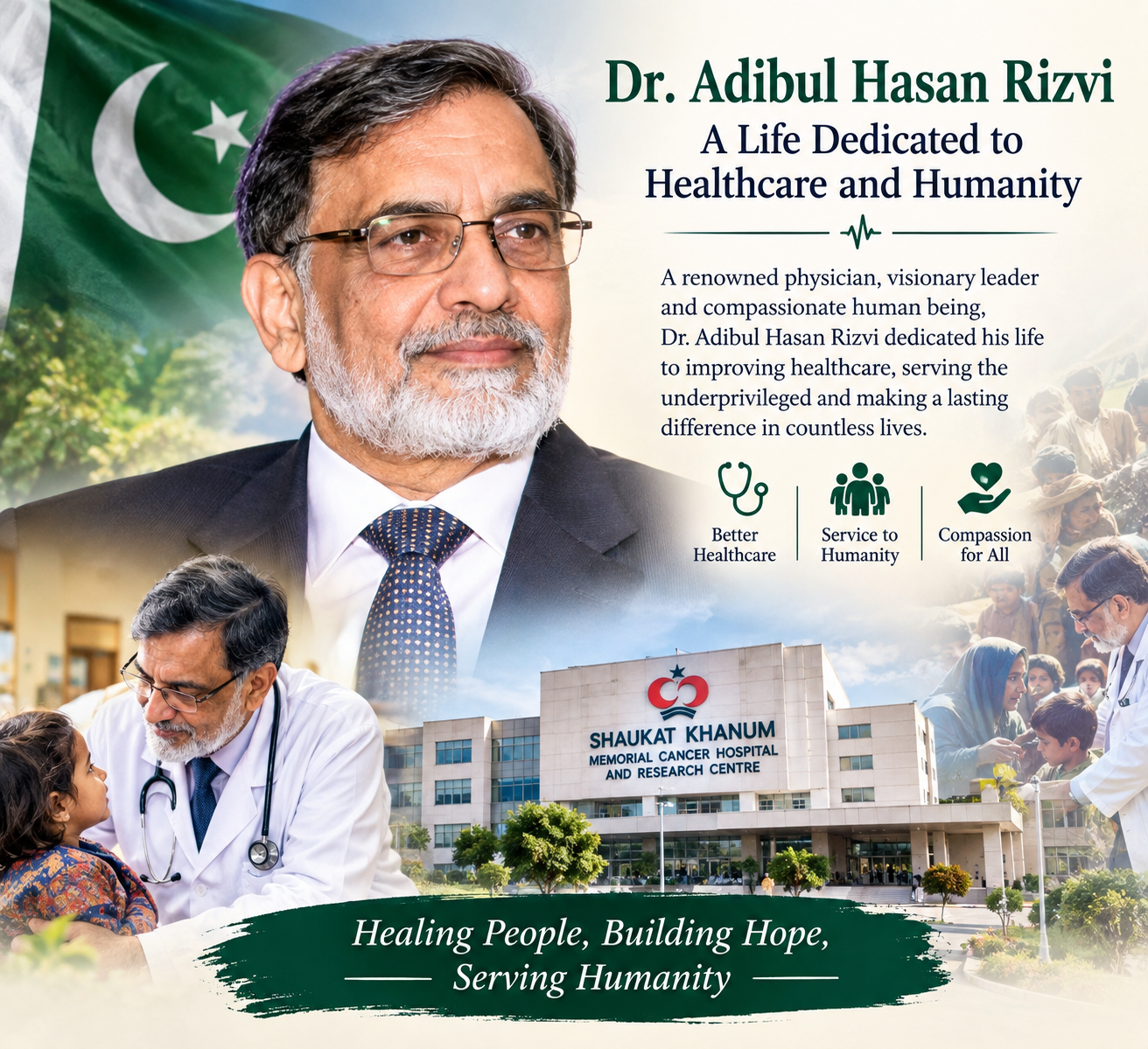
Dr. Adibul Hasan Rizvi is one of Pakistan’s most respected doctors and humanitarian healthcare leaders. He is widely known for his remarkable work in the field of urology and for making modern medical treatment available to people who cannot afford expensive healthcare. His professional life represents a strong combination of medical knowledge, public service, compassion, and dedication.
For many years, Dr. Rizvi has worked to improve healthcare facilities in Pakistan. His name is closely associated with the Sindh Institute of Urology and Transplantation (SIUT) in Karachi, an institution that has become an important example of free and quality healthcare. Through his work, thousands of patients have received medical treatment without having to worry about their financial situation.
Early Life and Interest in Medicine
Dr. Adibul Hasan Rizvi developed an interest in medicine at a time when healthcare was becoming an increasingly important field in Pakistan. Like many young people who choose medicine, he was attracted to the profession because it provided an opportunity to serve people while also requiring knowledge, discipline, and responsibility.
After completing his medical education, Dr. Rizvi decided to specialize in urology. Urology is a medical field that deals with the urinary system and related health problems. It requires specialized knowledge and training because many urinary and kidney-related conditions can become serious if they are not treated properly.
His education and professional training helped him develop the skills necessary to become a successful doctor. However, his career later became much bigger than individual medical practice. He began focusing on the larger problem of healthcare access and the difficulties faced by poor patients.
Becoming a Urologist
Dr. Rizvi became a respected urologist through years of education, training, and clinical experience. Urology involves the diagnosis and treatment of conditions affecting the kidneys, urinary tract, bladder, and other related organs.
In Pakistan, specialized medical treatment can be expensive, especially for people from low-income families. Kidney and urinary diseases may require surgery, long-term treatment, or specialized procedures. For families already struggling financially, these costs can create a serious burden.
Dr. Rizvi believed that a person's financial condition should not decide whether they receive medical treatment. This belief became one of the strongest principles behind his professional work.
Instead of limiting his contribution to private medical practice, he became involved in building a healthcare system where patients could receive specialized treatment without being excluded because of poverty.
Connection with SIUT
One of the most important parts of Dr. Rizvi’s career is his association with the Sindh Institute of Urology and Transplantation, commonly known as SIUT.
SIUT developed into a major healthcare institution providing treatment to patients, particularly those who might otherwise struggle to pay for specialized medical services. The institution became known for its commitment to providing healthcare free of cost to patients.
Under Dr. Rizvi’s leadership and vision, SIUT expanded its medical services and developed into an important center for urology, kidney care, transplantation, and other medical services.
The institution represents a different idea of healthcare. Instead of treating medical care simply as a commercial service, SIUT emphasizes the importance of human life and dignity.
Free Healthcare for Everyone
One of Dr. Rizvi’s most important contributions is his commitment to free healthcare.
In many parts of the world, advanced medical treatment can be extremely expensive. Kidney diseases, dialysis, transplantation, and surgery can require large amounts of money. Poor families may have to choose between treatment and other basic needs.
Dr. Rizvi and his colleagues worked toward creating a system where patients could receive necessary treatment without being financially ruined.
The philosophy behind this approach is simple: healthcare should be available according to medical need rather than according to a person's wealth.
This idea has made Dr. Rizvi an important figure in Pakistan's healthcare sector. His work demonstrates that medical institutions can focus on both professional excellence and social responsibility.
Services for Kidney Patients
Kidney disease is a major health concern because the kidneys perform important functions in the human body. When kidney function becomes severely reduced, patients may need specialized treatment such as dialysis or, in suitable cases, transplantation.
These treatments can be difficult for patients and their families. Regular dialysis can require repeated hospital visits and can become financially challenging when patients have to pay for every session.
SIUT became known for providing kidney-related treatment and services without charging patients. This approach has helped many families who would otherwise struggle to obtain specialized care.
Dr. Rizvi's work in this area has contributed to greater awareness about kidney health and the importance of early medical treatment.
Organ Transplantation
Another important area connected with Dr. Rizvi's medical work is organ transplantation.
Organ transplantation is a complex medical procedure that requires specialized doctors, nurses, laboratories, equipment, and long-term patient care. It also raises important ethical questions.
Dr. Rizvi has supported an approach to transplantation that emphasizes ethical medical practice and responsible organ donation. His work has helped strengthen transplantation services in Pakistan while highlighting the importance of protecting vulnerable patients.
The development of transplantation services has given hope to patients suffering from serious organ failure. For many such patients, a successful transplant can provide an opportunity for a better quality of life.
Importance of Ethical Medicine
Dr. Rizvi's career is also significant because of his emphasis on ethics.
Medicine is not only about diagnosing diseases and performing procedures. Doctors also have a responsibility to protect patients, respect their dignity, and make decisions based on medical and ethical principles.
Organ transplantation is one area where ethics are particularly important. Patients and families need protection from exploitation, illegal practices, and unfair treatment.
Dr. Rizvi's approach has emphasized the importance of ethical transplantation and responsible healthcare.
His work shows that medical progress should always be connected with human values.
Helping Poor and Needy Patients
A major reason for Dr. Rizvi's reputation is his concern for people who cannot afford medical treatment.
A poor patient may arrive at a hospital with the same medical problem as a wealthy patient, but their financial circumstances can be completely different. If treatment is too expensive, the poor patient may delay treatment or avoid it altogether.
Dr. Rizvi's healthcare model attempts to remove this financial barrier.
At SIUT, patients are treated as human beings who deserve care and respect. This approach has made the institution particularly important for families who have limited financial resources.
The idea is not simply to provide charity. It is to create a professional healthcare system in which patients can receive modern medical treatment while maintaining their dignity.
A Different Model of Healthcare
Dr. Rizvi's work has contributed to an alternative model of healthcare in Pakistan.
Traditional private healthcare often depends on patients paying for consultations, tests, medicines, procedures, or hospital stays. This model can be difficult for people with low incomes.
SIUT has demonstrated that a large medical institution can provide advanced services while maintaining a strong commitment to free treatment.
This model requires doctors, nurses, technicians, administrators, donors, volunteers, and many other workers to cooperate.
It also requires careful management because providing medical treatment to a large number of patients involves significant resources.
Dr. Rizvi's leadership has helped make this model possible on a large scale.
Education and Training
Healthcare cannot improve without trained medical professionals. For this reason, medical education and professional training are important parts of a strong healthcare system.
Institutions associated with Dr. Rizvi's work have supported the development of medical professionals and healthcare workers. Doctors need opportunities to learn new techniques, understand modern medical developments, and improve their clinical skills.
Training is especially important in specialized fields such as urology, kidney care, and transplantation.
By combining healthcare delivery with education and professional development, the medical system can continue improving over time.
Humanitarian Side of His Work
Dr. Rizvi is not known only because of his medical qualifications. His humanitarian approach is an important part of his public reputation.
Humanitarian healthcare means understanding that patients may have problems beyond their medical condition. They may be worried about money, family responsibilities, employment, education, and their future.
A doctor who understands these challenges can provide more compassionate care.
Dr. Rizvi's work has shown that medical professionals can play an important role in society beyond hospitals and clinics.
His example encourages doctors to think about the needs of communities and to consider how healthcare systems can become more accessible.
Importance of Kidney Health Awareness
Kidney diseases can sometimes develop without obvious symptoms during their early stages. This makes awareness and regular medical consultation important, especially for people who have risk factors.
Dr. Rizvi's work has helped draw attention to kidney-related healthcare in Pakistan.
Public awareness can encourage people to take symptoms seriously and seek medical advice rather than waiting until a disease becomes severe.
Healthy lifestyle choices, appropriate medical checkups, and early diagnosis can play important roles in reducing the impact of many diseases.
Healthcare institutions also have a role in educating communities about prevention and treatment.
Impact on Pakistani Society
The impact of Dr. Rizvi's work goes beyond the patients who have directly received treatment.
His healthcare philosophy has influenced discussions about medical ethics, free healthcare, transplantation, and social responsibility.
His work has also demonstrated that highly specialized medical services can be developed in Pakistan and provided to patients who need them.
For young doctors, his career provides an example of how professional success can be connected with public service.
For society, his work raises an important question: should quality healthcare be available only to those who can pay for it?
His career strongly supports the idea that medical care should prioritize human need.
Challenges in Healthcare
Providing free healthcare to a large population is not easy.
Hospitals require medical equipment, medicines, trained staff, laboratories, electricity, buildings, maintenance, and administrative systems. Specialized treatment can be particularly expensive.
Kidney care and transplantation require advanced facilities and continuous monitoring.
A healthcare institution also needs to maintain quality while treating a large number of patients.
Dr. Rizvi's work demonstrates the importance of long-term planning, teamwork, professional standards, and public support in overcoming these challenges.
Leadership and Vision
Leadership in healthcare is different from leadership in many other fields. A medical leader must understand patients, doctors, nurses, technology, finances, ethics, and public needs.
Dr. Rizvi's career reflects a long-term vision for healthcare rather than a focus on short-term achievements.
His work with SIUT has shown how one medical institution can grow from a specialized service into a broader healthcare system.
His vision has centered on the principle that medical treatment should be provided with compassion and without discrimination based on wealth.
Inspiration for Young People
Dr. Rizvi's life offers several lessons for young people.
The first lesson is that education can be used to serve society. A medical degree is not only a qualification for earning a living; it can also become a tool for helping others.
The second lesson is that professional success and kindness can exist together.
The third lesson is that large changes often begin with a clear idea and consistent effort.
Young doctors and students can learn from his dedication to his profession and his commitment to patients.
His story can also encourage students to think about how their future careers might benefit their communities.
Recognition and Respect
Dr. Rizvi has received recognition and respect for his contributions to medicine and humanitarian healthcare. His reputation comes from decades of professional service and his association with one of Pakistan's important free healthcare institutions.
However, the strongest measure of his contribution is the impact of healthcare services on patients.
For a person suffering from serious kidney disease, access to treatment can mean the difference between despair and hope.
For families with limited resources, receiving specialized medical care without facing overwhelming costs can change their lives.
This human impact is an important part of Dr. Rizvi's legacy.
Dr. Rizvi's Legacy
A person's legacy is not only measured by awards or professional titles. It is also measured by the institutions they help build and the people they serve.
Dr. Adibul Hasan Rizvi's legacy is strongly connected with the development of free and ethical healthcare in Pakistan.
His work with SIUT has created a lasting healthcare model that continues to serve patients.
The institution represents an important message: medical treatment can be based on compassion, professionalism, and human dignity.
His career also demonstrates the power of combining medical expertise with social responsibility.
Conclusion
Dr. Adibul Hasan Rizvi is an inspiring Pakistani doctor whose career has combined medicine with humanitarian service. As a leading urologist and a key figure associated with SIUT, he has contributed greatly to healthcare for patients, particularly those who cannot afford expensive treatment.
His work in urology, kidney care, transplantation, medical education, and ethical healthcare has made him a respected figure in Pakistan.
The most important lesson from his life is that a profession becomes more meaningful when it is used to help others. Dr. Rizvi's commitment to free healthcare demonstrates that compassion and medical excellence can work together.
For Pakistan, his contribution is an example of how dedicated professionals can build institutions that serve society for generations. His life continues to inspire students, doctors, healthcare workers, and ordinary citizens to believe that serving humanity is one of the highest forms of achievement.
FAQS
1. Who is Dr. Adibul Hasan Rizvi?
Dr. Adibul Hasan Rizvi is a renowned Pakistani urologist and healthcare humanitarian.
2. What is Dr. Adibul Hasan Rizvi famous for?
He is famous for his medical work and his commitment to providing free and ethical healthcare.
3. What is SIUT?
SIUT stands for Sindh Institute of Urology and Transplantation, a major healthcare institution in Karachi known for providing free medical treatment.
4. What type of medical work is Dr. Rizvi associated with?
He is particularly associated with urology, kidney care, transplantation, and healthcare services for people who cannot afford treatment.
5. Why is Dr. Rizvi an inspiration for young people?
His career shows how professional education and medical expertise can be used to serve humanity and improve society.