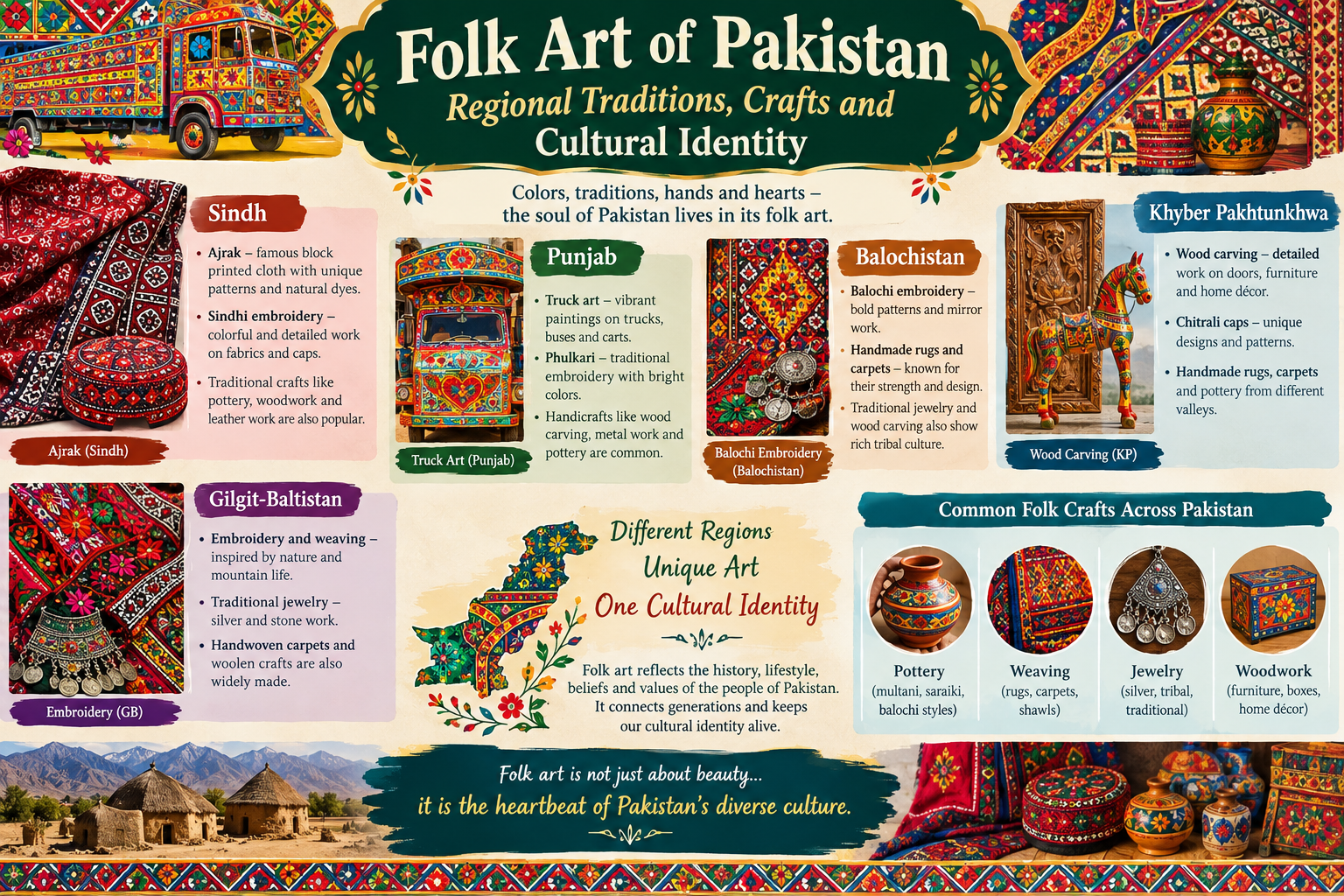
Folk art is one of the most meaningful parts of Pakistan's cultural heritage. It represents the creativity, traditions, beliefs, stories and everyday experiences of communities across the country. Unlike art that is created mainly for galleries or formal institutions, folk art often develops within communities and is passed from one generation to another through practical skills and traditional knowledge.
Pakistan has a rich variety of folk art because its different regions have their own languages, clothing traditions, crafts, patterns, music, architecture and decorative styles. Punjab, Sindh, Balochistan, Khyber Pakhtunkhwa, Gilgit-Baltistan and other areas have developed distinctive artistic traditions.
Pakistani folk art can be found in embroidery, pottery, weaving, wood carving, jewelry, painting, basketry, decorative objects and many other forms. These crafts often use locally available materials and reflect the environment and lifestyle of the communities that produce them.
Today, folk art remains important not only as a form of traditional craftsmanship but also as a source of inspiration for modern Pakistani fashion, interior design, tourism and contemporary art.
What Is Folk Art?
Folk art refers to creative work that develops within a particular community or cultural tradition. It is often created by local craftspeople who learn their skills through family members, apprenticeships and community practices.
Folk art can include:
Embroidery
Weaving
Pottery
Wood carving
Basketry
Jewelry
Textile decoration
Traditional painting
Decorative objects
Architectural decoration
Folk art can be practical as well as beautiful. A handmade object may be used in everyday life while also carrying cultural meaning.
Importance of Folk Art in Pakistan
Pakistan's folk art is important because it preserves knowledge about local communities.
Traditional designs can tell us about:
Regional history
Local lifestyles
Clothing traditions
Natural environments
Community celebrations
Family traditions
Religious and cultural practices
Traditional craftsmanship
Many patterns and techniques have survived because older generations taught them to younger people.
Regional Diversity of Pakistani Folk Art
Pakistan is culturally diverse, and folk art changes from one region to another.
The artistic traditions of Punjab may look different from those of Sindh. Balochistan has its own embroidery and decorative traditions, while Khyber Pakhtunkhwa is known for distinctive woodwork and regional crafts.
Gilgit-Baltistan also has traditional crafts influenced by its mountainous environment and local communities.
This diversity makes Pakistani folk art a broad collection of traditions rather than a single style.
Folk Art of Punjab
Punjab has a long history of crafts, textiles, pottery and decorative arts.
Punjabi folk art often reflects the region's agricultural lifestyle, colorful clothing traditions and strong community culture.
Important examples include:
Phulkari
Pottery
Embroidery
Basketry
Textile decoration
Woodwork
Traditional painting
Phulkari
Phulkari is one of the most recognizable textile traditions associated with Punjab.
The word "phulkari" is commonly associated with floral embroidery. Traditional pieces often feature colorful thread work on fabric.
Floral and geometric patterns can cover significant portions of a textile.
Phulkari has historically been associated with clothing, shawls and other decorative fabrics.
The craft demonstrates the importance of embroidery in Punjabi cultural traditions.
Punjabi Pottery
Pottery is another traditional craft found in Punjab.
Clay is shaped into useful and decorative objects such as:
Pots
Bowls
Water containers
Decorative pieces
Cooking vessels
Traditional pottery techniques require knowledge of clay preparation, shaping and firing.
Decorative painting can also be added to finished pottery.
Basketry in Punjab
Basket-making uses natural materials to create practical household objects.
Baskets can be used for storage, carrying agricultural products and everyday household activities.
The craft demonstrates how traditional communities used locally available materials to produce useful objects.
Folk Art of Sindh
Sindh has one of Pakistan's richest traditions of folk crafts.
Sindhi folk art is particularly known for embroidery, ajrak, ralli quilts, pottery, jewelry and decorative patterns.
Ajrak
Ajrak is one of the most recognizable textile traditions of Sindh.
It is known for detailed geometric patterns and deep traditional colors.
Ajrak has cultural significance in Sindh and is commonly associated with Sindhi identity.
It can be used as a shawl, fabric, clothing material or ceremonial textile.
The production process traditionally involves multiple stages of printing and dyeing.
Sindhi Embroidery
Sindhi embroidery is known for detailed patterns and colorful thread work.
Different communities may have their own styles and motifs.
Embroidery can be used to decorate:
Dresses
Shawls
Bags
Caps
Household textiles
The detailed work often requires significant time and patience.
Ralli Quilts
Ralli quilts are traditional patchwork textiles associated with Sindh and nearby regions.
They are made by arranging pieces of fabric into geometric patterns.
Different colors and shapes can create complex designs.
Ralli-making demonstrates how fabric scraps and simple materials can be transformed into artistic and useful objects.
Sindhi Pottery
Sindh also has a strong pottery tradition.
Traditional pottery may feature painted or carved designs.
Clay vessels have historically served practical purposes, particularly for storing water and household goods.
Modern artists and craftspeople continue to create decorative pottery inspired by traditional designs.
Folk Art of Balochistan
Balochistan has distinctive traditions of embroidery, weaving, jewelry and decorative crafts.
Balochi embroidery is particularly well known for its detailed patterns.
Balochi Embroidery
Balochi embroidery can contain intricate geometric and symbolic designs.
The work is often used to decorate traditional clothing.
Different communities may have their own patterns, color combinations and stitching methods.
The level of detail can make the embroidery highly time-consuming.
Balochi Jewelry
Traditional jewelry is another important aspect of Baloch cultural expression.
Jewelry may include silverwork, beads and decorative elements.
Traditional designs can reflect local aesthetics and community traditions.
Balochistan's Natural Materials
Traditional crafts in Balochistan may use locally available materials.
This can include wool, leather, metal, fabric and natural fibers.
Using local materials connects crafts with the environment in which communities live.
Folk Art of Khyber Pakhtunkhwa
Khyber Pakhtunkhwa has its own rich tradition of crafts.
Wood carving, embroidery, carpets, pottery and metalwork are among the crafts associated with the region.
Wood Carving
Wood carving is particularly important in many areas of Khyber Pakhtunkhwa.
Craftspeople create decorative designs on:
Doors
Windows
Furniture
Panels
Household objects
Geometric and floral patterns are common.
Wood carving requires careful cutting and shaping, making it a highly skilled craft.
Peshawari Craft Traditions
Peshawar has a long history as a cultural and commercial center.
Traditional bazaars and workshops have supported crafts such as woodwork, metalwork, embroidery and decorative objects.
The city's historical connections with different regions have also contributed to its diverse artistic traditions.
Folk Art of Gilgit-Baltistan
Gilgit-Baltistan has a distinct cultural environment shaped by its mountainous geography and diverse communities.
Traditional crafts include:
Wool work
Weaving
Embroidery
Woodwork
Basketry
Traditional clothing decoration
Local materials and climatic conditions influence many crafts.
Wool and other warm materials have practical importance in mountainous areas.
Traditional Weaving
Weaving is an important traditional skill in many mountain communities.
Wool and other fibers can be turned into warm clothing, rugs and household textiles.
Patterns may reflect local traditions.
Traditional Embroidery in Pakistan
Embroidery is one of the most widespread forms of Pakistani folk art.
Different regions use different stitches, colors and motifs.
Embroidery may be used on:
Dresses
Shawls
Dupattas
Caps
Bags
Cushions
Household textiles
The same basic technique can look very different depending on regional traditions.
Floral Motifs
Flowers are common in Pakistani embroidery.
Floral designs can represent beauty and nature and are often combined with leaves and geometric forms.
Different regions interpret floral patterns in their own ways.
Geometric Motifs
Geometric shapes are also common in folk art.
Triangles, diamonds, squares, lines and repeated patterns can create visually balanced designs.
Geometric patterns are especially common in textiles and decorative crafts.
Pakistani Pottery as Folk Art
Pottery has been practiced across the region for centuries.
Clay is a practical material because it can be shaped and fired into durable objects.
Traditional pottery can include:
Water pots
Cooking vessels
Bowls
Plates
Storage containers
Decorative objects
Potters develop skills in shaping, drying and firing clay.
Blue Pottery
Blue pottery is strongly associated with South Asian decorative traditions and is particularly famous in Multan and other areas of Pakistan.
Multan is widely associated with decorative ceramic traditions.
Blue and other colors are used to create floral and geometric designs.
Modern blue pottery may be used for plates, tiles, vases and decorative pieces.
Folk Painting in Pakistan
Traditional painting appears in several forms across Pakistan.
It may be found on:
Walls
Household objects
Vehicles
Decorative panels
Pottery
Textiles
Truck art is one famous example of popular decorative painting, although it has developed into a specialized art form of its own.
Truck Art and Folk Culture
Truck art is closely connected with Pakistan's popular visual culture.
Colorful trucks decorated with flowers, landscapes, portraits, poetry and patterns travel across the country.
The artwork often reflects local humor, cultural ideas and individual preferences.
Truck art demonstrates how folk-inspired creativity can transform everyday objects into moving works of art.
Woodwork in Pakistani Folk Art
Woodworking has a long tradition in many parts of Pakistan.
Craftspeople create decorative furniture, doors, boxes and architectural elements.
Wood carving can feature:
Floral patterns
Geometric designs
Traditional motifs
Calligraphy
In historic buildings, carved wooden doors and panels can also demonstrate the importance of craftsmanship.
Metalwork and Folk Crafts
Metalwork is another important traditional craft.
Artisans may work with materials such as copper, brass and other metals to create:
Trays
Pots
Decorative objects
Jewelry
Household items
Engraving and decorative patterns can turn useful objects into works of art.
Traditional Jewelry
Jewelry is an important part of folk culture in many Pakistani communities.
Traditional jewelry can vary greatly between regions.
It may include:
Necklaces
Earrings
Bracelets
Rings
Anklets
Hair ornaments
Silver, beads and other materials may be used.
Jewelry can also communicate regional and cultural identity.
Folk Art and Traditional Clothing
Clothing is one of the most visible areas where folk art appears.
Embroidery, weaving and decorative stitching can transform ordinary fabric into culturally meaningful clothing.
Different regions have their own traditional garments and decorative techniques.
For example, Sindhi, Balochi, Punjabi and Pashtun clothing traditions can contain distinctive colors, embroidery and patterns.
Folk Art and Weddings
Traditional crafts are often important during weddings and other celebrations.
Embroidered clothing, decorated fabrics, jewelry and handmade objects can become part of ceremonial traditions.
In many communities, handmade items may be prepared as gifts for family members.
This gives folk art an important social role.
Folk Art and Festivals
Cultural festivals provide opportunities for communities to display traditional crafts.
Artisans may demonstrate:
Embroidery
Pottery
Weaving
Wood carving
Jewelry making
Basketry
Festivals can also help younger generations learn about traditional crafts.
Folk Art and Storytelling
Folk art can communicate stories without using written text.
A pattern may represent a local tradition. A textile can show the creativity of a particular community. A decorative object can carry memories of family craftsmanship.
In this way, folk art acts as a visual form of cultural storytelling.
Role of Women in Pakistani Folk Art
Women have played a major role in many Pakistani textile and embroidery traditions.
Embroidery, weaving and textile decoration have often been practiced within households and communities.
Women may learn these skills from mothers, grandmothers and other relatives.
In many areas, traditional craftwork can also provide opportunities for women to earn income.
Community-based craft organizations and businesses have helped connect some artisans with wider markets.
Folk Art as a Source of Income
Traditional crafts can contribute to local economies.
Artisans can earn money by selling:
Embroidered clothing
Shawls
Pottery
Furniture
Jewelry
Bags
Decorative objects
Handmade textiles
Tourism and online marketplaces can create additional opportunities for craftspeople.
Challenges Faced by Folk Artists
Despite its cultural importance, folk art faces several challenges.
Mass-produced products can be cheaper and easier to obtain than handmade items.
Traditional crafts can require significant time, making it difficult for artisans to compete with factory-made goods.
Young people may also choose other careers instead of learning traditional crafts.
Without active preservation efforts, some specialized techniques may become less common.
Preserving Pakistani Folk Art
Preserving folk art requires support for both the artwork and the people who make it.
Important approaches include:
Teaching traditional crafts
Supporting local artisans
Organizing exhibitions
Creating craft markets
Documenting techniques
Encouraging young people to learn
Promoting traditional products
Supporting fair payment for craftspeople
Preservation is stronger when artisans themselves benefit from the continued interest in their traditions.
Folk Art and Modern Fashion
Modern Pakistani fashion often takes inspiration from traditional crafts.
Designers may use:
Embroidery
Ajrak patterns
Floral motifs
Geometric designs
Traditional weaving
Regional colors
These elements can be incorporated into contemporary clothing.
This helps connect historical craft traditions with modern fashion.
Folk Art in Interior Design
Traditional patterns can also be used in modern homes.
Pakistani folk-inspired interior design may include:
Handwoven rugs
Embroidered cushions
Painted pottery
Wooden furniture
Decorative textiles
Traditional wall art
Combining handmade crafts with modern furniture can create a culturally distinctive environment.
Folk Art and Tourism
Traditional crafts are an important part of cultural tourism.
Visitors often look for handmade products that represent the places they visit.
Local crafts can provide a way for tourists to take a piece of regional culture home with them.
Tourism can therefore create economic opportunities for artisans while also increasing awareness of cultural heritage.
Folk Art in the Digital Age
Technology has created new opportunities for traditional crafts.
Artisans and craft businesses can use digital platforms to display and sell products.
Social media can help introduce regional crafts to customers in other cities and countries.
Online tutorials can also help preserve knowledge about traditional techniques.
However, digital promotion should respect the cultural origins of the designs and give appropriate recognition to the artisans and communities behind them.
Contemporary Folk-Inspired Art
Modern Pakistani artists sometimes use traditional folk patterns in contemporary artwork.
They may combine old motifs with:
Abstract painting
Digital art
Modern sculpture
Graphic design
Installation art
Contemporary fashion
This allows traditional cultural elements to enter new artistic spaces.
Importance of Handmade Art
Handmade art has a special value because every piece can contain small differences.
Two handmade objects may have similar designs but still be unique.
The artist's individual decisions, materials and techniques contribute to the final result.
This is different from mass-produced objects made to look exactly the same.
Folk Art and Cultural Identity
Folk art helps communities maintain connections with their history.
A traditional embroidery pattern, textile, pottery design or craft technique can carry information about where a community comes from.
It can also create a sense of connection between older and younger generations.
For Pakistan, folk art provides a visual record of the country's cultural diversity.
Folk Art and National Heritage
Pakistan's cultural heritage includes many different traditions.
Folk art is an important part of this heritage because it represents everyday creativity rather than only royal or formal artistic traditions.
It shows how ordinary communities have contributed to the country's artistic history.
Learning Folk Art in Schools
Schools can play an important role in preserving folk traditions.
Students can learn simple forms of:
Embroidery
Drawing
Pottery
Pattern design
Paper craft
Traditional decoration
Educational projects can introduce students to the artistic traditions of different Pakistani regions.
Museums and Folk Art
Museums and cultural institutions can preserve folk art by collecting and displaying traditional objects.
A museum collection may include:
Clothing
Pottery
Jewelry
Tools
Textiles
Wooden objects
Decorative crafts
Museums also provide opportunities for researchers to study traditional techniques.
Folk Art and Community Knowledge
One of the most valuable aspects of folk art is the knowledge behind it.
A finished object is only part of the tradition.
The methods used to create it may include knowledge about:
Materials
Tools
Colors
Patterns
Stitching
Weaving
Firing
Carving
Preserving these skills is just as important as preserving finished objects.
Future of Pakistani Folk Art
The future of Pakistani folk art depends on maintaining a balance between tradition and innovation.
Traditional techniques need to be taught and documented, while artisans should also have opportunities to adapt their work for modern markets.
New technologies can help promote crafts without replacing traditional craftsmanship.
Young artists can combine regional heritage with contemporary design.
This can make folk art relevant to new generations.
Why Pakistani Folk Art Matters
Pakistani folk art matters because it represents the creativity of communities across the country.
It connects art with everyday life.
A handmade embroidered cloth, a clay pot, a carved wooden door or a traditional textile can all carry cultural meaning.
Folk art also creates opportunities for artisans and supports local economies.
Most importantly, it reminds people that cultural heritage is not only found in historical monuments. It can also be found in the objects people make, wear, use and pass from one generation to another.
Conclusion
Folk art is a valuable part of Pakistan's cultural identity. From Punjab's embroidery and pottery to Sindh's ajrak and ralli traditions, Balochistan's detailed embroidery, Khyber Pakhtunkhwa's woodwork and the crafts of Gilgit-Baltistan, every region contributes something distinctive.
These traditions represent creativity, practical knowledge and community history. They are often learned through families and passed down over many generations.
Modern fashion, tourism, interior design and digital platforms are providing new opportunities for Pakistani folk art. At the same time, traditional crafts face challenges from mass production, changing lifestyles and the loss of specialized skills.
Supporting artisans, teaching young people, documenting techniques and creating fair markets can help preserve these traditions.
Pakistani folk art is not simply a collection of old crafts. It is a living part of the country's cultural heritage that continues to evolve while carrying the stories and creativity of its communities.
FAQs
1. What is folk art in Pakistan?
Pakistani folk art includes traditional crafts and creative practices developed within local communities, such as embroidery, pottery, weaving, woodwork and jewelry.
2. Which Pakistani regions are known for folk art?
Punjab, Sindh, Balochistan, Khyber Pakhtunkhwa and Gilgit-Baltistan all have distinctive folk-art traditions.
3. What is Phulkari?
Phulkari is a traditional embroidery style associated particularly with Punjab and is known for colorful floral and decorative patterns.
4. What is Ajrak?
Ajrak is a traditional textile associated with Sindh, recognized for its detailed geometric patterns and distinctive traditional colors.
5. Why is Pakistani folk art important?
Pakistani folk art preserves regional traditions, supports artisans, represents cultural identity and passes artistic knowledge from one generation to another.