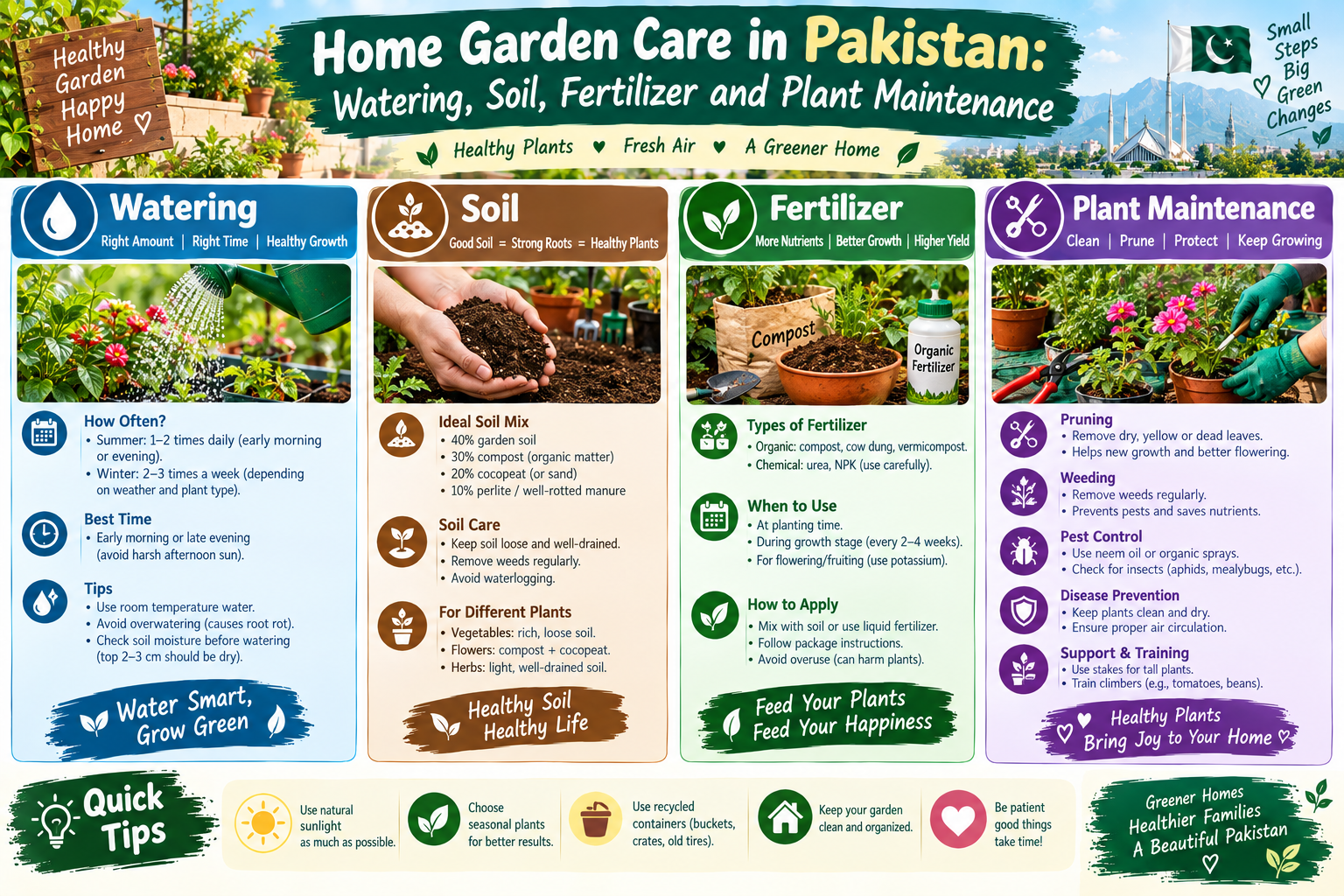
A beautiful home garden does not depend only on buying good plants. Regular care is equally important. Plants need suitable soil, appropriate sunlight, enough water, nutrients, proper drainage, and protection from extreme weather. In Pakistan, garden care can be especially important because the country has different climates and strong seasonal changes.
A garden in Punjab may experience very hot summers and cooler winters. Coastal areas can have different humidity and wind conditions, while northern regions can experience much colder weather. Because of these differences, gardeners need to understand the conditions around their homes and adjust plant care accordingly.
Home garden care does not have to be complicated. Beginners can maintain healthy plants by following a few basic principles. The most important thing is to understand that every plant has different requirements. A cactus does not need the same amount of water as mint, and an indoor plant may need different light than an outdoor flowering plant.
This complete guide explains the main areas of home garden care in Pakistan, including watering, soil preparation, fertilizer, sunlight, drainage, pruning, pest management, seasonal care, container maintenance, and simple garden routines.
Why Regular Garden Care Matters
Plants are living organisms that require suitable conditions to grow.
Regular garden care helps gardeners notice problems early.
For example, a plant may show changes because of:
Too much water
Too little water
Poor sunlight
Nutrient problems
Pests
Extreme temperatures
Poor drainage
Compact soil
Root problems
If these issues are noticed early, gardeners can investigate the cause and make appropriate changes.
Understanding Your Plants
The first step in proper garden care is knowing what plants you have.
Write down the names of your plants and learn their basic requirements.
For each plant, find out:
How much sunlight it needs
How often it usually needs water
What type of soil is suitable
How large it can become
Whether it needs fertilizer
Whether it is sensitive to heat or cold
Whether it needs pruning
This simple information can prevent many common gardening mistakes.
Watering Plants Correctly
Water is one of the most important requirements for plants.
However, plants should not be watered simply because it is part of a daily routine.
The correct amount of water depends on:
Plant type
Pot size
Soil
Temperature
Season
Sunlight
Humidity
Wind
Before watering, check the soil.
If the soil is already wet, adding more water may not be necessary.
Why Overwatering Is a Problem
Many beginner gardeners believe that more water means healthier plants.
In reality, excessive watering can create problems.
When soil remains waterlogged for long periods, roots may not receive enough air. This can contribute to root damage and weak growth.
Possible signs of watering problems can include:
Yellow leaves
Dropping leaves
Weak growth
Soft stems
Unusual soil smell
These symptoms can have different causes, so gardeners should examine the complete growing environment.
Signs of Underwatering
Plants can also suffer when they do not receive enough water.
Depending on the plant, signs may include:
Dry soil
Wilting
Drooping leaves
Dry leaf edges
Slow growth
The best response is to check the plant's actual requirements rather than immediately giving a large amount of water.
Best Time to Water
During hot weather, watering in the morning or evening can be practical because temperatures are generally lower than during the hottest part of the day.
However, the exact timing is less important than maintaining appropriate soil moisture.
Avoid creating constantly wet soil.
Watering Indoor Plants
Indoor plants often dry more slowly than outdoor plants.
This is because they may receive less direct sunlight and experience less wind.
Check the soil before watering.
Do not use the same watering schedule for every indoor plant.
For example, succulents and cacti generally require less frequent watering than many leafy plants.
Watering Outdoor Plants
Outdoor plants can lose water more quickly because of sunlight, heat, and wind.
Container plants may require more frequent monitoring than plants growing in the ground.
During hot Pakistani summers, check containers regularly.
However, increased heat does not mean that every plant should be watered excessively.
Importance of Good Soil
Healthy soil provides support for roots and helps manage water and nutrients.
Good garden soil should provide:
Root support
Moisture
Air spaces
Nutrients
Drainage
Different plants may require different types of soil.
Improving Garden Soil
If soil is hard or compact, organic matter can help improve its structure.
Compost can be mixed into suitable garden soil.
Other materials may be used depending on the plant and local availability.
The aim is to create a growing environment where roots can access moisture and air.
Soil for Container Plants
Container plants often require special attention because the amount of soil is limited.
A basic container mixture can contain suitable garden soil, compost, and material that improves drainage.
The exact mixture should depend on the plant.
For example, succulents and cacti generally need faster-draining growing media than many moisture-loving plants.
Checking Soil Moisture
The easiest method for beginners is to check the soil directly.
Touch the upper layer of soil.
If it is dry and the plant requires watering, water appropriately.
If it is still moist, wait and check again later.
Some gardeners also use moisture meters, but simple observation can work well for many home gardens.
Importance of Drainage
Drainage is one of the most important aspects of container gardening.
Excess water needs a way to leave the pot.
Pots should have appropriate drainage holes.
Blocked drainage holes can cause water to remain around roots.
Check drainage holes regularly, especially after heavy rain or when moving pots.
Choosing the Right Pot
The pot should be suitable for the plant's size.
A very small pot may restrict root development.
A very large pot can hold more moisture than the plant requires.
When a plant becomes root-bound or outgrows its container, it may need repotting.
Clay Pots
Clay pots are widely used in Pakistan.
They can be suitable for many plants and have a natural appearance.
Because clay pots can lose moisture through their sides, gardeners may need to monitor soil moisture more frequently.
Plastic Pots
Plastic pots are lightweight and easy to move.
They are useful for balconies and rooftops.
However, containers exposed to strong sunlight can become hot, particularly during summer.
Choose their location carefully.
Grow Bags
Grow bags are useful for vegetables and other plants.
They are relatively lightweight and can be practical for rooftop gardening.
Make sure they have suitable drainage and are placed on a surface where water can escape safely.
Importance of Fertilizer
Plants require nutrients for healthy growth.
The nutrients available in soil may eventually become limited, particularly in containers.
Fertilizer can provide additional nutrients when used appropriately.
However, fertilizer should not be applied randomly or excessively.
Types of Fertilizer
Gardeners may encounter:
Organic compost
Compost-based materials
Granular fertilizers
Liquid fertilizers
Slow-release fertilizers
Each product has different instructions.
Read the label carefully and use the amount recommended for the plant.
Avoiding Too Much Fertilizer
Excess fertilizer can damage plants.
Some signs of fertilizer problems may include:
Leaf-edge damage
Poor growth
Changes in leaf color
Salt buildup on soil
If fertilizer has been overused, gardeners should seek plant-specific guidance rather than adding more products.
Compost for Home Gardens
Compost can be useful for improving soil and adding organic matter.
Suitable compost materials can include properly decomposed plant material and certain household organic waste.
Compost should be mature before being added to soil.
Fresh organic waste should not simply be placed around living plants.
Sunlight and Plant Health
Sunlight is essential for photosynthesis.
However, not every plant requires the same amount of light.
Plants may prefer:
Full sunlight
Partial sunlight
Morning sunlight
Bright indirect light
Lower-light conditions
Observe the location before choosing plants.
Protecting Plants From Strong Summer Heat
Many parts of Pakistan experience intense summer temperatures.
Container plants can become particularly stressed because pots heat up quickly.
During extreme heat:
Monitor soil moisture.
Provide suitable shade to sensitive plants.
Avoid unnecessary movement or disturbance.
Keep roots protected.
Maintain good drainage.
Check plants regularly.
Shade should be provided according to plant requirements because some plants need strong sunlight.
Winter Plant Care
Winter care depends on the region.
In northern and colder areas, sensitive plants may need protection from low temperatures.
In warmer areas, many plants can continue growing with less adjustment.
During winter:
Check soil before watering.
Protect sensitive plants from frost where necessary.
Move suitable container plants to sheltered locations.
Avoid keeping cold-sensitive plants in exposed areas.
Garden Care During Rainy Weather
Heavy rain can create excess moisture.
Check drainage after rainfall.
Make sure pots are not sitting in standing water.
Move vulnerable containers to suitable protected locations when necessary.
Heavy rain can also damage delicate stems and leaves.
Managing Humidity
Humidity varies across Pakistan.
Coastal areas can experience higher humidity than many inland areas.
High humidity can affect airflow and may increase certain plant disease risks.
Avoid overcrowding plants.
Provide suitable airflow.
Do not keep leaves constantly wet without a reason.
Pruning Plants
Pruning means removing selected unwanted or damaged growth.
It can help maintain plant shape and remove dead material.
However, different plants require different pruning methods.
Avoid cutting plants randomly.
Use clean, suitable tools.
Removing Dead Leaves
Dead leaves should be removed from the plant and garden area.
This keeps the garden clean and makes it easier to observe new growth.
Do not remove healthy leaves unnecessarily.
Leaves contribute to the plant's growth, so pruning should be purposeful.
Supporting Plants
Some plants become tall or produce heavy stems.
Vegetables such as tomatoes and climbing plants may need support.
Suitable supports can include:
Stakes
Trellises
Plant cages
Garden ties
Install support carefully to avoid damaging roots.
Controlling Weeds
Weeds compete with plants for water, nutrients, light, and space.
Remove unwanted weeds from garden beds and containers.
Removing them when they are small can make the task easier.
Avoid disturbing plant roots while removing weeds.
Pest Monitoring
Garden pests can affect leaves, stems, flowers, and roots.
Inspect plants regularly.
Look at the underside of leaves because some insects hide there.
Check new growth as well.
Early detection makes garden management easier.
Common Pest Signs
Possible signs include:
Holes in leaves
Sticky surfaces
Small insects
Damaged new leaves
Web-like material
Distorted growth
These signs do not always identify a specific pest, so proper identification is important.
Natural Pest Management
Gardeners can begin with basic non-chemical approaches.
These may include:
Removing heavily damaged leaves
Improving airflow
Keeping plants clean
Removing visible pests when practical
Separating severely affected plants
For serious infestations, ask a knowledgeable nursery worker or gardening professional for suitable treatment.
Keeping Garden Tools Clean
Garden tools should be kept clean.
Tools such as:
Pruning scissors
Hand trowels
Small shovels
Gardening gloves
should be maintained properly.
Cleaning tools can help reduce the transfer of unwanted material between plants.
Repotting Plants
Plants may eventually outgrow their containers.
Signs can include:
Roots coming through drainage holes
Very rapid drying of soil
Plant becoming unstable
Roots becoming tightly packed
When repotting is needed, select a suitable container that is only appropriately larger.
Do not automatically move every plant into a very large pot.
Caring for Indoor Plants
Indoor plants need regular observation.
Check:
Light
Soil moisture
Leaves
Dust
Pests
Pot drainage
Dust can collect on broad leaves.
Gently cleaning leaves can improve their appearance.
Caring for Balcony Plants
Balcony plants may face strong sunlight and wind.
Secure pots properly.
Avoid overcrowding.
Monitor water because containers can dry quickly.
Make sure water does not create problems for floors or neighboring areas.
Caring for Rooftop Gardens
Rooftop gardens require special attention.
Rooftops can become hot and windy.
Use stable containers.
Plan drainage carefully.
Avoid placing unnecessary heavy materials on the roof.
Before creating a large rooftop garden, the condition and suitability of the structure should be considered.
Caring for Small Courtyard Gardens
Courtyards can be easier to manage because plants may have more stable conditions than exposed rooftops.
Arrange plants according to height.
Keep walking paths clear.
Use suitable flowering plants, herbs, and decorative greenery.
Garden Cleaning Routine
A clean garden is easier to maintain.
Remove:
Dead leaves
Broken stems
Unwanted weeds
Fallen plant material
Unnecessary containers
Keep gardening tools organized.
Clean pots before reusing them where appropriate.
Weekly Garden Routine
A simple weekly routine can include:
Day 1
Check soil moisture.
Day 2
Inspect leaves for pests.
Day 3
Remove dead leaves.
Day 4
Check pot drainage.
Day 5
Observe new growth.
Day 6
Clean the garden area.
Day 7
Review plants and identify any problems.
This does not mean every task must be done on exactly these days. The routine can be adjusted according to the garden.
Monthly Garden Maintenance
Once a month, check:
Pot sizes
Soil condition
Fertilizer needs
Plant growth
Pest activity
Support structures
Drainage
Garden organization
This helps keep the garden under control.
Caring for Plants During Holidays
If you are going away from home, plan plant care in advance.
For a short trip, check soil moisture before leaving.
For a longer trip, ask a trusted person to check the plants.
Do not flood plants with extra water simply because you will be away.
Different plants have different water needs.
Water Conservation in Home Gardening
Water should be used responsibly.
Ways to reduce unnecessary water use include:
Watering according to soil moisture
Using suitable mulch
Checking leaking containers
Choosing plants suitable for local climate
Reusing appropriate clean water where safe and suitable
Avoid wasting water on paths and empty areas.
Choosing Low-Maintenance Plants
People with limited time can select plants that require relatively simple care.
Examples may include:
Aloe vera
Snake plant
Certain succulents
Some hardy decorative plants
Selected local flowering plants
Even low-maintenance plants still require appropriate sunlight and occasional watering.
Garden Care for Different Family Members
A garden can be divided into simple responsibilities.
One person can check watering.
Another can monitor pests.
Children can help observe plants under adult supervision.
This can make gardening a shared household activity.
Keeping a Gardening Journal
A gardening journal can help beginners learn.
Write down:
Plant name
Planting date
Location
Watering observations
Fertilizer use
Growth
Problems
Weather conditions
Over time, this creates a record of what works best in your home.
Common Garden Care Mistakes
Watering Every Plant the Same Way
Different plants have different requirements.
Ignoring Drainage
Poor drainage can cause root problems.
Using Too Much Fertilizer
More fertilizer does not automatically produce better growth.
Ignoring Sunlight
A plant may struggle if it receives unsuitable light.
Overcrowding
Plants need space and airflow.
Ignoring Pests
Small pest problems can become larger.
Pruning Without Understanding the Plant
Incorrect pruning can damage plants.
Using Poor Soil
Compacted or unsuitable soil can restrict root growth.
Creating a Simple Garden Care Schedule
A practical schedule can make maintenance easier.
Daily or Regular Observation
Look at plants and notice unusual changes.
Several Times a Week
Check soil moisture.
Weekly
Clean the area and inspect plants carefully.
Monthly
Review soil, fertilizer, pots, growth, and overall garden condition.
The schedule should be adapted according to weather and plant requirements.
Home Garden Care on a Budget
Good garden care does not require expensive products.
You can:
Make compost
Reuse suitable containers
Use locally available plants
Clean and reuse pots
Propagate suitable plants
Use simple supports
Learn plant-specific care
Spend money where it is genuinely useful rather than buying unnecessary gardening products.
Garden Care in Different Pakistani Regions
Garden maintenance should be adapted to local conditions.
Punjab
Hot summers can increase watering needs for some plants, especially container plants.
Sindh
Warm temperatures and coastal conditions in some areas require careful consideration of humidity, heat, and wind.
Khyber Pakhtunkhwa
Seasonal differences can affect planting and winter care.
Northern Areas
Cold temperatures and frost can become important considerations for sensitive plants.
These are broad regional patterns. Local conditions can vary significantly even within the same province.
Why Observation Is the Most Important Gardening Skill
Experienced gardeners often become better at recognizing changes in plants.
Instead of following a fixed rule for every plant, observe:
Soil
Leaves
New growth
Temperature
Sunlight
Water
Pests
This helps you understand what your particular garden needs.
Final Home Garden Care Checklist
Before finishing your garden routine, check:
Is the soil suitable?
Is drainage working?
Are plants receiving appropriate light?
Is watering suitable?
Are plants showing signs of pests?
Does any plant need support?
Are dead leaves removed?
Are containers suitable?
Is fertilizer being used correctly?
Are plants protected from extreme weather?
These simple checks can help maintain a healthy garden.
Conclusion
Home garden care in Pakistan is based on simple but important principles. Plants need appropriate water, healthy soil, suitable sunlight, nutrients, good drainage, enough space, and regular observation.
Because Pakistan has different climates, garden care should not follow one fixed routine for every home. A plant growing on a hot rooftop may require different attention from a plant growing inside a shaded room.
Water plants according to their needs rather than automatically watering every day. Use suitable soil and compost, provide appropriate nutrients, maintain drainage, monitor sunlight, and protect sensitive plants from extreme temperatures.
Regular observation is one of the most useful gardening skills. By checking plants frequently, homeowners can notice changes before problems become serious.
A well-maintained garden does not need to be large or expensive. Even a few healthy plants in pots can create a beautiful green environment around a Pakistani home.
With patience, careful watering, suitable soil, proper sunlight, responsible fertilizer use, and regular maintenance, home gardening can become an enjoyable and long-term hobby for families, students, and beginners across Pakistan.
FAQs
1. How often should I water plants in Pakistan?
Watering depends on the plant, soil, pot size, season, temperature and sunlight. Check soil moisture before watering instead of following one fixed schedule.
2. Why is good drainage important for plants?
Good drainage allows excess water to leave the container and helps prevent soil from remaining waterlogged around plant roots.
3. How can I protect plants from Pakistan's hot summers?
Monitor soil moisture, protect sensitive plants from extreme afternoon heat where necessary, maintain good drainage and provide suitable shade according to each plant's requirements.
4. How often should I use fertilizer?
Fertilizer requirements vary by plant and product. Follow the instructions for the specific fertilizer and avoid excessive application.
5. What is the easiest way to maintain a healthy home garden?
Regularly observe plants, check soil moisture, provide suitable sunlight, maintain drainage, remove damaged growth and respond early to pests or other problems.