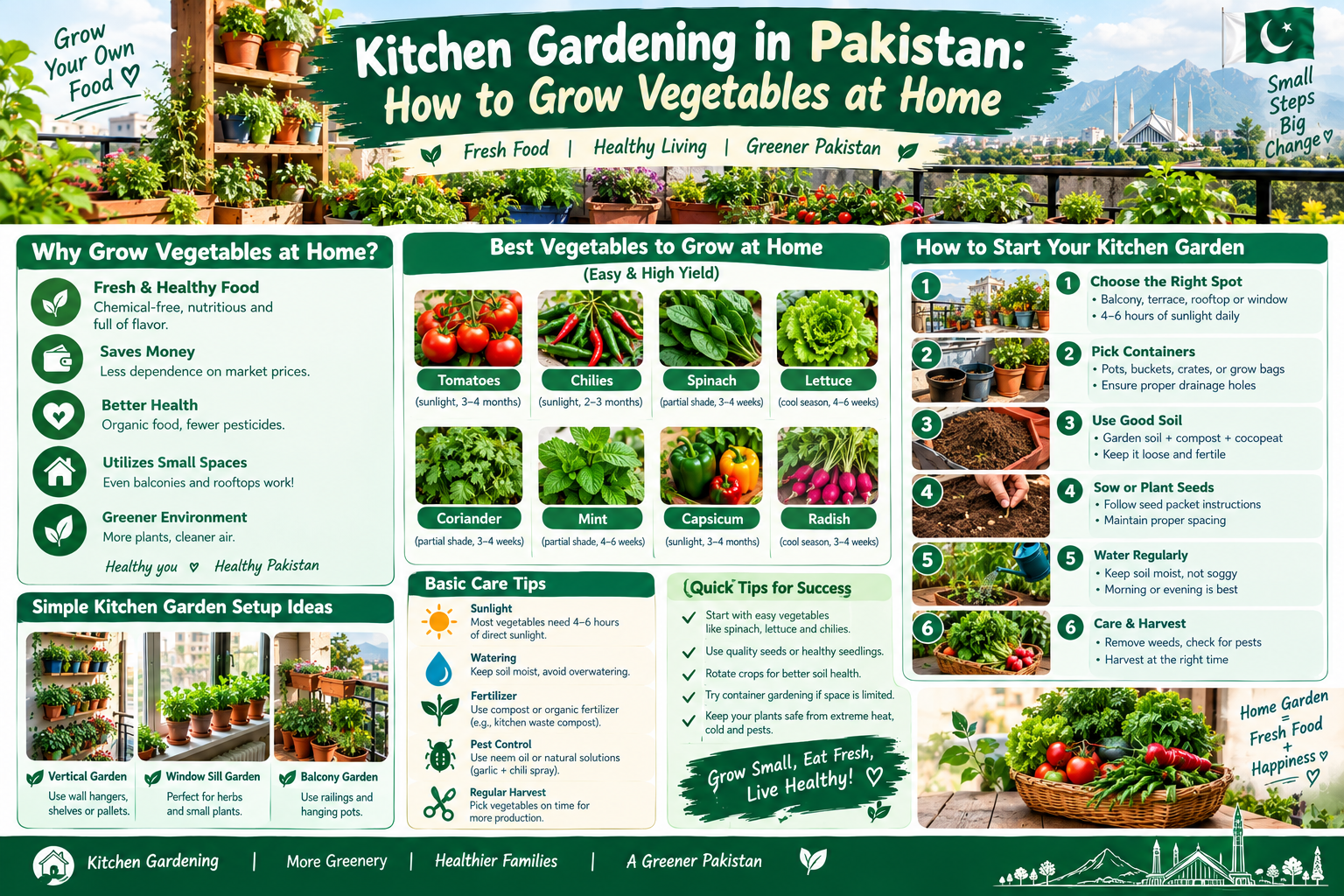
Kitchen gardening is a useful and enjoyable way to grow herbs, vegetables, and some fruits at home. In Pakistan, many people have started showing interest in growing fresh plants in courtyards, balconies, rooftops, terraces, gardens, and even small containers. A kitchen garden does not always require a large piece of land. With suitable containers, soil, sunlight, water, and regular care, a small space can become a productive home garden.
Growing vegetables at home can also be an educational hobby. It helps people understand how food grows and how plants depend on sunlight, water, soil, nutrients, and suitable temperatures. For families, kitchen gardening can become a shared activity, while children can learn basic lessons about nature and plant growth.
Pakistan has different climates, so the best plants and growing seasons can vary from one region to another. Punjab can experience very hot summers and cooler winters, while Sindh includes warmer and coastal areas. Khyber Pakhtunkhwa and northern regions can have different temperature patterns. Therefore, gardeners should select vegetables according to their local weather and available growing conditions.
This complete guide explains how beginners can start kitchen gardening in Pakistan, which vegetables and herbs can be considered, how to choose containers and soil, how to manage sunlight and water, how to deal with seasonal changes, and how to maintain a small vegetable garden successfully.
What Is Kitchen Gardening?
Kitchen gardening means growing edible plants around the home for household use.
It can include:
Vegetables
Herbs
Green chilies
Leafy greens
Tomatoes
Green onions
Mint
Coriander
Basil
Selected fruits
A kitchen garden can be located in a traditional garden, raised bed, balcony, rooftop, courtyard, or containers.
The purpose does not have to be producing all the food a family needs. Even growing a few herbs or vegetables can make the garden useful.
Why Kitchen Gardening Is Popular in Pakistan
Kitchen gardening offers several practical benefits.
One benefit is convenience. Herbs and vegetables grown at home can be available close to the kitchen.
Another benefit is the gardening experience itself. People can learn how seeds germinate, how plants grow, and how flowers eventually produce vegetables or fruit in suitable plants.
Kitchen gardening can also make unused spaces productive.
A rooftop, balcony, or courtyard that is not being used can become a small growing area.
Benefits of Growing Vegetables at Home
A home kitchen garden can provide several benefits.
Fresh Home-Grown Produce
Home gardeners can harvest vegetables and herbs when they are ready.
Useful Hobby
Gardening can become a productive way to spend free time.
Educational Activity
Children can learn about plants and food production.
Better Use of Space
Small spaces can be used for containers and grow bags.
Connection With Nature
Gardening gives people an opportunity to observe natural growth closely.
Choosing the Right Location
Before planting anything, select the best available location.
The most important factor is sunlight.
Many vegetables require several hours of sunlight for healthy growth.
Observe the location throughout the day.
Check:
Morning sunlight
Afternoon sunlight
Shade
Wind
Rain exposure
Water availability
Drainage
A location with suitable sunlight and easy access to water can make gardening much easier.
Kitchen Gardening in a Balcony
Balcony gardening is suitable for people living in apartments or houses with limited outdoor space.
Use containers that are appropriate for the vegetable.
Possible balcony crops include:
Mint
Coriander
Basil
Green chilies
Green onions
Small leafy vegetables
Some tomato varieties
Do not overcrowd the balcony.
Plants need enough space for leaves and roots.
Containers should also be stable and safely positioned.
Kitchen Gardening on a Rooftop
Rooftops can provide valuable gardening space.
Containers and grow bags can be arranged in rows.
However, rooftops may experience:
Strong sunlight
High temperatures
Strong winds
Rapid drying of soil
Therefore, rooftop gardeners need to monitor plants carefully.
Safety is also important. Containers should be placed securely and water drainage should be managed properly.
Kitchen Gardening in a Courtyard
A courtyard can be a convenient location for a kitchen garden.
You can use:
Ground beds
Raised beds
Pots
Grow bags
Wooden planters
Divide the area into sections if possible.
For example, herbs can be placed in one area while larger vegetables are planted separately.
Choosing Containers
Container selection depends on the plant.
Small herbs can often grow in smaller pots, while vegetables with larger root systems may require bigger containers.
Common container materials include:
Clay
Plastic
Wood
Cement
Fabric grow bags
The most important feature is drainage.
Containers should allow excess water to leave.
Using Grow Bags
Grow bags can be useful for rooftop and balcony gardening.
They are generally lighter than some traditional containers and can be moved when necessary.
Grow bags are available in different sizes.
Select a size according to the plant's expected root growth.
They should be placed on a surface where excess water can drain safely.
Preparing Soil
Good soil is essential for vegetable gardening.
A suitable container mixture should provide:
Nutrients
Root support
Air spaces
Moisture
Drainage
Garden soil can be combined with suitable organic matter and compost.
The exact mixture depends on the crop.
Soil should not become hard and compact.
Roots need access to both moisture and air.
Importance of Compost
Compost can improve soil structure and provide organic matter.
Gardeners can use properly decomposed compost made from suitable organic materials.
Compost should be mature before being added to containers.
Fresh kitchen waste should not simply be buried around growing plants.
A well-managed composting system can provide useful material for the garden.
Growing Mint
Mint is one of the most popular herbs for Pakistani kitchens.
It can be grown in containers and used in chutneys, drinks, salads, and other foods.
Mint can spread quickly, so growing it in a separate pot can make management easier.
Provide suitable light and regular moisture.
Avoid keeping the soil constantly waterlogged.
Growing Coriander
Coriander is widely used in Pakistani cooking.
It can be grown from seeds in containers or garden beds.
It needs suitable soil moisture and appropriate sunlight.
Because coriander is a relatively short-lived herb, gardeners can plant new seeds periodically.
This can provide a more continuous supply during suitable growing conditions.
Growing Basil
Basil can be used in cooking and can also make a kitchen garden attractive.
It generally prefers warm conditions and suitable sunlight.
Use well-draining soil and monitor moisture.
Regular harvesting can encourage continued growth in suitable conditions.
Growing Green Chilies
Green chili plants can be grown in containers.
They generally need suitable sunlight, soil, water, and nutrients.
Choose a container large enough for root development.
The plant may need support as it grows.
Inspect leaves regularly for pests.
Growing Tomatoes
Tomatoes are a popular choice for home vegetable gardens.
They can be grown in garden beds or containers.
Tomatoes usually need sufficient sunlight and appropriate soil.
Many varieties benefit from support because stems can become heavy as the plant develops.
A suitable stake or cage can help support the plant.
Tomatoes can be sensitive to temperature extremes, so local season and climate should be considered before planting.
Growing Green Onions
Green onions can be suitable for container gardening.
They do not always require a large growing area.
A long container can be used to grow several plants with suitable spacing.
They can be useful for small kitchen gardens because they do not require as much space as some larger crops.
Growing Leafy Vegetables
Leafy vegetables can be suitable for home gardens during appropriate seasons.
Examples include:
Spinach
Lettuce
Mustard greens
Other locally suitable leafy vegetables
The exact choice depends on the local climate and season.
Leafy vegetables can often be grown in relatively shallow containers compared with some root vegetables.
Growing Radishes
Radishes can be grown in suitable containers or garden beds.
Because the edible portion develops below the soil surface, the container should have enough depth.
Loose soil can make root development easier.
Choose varieties appropriate for your local growing season.
Growing Carrots
Carrots require sufficient soil depth because the edible root develops underground.
A deep container can be used for container gardening.
Soil should be loose enough to allow roots to develop.
The results depend on variety, soil, temperature, and care.
Growing Cucumbers
Cucumbers can grow quickly under suitable conditions.
They require space because vines can spread.
A support or trellis can help the plant grow vertically.
This can save floor space in a small garden.
Cucumbers need suitable sunlight, water, and nutrients.
Growing Beans
Some types of beans can be suitable for home gardening.
Climbing varieties can use vertical support and therefore make efficient use of space.
Provide a strong trellis or support where required.
Harvest timing depends on the variety.
Growing Peppers
Different types of peppers can be grown in suitable conditions.
They generally benefit from warmth and sunlight.
Container size, watering, soil quality, and temperature all affect plant growth.
Regular inspection can help identify pests early.
Growing Tomatoes in Small Spaces
Small-space gardeners can choose suitable compact tomato varieties.
Use a container large enough for the plant and provide support.
Place the container where sufficient sunlight is available.
Avoid overcrowding several tomato plants in a single small container.
Choosing Seeds
Good seeds are important for successful kitchen gardening.
Buy seeds from reliable nurseries, gardening stores, or established agricultural suppliers.
Check:
Crop name
Variety
Packaging
Expiry information where provided
Growing season
Instructions
Store unused seeds in a cool, dry location according to their packaging instructions.
Starting From Seeds
Growing from seeds can be economical.
Use clean containers and suitable growing medium.
Plant seeds at the depth recommended for the crop.
Keep the soil appropriately moist.
Avoid flooding the container.
Once seedlings emerge, provide suitable light.
Buying Seedlings
Beginners can also buy young plants from nurseries.
This can save time compared with starting every crop from seed.
When buying seedlings, inspect them for:
Healthy leaves
Strong stems
Signs of pests
Damaged roots
Unusual discoloration
Ask the nursery about the plant's growing requirements.
Watering Kitchen Garden Plants
Watering is one of the most important parts of vegetable gardening.
There is no universal watering schedule.
Water requirements depend on:
Plant type
Container size
Soil
Temperature
Season
Sunlight
Wind
Check soil moisture before watering.
Vegetables in small containers may dry faster during hot weather.
Avoiding Overwatering
Overwatering can be as harmful as underwatering.
When soil stays wet for too long, roots may not receive enough air.
Possible signs of watering problems include:
Yellowing leaves
Weak growth
Root damage
Poor plant development
The same symptom can have multiple causes, so observe the complete growing environment before changing the watering routine.
Best Time to Water
In hot weather, morning or evening can be practical times to water.
Watering during the hottest part of the day can lead to rapid evaporation.
However, the most important principle is providing appropriate moisture without keeping the soil permanently saturated.
Sunlight Requirements
Many vegetables need substantial sunlight.
Before planting, observe the location.
If the area receives only a small amount of light, choose plants that can tolerate those conditions rather than forcing sun-loving vegetables to grow there.
Sunlight requirements can vary between varieties.
Kitchen Gardening During Summer
Summer can be challenging in many parts of Pakistan.
High temperatures can dry containers quickly.
During hot weather:
Monitor soil regularly.
Provide appropriate shade to sensitive plants.
Use mulch where suitable.
Water according to plant requirements.
Protect containers from excessive heat where necessary.
Some crops are better suited to cooler seasons, so not every vegetable should be planted during extreme summer conditions.
Kitchen Gardening During Winter
Winter is suitable for several vegetables in different parts of Pakistan.
However, exact planting times vary by region.
In colder areas, sensitive plants may need protection.
Reduce watering when the soil stays moist for longer periods.
Observe local weather rather than following the same schedule throughout Pakistan.
Seasonal Planning
Successful kitchen gardening requires planning around seasons.
Instead of planting every crop at the same time, choose crops according to local weather.
Keep a simple gardening calendar.
Record:
Planting date
Seed variety
First growth
Harvest period
Problems
Weather conditions
This can help improve future planting decisions.
Natural Pest Management
Vegetable plants can attract insects.
Regular inspection is important.
Look at:
Underside of leaves
New shoots
Stems
Flowers
Soil surface
If you notice pests, identify them before selecting a treatment.
Removing affected leaves, improving airflow, and maintaining garden cleanliness can help in some situations.
For serious pest problems, ask a qualified gardening professional or nursery for advice.
Organic Gardening at Home
Some home gardeners prefer organic gardening methods.
Organic gardening can include:
Compost
Organic matter
Natural soil improvement
Careful pest monitoring
Avoiding unnecessary chemical applications
Organic does not mean that every substance is automatically safe or suitable. Gardeners should still use any treatment carefully and follow reliable instructions.
Using Mulch
Mulch can be placed on the soil surface to help manage moisture and temperature.
Suitable organic materials may include dry leaves or other appropriate garden materials.
Mulch should not be piled directly against plant stems.
It should also be kept clean and monitored for pests.
Supporting Vegetable Plants
Some plants need physical support.
Tomatoes, cucumbers, beans, and climbing plants may benefit from stakes, cages, trellises, or other supports.
Support should be installed early enough to avoid damaging roots later.
The structure should be strong enough to handle the mature plant.
Pruning and Harvesting
Some plants benefit from removing damaged or unwanted growth.
However, pruning requirements vary by plant.
Harvest vegetables and herbs at the appropriate stage.
Regular harvesting can encourage continued production in some crops.
Use clean tools when cutting plants.
Keeping the Kitchen Garden Clean
Remove dead leaves and damaged plant material regularly.
Keep containers clean.
Remove weeds from garden beds.
Check drainage holes.
A clean garden is easier to monitor and maintain.
Growing Food From Kitchen Scraps
Some vegetables and herbs can sometimes regrow from kitchen leftovers under suitable conditions.
Examples may include certain green onions and herbs.
However, regrowth does not always produce a full mature plant.
It is often better to use quality seeds or healthy seedlings when reliable production is the goal.
Using Recycled Containers
Suitable household containers can reduce gardening costs.
Old buckets and food-safe containers can be reused if they are clean and safe.
Always create appropriate drainage.
Never use containers that previously held hazardous chemicals.
Kitchen Gardening for Beginners
Beginners should avoid trying to grow ten or twenty different crops at once.
Start with two or three easy plants.
For example:
Mint
Coriander
Green chilies
Once you understand watering and sunlight, you can add tomatoes or other vegetables.
This makes learning easier.
Common Kitchen Gardening Mistakes
Planting in the Wrong Season
A crop may struggle if planted during unsuitable weather.
Poor Drainage
Waterlogged soil can damage roots.
Too Much Water
Overwatering is a common problem.
Too Little Sunlight
Many vegetables require adequate light.
Small Containers
Large plants may struggle in containers that are too small.
Too Much Fertilizer
Excess fertilizer can damage plants.
Overcrowding
Plants need enough space for roots, leaves, and airflow.
Small Kitchen Garden Layout
A simple small garden can be arranged into sections.
For example:
Section 1: Herbs
Mint, coriander, basil
Section 2: Chilies
Green chili plants
Section 3: Vegetables
Tomatoes or seasonal vegetables
Section 4: Leafy Greens
Suitable seasonal greens
This arrangement makes watering and harvesting easier.
Kitchen Gardening on a Low Budget
A home garden does not need expensive equipment.
Start with a few containers.
Use locally available soil materials.
Make compost from suitable organic waste.
Grow plants from seeds.
Use simple supports made from safe, suitable materials.
Buy new equipment only when necessary.
How Much Time Does Kitchen Gardening Require?
The amount of time depends on the number and type of plants.
A small garden may require only a few minutes of observation each day.
Regular tasks include:
Checking soil
Watering when needed
Removing damaged leaves
Checking for pests
Harvesting
Cleaning containers
Larger gardens naturally require more time.
Teaching Children About Food
Kitchen gardening can help children understand where food comes from.
Instead of seeing vegetables only in shops, children can observe:
Seed
Seedling
Growing plant
Flower
Vegetable or fruit
Harvest
Children can participate in simple tasks under adult supervision.
Kitchen Gardening and Healthy Habits
Growing vegetables at home can encourage people to take an interest in fresh foods.
However, a home garden should be viewed as a gardening activity rather than a guarantee of a particular diet or health outcome.
The main value is learning, growing, and making productive use of available space.
Choosing Plants According to Pakistani Regions
Different regions require different approaches.
In hot areas, gardeners may need to focus on heat-tolerant plants and careful summer management.
In cooler areas, seasonal vegetables and winter crops may have different opportunities.
Coastal regions can have different humidity and wind conditions.
Therefore, local nurseries and agricultural resources can provide useful region-specific information.
Maintaining a Kitchen Garden Long Term
A successful garden develops over time.
Keep notes about which crops performed well.
Record which plants needed more water and which ones struggled.
Notice which areas receive the best sunlight.
After one growing season, use your experience to improve the next season.
Gardening becomes easier as you learn the conditions of your own home.
Final Tips for Successful Kitchen Gardening
Choose a suitable location first.
Start with a few easy crops.
Use containers with drainage.
Prepare healthy soil.
Select seeds or seedlings carefully.
Provide appropriate sunlight.
Check soil moisture before watering.
Protect plants from extreme weather when needed.
Inspect regularly for pests.
Harvest at the appropriate time.
Do not become discouraged if the first attempt is not perfect.
Every growing season provides new experience.
Conclusion
Kitchen gardening in Pakistan can be started in almost any home with suitable space. A large garden is not necessary. Balconies, rooftops, courtyards, verandas, and containers can all be used to grow herbs and vegetables.
Mint, coriander, basil, green chilies, tomatoes, green onions, leafy vegetables, radishes, cucumbers, beans, and other suitable crops can be considered according to local climate and season.
The most important factors are sunlight, soil, water, drainage, temperature, container size, and regular care. Gardeners should select crops according to their region instead of using the same planting schedule everywhere in Pakistan.
Beginners should start small and learn gradually. A few healthy plants can provide valuable gardening experience and make an unused space more productive.
With patience, planning, and regular observation, kitchen gardening can become a rewarding part of home life in Pakistan.
FAQs
1. Can I start a kitchen garden without a large yard?
Yes. Herbs and selected vegetables can be grown in pots, grow bags, balconies, rooftops and other small spaces.
2. Which vegetables are suitable for a home kitchen garden?
Depending on the season and local climate, options can include tomatoes, green chilies, green onions, leafy vegetables, radishes, cucumbers and beans.
3. What herbs can I grow at home in Pakistan?
Mint, coriander and basil are common options when suitable sunlight, soil and watering conditions are available.
4. How much sunlight do vegetables need?
Many vegetables require several hours of suitable sunlight, but exact requirements vary by crop and variety.
5. How can beginners avoid common kitchen gardening problems?
Start with a few easy crops, use containers with drainage, select plants according to the season, check soil moisture before watering, and inspect plants regularly for pests and other problems.