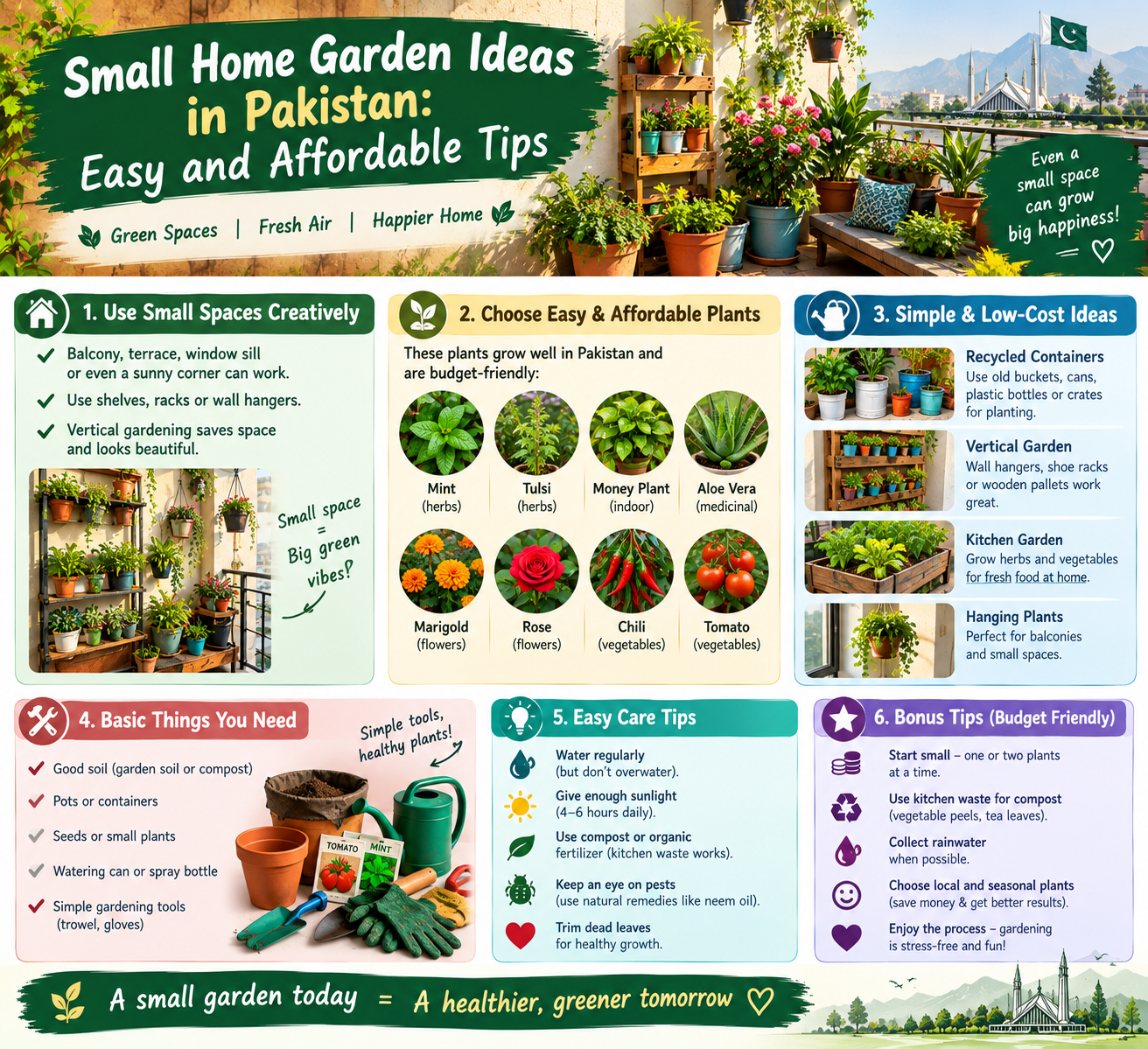
A beautiful garden does not always require a large piece of land. In Pakistan, many people live in houses, apartments, or small spaces where there may not be enough room for a traditional garden. However, with creative planning, even a small balcony, rooftop, courtyard, veranda, entrance, or window area can be transformed into a green and attractive space.
Small home gardens are becoming a practical choice for people who want to bring nature closer to their daily lives. A few plants can make a home feel fresher and more welcoming. Small gardens can also provide an opportunity to grow herbs, flowers, vegetables, and decorative plants.
Pakistan has different climates, so garden planning should consider the local weather. Cities in Punjab can experience very hot summers, Karachi has coastal conditions, and northern regions can have colder weather. Therefore, plants should be selected according to the local environment.
The good news is that creating a small garden does not always require a large budget. Reusable containers, simple pots, locally available plants, and basic gardening materials can be enough to create a pleasant garden.
This guide explains practical small home garden ideas for Pakistani homes, including balcony gardens, rooftop gardens, courtyard gardens, vertical gardens, container gardening, kitchen gardening, plant selection, watering, sunlight, soil, decoration, maintenance, and budget-friendly ideas.
Why Small Home Gardens Are Useful
A small garden can make an unused space more useful.
A balcony that previously contained only a few household items can become a green corner. An empty rooftop can contain carefully arranged containers. A small courtyard can have flowers and herbs.
Gardening can also become a relaxing hobby. Looking after plants encourages regular outdoor activity and teaches patience.
Another advantage is that some plants can be useful in everyday life. Herbs such as mint, coriander, basil, and green chilies can be grown in suitable conditions.
A small garden can also introduce children to nature and help them understand how plants grow.
You Do Not Need a Large Space
One of the biggest misconceptions about gardening is that a garden needs a large yard.
This is not true.
Plants can grow in:
Small balconies
Rooftops
Courtyards
Verandas
Window areas
Entrance spaces
Small patios
Containers
Hanging pots
Vertical structures
The key is choosing plants according to the available space.
A small space should not be overcrowded. A few healthy plants can look better and be easier to maintain than dozens of plants packed together.
Start With a Simple Garden Plan
Before buying plants, make a basic plan.
Measure the available space and observe it during different times of the day.
Ask yourself:
How much sunlight does the area receive?
Is it exposed to rain?
Is there strong wind?
How much space is available?
Where will water drain?
How much time can I spend caring for plants?
These questions can help you avoid buying plants that are unsuitable for the location.
Balcony Garden Ideas
Balconies are excellent locations for small gardens.
A balcony garden can include a combination of floor pots, hanging containers, and small vertical arrangements.
Suitable options may include:
Mint
Basil
Aloe vera
Marigold
Spider plant
Money plant
Small flowering plants
Selected herbs
Small vegetables
If the balcony receives strong sunlight, select plants that can tolerate those conditions.
If it receives mostly indirect light, choose plants that perform well with lower-intensity light.
Always make sure pots are placed securely.
Hanging Pots for Small Spaces
Hanging pots can save floor space.
They can be attached to suitable supports where safe.
Hanging plants can include suitable decorative plants and some herbs.
However, hanging pots should be securely installed. Heavy containers can become dangerous if they fall.
Watering should also be controlled so excess water does not drip onto people, walls, furniture, or lower floors.
Vertical Gardening
Vertical gardening is useful when floor space is limited.
Plants can be arranged vertically using suitable stands, shelves, wall-mounted systems, or other safe structures.
A vertical garden can be used for:
Decorative plants
Herbs
Small flowers
Selected vegetables
The structure should allow each plant to receive enough light.
Do not place too many plants together because overcrowding can reduce airflow and make maintenance difficult.
Small Rooftop Garden
Rooftops can provide useful gardening space.
A small rooftop garden can use containers or grow bags instead of creating a permanent garden structure.
Possible plants include:
Herbs
Flowers
Aloe vera
Selected vegetables
Decorative plants
Rooftops can become very hot in summer, so plant selection and shade management are important.
Strong winds can also affect plants, particularly taller containers.
Safety should always come first when creating a rooftop garden. Containers should be positioned carefully and drainage should be managed properly.
Courtyard Garden
Many Pakistani houses have small courtyards.
A courtyard can become a beautiful garden with a few well-placed plants.
Use different plant heights to create visual variety.
For example:
Smaller plants near the front
Medium plants in the middle
Taller plants near suitable walls
Leave enough walking space.
Flowers, herbs, and decorative plants can be combined according to the available sunlight.
Entrance Garden
The entrance of a home can be decorated with a few plants.
Medium-sized pots can be placed on both sides of an entrance if there is enough space.
Flowering plants can provide color, while green decorative plants can create a simple natural appearance.
Do not block the doorway or walking path.
Window Garden
A window area can become a small plant corner.
Plants should be selected according to the amount of light available.
Some herbs and small plants can grow well near bright windows.
However, avoid placing pots where they can fall or block ventilation.
A small shelf can provide space for lightweight plant containers if it is properly installed.
Kitchen Garden in Small Spaces
A kitchen garden can be created even without a large yard.
Small containers can be used for:
Mint
Coriander
Basil
Green chilies
Green onions
Selected vegetables
Choose containers that are large enough for the plant's roots.
Kitchen gardens should be placed where plants receive suitable sunlight.
Growing food at home requires patience. Results can vary depending on season, soil, temperature, and plant care.
Using Recycled Containers
Small gardens do not always require expensive pots.
Suitable household containers can sometimes be reused.
Examples may include:
Old buckets
Wooden boxes
Large food containers
Unused pots
Suitable cans
Reusable plastic containers
Before using a container, clean it properly and ensure it is safe for gardening.
Most importantly, provide appropriate drainage.
Avoid containers that previously held harmful chemicals or substances.
Clay Pots
Clay pots are commonly used in Pakistan.
They have a traditional appearance and can be useful for many plants.
Because clay can allow moisture to evaporate more readily than some other materials, gardeners should monitor soil moisture.
Clay pots can work well for outdoor gardens and certain indoor arrangements.
Plastic Pots
Plastic pots are lightweight and available in many sizes.
They can be useful for balconies and rooftops because they are easier to move than heavy containers.
However, dark-colored plastic containers can become hot when exposed to intense sunlight.
The condition of the pot and drainage holes should be checked regularly.
Wooden Boxes and Planters
Wooden planters can give a natural appearance.
They can be used for herbs, flowers, and selected vegetables.
Wood needs protection from excessive moisture because constant contact with water can cause deterioration.
A suitable lining or properly constructed planter can improve durability.
Choosing Plants for Small Gardens
Plant selection is one of the most important parts of small-space gardening.
Look for plants that:
Match the available sunlight
Fit the available space
Have manageable growth
Suit the local climate
Match your watering routine
Do not require more maintenance than you can provide
Avoid selecting plants simply because they look attractive at a nursery.
A plant should also be suitable for your home's actual conditions.
Easy Plants for Small Pakistani Gardens
Several plants can work well in small gardens when their requirements are met.
Aloe Vera
Aloe vera can be grown in containers and generally does not require frequent watering.
Mint
Mint is useful for kitchen gardening and can grow well in containers.
Basil
Basil can provide both greenery and a useful kitchen herb.
Marigold
Marigold can add bright flowers to balconies and courtyards.
Spider Plant
Spider plants can be suitable for indoor or shaded areas with appropriate light.
Snake Plant
Snake plants are popular indoor plants and generally need less frequent watering.
Money Plant
Money plants can be grown in suitable containers and can provide attractive green foliage.
Small Garden With Flowering Plants
Flowers can make a small garden look colorful.
Possible flowering plants include:
Marigold
Jasmine
Rose
Hibiscus
Bougainvillea
Seasonal flowering plants
The best choice depends on local climate and sunlight.
Do not overcrowd a small garden with too many flowering plants. A few well-maintained plants can create a better appearance.
Small Garden With Herbs
Herb gardening is practical for small spaces.
A small herb corner can include separate pots for:
Mint
Coriander
Basil
Green chilies
Labeling pots can help beginners remember what they planted.
Keep plants with similar light and water requirements together where possible.
Small Vegetable Garden
Some vegetables can be grown in containers.
Depending on the season and local conditions, gardeners may try:
Tomatoes
Green chilies
Green onions
Leafy greens
Radishes
Selected herbs
Container size should be suitable for the plant.
Vegetable plants may also need support as they grow.
Creating a Vertical Herb Garden
A vertical herb garden can save space.
Small containers can be arranged on a safe stand or wall-mounted structure.
For example, the top section could contain herbs requiring more light, while lower sections can hold plants suitable for the available light.
However, sunlight should be checked carefully because upper plants can shade lower ones.
Using Shelves for Plants
Shelves can help organize small gardens.
A simple plant shelf can contain several small pots without using much floor space.
Indoor shelves should be positioned where plants receive enough light.
Outdoor shelves should be strong enough to support the total weight of pots and wet soil.
Small Garden Color Ideas
Plants themselves can provide most of the decoration.
Different shades of green, flowers, and natural textures can create an attractive appearance.
You can also use pots with different shapes and sizes.
For a more organized look, use pots of similar styles.
For a more creative appearance, mix different containers while keeping the overall arrangement neat.
Creating a Relaxing Green Corner
A small green corner can be created with just a few plants.
Place plants around a suitable chair or small sitting area if space allows.
Avoid overcrowding.
A simple combination of greenery, flowers, and a clean floor can create a pleasant outdoor space.
Small Garden for Apartments
Apartment residents can use balconies, windows, and indoor spaces.
A simple apartment garden might include:
Two or three indoor plants
A few balcony pots
One herb container
One flowering plant
This is easier to maintain than a large collection of plants.
Small Garden for Renters
People living in rented houses or apartments may prefer portable gardening.
Containers are especially useful because they can be moved when necessary.
Avoid making permanent changes to walls or floors without permission.
Lightweight pots can make relocation easier.
Garden Ideas for Children
A small garden can become an educational activity for children.
Give children simple responsibilities such as:
Observing plants
Checking soil
Watering with supervision
Measuring plant growth
Learning plant names
Children can grow easy herbs or flowers in small containers.
This can help them understand how plants depend on water, light, soil, and care.
Budget-Friendly Garden Ideas
A small garden can be created on a limited budget.
Start with plants that are locally available.
Use suitable recycled containers.
Grow some plants from seeds.
Make compost from appropriate organic materials.
Propagate suitable plants where possible.
Buy only a few plants at first.
As the garden develops, add new plants gradually.
There is no need to purchase expensive decoration.
Natural Garden Decoration
Natural materials can make a garden attractive.
For example, you can use:
Wooden stands
Clay pots
Stones
Simple plant shelves
Bamboo supports where suitable
The garden should remain practical rather than becoming difficult to maintain.
Watering a Small Garden
Small container gardens can dry out quickly during hot weather.
However, watering too frequently can also cause problems.
Check the soil before watering.
Consider:
Plant type
Pot size
Season
Temperature
Sunlight
Soil type
Plants exposed to strong summer sunlight may require more frequent monitoring than plants kept in shaded indoor areas.
Drainage in Small Gardens
Drainage is essential.
Every container should have a suitable way for excess water to leave.
Without proper drainage, roots may remain in waterlogged soil.
Keep drainage holes clear.
When arranging pots on balconies or rooftops, make sure excess water can be managed safely.
Soil for Container Gardening
Container plants need suitable growing material.
A basic mixture may contain garden soil, compost, and material that improves drainage.
Different plants require different mixtures.
For example, succulents and cacti generally need faster drainage than many leafy plants.
Avoid using extremely compact soil in containers.
Fertilizer for Small Gardens
Plants need nutrients, but fertilizer should be used carefully.
Follow product instructions when using commercial fertilizers.
Compost can also add organic matter.
Do not assume that applying a large amount of fertilizer will make plants grow faster.
Excess fertilizer can damage plants.
Managing Summer Heat
Pakistan's summer can be challenging for small container gardens.
Containers can become hot, particularly on rooftops and exposed balconies.
During very hot weather:
Monitor soil regularly.
Protect sensitive plants from extreme afternoon heat.
Use suitable shade where necessary.
Keep plants properly hydrated without overwatering.
Check that pots are not overheating excessively.
Maintain good drainage.
Plant requirements should always guide the amount of shade provided.
Managing Winter
In colder regions, small containers may be more affected by low temperatures.
Sensitive plants can be moved to protected areas where appropriate.
Watering may need to be reduced when the soil remains wet for longer periods.
Protect sensitive plants from frost when necessary.
Protecting Small Gardens From Wind
Balconies and rooftops can experience strong winds.
Lightweight pots can fall or move.
Use stable containers and secure plant stands.
Tall plants may require support.
Avoid placing loose items where they can fall from balconies or rooftops.
Pest Management
Small gardens can still experience pests.
Inspect plants regularly.
Look under leaves and around new growth.
If pests are noticed, identify the problem before choosing a treatment.
Simple measures such as removing damaged leaves and improving airflow can sometimes help.
For serious infestations, seek advice from a knowledgeable nursery or gardening professional.
Maintaining a Small Garden
Small gardens are easiest to manage with a regular routine.
Daily Observation
Spend a few minutes looking at plants.
Regular Water Check
Check soil moisture rather than watering automatically.
Weekly Cleaning
Remove fallen leaves and unwanted growth.
Monthly Review
Check whether plants need larger pots, pruning, support, or soil improvement.
Avoiding Overcrowding
One of the most common mistakes in small gardens is adding too many plants.
Plants need space for:
Roots
Leaves
Airflow
Light
Growth
An overcrowded garden can become difficult to water and clean.
Start small and expand slowly.
Using Plant Stands
Plant stands can help organize a small garden.
They allow several plants to be placed vertically.
Choose a stand that can safely support the weight of pots.
Outdoor stands should be suitable for weather conditions.
Using Hanging Baskets
Hanging baskets can add height and save floor space.
They are particularly useful for balconies and verandas.
However, make sure they are securely installed.
Water carefully to prevent dripping.
Small Garden for a Pakistani Kitchen
A kitchen garden can be particularly useful.
Place herb containers in a location with suitable sunlight.
Mint, coriander, basil, and green chilies can be considered.
Do not place plants where they interfere with cooking or movement.
Keep gardening materials separate from food preparation areas.
Creating a Low-Maintenance Garden
If you have little time, select plants that require relatively simple care.
A low-maintenance garden might include:
Aloe vera
Snake plant
Succulents
Selected decorative plants
A few hardy flowering plants
Even low-maintenance plants still need suitable light, water, and occasional care.
Common Small Garden Mistakes
Buying Too Many Plants
This creates unnecessary maintenance.
Ignoring Sunlight
Plants may struggle if their light requirements are not met.
Overwatering
More water is not always better.
Poor Drainage
Waterlogged soil can damage roots.
Unsafe Pots
Unstable pots can fall from balconies or rooftops.
Ignoring Plant Size
Plants can become much larger than they appear when purchased.
Using Too Much Fertilizer
Excess fertilizer can harm plants.
How to Make a Small Garden Look Bigger
A small garden can feel more spacious when it is organized.
Keep walking areas clear.
Use vertical space.
Place taller plants toward the back.
Use smaller pots toward the front.
Avoid filling every empty space.
Use a limited number of plant varieties for a clean appearance.
Seasonal Garden Planning
A small garden can change throughout the year.
During warmer months, many heat-tolerant plants can perform well.
During cooler months, suitable seasonal flowers and vegetables can be introduced.
Instead of keeping the exact same plants throughout the year, gardeners can gradually replace seasonal plants.
Small Garden and Sustainability
Home gardens can encourage environmentally responsible habits.
Using compost can reduce some household organic waste.
Reusing suitable containers can reduce unnecessary purchases.
Growing herbs at home can provide fresh produce from a small space.
Water should be used carefully rather than wasted.
Final Checklist for a Small Home Garden
Before starting, check:
Available space
Sunlight
Local climate
Water access
Drainage
Container size
Plant type
Maintenance time
Safety
Budget
After setting up the garden, observe the plants regularly and adjust their location or care when necessary.
Conclusion
Small home gardens are a practical option for Pakistani homes of many sizes. A person does not need a large yard to enjoy plants. Balconies, rooftops, courtyards, verandas, windows, and small corners can all be used creatively.
The most important part is choosing plants according to the available sunlight, climate, space, water, and soil. Herbs, flowers, vegetables, and decorative plants can all be included when their requirements are suitable.
Budget-friendly gardening is also possible by using suitable recycled containers, locally available plants, simple shelves, clay pots, and homemade compost.
A successful small garden does not depend on the number of plants or the amount of money spent. It depends on good planning and regular care.
Start with a few plants, learn what works in your home, and expand gradually. With patience and simple maintenance, even a small space can become a beautiful green corner.
FAQs
1. Can I create a garden in a small Pakistani home?
Yes. Balconies, rooftops, courtyards, verandas, windows and containers can all be used for small-scale gardening.
2. Which plants are suitable for a small garden?
Aloe vera, mint, basil, marigold, snake plant, spider plant and other locally suitable plants can be considered depending on sunlight and climate.
3. How can I save space in a small garden?
Use hanging pots, vertical stands, shelves and wall-mounted systems where safe and suitable.
4. Can I grow vegetables on a balcony?
Yes. Herbs and selected vegetables such as mint, coriander, green chilies and tomatoes can be grown in suitable containers.
5. How can I create a garden on a low budget?
Start with a few locally available plants, reuse safe containers, grow some plants from seeds, and gradually expand the garden instead of buying everything at once.