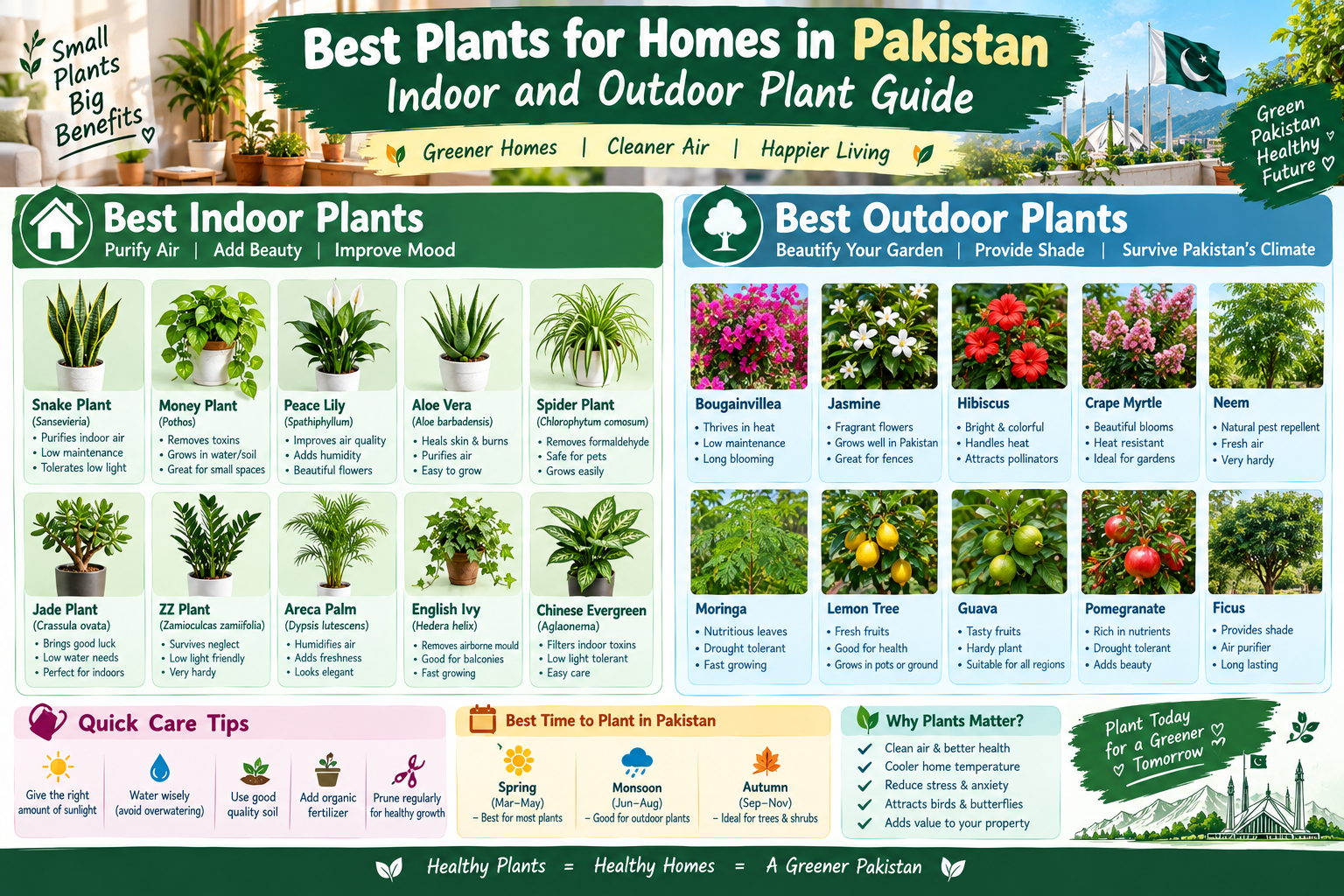
Plants can make a home look fresh, natural, and welcoming. In Pakistan, many people enjoy keeping plants in their homes, balconies, rooftops, courtyards, verandas, and gardens. Some people grow plants for decoration, while others choose herbs, vegetables, fruit plants, or trees for practical reasons.
Choosing the right plant is important because Pakistan has different climates. Some areas experience very hot summers, some have colder winters, and coastal areas can have higher humidity. A plant that grows well in one location may need different care in another.
For this reason, homeowners should consider sunlight, temperature, water, soil, available space, and seasonal changes before buying plants.
This guide explains some suitable indoor and outdoor plant options for Pakistani homes, along with basic information about their care, location, watering, sunlight, containers, and maintenance. It is designed for beginners who want to create a green and attractive home environment without making gardening unnecessarily complicated.
Why Choose Plants for Your Home?
Plants can improve the appearance of a home and make empty spaces look more lively. A few pots near a window, balcony, entrance, or courtyard can create a natural atmosphere.
Plants can also provide a useful hobby. Taking care of plants teaches patience and allows people to observe natural growth.
Some plants can also be useful in the kitchen. Herbs such as mint, coriander, and basil can be grown in suitable containers. Some vegetables can also be grown at home when the right conditions are available.
Another advantage is flexibility. A person does not need a large garden to enjoy plants. Even a small apartment can have a few suitable indoor or balcony plants.
Understanding Indoor and Outdoor Plants
Indoor plants are generally selected because they can tolerate the light and environmental conditions available inside a home. However, indoor does not mean that a plant needs no sunlight.
Many indoor plants need bright indirect light, while some can tolerate lower-light conditions.
Outdoor plants generally need more direct sunlight and can be exposed to natural weather conditions. Some may require protection from extreme heat, heavy rain, strong winds, or cold weather.
Before buying a plant, always consider where it will be placed.
Factors to Consider Before Buying a Plant
Before purchasing a plant for your home, consider several basic factors.
Sunlight
Observe how much sunlight reaches the location.
Does it receive:
Full sunlight?
Morning sunlight?
Afternoon sunlight?
Partial shade?
Bright indirect light?
Very little natural light?
Different plants have different requirements.
Temperature
Pakistan can experience significant temperature changes throughout the year. A plant suitable for warm weather may need protection during colder months.
Water
Some plants need frequent watering, while others prefer the soil to dry between watering.
Space
Consider how large the plant may become. A small plant can eventually require a larger pot.
Soil
Different plants have different soil preferences. Good drainage is particularly important for container plants.
Maintenance
Beginners may prefer plants that do not require complicated daily care.
Aloe Vera
Aloe vera is a popular plant for homes in Pakistan. It can be grown in pots and is often selected because it generally requires less frequent watering than many other plants.
Aloe vera prefers well-draining soil and suitable sunlight. It can be placed outdoors or in a bright location indoors, depending on local conditions.
Avoid keeping the soil constantly wet.
Aloe vera can be a good choice for beginners who want a simple plant with attractive green leaves.
Snake Plant
The snake plant is commonly used as an indoor decorative plant.
Its upright leaves give it a distinctive appearance, and it can tolerate a range of indoor conditions.
It generally does not require frequent watering. The soil should be allowed to dry appropriately between watering.
Snake plants can be useful for:
Bedrooms
Living rooms
Offices
Study areas
Hallways with suitable light
However, every indoor location should still provide appropriate environmental conditions.
Money Plant
Money plant is a popular household plant in Pakistan. It is often grown in pots and can also be trained to grow along supports.
It can be suitable for indoor and outdoor areas depending on the local conditions and variety.
It generally performs well with bright indirect light but can tolerate some lower-light conditions.
Avoid excessive watering, especially when growing it indoors.
Money plants can also add a decorative touch to shelves, balconies, and windows.
Spider Plant
Spider plant is another option for indoor gardening.
It has narrow leaves that grow outward from the center, creating an attractive appearance.
It can be grown in containers and hanging pots.
Spider plants generally prefer bright indirect light but can tolerate less intense light.
Regular observation of soil moisture is important. Do not water automatically every day.
Peace Lily
Peace lily is a popular decorative indoor plant.
It is known for its green leaves and attractive flowers under suitable conditions.
It generally prefers bright indirect light rather than harsh direct sunlight.
The soil should receive appropriate moisture, but excessive water should be avoided.
Peace lilies may be suitable for living rooms and other indoor spaces where appropriate light is available.
Areca Palm
Areca palm is often used to add a tropical appearance to homes.
It can work well in larger indoor spaces and suitable outdoor locations.
Because it can grow relatively large compared with small tabletop plants, it should have enough space.
Bright indirect light and appropriate watering can support healthy growth.
It is important to avoid keeping the roots constantly waterlogged.
Rubber Plant
Rubber plants are popular decorative plants with broad leaves.
They can become large, so they need an appropriate location and container.
They generally perform well in bright, indirect light.
If the plant is kept indoors, rotate it occasionally so that different sides receive light, where appropriate.
Dust can also collect on large leaves, so gently cleaning them can improve their appearance.
Basil
Basil is both decorative and useful as a kitchen herb.
It can be grown in containers where it receives suitable sunlight.
Basil generally prefers warm conditions and regular attention to soil moisture.
It can be useful for people who want to combine decorative gardening with kitchen gardening.
During extreme weather, its location may need adjustment according to local conditions.
Mint
Mint is one of the easiest herbs for many home gardeners to grow.
It can be grown in pots and used in drinks, chutneys, salads, and other foods.
Mint can spread quickly, so keeping it in a separate container is often easier.
It needs suitable light and regular watering, but the soil should not remain constantly waterlogged.
A small pot of mint can be a practical addition to a kitchen garden.
Coriander
Coriander is widely used in Pakistani cooking and can be grown at home during suitable seasons.
It can be grown in containers or garden beds.
Coriander needs suitable sunlight, soil moisture, and temperature.
Because it is a short-duration herb, gardeners can grow new plants periodically instead of expecting one plant to remain productive indefinitely.
Green Chili Plant
Green chilies are another useful plant for home gardens.
They can be grown in medium-sized containers when provided with suitable soil, sunlight, water, and nutrients.
A chili plant may continue producing for a period when conditions are favorable.
The plant should be monitored for insects and other common gardening problems.
Tomato Plants
Tomatoes can be grown in suitable home gardens and containers.
They usually need adequate sunlight and a suitable growing medium.
Container size matters because tomato plants can develop significant roots and may need support as they grow.
A simple stake or support can help keep some tomato plants upright.
The growing season depends on the local climate.
Marigold
Marigold is a popular flowering plant that can add color to Pakistani homes.
It can be grown in pots, garden beds, balconies, and courtyards.
It generally benefits from suitable sunlight and regular but controlled watering.
Marigold can be an excellent choice for people who want colorful flowers without creating a complicated garden.
Rose Plants
Roses are widely appreciated for their flowers and fragrance.
They can be grown in garden beds or suitable containers.
Rose plants generally need adequate sunlight, good soil, proper watering, and regular maintenance.
Pruning can be important depending on the variety and growing conditions.
Because roses can experience pest and disease problems, regular observation is useful.
Jasmine
Jasmine is popular in Pakistan because of its attractive flowers and fragrance.
It can be grown in suitable outdoor areas and may require support when it grows as a climber.
Jasmine generally benefits from appropriate sunlight, good drainage, and regular care.
It can be particularly attractive near entrances, courtyards, or garden walls when planted in a suitable location.
Bougainvillea
Bougainvillea is a popular outdoor ornamental plant in Pakistan.
It can tolerate warm conditions when properly established and is often used around walls, gates, terraces, and gardens.
It needs appropriate sunlight and good drainage.
Because it can grow extensively, it needs enough space and occasional pruning.
It can be a useful choice for people who want colorful outdoor greenery.
Hibiscus
Hibiscus plants can produce large and attractive flowers.
They can be grown in gardens and suitable containers.
They generally benefit from sunlight, appropriate watering, and nutrient-rich soil.
In hot regions, the plant may require careful watering during very high temperatures.
Regular monitoring can help identify pests and damaged leaves.
Lucky Bamboo
Lucky bamboo is commonly kept indoors as a decorative plant.
It can be grown in suitable containers and may be placed in homes or offices.
When grown in water, the container should be maintained properly and kept clean.
If grown in soil, suitable drainage is important.
The plant should receive an appropriate amount of indirect light.
ZZ Plant
ZZ plants are popular indoor plants because they can tolerate relatively low-light conditions compared with many other houseplants.
They also generally require less frequent watering.
This makes them an option for people who may not have much time for daily plant care.
However, low-light tolerance does not mean complete darkness. A suitable indoor environment is still necessary.
Succulents
Succulents include many different plant varieties.
They usually store water in their leaves or stems and often prefer well-draining soil.
Because they generally do not require frequent watering, they can be suitable for people who tend to forget regular watering.
They need suitable light, and their exact requirements depend on the specific variety.
Small succulents can work well on:
Study tables
Shelves
Windows
Office desks
Small balconies
Cactus Plants
Cactus plants are another option for sunny areas.
They are adapted to conditions where water availability can be limited.
Cactus plants require well-draining soil and should not be kept constantly wet.
They can be attractive in small pots and can be used in outdoor or bright indoor locations where suitable.
When handling cactus plants, use appropriate care because some varieties have sharp spines.
Outdoor Plants for Pakistani Homes
Outdoor plants can create a larger green environment around a house.
Depending on the local climate and available space, homeowners can consider:
Roses
Jasmine
Marigold
Hibiscus
Bougainvillea
Basil
Mint
Chili plants
Tomato plants
Suitable ornamental shrubs
The right selection depends on sunlight, soil, water, temperature, and available space.
Plants for Balconies
Balconies can become attractive green spaces with the right plants.
Small and medium-sized containers can be used for:
Mint
Basil
Aloe vera
Marigold
Small flowering plants
Spider plants
Money plants
Selected succulents
Hanging pots can also save floor space.
However, balcony gardeners should ensure that containers are secure and that excess water does not create problems.
Plants for Rooftops
Rooftops can receive strong sunlight and wind, making plant selection important.
Containers should be selected according to the space and safety requirements.
Suitable options may include:
Aloe vera
Bougainvillea
Marigold
Herbs
Seasonal vegetables
Suitable flowering plants
During very hot weather, some plants may require shade or protection.
Watering requirements can also increase when containers are exposed to strong sunlight.
Plants for Courtyards
Courtyards often provide more space than balconies.
They can contain a mixture of:
Flowering plants
Decorative plants
Herbs
Small shrubs
Container vegetables
Tall plants should be positioned carefully so they do not block all sunlight from smaller plants.
A combination of different heights can make the courtyard look more attractive.
Plants for Small Apartments
People living in apartments do not need to give up gardening.
A few carefully selected indoor and balcony plants can create a pleasant environment.
For a small apartment, consider:
Snake plant
Spider plant
Money plant
Aloe vera
Small succulents
Small herbs
Avoid buying large plants if the space cannot accommodate them.
Choosing Plants According to Sunlight
Sunlight is one of the most important factors in plant selection.
Full Sun
Some outdoor plants prefer several hours of direct sunlight.
Examples can include many flowering plants and vegetables.
Partial Sun
Some plants perform well with a mixture of sunlight and shade.
Bright Indirect Light
Many indoor plants prefer bright light without strong direct afternoon sunlight.
Low Light
Some plants can tolerate lower-light conditions, but no plant should automatically be assumed to grow well in complete darkness.
Watering Indoor Plants
Indoor plants often require less water than outdoor plants because indoor soil may dry more slowly.
Check the soil before watering.
Do not follow a rule such as “water every plant every day.”
Instead, consider:
Soil moisture
Pot size
Plant type
Room temperature
Season
Light level
Always ensure excess water can leave the pot.
Importance of Drainage
Drainage is essential for most container plants.
A pot without drainage can trap excess water around the roots.
When selecting pots, look for suitable drainage holes.
If a decorative container does not have drainage, it can sometimes be used as an outer cover for a plant kept in a separate draining pot.
This allows excess water to be managed more easily.
Choosing Soil for Indoor Plants
Indoor plants generally need a clean, well-draining growing medium.
Heavy garden soil may not always be suitable for every indoor container.
A suitable potting mixture can provide:
Root support
Air spaces
Moisture retention
Drainage
Organic matter
The exact mixture should depend on the plant.
Succulents and cacti, for example, generally need faster drainage than plants that prefer more moisture.
Fertilizing Home Plants
Plants require nutrients for growth.
However, fertilizer should not be used randomly or excessively.
Different plants have different nutritional needs.
Follow the instructions on a suitable fertilizer product and consider the plant's growth stage.
Organic compost can also contribute organic matter to soil.
New gardeners should avoid the idea that more fertilizer automatically means faster or healthier growth.
Protecting Plants From Pakistani Heat
Hot weather can be challenging for container plants.
Pots can heat up quickly, especially on exposed rooftops.
During extreme heat:
Check soil moisture regularly.
Provide suitable shade to sensitive plants.
Avoid unnecessary disturbance of roots.
Protect small plants from severe afternoon heat when required.
Keep drainage working properly.
Do not move every plant into shade automatically because some plants require strong sunlight.
Protecting Plants During Winter
In colder regions, sensitive plants may need protection.
Plants in containers are often more exposed to temperature changes than plants growing in the ground.
During cold weather:
Move sensitive pots to protected areas when appropriate.
Reduce watering if soil remains wet longer.
Protect plants from frost where necessary.
Avoid placing sensitive plants directly against very cold surfaces.
Local weather conditions should guide winter care.
Common Mistakes When Choosing Plants
A beautiful plant in a nursery is not automatically suitable for every home.
Common mistakes include:
Choosing a Plant Without Checking Light
A plant requiring strong sunlight may struggle in a dark room.
Buying Too Many Plants
Too many plants can make maintenance difficult.
Ignoring Plant Size
A small nursery plant may become much larger.
Overwatering
Many houseplants suffer because they receive water too frequently.
Ignoring Drainage
Waterlogged soil can damage roots.
Choosing Plants Only for Appearance
Appearance is important, but practical care requirements matter too.
How to Create a Balanced Home Garden
A balanced garden can include different types of plants.
For example, a home could have:
Indoor decorative plants
Outdoor flowering plants
Kitchen herbs
Small vegetables
A few larger decorative plants
This creates variety without making the garden difficult to manage.
Use plants with similar care requirements together when possible.
Buying Plants From Pakistani Nurseries
Local nurseries can be a useful place to buy plants.
When visiting a nursery, inspect plants carefully.
Look for:
Healthy leaves
Strong stems
No obvious pest infestation
Suitable roots
Healthy soil
Appropriate plant size
Ask questions about sunlight, watering, fertilizer, and seasonal care.
If buying online, carefully check the seller's plant information and delivery conditions.
How to Maintain Plants After Buying Them
A newly purchased plant may need time to adjust to its new location.
Do not immediately change everything about its environment.
Place it in a suitable location and monitor it.
Check the soil before watering.
Watch for changes in leaves or growth.
If the plant shows stress, consider factors such as sunlight, temperature, watering, pests, and recent environmental changes.
Making Plant Care Easier
Plant care becomes easier when it is part of a routine.
Spend a few minutes checking plants regularly.
Look at:
Soil
Leaves
Stems
New growth
Pot drainage
Insects
Early observation can help prevent small problems from becoming bigger.
Final Tips for Pakistani Homeowners
The best plants for your home are not necessarily the most expensive or fashionable ones. The best choice depends on your home's actual conditions.
Before buying a plant, ask:
How much sunlight does it need?
How often should it be watered?
How large can it become?
Does it need special soil?
Can it tolerate my local climate?
Can I provide the required care?
Does the pot have proper drainage?
These simple questions can prevent many common gardening problems.
Conclusion
Choosing the best plants for homes in Pakistan requires more than simply selecting attractive plants. Homeowners should consider climate, sunlight, water, soil, space, temperature, and maintenance requirements.
Indoor plants such as snake plants, spider plants, money plants, aloe vera, peace lilies, and suitable palms can add greenery to indoor spaces when their requirements are met. Outdoor plants such as roses, jasmine, marigold, hibiscus, bougainvillea, herbs, and vegetables can add color and usefulness to gardens, balconies, courtyards, and rooftops.
Pakistan's diverse climate means that plant care should be adapted to the local environment. What works in one city or season may need adjustment in another.
Beginners should start with a small number of plants, learn their requirements, and gradually expand the garden. With proper selection and regular care, even a small Pakistani home can become a fresh and attractive green space.
FAQs
1. Which indoor plants are suitable for homes in Pakistan?
Snake plant, spider plant, money plant, aloe vera, peace lily and suitable palms can be considered for indoor spaces depending on available light and temperature.
2. Which plants are easy for gardening beginners?
Aloe vera, mint, snake plant, spider plant, marigold and some herbs can be relatively easy options when their basic growing requirements are met.
3. Can plants be grown on a balcony in Pakistan?
Yes. Many herbs, flowers and compact decorative plants can be grown in balcony containers when they receive suitable sunlight, water and drainage.
4. How do I choose a plant for my home?
Check the available sunlight, temperature, space, soil, watering requirements and expected plant size before buying.
5. How often should indoor plants be watered?
Watering frequency depends on the plant, soil, pot, season, temperature and light. Check soil moisture instead of following the same watering schedule for every plant.