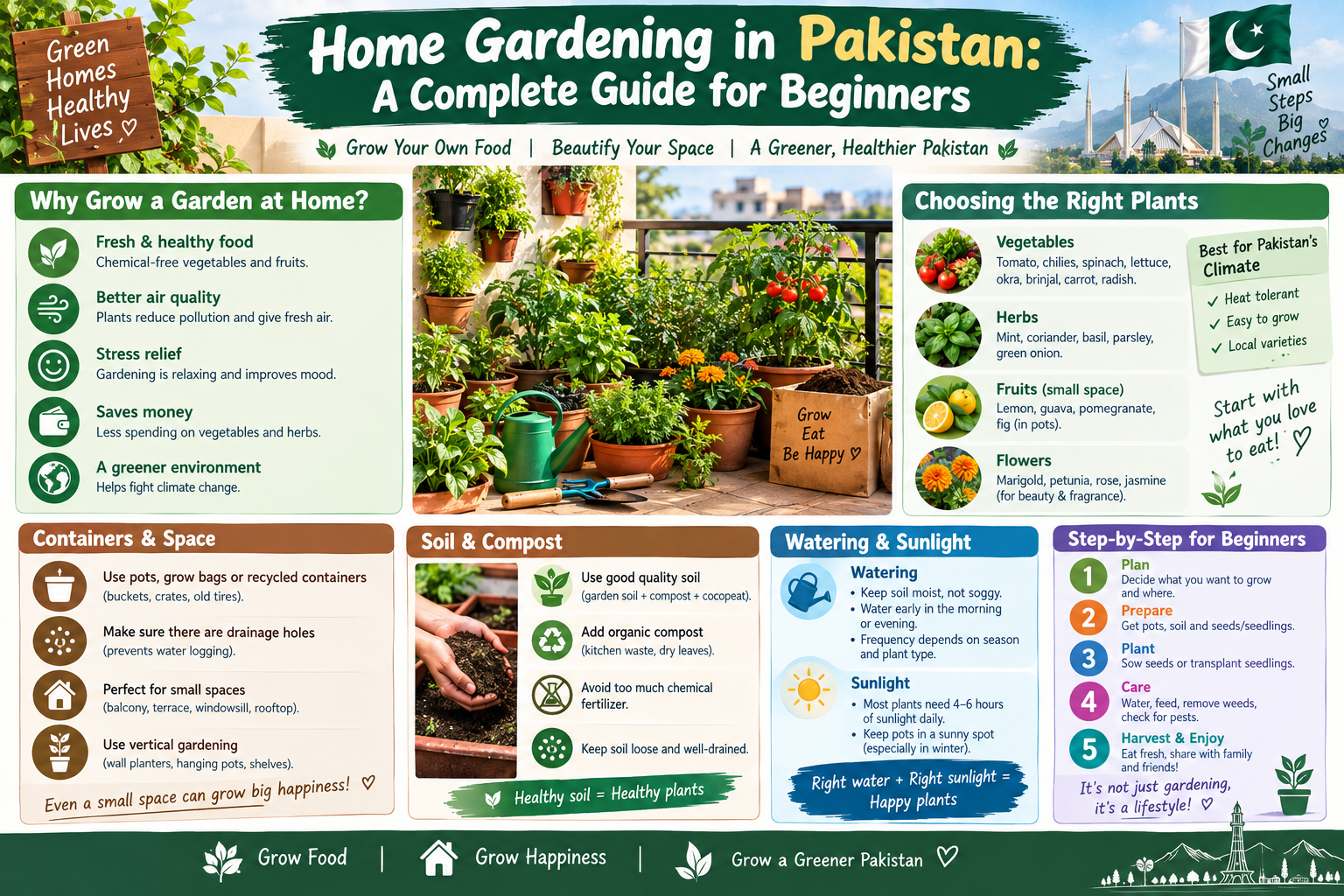
Home gardening is becoming a popular and useful activity in Pakistan. People living in cities, towns, and villages are interested in growing plants around their homes. A small garden can make a home look fresh, attractive, and peaceful. It can also provide a healthy way to spend free time and develop an interest in nature.
Home gardening does not always require a large piece of land. A person can grow plants in a courtyard, balcony, rooftop, terrace, veranda, window area, or even in small pots. With the right plants, suitable soil, proper watering, enough sunlight, and regular care, beginners can create a beautiful home garden.
Pakistan has different climates and geographical regions. Some areas are hot and dry, while others have cooler weather. Coastal areas can be humid, whereas northern regions can have cold winters. Because of these differences, selecting plants according to the local climate is an important part of successful gardening.
This complete guide explains how beginners in Pakistan can start home gardening, select plants, prepare soil, choose pots, manage water, provide sunlight, control common garden problems, and maintain plants throughout the year.
Why Home Gardening Is Important
A home garden can provide many benefits. Plants make indoor and outdoor spaces more attractive and can create a natural environment around the house.
Gardening can also become a useful hobby. Instead of spending free time only on phones or television, people can spend some time caring for plants. Children can also learn about nature by helping adults water plants and observe their growth.
Another advantage is that some plants can provide fresh herbs and vegetables. For example, mint, coriander, green chilies, tomatoes, and other suitable vegetables can be grown in containers when conditions are appropriate.
A garden can also make unused spaces more useful. A small balcony or rooftop does not have to remain empty. With suitable pots and containers, it can become a simple green space.
Understanding Pakistan's Climate
Before buying plants, beginners should understand the climate of their area.
Pakistan has a variety of climates. Cities such as Lahore, Faisalabad, Multan, and other areas of Punjab can experience very hot summers. Karachi has a coastal climate, while Islamabad and Rawalpindi generally experience different seasonal conditions. Northern areas can have much colder winters.
This means the same plant may not perform equally well in every part of Pakistan.
Before choosing a plant, consider:
Temperature
Sunlight
Humidity
Rainfall
Winter conditions
Available space
Soil type
Water availability
Local nurseries can also be helpful because they usually know which plants perform well in the local environment.
Choosing the Right Location for a Home Garden
The first practical step is selecting a suitable location.
A garden location should have enough light for the plants you want to grow. Some plants require several hours of direct sunlight, while others can tolerate partial shade.
Possible locations include:
Front yard
Backyard
Courtyard
Balcony
Rooftop
Terrace
Veranda
Window area
Small outdoor corner
If you have a balcony, check how much sunlight reaches it during the day. A balcony receiving strong afternoon sunlight may be suitable for sun-loving plants, while a shaded balcony may require plants that tolerate lower light.
For rooftop gardening, containers should be placed carefully and the area should be kept organized. Heavy containers should not be placed without considering the safety and suitability of the roof.
Starting With Small Plants
Beginners often make the mistake of buying too many plants at once. A better approach is to start small.
Choose a few easy-to-manage plants and learn their basic needs.
For example, a beginner can start with:
Mint
Coriander
Aloe vera
Marigold
Basil
Green chilies
Snake plant
Money plant
Spider plant
The exact suitability depends on the local climate and growing conditions.
Starting with a small number of plants makes watering, feeding, pruning, and monitoring easier.
Choosing Pots for Home Gardening
Pots are one of the most important items in container gardening.
Pots can be made from:
Clay
Plastic
Cement
Ceramic
Metal
Reused household containers
The most important feature is proper drainage.
A pot should have holes at the bottom so excess water can leave the container. Without drainage, water may remain around the roots and create problems.
The size of the pot should also match the plant. A very small pot can restrict root development, while an unnecessarily large pot can hold more moisture than needed.
For beginners, medium-sized containers are often easier to manage.
Preparing Good Soil
Healthy soil is essential for healthy plants.
Garden soil alone may not always provide the ideal conditions for container gardening. Soil should provide support, nutrients, air spaces, and suitable drainage.
A basic growing mixture can include components such as:
Garden soil
Compost
Organic matter
Sand or another drainage-supporting material
The exact mixture depends on the type of plant.
Soil should not become extremely compact. Roots need air as well as water.
Before planting, remove stones, unwanted roots, plastic pieces, and other materials from the soil.
Importance of Compost
Compost is a useful source of organic matter for many gardens.
It can improve soil structure and provide nutrients over time. Home gardeners can use properly prepared compost rather than putting fresh kitchen waste directly around plants.
Compost may be made from suitable organic materials such as certain vegetable scraps, dry leaves, and other compostable materials.
However, compost needs to be properly decomposed before being used around plants.
Using too much fertilizer or compost is not necessarily better. Plants require balanced care.
Selecting Plants for Beginners
Beginners should select plants according to their available space and climate.
For sunny areas, many flowering and vegetable plants may perform well when provided with appropriate conditions.
For indoor or shaded areas, plants that tolerate lower light can be considered.
Some commonly grown home plants include:
Aloe Vera
Aloe vera is popular in many Pakistani homes. It can be grown in containers and generally does not require frequent watering.
It prefers suitable sunlight and well-draining soil.
Mint
Mint can be grown in containers and is useful in the kitchen. It can spread quickly, so keeping it in a separate container can make management easier.
Coriander
Coriander is a popular herb used in Pakistani cooking. It can be grown in suitable containers with adequate sunlight and regular but controlled watering.
Green Chilies
Green chili plants can be grown in containers when they receive suitable sunlight, soil, water, and nutrients.
Marigold
Marigold is a popular flowering plant. Its colorful flowers can add beauty to balconies, courtyards, and gardens.
Basil
Basil is another useful herb that can be grown in suitable conditions. It generally benefits from sunlight and regular care.
Indoor Plants for Pakistani Homes
Indoor gardening is useful for people who do not have outdoor space.
However, indoor plants still need appropriate light and ventilation. A plant should not automatically be placed in a completely dark corner simply because it is called an indoor plant.
Suitable plants can include:
Snake plant
Spider plant
Money plant
Aloe vera
Certain varieties of palms
Before selecting an indoor plant, check its light and watering requirements.
A window receiving indirect light may provide a suitable location for some indoor plants.
Watering Plants Correctly
Watering is one of the most important parts of gardening.
Many beginners either give plants too much water or too little water.
There is no single watering schedule that works for every plant. Water requirements depend on:
Plant type
Pot size
Soil
Temperature
Season
Sunlight
Humidity
During hot weather, containers can dry faster. During cooler or rainy periods, plants may require less additional water.
Before watering, check the soil. If the upper layer is still wet, adding more water may not be necessary.
Water should reach the root area without creating constant standing water.
Avoiding Overwatering
Overwatering is a common gardening problem.
Some people believe that giving more water always makes plants healthier. This is not true.
Too much water can reduce air around the roots and may contribute to root problems.
Signs of watering problems can vary by plant, but gardeners may notice:
Yellowing leaves
Weak growth
Soft or damaged roots
Unpleasant soil smell
Leaves dropping unexpectedly
The correct response depends on the plant and the actual cause, because similar symptoms can have different causes.
Importance of Sunlight
Plants use light to support photosynthesis and growth.
Different plants have different light requirements.
Some plants prefer full sunlight, while others perform better with partial shade or indirect light.
Observe your garden throughout the day and identify areas with:
Morning sunlight
Afternoon sunlight
Partial shade
Full shade
Then select plants according to those conditions.
In very hot parts of Pakistan, some plants may require protection from intense afternoon heat, especially during extreme summer conditions.
Gardening During Summer
Summer can be challenging for gardeners in many parts of Pakistan.
High temperatures can cause soil to dry quickly. Containers can become especially hot because they are exposed to surrounding air.
During hot weather:
Check soil moisture regularly.
Avoid unnecessary watering during the hottest part of the day.
Protect sensitive plants from extreme heat.
Use suitable mulch where appropriate.
Keep containers in locations suitable for their light requirements.
Ensure drainage holes remain open.
Morning or evening watering is often more practical than watering during the hottest hours.
Gardening During Winter
Winter conditions vary across Pakistan.
In colder areas, sensitive plants may need protection from low temperatures. In warmer areas, many plants can continue growing normally.
During winter:
Reduce watering when soil remains wet longer.
Protect sensitive plants from frost where necessary.
Keep suitable plants in warmer locations.
Remove damaged leaves.
Observe plants regularly.
Do not assume that every plant requires the same winter care.
Rooftop Gardening in Pakistan
Rooftop gardening is becoming an interesting option for homes with limited ground space.
A rooftop can hold containers, grow bags, herbs, flowers, and selected vegetables.
However, safety should always come first.
Before creating a large rooftop garden, consider:
Weight of containers
Water weight
Drainage
Roof condition
Wind exposure
Safe movement around the roof
Small containers and lightweight gardening systems can be easier to manage than large heavy structures.
Balcony Gardening
Balcony gardening is suitable for people living in apartments or houses with limited outdoor space.
Use compact pots and vertical arrangements where appropriate.
A balcony garden can contain:
Small flowering plants
Herbs
Decorative plants
Hanging containers
Small vegetables
Do not overcrowd the balcony. Plants need enough space for growth and airflow.
Water should also be managed carefully so it does not damage walls, floors, or neighboring areas.
Kitchen Gardening
Kitchen gardening means growing useful herbs and vegetables at home.
It can be started in a small space.
Some plants commonly considered for home growing include:
Mint
Coriander
Green chilies
Tomatoes
Green onions
Basil
Growing vegetables at home requires regular attention. Seeds need appropriate soil, moisture, light, and temperature.
Not every vegetable is equally easy to grow in every season, so beginners should select plants according to local conditions.
Natural Pest Management
Plants can sometimes attract insects and other pests.
Regular observation is important.
Check leaves, stems, and the soil for unusual changes.
Possible signs of pest problems include:
Small insects
Holes in leaves
Sticky surfaces
Damaged new growth
Discolored leaves
The first step should be identifying the actual problem rather than immediately using strong chemicals.
Simple gardening practices such as removing heavily affected leaves, maintaining cleanliness, improving airflow, and monitoring plants regularly can help.
If a pest infestation becomes serious, gardeners should seek advice from a qualified local gardening professional or nursery.
Pruning and Plant Maintenance
Pruning means removing selected unwanted, damaged, or overgrown parts of a plant.
It can help maintain the shape of some plants and remove damaged growth.
However, excessive cutting can harm plants.
Use clean tools and learn the correct pruning method for the specific plant.
Remove dead leaves from pots because they can contribute to an untidy growing environment.
Cleaning Garden Pots
Garden pots should also be maintained.
Old leaves, weeds, and unwanted material should be removed regularly.
If a pot is reused for another plant, cleaning it before replanting can be useful.
Dirty containers can sometimes carry unwanted organisms or residues.
Keeping the garden clean also makes it easier to identify plant problems early.
Choosing Plants From Local Nurseries
Local nurseries can be useful sources for beginners.
Before buying a plant, check:
Leaf condition
Stem condition
Soil condition
Signs of insects
Root health when visible
Overall plant strength
Ask the nursery worker about:
Sunlight requirements
Watering
Soil
Fertilizer
Suitable season
Expected growth
Local knowledge can be especially useful because growing conditions differ across Pakistan.
Gardening on a Small Budget
Home gardening does not have to be expensive.
Beginners can reuse suitable household containers as plant pots, provided they are safe and have proper drainage.
Other ways to reduce costs include:
Growing plants from seeds
Using homemade compost
Reusing suitable containers
Propagating easy plants
Buying a few plants at a time
Using locally available soil materials
The goal is not to create an expensive garden. A simple, healthy garden can be attractive and useful.
Common Gardening Mistakes
Beginners can avoid many problems by understanding common mistakes.
Planting Too Many Plants
Too many plants can make maintenance difficult.
Overwatering
More water does not automatically mean healthier plants.
Ignoring Drainage
Containers without drainage can create serious problems.
Choosing Plants Without Considering Climate
A plant that performs well in one area may struggle in another.
Giving Too Little Light
Many plants require appropriate light for healthy growth.
Using Too Much Fertilizer
Excess fertilizer can damage plants.
Ignoring Pests
Small pest problems can become larger if they are not noticed early.
Creating a Simple Weekly Gardening Routine
A gardening routine can make plant care easier.
Daily
Quickly observe the plants.
Check whether any plant looks unusually weak, damaged, or dry.
A Few Times a Week
Check soil moisture and water plants when required.
Remove fallen leaves and inspect for insects.
Weekly
Clean the garden area and check pots and drainage holes.
Rotate some container plants if appropriate for their light conditions.
Monthly
Review plant growth, soil condition, fertilizer requirements, and pot size.
Repot plants when necessary rather than following a fixed schedule for every plant.
Gardening for Children
Home gardening can be a simple educational activity for children.
Children can learn:
How seeds grow
Why plants need sunlight
How roots work
Why water is important
How vegetables and herbs are produced
Adults should supervise gardening activities and choose age-appropriate tools.
A small pot of mint, coriander, or flowers can provide an easy starting point.
Home Gardening in Pakistani Cities
Home gardening can be adapted to different Pakistani cities.
In Lahore and Faisalabad, hot summers require attention to watering, sunlight, and plant protection.
In Multan and other hot regions, gardeners may need to consider heat-tolerant plants and careful summer management.
In Karachi, coastal conditions and humidity can influence plant selection and watering.
In Islamabad and Rawalpindi, seasonal changes can create different opportunities for flowering plants, herbs, and vegetables.
In colder northern areas, winter protection becomes more important.
The best approach is to observe the local environment and select plants accordingly.
Making a Garden Look Attractive
A garden does not need expensive decoration to look beautiful.
Simple arrangements can make a major difference.
Use pots of different sizes, arrange plants according to height, and keep walking areas clear.
You can create separate sections for:
Flowers
Herbs
Indoor plants
Vegetables
Decorative plants
Using similar pots can create a clean appearance, while different container styles can provide a more creative look.
Gardening and Family Life
A home garden can become a shared family activity.
One family member can manage watering, another can check plants, and children can help with simple tasks.
Gardening can encourage people to spend time outdoors and develop patience because plants require time to grow.
A garden also provides an opportunity to observe seasonal changes.
Long-Term Garden Planning
Once a beginner becomes comfortable with basic gardening, the garden can gradually expand.
Instead of buying many plants at once, add new plants according to available space.
Keep notes about:
Plant names
Planting dates
Watering needs
Fertilizer use
Growth
Seasonal performance
These notes can help identify which plants perform well in your home environment.
Final Tips for Beginners
Home gardening becomes easier when beginners focus on basic needs.
Choose plants according to your climate and available sunlight. Use containers with drainage holes. Prepare suitable soil. Water according to the plant's needs instead of following a fixed routine. Monitor plants regularly and respond to problems early.
Do not worry if every plant does not survive. Gardening is a learning process. With experience, gardeners become better at understanding soil, sunlight, water, temperature, and plant growth.
A successful home garden does not have to be large. Even a few healthy plants can bring greenery and natural beauty to a home.
For people living in Pakistan, home gardening can be adapted to almost any available space. Whether it is a large courtyard, a small balcony, a rooftop, or a few pots near a window, the basic principles remain the same: choose suitable plants, provide the right growing conditions, and give them regular care.
Conclusion
Home gardening in Pakistan is a practical and enjoyable activity that can be started by almost anyone with suitable space and basic knowledge. The country's different climates provide opportunities for growing many types of flowers, herbs, vegetables, and decorative plants.
Beginners should start with a few easy plants instead of creating a large garden immediately. Understanding sunlight, soil, water, temperature, drainage, and plant requirements is more important than spending a lot of money.
With regular observation and simple maintenance, a small collection of plants can gradually become a beautiful home garden. Whether someone lives in a city apartment or a house with a courtyard, gardening can make the home environment greener and more pleasant.
FAQs
1. How can beginners start home gardening in Pakistan?
Beginners can start with a few easy plants in pots and learn basic requirements such as sunlight, watering, soil, drainage and seasonal care.
2. Which plants are easy to grow at home in Pakistan?
Mint, coriander, aloe vera, marigold, basil and some other locally suitable plants can be good options for beginners, depending on the local climate.
3. Can I start a garden without a large outdoor space?
Yes. Gardening can be done in balconies, rooftops, courtyards, verandas and containers placed in suitable areas.
4. How often should plants be watered?
There is no single schedule for every plant. Check the soil and consider the plant type, season, temperature, pot size and sunlight before watering.
5. What is the most important thing for a healthy home garden?
Choosing plants suitable for your local climate and providing appropriate sunlight, soil, water, drainage and regular observation are key parts of healthy gardening.