Introduction
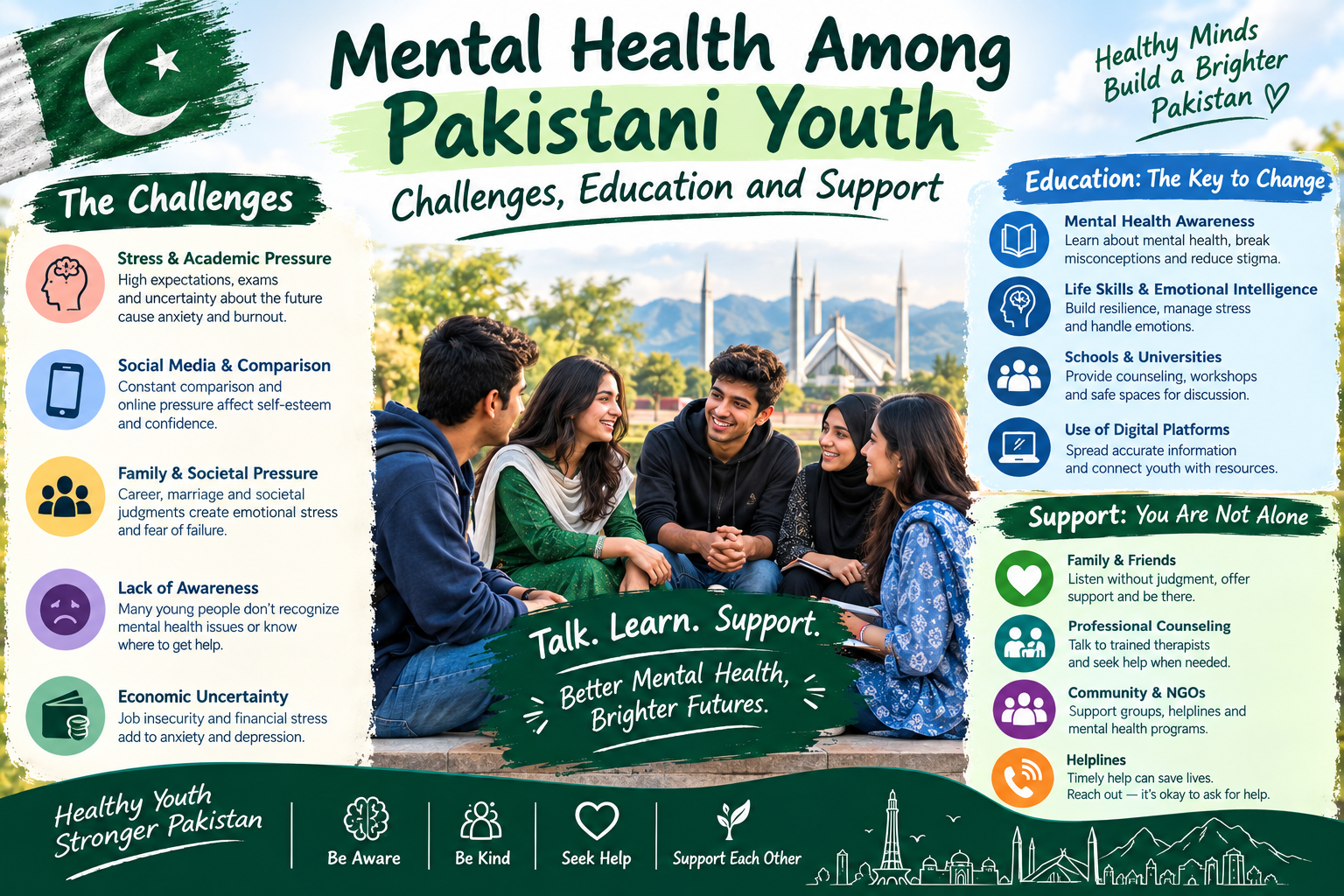
Young people are an important part of Pakistan's future. They are students, entrepreneurs, professionals, artists, athletes, researchers, and future community leaders. Their physical and mental wellbeing can influence their education, relationships, career development, and participation in society.
Mental health among young people deserves particular attention because adolescence and early adulthood involve many changes. Students may move between different educational stages, make career decisions, develop new friendships, experience changing family responsibilities, and think about their future.
At the same time, young people today live in an increasingly digital environment. Smartphones, social media, online education, gaming, and digital communication have changed the way young people study and interact.
These developments can create opportunities, but they can also introduce new sources of pressure.
Mental health education can help young people understand emotions, recognize when they need support, communicate with trusted people, and find appropriate professional services when necessary.
Understanding Youth Mental Health
Youth mental health refers to the emotional, psychological, and social wellbeing of young people.
It can influence:
Learning
Concentration
Communication
Relationships
Decision-making
Daily routines
Emotional responses
Academic participation
Future planning
Mental wellbeing can change over time. Experiencing occasional stress or sadness does not automatically mean that someone has a mental health condition.
However, persistent or serious difficulties that interfere with daily life may require professional assessment.
Why Youth Mental Health Matters in Pakistan
Pakistan has a large young population, making youth wellbeing an important social issue.
Young people contribute to education, business, technology, healthcare, culture, and many other areas.
Supporting their wellbeing can help create healthier educational and social environments.
Youth mental health also affects families. When young people feel supported, communication within families can become easier.
Academic Pressure
Academic pressure is one of the challenges many students experience.
Examinations, assignments, grades, admission requirements, competition, and career decisions can create stress.
Students may also feel pressure from their own expectations and from family or society.
Academic success is important, but one examination or grade does not define a person's entire future.
Educational institutions can help by encouraging realistic preparation, providing academic guidance, and making appropriate support available.
Examination Stress
Examinations can temporarily increase stress.
Students may worry about:
Completing the syllabus
Remembering information
Managing time
Meeting expectations
Choosing a career
Admission opportunities
Organized study schedules, appropriate breaks, sufficient sleep, and communication with teachers can help students manage ordinary academic pressure.
If stress becomes persistent or significantly affects daily functioning, students can consider talking with a trusted adult or qualified professional.
Career Uncertainty
Young people often have to make important educational and career decisions.
Students may be unsure whether they should choose medicine, engineering, law, business, computer science, education, arts, or another field.
Career uncertainty is understandable.
Students can benefit from career counseling, discussions with teachers, conversations with experienced professionals, and reliable educational information.
Career decisions should consider individual interests, abilities, opportunities, and circumstances rather than pressure alone.
Family Expectations
Family is an important part of Pakistani society.
Parents often have hopes for their children's education and future.
Family encouragement can be valuable, but excessive pressure may sometimes create emotional difficulties.
Healthy communication allows young people to discuss their interests and concerns while parents can share their experience and guidance.
Respectful conversations can help families understand each other's expectations.
Communication Between Parents and Young People
Good communication is an important part of family support.
Parents can create opportunities for young people to talk without immediately judging them.
Young people can also communicate their concerns respectfully.
Not every disagreement means that a family relationship is unhealthy. Families naturally have different opinions.
The goal is to create an environment where important concerns can be discussed.
Friendships and Social Relationships
Friendships are important during adolescence and early adulthood.
Friends can provide companionship, encouragement, and a sense of belonging.
However, friendships can also sometimes involve misunderstandings, arguments, exclusion, or social pressure.
Young people can benefit from learning healthy communication and setting appropriate boundaries.
Supportive friendships should allow people to feel respected and safe.
Bullying and Youth Mental Health
Bullying can affect a young person's sense of safety and belonging.
It may happen at school, college, in neighborhoods, or online.
Educational institutions should have appropriate systems for addressing bullying.
Young people experiencing bullying can talk to a trusted adult, teacher, parent, counselor, or appropriate school authority.
Friends can also encourage someone to seek help rather than handling serious situations alone.
Cyberbullying
Digital communication has created new forms of social interaction.
Cyberbullying can occur through social media, messaging platforms, gaming communities, or other online spaces.
Young people should know how to use privacy settings, report harmful behavior through platform tools, and tell a trusted adult when online situations become difficult or threatening.
They should also avoid sharing another person's private information or participating in online harassment.
Social Media and Young People
Social media can provide entertainment, communication, education, and community.
Young people can use digital platforms to learn new skills, communicate with friends, follow educational content, and explore interests.
However, excessive or unhealthy online use may sometimes interfere with sleep, studies, relationships, or daily activities.
A balanced digital routine can help maintain healthy boundaries.
Online Comparison
Social media often presents selected moments from people's lives.
Comparing everyday life with carefully selected online content can create unrealistic expectations.
Young people should remember that online profiles do not necessarily represent a complete picture of someone's life.
Healthy digital habits include taking breaks and focusing on real-life relationships and activities.
Sleep and Youth Wellbeing
Sleep is important for learning, concentration, energy, and general wellbeing.
Students may stay awake late because of studying, entertainment, social media, or other responsibilities.
Maintaining a regular sleep routine can support overall health.
If persistent sleep problems interfere with everyday life, discussing them with a healthcare professional can be useful.
Physical Activity
Physical activity is another part of healthy living.
Walking, sports, cycling, stretching, and other age-appropriate activities can support general physical and emotional wellbeing.
The goal should be health rather than unrealistic appearance standards.
Young people should choose activities appropriate for their circumstances and health.
Healthy Eating and Mental Wellbeing
Nutrition contributes to general health.
Young people can benefit from balanced meals, sufficient hydration, and regular eating patterns.
However, food should not be treated as a simple solution to complex mental health difficulties.
When someone is experiencing significant psychological problems, professional support may be appropriate.
Importance of Hobbies
Hobbies can provide opportunities for enjoyment and creativity.
Young people may enjoy:
Reading
Drawing
Writing
Sports
Cooking
Photography
Programming
Gardening
Crafts
Music
Learning languages
Hobbies do not need to be productive all the time. Enjoyment and relaxation are also valuable.
Youth and Technology
Technology has created many opportunities for young people in Pakistan.
Students can access online courses, educational videos, digital libraries, programming resources, and international learning opportunities.
Technology can also support communication with teachers and professionals.
At the same time, young people need digital literacy so they can identify misinformation and protect their privacy.
Online Mental Health Information
The internet contains a large amount of mental health information.
Some of it comes from qualified professionals or reputable organizations.
Other information may be incomplete, inaccurate, or misleading.
Young people should avoid diagnosing themselves solely through social media posts or online quizzes.
Professional assessment is more appropriate when someone has ongoing concerns.
Mental Health Education in Schools
Schools can play a major role in youth mental health awareness.
Age-appropriate educational programs can teach students about:
Emotional wellbeing
Stress
Healthy communication
Bullying
Digital safety
Help-seeking
Supportive friendships
Schools can also provide access to counselors or referral systems where available.
Mental Health Education in Colleges
College students may face a different set of challenges.
They may be preparing for university, entering professional education, looking for employment, or becoming more independent.
Colleges can provide career counseling, student support services, awareness sessions, and referrals to qualified professionals.
Role of Teachers
Teachers interact with students frequently.
They may notice changes in attendance, classroom participation, concentration, or communication.
Teachers should not diagnose students unless they have appropriate professional qualifications.
Instead, they can:
Listen respectfully
Encourage communication
Avoid unnecessary humiliation
Provide academic guidance
Refer students to appropriate support
Communicate with parents or guardians where suitable
Role of Parents and Guardians
Parents and guardians can support young people's wellbeing by creating an environment where communication is possible.
They can ask about school, friendships, interests, and future plans.
They can also take persistent concerns seriously.
If a young person needs professional support, parents can help them access an appropriately qualified professional.
Role of Friends
Friends can provide valuable social support.
A friend can listen, spend time with someone, and encourage them to speak with a trusted adult or professional.
However, friends should not attempt to diagnose or treat mental health conditions.
Serious concerns should be shared with an appropriate trusted adult or professional.
Mental Health Professionals
Different professionals have different roles.
Psychologists may provide psychological assessment and therapy.
Psychiatrists are medical doctors who specialize in mental health and can provide medical assessment and treatment.
Counselors may provide support for certain emotional, educational, or personal concerns depending on their training and professional role.
Choosing a qualified professional is important.
Access to Mental Healthcare
Access to mental healthcare may vary between urban and rural areas.
Some young people may face challenges related to:
Cost
Distance
Transportation
Limited availability of specialists
Lack of information
Concerns about privacy
Family attitudes
Improving access requires investment in healthcare services, education, professional training, and community programs.
Telehealth and Young People
Digital healthcare can provide additional options for some young people.
Online consultations can be useful when appropriate professionals and secure platforms are available.
However, digital mental health services should maintain appropriate privacy and professional standards.
Young people should also involve a trusted adult when appropriate, especially when they need help accessing healthcare.
Mental Health and Rural Youth
Young people living in rural areas may have different access to education and healthcare services compared with those in major cities.
Transportation and specialist availability can be important challenges.
Community healthcare programs and appropriate digital services may help expand access.
Financial Barriers
The cost of healthcare can affect whether young people receive professional support.
Families may have different financial circumstances.
Affordable public healthcare services, educational counseling programs, community initiatives, and other accessible options can help reduce barriers.
Cultural and Social Factors
Pakistan has diverse cultures, languages, traditions, and family structures.
Youth mental health awareness should recognize this diversity.
Information is often more useful when it is communicated in simple and familiar language.
At the same time, cultural understanding should not prevent young people from receiving appropriate professional healthcare.
Religious and Spiritual Support
For many Pakistani families, religious and spiritual practices are important parts of life.
Faith communities can provide social connection and emotional support.
Young people may find comfort in religious practices that are meaningful to them.
However, spiritual support should not be considered a universal replacement for professional mental healthcare when clinical assessment or treatment is needed.
Building Resilience
Resilience refers broadly to the ability to adapt to challenges and recover from difficult experiences.
Young people can develop useful skills through:
Problem-solving
Communication
Time management
Healthy routines
Social support
Goal setting
Learning from mistakes
Resilience does not mean that someone should handle every problem alone.
Asking for help can also be part of healthy coping.
Teaching Young People to Ask for Help
One important part of mental health education is teaching young people that seeking support is acceptable.
A person does not need to wait until difficulties become extreme before discussing them.
Young people can talk to:
Parents or guardians
Teachers
School counselors
College counselors
Doctors
Psychologists
Psychiatrists
Other trusted adults
The appropriate person depends on the situation.
Creating Supportive Educational Environments
Schools and colleges can support wellbeing by creating respectful environments.
Useful approaches can include:
Clear anti-bullying policies
Accessible counseling
Teacher training
Career guidance
Student support services
Reasonable communication
Awareness programs
Students are more likely to participate positively when they feel respected.
Youth Mental Health and Employment
Older students and young adults may begin searching for employment.
Job searching can involve uncertainty, interviews, financial concerns, and competition.
Career guidance can help young people understand available options.
Workplaces can also contribute to wellbeing through respectful treatment and appropriate working conditions.
Entrepreneurship and Youth Wellbeing
Pakistan's young population includes many aspiring entrepreneurs.
Starting a business can provide opportunities but may also involve uncertainty, financial risk, workload, and responsibility.
Young entrepreneurs can benefit from realistic planning, mentorship, networking, and healthy boundaries between work and personal life.
Positive Use of Digital Platforms
Digital platforms can be used constructively.
Young people can use technology for:
Online education
Freelancing skills
Programming
Entrepreneurship
Communication
Creative work
Professional networking
Career research
Balanced use is important so that digital activities do not unnecessarily interfere with sleep, studies, relationships, or health.
Building Awareness Through Youth Communities
Young people can also participate in awareness activities.
Student societies, community organizations, educational institutions, and youth groups can organize responsible awareness events.
These programs should use accurate information and encourage professional support where appropriate.
The Importance of Listening
Sometimes young people primarily need someone who will listen respectfully.
Listening does not mean agreeing with everything a person says.
It means giving them an opportunity to explain their experience without immediately mocking or dismissing them.
Supportive listening can be an important first step toward finding appropriate help.
Mental Health and Future Generations
Supporting young people's wellbeing can have long-term benefits.
Young people who understand mental health may be better prepared to communicate with future colleagues, friends, family members, and children.
Mental health education can therefore become part of a broader culture of wellbeing.
Challenges Ahead
Several challenges still need attention.
These include:
Stigma
Lack of awareness
Unequal access to professionals
Financial barriers
Misinformation
Academic pressure
Digital challenges
Limited counseling facilities in some institutions
These challenges cannot be solved by one group alone.
Families, schools, healthcare professionals, communities, government institutions, and technology organizations can all contribute.
The Future of Youth Mental Health in Pakistan
The future can include stronger mental health education in schools and colleges, improved professional services, better digital healthcare options, and greater public awareness.
Career counseling and student support services can also become more important as young people face increasingly diverse educational and employment opportunities.
Technology may help connect young people with educational resources and qualified professionals.
Conclusion
Mental health among Pakistani youth is an important part of the country's social and educational future.
Young people can face academic pressure, career uncertainty, family expectations, social challenges, bullying, digital pressures, and many other life changes.
Supportive families, teachers, friends, schools, colleges, healthcare professionals, and communities can help young people navigate these challenges.
Mental health awareness should focus on accurate information rather than self-diagnosis. Healthy routines, social connections, physical activity, hobbies, and good communication can support general wellbeing, while persistent or serious concerns may require professional assessment.
Pakistan can strengthen youth wellbeing by improving mental health education, reducing stigma, expanding access to qualified professionals, and creating supportive educational environments.
When young people know that asking for help is acceptable, they may feel more comfortable seeking appropriate support and building healthier futures.
1. Why is youth mental health important in Pakistan?
Young people's mental wellbeing can affect education, relationships, career development, and their participation in society.
2. What challenges can affect Pakistani students' mental wellbeing?
Academic pressure, examinations, career uncertainty, family expectations, friendships, bullying, and digital pressures can all affect wellbeing.
3. How can parents support young people's mental health?
Parents can encourage respectful communication, listen without unnecessary judgment, respect privacy, and help young people access qualified professionals when appropriate.
4. Can schools and colleges support student mental health?
Yes. Educational institutions can provide awareness programs, counseling where available, supportive teachers, anti-bullying measures, and referrals to appropriate professionals.
5. Should young people diagnose mental health conditions through social media?
No. Social media can provide general information, but diagnosis should be left to appropriately qualified healthcare professionals.