Introduction
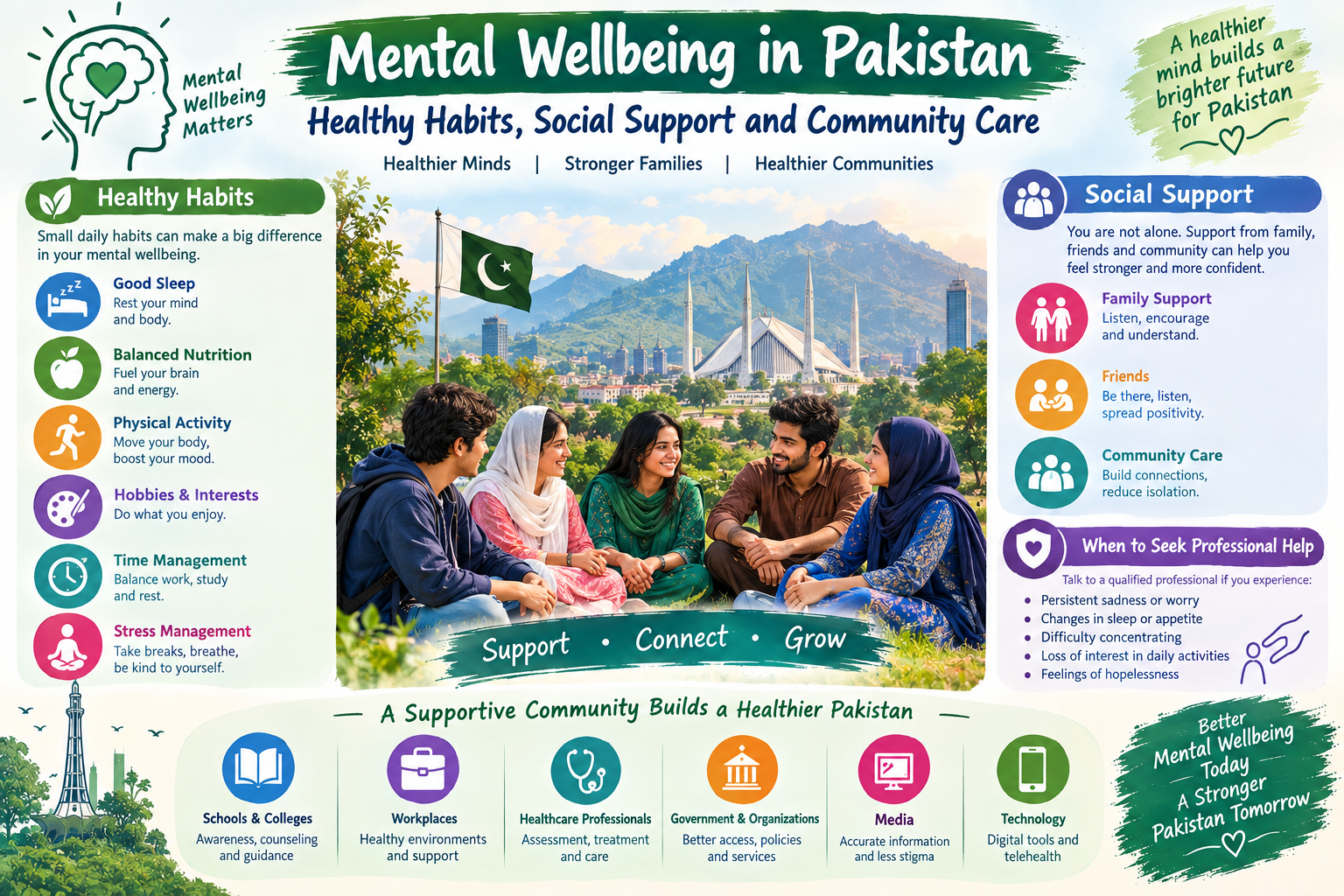
Mental wellbeing is an important part of a healthy and balanced life. It influences how people manage everyday responsibilities, communicate with others, respond to challenges, and maintain relationships. Physical health is often discussed openly, but mental wellbeing also deserves regular attention.
In Pakistan, awareness about mental wellbeing is gradually increasing. Families, educational institutions, workplaces, healthcare professionals, community organizations, and digital platforms are creating more opportunities to discuss emotional health.
However, many people still face challenges when trying to understand or discuss mental wellbeing. Social stigma, misinformation, financial difficulties, limited access to professional services, and concerns about privacy can create barriers.
Mental wellbeing does not mean feeling happy all the time. Everyone experiences different emotions, including stress, disappointment, sadness, excitement, frustration, and uncertainty. A healthy approach is to understand these experiences, develop useful coping habits, maintain supportive relationships, and seek professional help when appropriate.
What Is Mental Wellbeing?
Mental wellbeing refers to a person's overall emotional, psychological, and social state.
It can influence:
How a person manages daily responsibilities
How they communicate
How they respond to challenges
How they build relationships
How they make decisions
How they handle changes
How they participate in school or work
Mental wellbeing can change throughout life.
A person may feel emotionally well during one period and experience greater stress during another. This does not automatically mean that they have a mental health condition.
Why Mental Wellbeing Matters in Pakistan
Pakistan has a diverse population with different lifestyles, cultures, family structures, and economic circumstances.
People can experience different forms of pressure.
Students may deal with examinations and career decisions. Adults may face workplace or financial responsibilities. Families may experience major life changes or health concerns.
Mental wellbeing deserves attention because it is connected to everyday life.
Mental Wellbeing and Physical Health
Mental and physical health are closely connected.
Emotional difficulties can sometimes affect sleep, concentration, energy, and daily routines. Physical health problems can also influence emotional wellbeing.
This is why a complete approach to health should consider both physical and mental aspects.
Healthy Daily Routines
A balanced daily routine can support general wellbeing.
A routine may include:
Regular sleep
Balanced meals
Study or work time
Physical activity
Family or social time
Hobbies
Appropriate breaks
Relaxation
A routine does not have to be extremely strict.
The goal is to create enough structure to manage responsibilities while leaving room for rest and flexibility.
Importance of Sleep
Sleep is essential for general health.
Students and adults may sometimes stay awake late because of studying, work, entertainment, or phone use.
A consistent sleep schedule can support concentration, energy, and daily functioning.
Creating a relaxing bedtime routine and reducing unnecessary screen use before sleep may be helpful.
Persistent sleep problems should be discussed with a healthcare professional when they significantly affect everyday life.
Physical Activity and Wellbeing
Physical activity can support overall physical and mental wellbeing.
People can choose activities that suit their age, health, interests, and circumstances.
Examples include:
Walking
Cycling
Sports
Stretching
Gardening
Outdoor activities
The purpose should be health and enjoyment rather than unrealistic appearance standards.
Balanced Nutrition
Nutrition contributes to general health.
Balanced meals and sufficient hydration support the body's normal functioning.
Young people and adults can benefit from regular meals that include a variety of nutritious foods.
However, food and nutrition should not be treated as a complete solution to mental health problems.
Professional support may still be needed when psychological difficulties are significant.
The Role of Family
Family relationships are particularly important in Pakistani society.
A supportive family can provide:
Emotional encouragement
Practical assistance
Companionship
Communication
A sense of belonging
Families can support wellbeing by listening respectfully and avoiding unnecessary judgment.
Healthy Family Communication
Good communication can help family members understand each other.
Parents and children may sometimes have different opinions.
Disagreement does not automatically mean that relationships are unhealthy.
Families can work toward respectful communication where people have opportunities to explain their concerns.
Friends and Social Support
Friendships can contribute to wellbeing.
Friends can provide companionship, encouragement, and opportunities for enjoyable activities.
A person does not need a very large social circle.
A few supportive relationships can be meaningful.
Community Connections
Community participation can also provide a sense of belonging.
People may connect through:
Educational institutions
Sports clubs
Community organizations
Volunteer activities
Religious communities
Cultural events
Local groups
Community connections can reduce isolation and create opportunities for positive interaction.
Mental Wellbeing Among Students
Students experience many different forms of pressure.
Examinations, assignments, grades, career choices, and family expectations can affect wellbeing.
Students can benefit from:
Organized study schedules
Appropriate breaks
Adequate sleep
Supportive friendships
Communication with teachers
Career guidance
When academic pressure becomes difficult to manage, students can speak with trusted adults or qualified professionals.
Managing Examination Stress
Examinations can be an important source of temporary stress.
Students can manage ordinary academic pressure by dividing large tasks into smaller steps.
Creating a realistic timetable can make preparation more organized.
Students should also allow time for rest and sleep.
When stress becomes persistent or significantly interferes with daily functioning, professional support may be appropriate.
Career Planning and Wellbeing
Career decisions can be stressful for young people.
Students may feel uncertain about choosing subjects, degrees, universities, or careers.
Career counseling can help students understand available options.
It is also useful to remember that career paths can change over time.
A person's future does not always depend on making one perfect decision at one particular age.
Workplace Wellbeing
Adults spend a significant amount of time at work.
Workplace wellbeing can be influenced by workload, communication, relationships, job security, financial concerns, and working conditions.
Organizations can support employees through respectful workplace practices, appropriate breaks, reasonable communication, and access to support services where available.
Work-Life Balance
Work and personal life can sometimes overlap.
People may continue thinking about work after working hours or struggle to find time for family and personal interests.
Healthy boundaries can help people maintain balance.
Depending on the type of job, this may include setting reasonable working hours, taking breaks, and making time for activities outside work.
Digital Wellbeing
Technology is an important part of modern Pakistani life.
Smartphones, social media, online education, digital payments, entertainment, and messaging platforms have changed daily routines.
Technology can be useful, but excessive or unhealthy use may interfere with sleep, studies, work, relationships, or relaxation.
Digital wellbeing means using technology in a balanced and responsible way.
Social Media and Mental Wellbeing
Social media can provide entertainment, education, communication, and community.
However, people may sometimes compare their lives with carefully selected online content.
Online profiles do not show every part of someone's life.
Taking breaks from social media and focusing on offline relationships and activities can help create a healthier balance.
Managing Online Information
The internet contains useful mental health information as well as misinformation.
People should be careful when reading medical advice online.
Social media posts and online quizzes should not be treated as professional diagnosis.
For significant concerns, qualified healthcare professionals can provide more appropriate assessment and guidance.
Importance of Hobbies
Hobbies provide opportunities for enjoyment, creativity, and relaxation.
Pakistani families and communities can encourage young people and adults to develop healthy interests.
Hobbies may include:
Reading
Writing
Drawing
Cooking
Gardening
Photography
Sports
Programming
Crafts
Learning languages
A hobby does not always need to produce a financial or academic benefit.
Enjoyment itself has value.
Creative Activities and Wellbeing
Creative activities can provide opportunities for self-expression.
Writing, drawing, photography, crafts, and other creative activities may help people spend time doing something meaningful.
These activities should be considered supportive lifestyle practices rather than treatments for mental health conditions.
Spending Time Outdoors
Outdoor activities can provide opportunities for movement, fresh air, and social interaction.
Walking in a suitable area, spending time in a garden, or participating in outdoor activities can be part of a balanced lifestyle.
People should choose safe and appropriate environments for outdoor activities.
Building Healthy Relationships
Healthy relationships involve respect, communication, and appropriate boundaries.
People can support their relationships by:
Listening
Communicating clearly
Respecting differences
Apologizing when appropriate
Giving others reasonable space
Avoiding unnecessary conflict
Healthy relationships can contribute to emotional wellbeing.
Setting Personal Boundaries
Boundaries help people communicate what they are comfortable with.
Young people can learn to communicate respectfully when they need personal space or time.
Adults can also establish reasonable boundaries in family, friendship, and workplace relationships.
Boundaries should be communicated respectfully and should consider the rights of others.
Learning to Manage Stress
Stress is a normal part of life.
Short periods of stress can occur before examinations, presentations, interviews, competitions, or important events.
Useful general strategies can include:
Planning tasks
Taking appropriate breaks
Talking with supportive people
Physical activity
Relaxation
Organizing priorities
Maintaining regular sleep
Persistent or severe stress may require professional support.
Importance of Time Management
Poor time management can sometimes increase unnecessary pressure.
Students can divide assignments into smaller tasks.
Adults can prioritize important responsibilities.
A realistic schedule should include time for rest.
Trying to complete everything at once can make daily responsibilities feel more difficult.
Self-Care and Mental Wellbeing
Self-care refers broadly to healthy activities that support wellbeing.
It can include:
Rest
Hobbies
Healthy meals
Physical activity
Social connection
Personal hygiene
Relaxation
Taking appropriate breaks
Self-care is useful, but it should not be presented as a replacement for professional treatment when someone has a mental health condition.
Mental Health Stigma in Pakistan
Stigma can prevent people from talking openly about mental health.
Some people may worry about being judged by family, friends, classmates, colleagues, or neighbors.
Education can help replace myths with accurate information.
People experiencing mental health difficulties deserve respect and appropriate healthcare.
Encouraging People to Seek Support
Support should be available without unnecessary shame.
A person may choose to talk to:
A trusted family member
A teacher
A counselor
A doctor
A psychologist
A psychiatrist
Another qualified healthcare professional
The appropriate source of support depends on the individual's circumstances.
Professional Support
Professional support can help people understand persistent or significant emotional and psychological difficulties.
Psychologists can provide psychological assessment and therapy.
Psychiatrists are medical doctors specializing in mental health and can provide medical assessment and treatment.
Other qualified professionals may provide counseling or related services depending on their training.
Community Mental Health Support
Community programs can make mental health information more accessible.
Local organizations can organize awareness sessions, educational programs, support groups, or referral services when appropriately qualified and managed.
Community support can be especially useful in areas where specialist services are limited.
Mental Wellbeing in Rural Areas
People in rural areas may experience challenges related to transportation, healthcare availability, cost, and distance.
Community healthcare programs and suitable telehealth services may provide additional options.
However, digital services require reliable infrastructure and qualified professionals.
Telehealth and Digital Support
Telehealth can allow patients to communicate with healthcare professionals remotely.
It may be useful for some people who have difficulty reaching specialist services.
Digital platforms can also provide educational information and appointment systems.
However, users should verify that healthcare providers are appropriately qualified.
Role of Schools
Schools can promote mental wellbeing through supportive learning environments.
They can provide:
Student counseling where available
Awareness sessions
Anti-bullying policies
Teacher support
Career guidance
Referral systems
Students should know where to seek help if they are experiencing significant difficulties.
Role of Colleges and Universities
Higher education institutions can provide additional support for young adults.
University students may face academic pressure, financial concerns, career uncertainty, and changes in social relationships.
Counseling centers, student advisors, career offices, and referral services can help students access appropriate support.
Role of Workplaces
Workplaces can support mental wellbeing through healthy organizational practices.
Employers can encourage respectful communication and provide appropriate resources.
Employees can also benefit from understanding when to take breaks and when to seek professional support.
Role of Healthcare Professionals
Healthcare professionals can provide accurate information and appropriate assessment.
They can also help people understand treatment options and refer them to specialists when necessary.
Professional healthcare is important when symptoms or difficulties significantly affect everyday functioning.
Role of Media
Media can influence public understanding of mental health.
Television programs, websites, newspapers, and social media campaigns can share useful educational information.
Responsible media coverage should avoid stereotypes and sensationalism.
It should distinguish between personal experiences and professional medical information.
Role of Government and Organizations
Improving mental wellbeing at a national level requires cooperation among different institutions.
Government departments, healthcare organizations, educational institutions, nonprofit groups, and communities can contribute to awareness and service development.
Long-term planning can help expand access to qualified professionals and appropriate services.
Mental Wellbeing and Pakistani Communities
Community values can provide opportunities for connection and mutual support.
Family gatherings, community events, educational activities, sports, cultural programs, and other social activities can help people maintain connections.
At the same time, communities should respect personal privacy and avoid judging people for seeking mental healthcare.
Supporting Children and Teenagers
Children and teenagers need age-appropriate support.
Parents, teachers, and caregivers can create environments where young people feel comfortable discussing concerns.
Adults should listen carefully and take persistent difficulties seriously.
When professional assessment is needed, young people should be connected with appropriately qualified healthcare professionals.
Supporting Older Adults
Older adults can experience changes related to health, retirement, family circumstances, social connections, and daily routines.
Families can support older adults by maintaining communication and social connection.
Healthcare professionals can provide appropriate support when concerns affect wellbeing.
Mental Wellbeing and Financial Stress
Financial difficulties can create significant pressure.
People may worry about household expenses, education, employment, or business responsibilities.
While financial problems cannot always be solved through lifestyle changes, supportive communication and appropriate financial planning may help with some aspects of stress.
Professional mental healthcare may also be appropriate when financial stress becomes psychologically overwhelming.
Mental Wellbeing and Entrepreneurship
Entrepreneurship can provide opportunities but can also involve uncertainty.
Business owners may face changing income, competition, long working hours, and responsibility for employees.
Maintaining reasonable work boundaries, seeking mentorship, and building supportive networks can help entrepreneurs manage everyday pressures.
Building a Culture of Mental Wellbeing
A healthy society does not require everyone to feel positive all the time.
Instead, it should encourage people to:
Talk respectfully
Ask for help
Support one another
Access professional care when needed
Respect privacy
Avoid harmful stereotypes
Learn from reliable information
This approach can create a stronger culture of wellbeing.
Future of Mental Wellbeing in Pakistan
The future can include greater mental health education, improved professional services, digital healthcare, community support, and workplace wellbeing programs.
Schools and colleges may play an increasingly important role in early awareness.
Technology may also help connect people with qualified professionals.
Research can help organizations understand the needs of different communities.
Conclusion
Mental wellbeing is an important part of everyday life in Pakistan.
Healthy routines, adequate sleep, physical activity, balanced nutrition, hobbies, supportive relationships, and responsible technology use can contribute to general wellbeing.
At the same time, lifestyle habits are not substitutes for professional mental healthcare when someone experiences persistent or significant psychological difficulties.
Families, schools, colleges, workplaces, healthcare professionals, communities, media organizations, and government institutions can all contribute to improving mental wellbeing.
Reducing stigma is also important. People should be able to discuss mental health respectfully without unnecessary judgment.
Pakistan can strengthen mental wellbeing by increasing awareness, improving access to qualified professionals, supporting community programs, using technology responsibly, and encouraging healthy communication.
A culture of mental wellbeing is built through understanding, support, respect, and appropriate care. By making mental health a normal part of conversations about overall health, communities can create a more supportive environment for people of all ages.
FAQs
1. What does mental wellbeing mean?
Mental wellbeing refers to emotional, psychological, and social wellbeing and how a person manages everyday life and relationships.
2. What habits can support mental wellbeing?
Regular sleep, balanced nutrition, physical activity, hobbies, social connections, appropriate rest, and healthy daily routines can support general wellbeing.
3. How can families support mental wellbeing?
Families can listen respectfully, communicate openly, provide appropriate encouragement, respect privacy, and help individuals access professional support when needed.
4. Can social media affect mental wellbeing?
Yes. Social media can provide communication and education, but excessive or unhealthy use may sometimes interfere with sleep, studies, work, relationships, or relaxation.
5. When should someone seek professional support?
Professional support may be appropriate when emotional or psychological difficulties persist, become difficult to manage, or significantly interfere with everyday activities.