Introduction
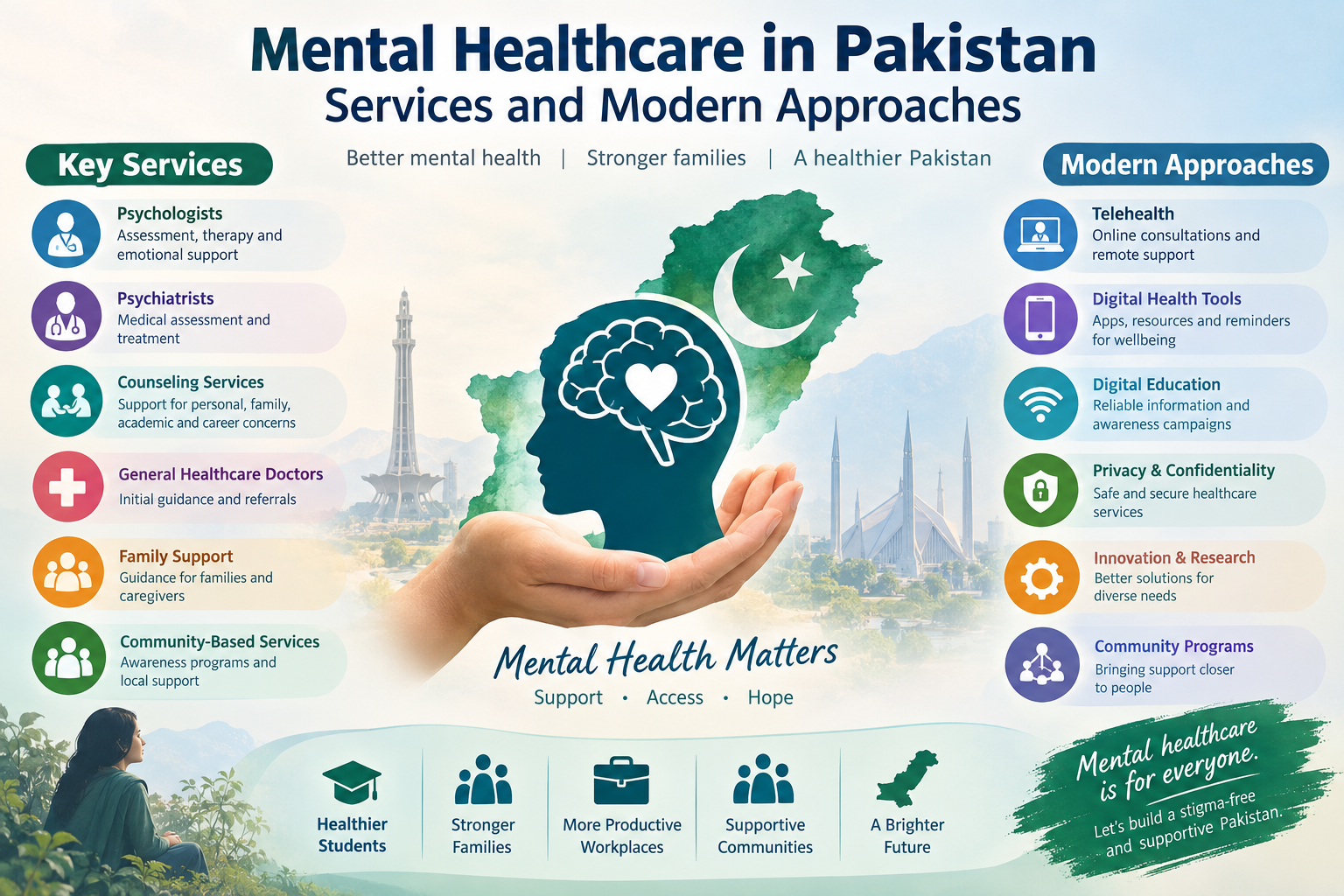
Mental healthcare is an important part of a complete healthcare system. Just as people seek medical attention for physical health problems, they may also need professional support for emotional, psychological, or behavioral difficulties.
In Pakistan, awareness about mental healthcare has been growing. More people are discussing stress, emotional wellbeing, counseling, psychology, and psychiatric care than in the past. Social media, educational institutions, healthcare organizations, and community initiatives have also contributed to wider conversations about mental health.
Despite this growing awareness, Pakistan still faces challenges in making mental healthcare accessible to everyone. These challenges can include social stigma, limited awareness, financial barriers, unequal distribution of professionals, transportation difficulties, and concerns about privacy.
Modern approaches such as telehealth, digital education, online appointments, and community-based support may create additional opportunities. However, these approaches need qualified professionals, responsible systems, privacy protections, and appropriate healthcare standards.
Understanding mental healthcare can help individuals and families make more informed decisions about seeking support.
What Is Mental Healthcare?
Mental healthcare includes professional services designed to support emotional, psychological, and behavioral wellbeing.
Depending on an individual's needs, mental healthcare can involve:
Psychological assessment
Counseling
Psychotherapy
Psychiatric assessment
Medical treatment
Family support
Educational guidance
Community-based services
Follow-up care
Different people require different forms of support.
Not every experience of stress or sadness means that someone has a mental health condition. Professional assessment can help determine what type of support may be appropriate.
Why Mental Healthcare Matters in Pakistan
Pakistan's population includes people from many different social, cultural, economic, and geographic backgrounds.
Mental healthcare needs can therefore vary significantly.
Students may need support with academic pressure. Adults may experience workplace stress or major life changes. Families may need guidance when supporting a relative with a mental health condition.
Accessible healthcare can help people obtain appropriate information and treatment.
Mental Health and General Healthcare
Mental health should be considered part of overall healthcare.
Physical illness can sometimes affect emotional wellbeing, while psychological difficulties can influence sleep, concentration, energy, and daily functioning.
Healthcare systems can benefit from recognizing both physical and mental health needs.
Types of Mental Healthcare Professionals
Different professionals have different qualifications and responsibilities.
Psychologists
Psychologists are trained in psychology and can provide psychological assessment and various forms of therapy.
They may help people understand emotions, thoughts, behaviors, relationships, and coping patterns.
Psychiatrists
Psychiatrists are medical doctors who specialize in mental health.
They can assess mental health conditions and provide medical treatment when appropriate.
Counselors
Counselors may provide support for certain emotional, educational, personal, or relationship concerns depending on their qualifications and professional training.
General Healthcare Doctors
General doctors can also play an important role.
They may identify concerns, provide initial guidance, and refer patients to mental health specialists when necessary.
Psychological Therapy
Psychological therapy involves structured conversations and therapeutic approaches designed to help people understand and manage difficulties.
Different therapies are used for different concerns.
The appropriate approach depends on the individual's situation and assessment.
Therapy is not simply casual conversation. Professional therapy involves specific methods and ethical responsibilities.
Psychiatric Care
Psychiatric care involves medical assessment and treatment of mental health conditions.
A psychiatrist may consider different treatment options depending on the person's needs.
Some people may receive medication, therapy, or a combination of approaches.
Medication should only be used according to appropriate medical guidance.
Counseling Services
Counseling can provide support for certain personal, educational, family, or emotional concerns.
Schools, colleges, universities, workplaces, and healthcare organizations may offer counseling services.
The type of counseling available depends on the institution and the qualifications of the counselor.
Mental Healthcare for Students
Students are an important group for mental health services.
Academic pressure, examinations, career decisions, family expectations, friendships, and transitions between educational stages can affect wellbeing.
Schools and colleges can provide:
Counseling
Career guidance
Student support offices
Awareness sessions
Teacher referrals
Information about professional services
Mental Healthcare for Young Adults
Young adults may face new responsibilities after completing school or college.
They may be entering university, searching for jobs, starting businesses, or becoming financially independent.
These changes can create stress.
Accessible counseling and healthcare services can help young adults understand their concerns and identify appropriate options.
Mental Healthcare for Families
Families can also benefit from mental health education.
When a family member experiences psychological difficulties, other family members may not know how to respond.
Professional guidance can help families understand appropriate communication, treatment options, boundaries, and support strategies.
The Role of Family Support
Family support can be valuable.
Families can help by:
Listening respectfully
Avoiding unnecessary judgment
Encouraging appropriate healthcare
Respecting privacy
Supporting treatment plans
Providing practical assistance
However, families should not attempt to replace professional healthcare.
Mental Healthcare in Rural Pakistan
Access to healthcare can vary between urban and rural communities.
Some rural areas may have fewer mental health specialists.
Traveling long distances can make regular appointments difficult.
Community healthcare and appropriate telehealth services may help improve access where suitable.
Urban Mental Healthcare
Major Pakistani cities have more healthcare facilities and specialists than many remote areas.
However, urban residents can still face barriers.
These may include:
Cost
Long waiting periods
Transportation
Privacy concerns
Lack of awareness
Fear of social judgment
Having healthcare facilities nearby does not automatically guarantee that everyone can access them.
Financial Barriers
Healthcare costs can affect people's ability to seek professional support.
Private services may not be affordable for every family.
Affordable public services, community programs, institutional counseling, and other accessible options can help reduce this barrier.
Improving affordability is an important part of expanding mental healthcare.
Mental Healthcare and Privacy
Privacy is a major consideration.
People may hesitate to seek mental healthcare if they fear that their personal information will be shared.
Healthcare organizations should handle patient information responsibly.
Families and friends should also avoid sharing someone's private mental health information unnecessarily.
Mental Health Stigma
Stigma remains a major challenge.
Some people may fear being judged if they visit a psychologist or psychiatrist.
Others may incorrectly believe that seeking mental healthcare indicates weakness.
Mental health education can challenge these misunderstandings.
Seeking professional healthcare should be treated as a healthcare decision rather than a reason for shame.
Mental Healthcare and Pakistani Culture
Pakistan has diverse cultural traditions and family structures.
Healthcare professionals need to understand the social and cultural context of the people they serve.
Communication in familiar languages can make healthcare information easier to understand.
Cultural sensitivity can help create more comfortable healthcare experiences.
Religion and Mental Healthcare
Religion can be an important part of life for many Pakistanis.
Spiritual practices and community support may provide comfort and connection.
People may choose to discuss personal concerns with trusted religious figures as well.
However, religious support and professional mental healthcare can serve different roles.
When someone needs clinical assessment or treatment, qualified healthcare professionals can provide appropriate medical or psychological care.
Mental Healthcare and Technology
Technology is changing healthcare delivery around the world.
Pakistan can also benefit from digital healthcare solutions.
Examples include:
Online appointments
Telehealth consultations
Digital health records
Educational websites
Healthcare applications
Remote follow-up services
Digital healthcare should be designed with privacy and professional standards in mind.
Telehealth in Mental Healthcare
Telehealth can connect patients with healthcare professionals through digital communication.
It may be especially useful for people who live far from specialist services.
However, telehealth is not appropriate for every situation.
The healthcare professional must determine whether remote care is suitable.
Online Mental Health Information
The internet provides access to a large amount of mental health information.
People can learn about general wellbeing, therapy, healthcare services, and common mental health concepts.
However, online information should be evaluated carefully.
Social media posts should not be treated as professional diagnosis.
Reliable healthcare information should come from qualified professionals or reputable healthcare organizations.
Digital Mental Health Applications
Digital applications can provide educational content, appointment services, reminders, and other features.
Some may also support relaxation or wellbeing activities.
However, users should understand what a particular application is designed to do.
A wellbeing application is not automatically a replacement for professional mental healthcare.
Mental Healthcare in Schools
Schools can support students through early awareness and appropriate referral systems.
Teachers can receive training to recognize when a student may need additional support, without turning teachers into mental health diagnosticians.
School counselors can provide appropriate support where qualified services are available.
Mental Healthcare in Colleges and Universities
Higher education institutions can establish student support systems.
These may include:
Counseling centers
Career services
Student advisors
Mental health awareness programs
Referral systems
University life can involve academic, social, financial, and career-related pressures, making accessible support valuable.
Workplace Mental Healthcare
Workplaces can contribute to employee wellbeing.
Organizations can provide:
Employee support programs
Counseling referrals
Awareness sessions
Reasonable workplace communication
Supportive management practices
Employees should also have appropriate privacy when accessing health-related support.
Community-Based Mental Healthcare
Community-based services can bring support closer to people.
Community programs may include awareness sessions, referrals, basic support, and connections to professional healthcare.
Such programs can be particularly useful in communities where specialist services are limited.
Role of Nonprofit Organizations
Nonprofit organizations can contribute to mental health awareness and community support.
They may organize educational programs, provide referrals, train volunteers, or support healthcare initiatives.
Their effectiveness depends on appropriate qualifications, responsible practices, funding, and coordination.
Government and Public Health
Government institutions have an important role in healthcare planning.
Mental healthcare can be strengthened through:
Healthcare infrastructure
Professional training
Public awareness
Affordable services
Community programs
Research
Data collection
Integration with general healthcare
Long-term planning can help improve access across different regions.
Training More Mental Health Professionals
Qualified professionals are essential for a functioning mental healthcare system.
Training psychologists, psychiatrists, counselors, nurses, social workers, and other healthcare professionals can help expand services.
Professional development is also important as healthcare approaches continue to evolve.
Importance of Research
Research can help healthcare professionals understand mental health needs in different communities.
Research can examine:
Access to services
Treatment outcomes
Public awareness
Youth wellbeing
Rural healthcare
Digital healthcare
Workplace wellbeing
Reliable research can help institutions make better-informed healthcare decisions.
Mental Health Awareness Campaigns
Public awareness campaigns can encourage people to learn about mental health.
Campaigns can focus on:
Reducing stigma
Encouraging professional support
Student wellbeing
Family communication
Stress management
Healthy digital habits
Available healthcare services
Campaigns should use accurate and responsible information.
Media's Role
Media organizations can help educate the public.
Television, newspapers, websites, podcasts, and social media can make mental health information accessible to large audiences.
Responsible media coverage should avoid sensationalism and stereotypes.
Personal stories can provide useful perspectives, but they should not be treated as universal medical evidence.
Mental Healthcare and Young People
Young people may face barriers when trying to access healthcare.
They may worry about family reactions, privacy, cost, or social judgment.
Creating age-appropriate and respectful services can help.
Schools and colleges can also provide pathways for students to access appropriate support.
Mental Healthcare for Women
Women may experience specific social and family circumstances that influence access to healthcare.
Factors such as family responsibilities, transportation, financial independence, and privacy can affect healthcare decisions.
Accessible and respectful healthcare services can help address these barriers.
Mental Healthcare for Older Adults
Older adults can also experience mental health concerns.
Changes in health, retirement, loneliness, bereavement, and changing family circumstances may affect wellbeing.
Healthcare systems should consider the mental health needs of older people as well.
Mental Healthcare and People with Disabilities
People with disabilities may face additional barriers to healthcare access.
Accessible facilities, communication support, transportation options, and appropriate professional services can improve healthcare experiences.
Mental health services should be inclusive and respectful.
Healthy Lifestyle and Mental Healthcare
Healthy lifestyle habits can support general wellbeing.
These include:
Regular sleep
Balanced nutrition
Physical activity
Social connections
Hobbies
Reasonable daily routines
Appropriate rest
However, these habits should not be presented as substitutes for professional mental healthcare.
When Professional Support May Be Appropriate
Professional support may be useful when emotional or psychological difficulties:
Continue for a significant period
Become difficult to manage
Affect education
Affect work
Disrupt relationships
Interfere with everyday responsibilities
A qualified healthcare professional can assess the situation and discuss appropriate options.
Choosing a Qualified Professional
People seeking mental healthcare should consider the professional's qualifications, relevant training, experience, and professional setting.
It is reasonable to ask about a provider's qualifications and the type of service they offer.
People should be cautious about individuals making unrealistic promises or claiming to provide guaranteed cures.
The Future of Mental Healthcare in Pakistan
The future of mental healthcare may include stronger integration with general healthcare, increased professional training, digital services, community programs, and improved public education.
Technology can make information and consultations more accessible in suitable circumstances.
Schools and workplaces may also play a larger role in awareness and referral.
Building a Better Mental Healthcare System
A stronger system requires cooperation.
Healthcare professionals can provide treatment.
Educational institutions can promote awareness.
Families can provide support.
Communities can reduce stigma.
Technology organizations can develop responsible digital tools.
Government institutions can support infrastructure, training, and public health programs.
No single group can address every mental health challenge alone.
Conclusion
Mental healthcare is an important part of overall healthcare in Pakistan.
People may need different forms of support, including counseling, psychological therapy, psychiatric care, medical assessment, family support, or community services.
Pakistan faces challenges such as stigma, financial barriers, unequal access to specialists, limited awareness, and concerns about privacy. At the same time, growing awareness and technological development provide opportunities to improve access to information and professional services.
Schools, colleges, workplaces, healthcare organizations, families, communities, and government institutions can all contribute to a healthier mental healthcare environment.
Technology can provide useful additional options through telehealth, online appointments, digital education, and healthcare platforms, but these services should maintain appropriate professional and privacy standards.
Most importantly, mental healthcare should be treated as a normal part of healthcare. Encouraging accurate information, respectful communication, professional support, and accessible services can help Pakistan move toward a stronger and more inclusive approach to mental wellbeing.
FAQs
1. What does mental healthcare include?
Mental healthcare can include psychological assessment, therapy, counseling, psychiatric care, medical treatment, and community-based support.
2. What is the difference between a psychologist and a psychiatrist?
A psychologist provides psychological assessment and therapy, while a psychiatrist is a medical doctor specializing in mental health who can provide medical assessment and treatment.
3. Can technology improve mental healthcare access in Pakistan?
Yes. Telehealth, online appointments, digital education, and other healthcare technologies can provide additional options when used appropriately.
4. Why is privacy important in mental healthcare?
Privacy helps protect personal health information and can make people more comfortable seeking appropriate professional support.
5. When should someone consider professional mental health support?
Professional support may be appropriate when emotional or psychological difficulties persist, become difficult to manage, or significantly affect education, work, relationships, or everyday life.