Introduction
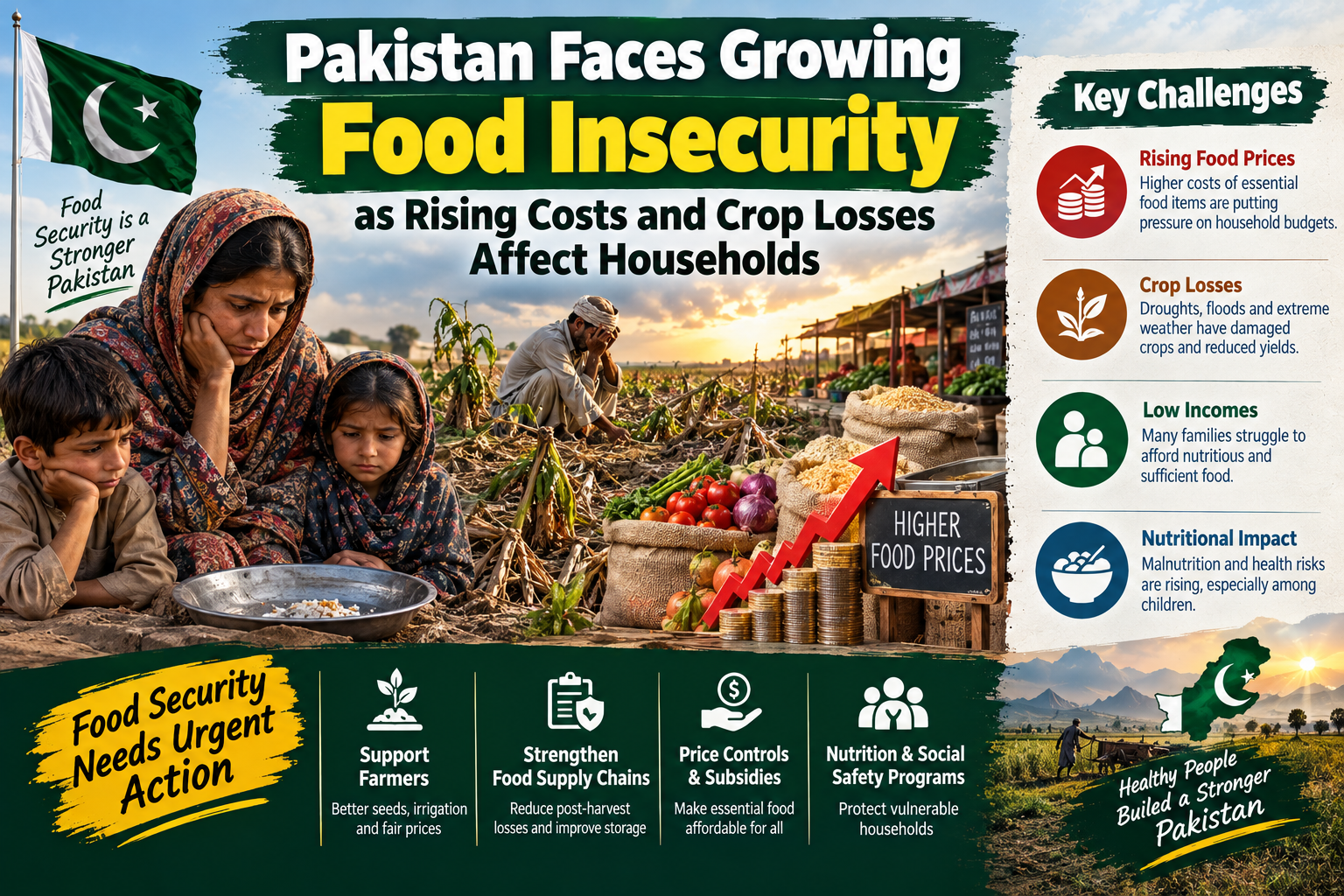
Pakistan is facing growing concerns over food insecurity as rising living costs, economic uncertainty and climate-related crop losses continue to put pressure on households across the country. Food is one of the most basic human needs, yet many families struggle to maintain a balanced and nutritious diet when the prices of essential items rise faster than their purchasing power.
A report published in October 2026 has brought renewed attention to Pakistan’s hunger challenge. According to reporting on the 2026 Global Hunger Index, Pakistan recorded the highest score in South Asia, highlighting the difficulties the country faces in ensuring reliable access to adequate food. Economic instability, food price inflation, heavy rains, floods and crop losses were identified among the factors contributing to the situation.
Food insecurity is not limited to whether food is available in markets. It also concerns whether people can afford it, whether nutritious choices are accessible and whether families can maintain sufficient food supplies throughout the year. A market may have flour, rice, vegetables, fruit, milk and other essentials, but these products do not automatically become affordable for every household.
The challenge affects different communities in different ways. Low-income urban families may struggle with rent, electricity bills, transport costs and grocery expenses. Rural households may face reduced agricultural income when crops are damaged by extreme weather. Farmers can experience higher production costs, while children and older people may be particularly affected when families cannot maintain a varied diet.
Addressing food insecurity requires coordinated action from government institutions, farmers, businesses, development organisations and communities. Short-term assistance can help families facing immediate difficulties, but lasting improvement depends on stronger agricultural resilience, better food distribution, stable employment, effective social protection and policies that make nutritious food more accessible.
Understanding Pakistan’s Food Insecurity Challenge
Food insecurity occurs when people do not have reliable physical or economic access to sufficient, safe and nutritious food for an active and healthy life.
The issue has several dimensions. Food availability concerns whether enough food is being produced, imported, stored and distributed. Food access concerns whether households have the income and opportunities needed to obtain it. Food utilisation involves nutrition, food safety, clean water and the body’s ability to benefit from the food consumed. Stability refers to whether these conditions remain reliable over time.
Pakistan’s food security challenge involves all four dimensions.
The country has a substantial agricultural sector that produces wheat, rice, maize, sugarcane, cotton and a variety of fruits and vegetables. Agriculture also supports millions of livelihoods and supplies raw materials to food-processing and other industries.
However, agricultural production alone cannot guarantee food security. Crops can be damaged by floods, droughts, extreme temperatures, pests and plant diseases. Farmers may also face high costs for seeds, fertilisers, fuel, electricity and irrigation. Even when food production is adequate, transportation costs, supply disruptions and weak household incomes can make food difficult to afford.
Food insecurity can also occur when households have enough calories but lack dietary diversity. Families may prioritise inexpensive staples while reducing their consumption of protein-rich foods, fruit, vegetables and dairy products. Such adjustments can affect nutrition even when people are not completely without food.
The challenge is therefore broader than agricultural output. Pakistan needs a food system that produces sufficient supplies, moves them efficiently, keeps them safe and ensures that households can afford nutritious choices.
Global Hunger Index Raises Concerns
The 2026 Global Hunger Index has renewed attention to hunger and nutrition challenges across South Asia. Reporting published on October 15 indicated that Pakistan recorded the region’s highest score in the index.
The Global Hunger Index assesses hunger through indicators associated with undernourishment and nutritional outcomes, including child nutrition and child mortality. Its findings provide a broad picture of the severity of hunger-related problems, although the index does not capture every aspect of food insecurity in every household.
A high score signals the need for serious attention to food access, nutrition and the conditions that influence health. It does not mean that every person in a country experiences the same circumstances, nor does it describe the situation of every district or community equally.
For Pakistan, the findings highlight the importance of understanding how economic pressures and environmental shocks affect vulnerable households. When families have limited financial resources, they may have fewer options for responding to higher food prices or unexpected losses of income.
The index also illustrates why hunger cannot be addressed through a single policy measure. Agricultural production, household earnings, maternal and child nutrition, clean water, healthcare and social protection are closely connected.
Policymakers need to examine these issues together rather than treating food insecurity as a problem that can be solved solely by increasing crop production.
Rising Food Prices Put Pressure on Household Budgets
Food prices are among the most immediate concerns for families facing financial pressure. When essential items become more expensive, households with limited incomes must make difficult decisions about how to distribute their money.
A family may need to pay for housing, electricity, transport, school expenses, healthcare and groceries from the same monthly income. If the cost of flour, cooking oil, pulses, vegetables, milk and other staples increases, less money remains available for other necessities.
Households do not all respond to these pressures in the same way. Some may purchase smaller quantities, switch to less expensive products or reduce spending on non-food items. Others may rely more heavily on relatives, community support or assistance programmes.
However, repeatedly reducing food quality can have consequences. A diet based mainly on a small number of inexpensive staples may provide energy but fail to supply the full range of nutrients required for healthy development and daily functioning.
Food inflation can also affect small businesses, restaurants, food vendors and institutions that provide meals. When ingredient prices rise, these businesses may face higher operating costs, potentially leading to increased prices or reduced margins.
For farmers, the relationship between prices and income can be complicated. Higher retail prices do not necessarily mean that farmers receive a proportionate increase in earnings. Production expenses, transport charges, storage losses and the bargaining power of intermediaries can influence the amount farmers ultimately receive.
A lasting response to food inflation requires attention to the entire supply chain. Better transport, storage, market information and competition can help reduce avoidable costs between producers and consumers.
Climate Change and Crop Losses
Climate-related shocks are an important risk to Pakistan’s food system. Heavy rains, flooding, droughts, heatwaves and changing seasonal patterns can affect agricultural production and the livelihoods of rural communities.
Pakistan has experienced severe floods and other extreme weather events in recent years. Such events can damage standing crops, wash away fertile soil, destroy irrigation infrastructure and disrupt transport routes. Flooding may also damage homes, livestock, storage facilities and local markets.
When crops are lost, farmers can suffer reduced income while facing continuing expenses for land preparation, seeds, equipment and debt repayments. Families that depend on agriculture for their livelihoods may then have less money available to purchase food.
The effects can extend beyond farming communities. Lower production in a particular area may reduce market supplies, while damaged roads and transport infrastructure can make it harder to move food from producing regions to cities and towns.
Extreme weather can also affect the timing of planting and harvesting. Unexpected rainfall or unusual temperatures may disrupt farming schedules, increase the risk of disease and make it more difficult for farmers to plan their operations.
Climate-related losses are not inevitable in every case, and their effects vary by crop and location. However, repeated shocks can make food production and household income less predictable.
Improving resilience requires better forecasting, climate information for farmers, drainage infrastructure, suitable crop varieties, water management and disaster preparedness. Agricultural extension services can help farmers understand risks and choose practices suited to local conditions.
Investing in resilience can protect both food supplies and the incomes of people whose livelihoods depend on agriculture.
Farmers Face Rising Production Costs
Farmers play a central role in Pakistan’s food security, but agricultural production can become difficult when input costs rise.
Seeds, fertilisers, pesticides, machinery, fuel, electricity and irrigation all contribute to the cost of growing crops. Farmers who need to borrow money before planting may also face financing costs that reduce their final earnings.
Small farmers can be particularly vulnerable because they may have limited savings, less access to affordable credit and fewer resources to recover from a poor harvest.
When input prices rise, some farmers may reduce the quantity of fertiliser they use, postpone repairs or choose crops that require lower investment. These decisions may be understandable in the short term but can affect productivity, depending on local conditions.
Access to reliable agricultural advice can help farmers make informed decisions about seed selection, soil health, irrigation and pest management. Affordable credit and suitable insurance arrangements may also improve their ability to invest and recover from losses.
Market access is another important issue. Farmers need dependable routes to sell their produce and access to information about prevailing prices. Where storage facilities are inadequate, they may have to sell quickly after harvesting, even when prices are unfavourable.
Strengthening agricultural cooperatives, storage infrastructure and transparent market systems can improve the position of producers while helping food move more efficiently to consumers.
Supporting farmers is therefore not separate from protecting households. Stronger and more resilient agricultural livelihoods can contribute to a more reliable food supply.
Rural and Urban Households Experience Different Pressures
Food insecurity can affect both rural and urban Pakistan, but the causes may differ.
In rural areas, some households produce part of their own food or earn income through farming and agricultural labour. Their food security can depend on rainfall, crop yields, livestock health, market access and seasonal employment.
When harvests are damaged, rural families may lose both income and food supplies at the same time. People who depend on daily agricultural wages can also face fewer employment opportunities when farming activity slows.
Urban households, by contrast, generally depend more heavily on markets for their food. They may have to purchase almost everything they consume while also paying rent, utilities and transport expenses.
A rise in food prices can therefore affect urban families immediately. Even households with regular earnings may struggle if their income does not keep pace with living costs.
Informal workers can face additional uncertainty because their earnings may fluctuate from day to day. A temporary loss of work can make it difficult to maintain regular food purchases.
Both rural and urban communities need policies that address their specific circumstances. Rural support may focus on agricultural resilience, market access and livelihood protection, while urban programmes may place greater emphasis on household purchasing power and targeted assistance.
A national food security strategy should recognise these differences rather than assuming that every household faces the same problem.
Children and Families Need Better Nutrition
Food security is closely connected to the health and development of children. Young children require adequate energy, protein, vitamins and minerals to support growth and learning.
When households cannot afford diverse diets, children may be at greater risk of nutritional deficiencies. Poor nutrition can affect physical development, immune function and the ability to concentrate in school.
Maternal nutrition is also important. Pregnant and breastfeeding women need adequate nourishment, and difficulties in accessing nutritious food can affect both mothers and children.
The consequences of undernutrition can extend beyond the immediate household. Children who experience nutritional problems may require additional health support, while schools may find it more difficult to support learning when students arrive hungry or unwell.
Food insecurity should not be treated as a failure by individual families. Household choices are often shaped by income, food prices, access to services and the availability of nutritious products.
Effective responses can include targeted nutrition support, maternal healthcare, school meal programmes, nutrition education and access to clean drinking water.
These measures should be designed to reach families facing the greatest barriers. Schools and health facilities can also provide useful opportunities to identify nutritional concerns and connect households with appropriate services.
Improving child nutrition is an investment in Pakistan’s future. Better nutrition can support learning, health and the development of human capabilities over the long term.
The Importance of School Meals and Community Support
School meal programmes can play a useful role in helping children receive regular nourishment while attending school.
Depending on how they are designed, such programmes may provide meals, snacks or other nutritional support. They can also reduce some of the pressure on families struggling to meet daily food expenses.
For children, access to food at school may support concentration and participation in classroom activities. For households, a dependable school meal can provide some relief from daily expenses.
However, programmes need appropriate planning and monitoring. Meals should meet relevant nutrition and food safety standards, and schools need reliable arrangements for procurement, storage, preparation and distribution.
Community organisations can also help identify households experiencing immediate food shortages. Local networks may provide meals, food packages or referrals to assistance programmes.
Such support can be valuable during emergencies, but charity alone cannot replace effective public policy. Community initiatives often have limited resources and may not be able to reach every household in need.
Government programmes can provide a broader foundation, while partnerships with credible organisations can help improve local delivery. Transparent eligibility criteria and monitoring can reduce duplication and help ensure that assistance reaches intended beneficiaries.
Long-term progress requires a combination of immediate relief and measures that improve household income, agricultural resilience and access to essential services.
Reducing Food Waste and Improving Storage
Food waste is another issue that deserves attention in Pakistan’s food system. Food can be lost during harvesting, transportation, storage, processing, retailing and household consumption.
Perishable products such as fruit, vegetables, dairy products and some meat and fish items can deteriorate quickly if they are exposed to unsuitable temperatures or delays.
Poor storage and transport conditions can reduce the amount of food that reaches consumers in a saleable condition. Farmers may lose income, traders may face higher costs and markets may receive less usable produce than expected.
Improving storage infrastructure can help protect supplies. Depending on the product and location, useful measures may include suitable warehouses, cold storage, better packaging, reliable transport and improved handling practices.
Farmers also need practical information about harvesting and storage techniques. Simple improvements in handling can reduce avoidable losses, although the appropriate approach varies by crop and local conditions.
Food businesses and households can contribute by planning purchases, storing products correctly and using food before it spoils. Retailers may also explore responsible arrangements for distributing safe, unsold food through appropriate organisations.
Reducing waste cannot solve every food security problem, because poverty and purchasing power remain major factors. Nevertheless, preventing avoidable losses can help make better use of the food Pakistan already produces.
Government Policies and Social Protection
Government action is essential in responding to food insecurity, particularly when households face sudden economic or environmental shocks.
Social protection programmes can provide cash assistance or other support to eligible families. When well designed, these programmes can help households meet basic needs without requiring them to sell productive assets or reduce essential spending.
Cash assistance may offer flexibility because families can purchase the items they need most. However, its effectiveness depends on accurate targeting, accessible payment systems and the availability of food in local markets.
In areas affected by floods or other emergencies, direct food assistance may be necessary when markets are disrupted or households cannot access essential supplies.
Government agencies also need reliable information about local conditions. Data on food prices, crop production, household income and nutritional outcomes can help officials identify areas where support is most urgently required.
Coordination between federal, provincial and local authorities is particularly important during emergencies. Clear responsibilities and communication can reduce delays and improve the distribution of assistance.
Long-term policies should complement emergency support with investment in agriculture, education, healthcare, transport and employment. These measures can help households become more resilient rather than relying on temporary assistance whenever a crisis occurs.
The effectiveness of social protection should be assessed through clear outcomes, including whether assistance reaches vulnerable households in time and whether it helps them maintain access to essential food.
Strengthening Pakistan’s Agricultural Infrastructure
Agricultural infrastructure has a direct influence on food availability, production costs and the income earned by farmers.
Irrigation systems are particularly important in many parts of Pakistan, where agricultural production depends heavily on managed water supplies. Damaged canals, inefficient distribution and poor maintenance can affect crop yields and increase uncertainty for farmers.
Better water management can help improve the reliability of supplies. This may involve maintaining existing infrastructure, reducing avoidable losses, improving scheduling and supporting suitable water-efficient farming practices.
Roads and transport networks are also important. Farmers need to move produce to markets, while wholesalers and retailers depend on dependable routes to distribute food to consumers.
When roads are damaged by floods or other disasters, transport costs can increase and deliveries may be delayed. Investment in resilient infrastructure can therefore support both agriculture and food distribution.
Storage facilities, agricultural research and reliable market information can further improve the system. Farmers who understand demand, prices and production risks are better placed to make informed decisions.
Infrastructure projects should be based on local needs and carefully assessed for long-term costs and environmental impacts. The objective should be to improve productivity and resilience without creating unsustainable financial burdens.
A stronger agricultural infrastructure can help Pakistan reduce avoidable losses and respond more effectively to changes in weather, demand and market conditions.
The Role of Technology and Agricultural Research
Technology can support food security by helping farmers use resources more efficiently and respond to changing conditions.
Weather forecasting and early-warning systems can provide information about rainfall, heatwaves and other risks. When forecasts are understandable and delivered in time, farmers may be able to adjust planting schedules, protect equipment or take other appropriate precautions.
Digital platforms can also provide information about market prices, agricultural advice and available services. Such tools may help farmers make better decisions, particularly when they have access to reliable information and practical training.
Agricultural research can contribute through crop varieties suited to local conditions, improved pest management, soil conservation and more efficient irrigation methods.
However, technology is not equally accessible to every farmer. Small producers may face barriers related to cost, connectivity, literacy or access to training. Public services and agricultural organisations can help close these gaps by making information available through multiple channels.
Research also needs to reflect Pakistan’s diverse agricultural environments. Practices suitable for one province or crop may not work equally well in another location.
The most effective approach combines scientific research, local experience and practical support. Technology should help farmers solve real problems rather than add unnecessary complexity.
Food Prices, Markets and Consumer Protection
Food markets influence how effectively supplies reach households. Even when farmers produce sufficient quantities, inefficiencies can increase the final price paid by consumers.
Transport expenses, storage losses, market disruptions and limited competition may all affect prices. Sudden shortages can also create pressure on essential items.
Market monitoring can help authorities identify unusual price movements and investigate possible disruptions. However, price controls or enforcement measures need careful design because poorly implemented policies may create unintended consequences, including reduced supply.
A sustainable approach should focus on improving competition, transparency and the movement of goods. Reliable market information can help farmers and traders make better decisions, while efficient transport and storage can reduce avoidable costs.
Consumer protection also matters. Food should meet appropriate safety standards, and consumers need access to accurate information about the products they purchase.
Authorities can strengthen food safety through inspections, clear standards and effective responses to violations. Businesses also have responsibilities to handle food properly and maintain suitable storage conditions.
Improving market performance requires cooperation between producers, traders, retailers and regulators. The goal is to create a system that supports farmers’ livelihoods while making safe and nutritious food more accessible to consumers.
Building Climate-Resilient Food Systems
Climate resilience should be a central part of Pakistan’s long-term food security strategy.
A resilient food system can continue providing essential supplies despite disruptions caused by extreme weather, economic shocks or other emergencies. It does not eliminate all risks, but it reduces the likelihood that a single event will create prolonged hardship.
For agriculture, resilience may involve improved water management, suitable crop choices, soil conservation, diversified livelihoods and access to early warnings. The best combination depends on local geography, farming practices and available resources.
Emergency planning is also essential. Authorities need clear procedures for identifying affected communities, protecting essential infrastructure and restoring transport and market access after disasters.
Food storage and distribution networks can help maintain supplies when local production is interrupted. However, these systems need regular maintenance, transparent management and realistic plans for replenishment.
Climate resilience also requires attention to vulnerable households. Families with limited savings may need temporary support after losing income or property. Assistance that arrives quickly can help prevent a temporary shock from developing into a longer-term food crisis.
Investment in resilience can provide benefits beyond agriculture. Better drainage, safer roads, improved water systems and stronger public services can protect communities from a range of risks.
Pakistan’s food security will depend partly on how effectively the country prepares for climate-related challenges rather than responding only after damage has occurred.
What Pakistan Needs to Prioritise
Addressing food insecurity requires a practical strategy that connects immediate assistance with long-term reforms.
First, the government should improve monitoring of food prices, crop conditions and household vulnerability. Timely information can help authorities identify emerging problems before they become more severe.
Second, support should reach families facing the greatest difficulties. Well-targeted cash assistance, food support and nutrition programmes can help protect households during periods of high prices or disaster-related disruption.
Third, investment in agriculture should focus on productivity and resilience. Farmers need dependable infrastructure, access to suitable inputs, agricultural advice and better opportunities to store and sell their produce.
Fourth, the country should strengthen the food supply chain. Better transport, storage and market information can reduce avoidable losses and improve the movement of food between producing regions and consumers.
Fifth, nutrition should receive attention alongside food availability. Policies must recognise the importance of diverse diets, maternal health, child nutrition and clean water.
Sixth, government institutions should improve coordination. Food security involves agriculture, finance, health, education, disaster management and social protection. These areas need to work together rather than operate as completely separate policy concerns.
Finally, progress should be measured transparently. Policymakers need reliable information on food affordability, nutritional outcomes, agricultural losses and the reach of support programmes.
These priorities require sustained funding and careful implementation. They also require an understanding that food insecurity is not caused by one factor alone.
Conclusion
Pakistan’s growing food insecurity challenge highlights the close relationship between economic stability, agricultural resilience, climate risks and household purchasing power. The 2026 Global Hunger Index reporting has renewed concern about hunger and nutrition in the country, while rising living costs and climate-related crop losses remain important issues for vulnerable communities.
The problem cannot be solved simply by producing more food. Households must also be able to afford nutritious meals, farmers need the resources to maintain production, and markets must distribute supplies efficiently.
Short-term assistance can protect families facing immediate hardship, but lasting improvement requires stronger agricultural infrastructure, better storage, climate preparedness, reliable social protection and policies that support household incomes.
Children, low-income families, small farmers and communities affected by extreme weather need particular attention. Their circumstances may differ, but all depend on a food system capable of providing safe, affordable and nutritious food.
Pakistan has agricultural resources, experienced farmers and opportunities to improve its food supply chains. Turning these strengths into better food security will require effective planning, cooperation between institutions and sustained investment.
Ultimately, food security should be treated as a national development priority. Ensuring that people can access nutritious food is essential not only for health and wellbeing but also for education, productivity and long-term economic progress.
Frequently Asked Questions (FAQs)
1. Why is Pakistan facing food insecurity?
Pakistan’s food security challenges are linked to rising food prices, economic pressures, climate-related crop losses, household income limitations and weaknesses in food distribution.
2. What did the 2026 Global Hunger Index report indicate about Pakistan?
Reporting on the 2026 Global Hunger Index indicated that Pakistan recorded the highest score in South Asia, highlighting continuing hunger and nutrition concerns.
3. How do floods affect food security in Pakistan?
Floods can damage crops, livestock, roads, storage facilities and irrigation infrastructure. These losses may reduce farmers’ incomes and disrupt food supplies.
4. Which households are particularly vulnerable to food insecurity?
Low-income families, small farmers, informal workers, children and communities affected by extreme weather may face greater difficulties accessing sufficient and nutritious food.
5. What can Pakistan do to improve food security?
Pakistan can strengthen social protection, improve agricultural infrastructure, reduce food losses, support climate-resilient farming, improve market distribution and expand access to nutritious food.
Tighten repeated food-security sectionsAdd a sharper news-style opening