Introduction
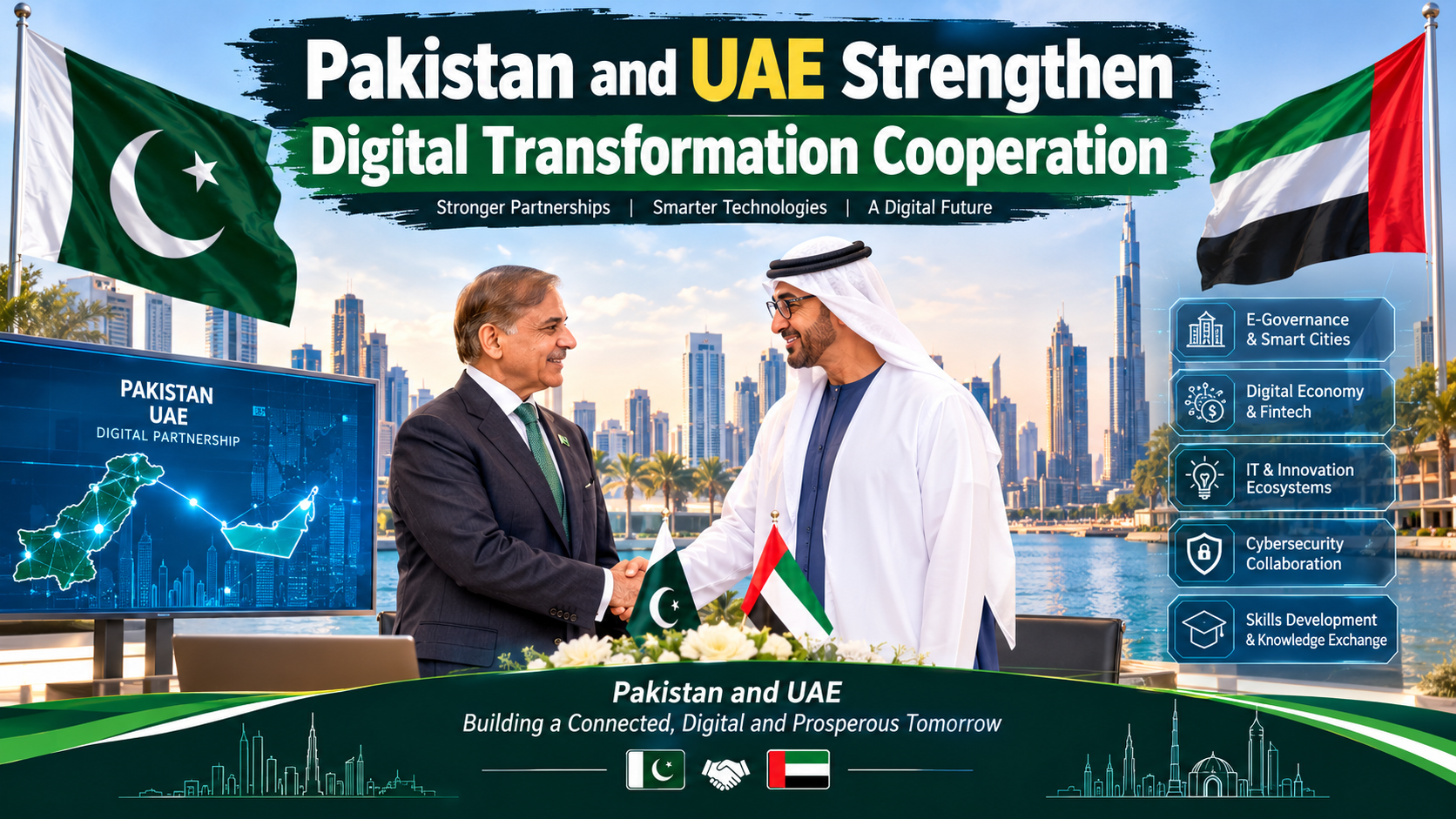
Pakistan and the United Arab Emirates are exploring opportunities to strengthen cooperation in digital transformation, technological innovation, and industrial development. The latest discussions between representatives of the two countries highlight the growing importance of technology in economic growth, public services, business development, and international partnerships.
On October 14, 2026, Pakistan's Federal Minister for Information Technology and Telecommunication, Shaza Fatima Khawaja, met with Omar Suwaina Al Suwaidi, Undersecretary at the UAE Ministry of Industry and Advanced Technology. Their meeting focused on opportunities for cooperation in digital transformation and innovation.
The discussions reflect a wider international trend in which governments are increasingly investing in digital systems to improve productivity, modernise public administration, and help businesses compete in a technology-driven economy.
For Pakistan, international cooperation could create opportunities to strengthen its information technology sector, develop digital skills, encourage investment, and improve access to modern technologies. The UAE, meanwhile, has been pursuing technology-led development across several sectors, making cooperation potentially beneficial for both sides.
However, successful collaboration depends on more than high-level meetings. It requires practical projects, investment, skilled professionals, reliable digital infrastructure, and policies that allow businesses and citizens to benefit from technological progress.
Pakistan and UAE Discuss Digital Cooperation
The meeting between Pakistani and Emirati officials represents an opportunity to explore areas where both countries can exchange knowledge and develop mutually beneficial partnerships.
Digital transformation refers to the use of modern technologies to improve how organisations operate, provide services, and make decisions. It can involve online government services, digital payments, cloud computing, data management, artificial intelligence, and other technology-based systems.
For Pakistan, these areas are increasingly relevant as government departments, businesses, educational institutions, and financial organisations look for ways to improve efficiency.
International partnerships can support this process by connecting local organisations with technical expertise, investors, training programmes, and potential commercial partners.
The UAE has developed a strong focus on technology and innovation as part of its broader economic development strategy. Cooperation with Pakistani institutions and companies could provide opportunities to exchange experience and explore projects in areas of shared interest.
At this stage, the meeting should be understood as a platform for discussion rather than confirmation that particular investments or technology agreements have already been finalised. The practical results will depend on the initiatives that follow.
Why Digital Transformation Matters for Pakistan
Pakistan's economy includes businesses of different sizes, from small family-owned shops to large companies operating in manufacturing, banking, telecommunications, and services.
Many organisations still face challenges involving paperwork, slow administrative processes, limited access to advanced software, and difficulties reaching customers outside their immediate areas.
Digital transformation can help address some of these problems.
For example, businesses can use online platforms to communicate with customers, manage orders, monitor inventory, and accept digital payments. Government departments can use electronic records to reduce duplication and improve the speed of selected services.
Educational institutions can introduce digital learning resources, while healthcare providers may use appropriate information systems to manage appointments and records.
The benefits are not automatic. Organisations need suitable infrastructure, trained staff, reliable cybersecurity measures, and systems that work for their users.
International cooperation could help Pakistan learn from other countries' experiences and identify solutions that suit its own economic and social conditions.
Opportunities for Pakistan's Information Technology Sector
Pakistan has a growing community of software developers, IT professionals, freelancers, digital entrepreneurs, and technology companies.
These professionals work in areas such as software development, web design, mobile applications, digital marketing, cloud services, business automation, and technical support.
Stronger cooperation with the UAE could create opportunities for Pakistani businesses to explore international partnerships, depending on commercial demand and the arrangements developed between organisations.
Potential areas of collaboration may include software solutions for businesses, digital service delivery, enterprise systems, and technology training.
For Pakistani companies, international partnerships can provide access to new customers and a better understanding of the requirements of overseas markets.
However, businesses must remain competitive. They need to deliver reliable services, protect customer information, meet contractual obligations, and maintain professional standards.
Companies that invest in quality, communication, and specialised skills may be better prepared to compete internationally.
The government can support this development through predictable policies, improved digital infrastructure, accessible training, and effective coordination with industry.
Artificial Intelligence and Emerging Technologies
Artificial intelligence is becoming an important part of digital transformation. Organisations around the world are exploring how AI can help analyse information, automate repetitive tasks, improve customer support, and support decision-making.
For Pakistan, the technology presents opportunities in business services, education, agriculture, healthcare administration, logistics, and software development.
AI tools may help organisations process information more efficiently, but their use requires careful planning. Systems can produce errors, reflect biases in their data, or expose confidential information if they are not used responsibly.
Businesses therefore need appropriate oversight, clear policies, and trained employees who understand both the capabilities and limitations of these tools.
Cooperation with international technology partners could support knowledge exchange, research, training, and the development of responsible applications.
Pakistan should also invest in foundational skills such as mathematics, computer science, data analysis, and critical thinking. These abilities help students and professionals understand emerging technologies rather than relying only on individual applications.
The most sustainable benefits will come when technology complements human expertise and addresses real problems.
Digital Skills and Workforce Development
Technology investment is most effective when people have the skills needed to use it.
Pakistan has a large young population, creating an opportunity to prepare more students and workers for digital careers. However, access to quality training varies by location, educational background, and financial circumstances.
Some learners have access to computers, reliable internet, and structured courses, while others face barriers that make practical learning more difficult.
Cooperation between educational institutions, employers, and international partners could help address these differences.
Training programmes may focus on software development, cybersecurity awareness, cloud computing, data analysis, digital business operations, and other skills relevant to actual employment opportunities.
Employers can contribute by explaining the competencies they need and offering practical learning opportunities where feasible.
Educational institutions should also help students develop communication, teamwork, problem-solving, and professional writing skills. These abilities remain important even when technical knowledge is strong.
For Pakistan, the goal should be to create a workforce capable of adapting as technology changes, rather than training students for only one tool or software platform.
Potential Benefits for Small and Medium-Sized Businesses
Small and medium-sized enterprises are important to economic activity because they provide goods, services, and employment across many communities.
Yet smaller businesses may not have the resources to hire large technology teams or purchase expensive digital systems.
Affordable digital tools can help them manage daily operations, communicate with customers, maintain financial records, and reach buyers in other cities or countries.
For example, a small manufacturer could use an online catalogue to present its products to international buyers. A service provider could manage appointments digitally, while a retailer might use inventory software to understand which products sell most frequently.
International partnerships may help introduce businesses to new technologies, business practices, and potential commercial relationships.
However, small companies need solutions suited to their budgets and capabilities. Complex systems can create extra costs if employees are not trained or the software does not address the company's actual needs.
Support programmes should therefore prioritise practical results, affordability, and accessible guidance.
E-Government and Better Public Services
Digital transformation can also improve how government services are delivered.
Traditional administrative procedures may involve paper documents, repeated visits to offices, and long waiting periods. Well-designed digital systems can allow citizens to submit information online, track applications, and access certain services more conveniently.
Electronic records can also help departments organise information and reduce duplication when systems are properly integrated.
For Pakistan, improvements in digital public services could benefit people living in large cities as well as those in smaller towns and rural areas.
However, online services must be accessible to people who have limited digital skills, disabilities, or unreliable internet connections. Offline assistance and alternative service channels may remain necessary.
Government systems must also protect personal information. Access controls, secure data handling, regular maintenance, and clear accountability are essential to maintaining public trust.
Cooperation with international partners could support the exchange of experience in designing digital services, but solutions must be adapted to local laws, institutional capacity, and public needs.
Cybersecurity and Data Protection
As more organisations move their operations online, cybersecurity becomes increasingly important.
Digital systems can help businesses work efficiently, but they may also face risks such as phishing, account theft, unauthorised access, data breaches, and service disruption.
Pakistan's public institutions and private companies need to treat cybersecurity as a fundamental part of digital development rather than an issue to address only after a problem occurs.
Organisations can strengthen their protection through staff training, secure authentication, regular software updates, careful access management, reliable backups, and appropriate incident-response procedures.
They should also collect and retain only the information they genuinely need, following applicable legal and privacy requirements.
International cooperation may provide opportunities to exchange knowledge about security standards, workforce training, and the management of technology risks.
At the same time, sensitive systems require careful assessment before any external technology is introduced. Organisations should understand where information is stored, who can access it, and how security responsibilities are divided.
Building public confidence in digital services requires both convenience and protection.
Technology Investment and Economic Growth
Investment can help technology companies expand, develop products, hire workers, and serve additional customers.
For Pakistan, attracting responsible investment into digital infrastructure and technology businesses could support wider economic development.
Potential investment areas include software services, data infrastructure, digital business platforms, telecommunications, and technology training. The viability of any project would depend on market demand, costs, regulations, and the capabilities of participating organisations.
Cooperation with the UAE may create opportunities to explore commercial partnerships and connect businesses with international networks.
Nevertheless, investment announcements should be distinguished from completed investments. A meeting or expression of interest does not necessarily mean that funding has been committed or a project will proceed.
For investment to produce lasting benefits, Pakistan needs a predictable business environment, reliable infrastructure, effective contract enforcement, and a skilled workforce.
Companies also need confidence that their operations can comply with local regulations and that projects can generate sustainable returns.
A transparent approach can help ensure that technology partnerships deliver practical economic value.
Pakistan's Freelancers and Digital Entrepreneurs
Freelancing has become an important source of income for many Pakistanis who provide services to clients in different countries.
These services can include programming, graphic design, writing, animation, digital marketing, data analysis, and other professional tasks.
International cooperation may help create networking opportunities, introduce businesses to new markets, and encourage the development of skills relevant to global clients.
However, freelancers must compete on quality, reliability, communication, and their ability to meet deadlines.
They also need to understand contracts, payment arrangements, customer privacy, and the rules that apply to their work.
Training programmes can help new freelancers build portfolios, communicate professionally, manage projects, and understand how to price their services responsibly.
Digital entrepreneurship should not be presented as a guaranteed route to quick income. Success usually requires sustained practice, learning, and the ability to adapt to changing customer needs.
A stronger technology ecosystem could nevertheless provide more opportunities for skilled individuals to build sustainable careers.
Education and Research Partnerships
Universities and technical institutions can play an important role in developing technology skills and supporting innovation.
Partnerships between Pakistani and Emirati institutions could explore student exchanges, professional training, research collaboration, entrepreneurship programmes, and the sharing of educational resources.
Such cooperation can be valuable when it addresses clear academic or industry needs.
For example, students may benefit from exposure to practical technology projects, while researchers could explore solutions to problems relevant to both countries.
Educational partnerships also need clear objectives, suitable funding, and transparent arrangements for participating institutions.
Training should be evaluated by what learners can actually do, not simply by the number of people who attend a course.
Institutions should measure outcomes such as completed projects, recognised qualifications, employment opportunities, and the practical use of newly acquired skills.
Long-term collaboration can help build relationships that continue beyond a single event or programme.
The Role of Telecommunications Infrastructure
Reliable connectivity is a foundation for digital transformation.
Businesses need stable internet access to communicate with customers, use online services, store information, and collaborate with colleagues. Students also need connectivity to access educational resources and participate in digital learning.
In areas where connectivity is expensive or unreliable, digital services may be difficult to use consistently.
Pakistan's digital development therefore requires attention to network quality, affordability, coverage, and the availability of suitable devices.
Telecommunications infrastructure must also be supported by reliable electricity, technical maintenance, and appropriate security measures.
International cooperation may help organisations exchange knowledge and explore investment opportunities, but the actual benefits will depend on project design and implementation.
Expanding access is particularly important for rural communities and small businesses that might otherwise be excluded from technology-led economic growth.
A more inclusive digital economy requires both advanced systems and basic access for ordinary users.
Digital Payments and Business Efficiency
Digital payments can make it easier for people and businesses to complete transactions without relying entirely on cash.
When suitable systems are accessible and secure, businesses may be able to receive payments more conveniently, maintain clearer records, and manage transactions across different locations.
Digital payment systems can also support online commerce by connecting customers with merchants through electronic channels.
However, adoption depends on trust, affordability, reliable technology, consumer awareness, and appropriate protections against fraud.
Users need to understand how to secure their accounts, verify transactions, and report suspicious activity. Businesses must also protect customer information and follow applicable financial regulations.
Pakistan can benefit from continued development of secure digital financial services, particularly where they make transactions more convenient for small businesses and consumers.
International partnerships may provide opportunities to share technical knowledge and explore business cooperation, but financial systems require careful oversight.
Challenges Facing Pakistan's Digital Transformation
Despite the opportunities, Pakistan faces several challenges that could slow technological development.
Unequal Access to Technology
Not everyone has reliable internet, suitable devices, or the digital skills needed to use online services. Improving access is essential if the benefits of technology are to reach more people.
Skills Gaps
Employers may struggle to find workers with the combination of technical and professional skills required for particular roles. Training programmes should respond to actual needs rather than focus only on popular trends.
Infrastructure Costs
Businesses need to consider the cost of connectivity, equipment, software, maintenance, and security. Small organisations may require affordable solutions and technical assistance.
Cybersecurity Risks
Greater digital activity can increase exposure to fraud and unauthorised access. Strong security practices and public awareness are necessary to protect systems and users.
Implementation and Coordination
Digital projects can fail to deliver their intended benefits when institutions lack clear responsibilities, sufficient funding, or realistic implementation plans.
Addressing these challenges requires coordination among government departments, educational institutions, technology companies, investors, and users.
What Pakistan Should Prioritise Next
Pakistan can strengthen its digital transformation efforts by focusing on practical and measurable objectives.
First, it should improve access to reliable digital infrastructure, particularly in underserved areas.
Second, it should expand training that connects education with real employment and business requirements.
Third, it should support local technology companies and small businesses that want to adopt suitable digital tools.
Fourth, it should strengthen cybersecurity awareness and data protection across public and private organisations.
Fifth, it should encourage international partnerships that have clear objectives, transparent terms, and measurable benefits.
Finally, digital projects should be evaluated according to their results. Important indicators could include the number of people trained, improvements in service delivery, new commercial partnerships, business productivity, and access to technology in underserved communities.
These priorities can help turn broad discussions about innovation into improvements that people and businesses can experience.
What the Pakistan-UAE Partnership Could Mean for the Future
The meeting between Pakistani and Emirati officials provides an opportunity to explore areas where digital development and industrial innovation may support stronger economic relations.
For Pakistan, the potential benefits include knowledge exchange, access to international networks, professional training, and opportunities for local companies to develop their services.
For the UAE, collaboration could provide access to Pakistani talent, technology businesses, and potential partners for suitable projects.
The actual results will depend on the agreements and initiatives that emerge from further discussions. Both sides would need to assess opportunities carefully and establish realistic objectives.
A successful partnership should benefit more than large organisations. Small businesses, students, freelancers, and ordinary citizens should also have opportunities to gain from improved technology and digital services.
This requires attention to affordability, accessibility, education, and security.
If cooperation produces practical programmes and sustainable investment, it could contribute to stronger technology ecosystems in both countries.
Conclusion
Pakistan and the UAE are exploring opportunities to strengthen cooperation in digital transformation and innovation, reflecting the growing role of technology in modern economies.
The October 14, 2026, meeting between officials from the two countries provides a platform for discussions about technology-led development and potential areas of collaboration.
For Pakistan, the priorities include improving digital infrastructure, developing skilled workers, supporting technology businesses, expanding access to digital services, and strengthening cybersecurity.
International partnerships may help advance these objectives by connecting organisations with expertise and commercial opportunities. However, meaningful progress will require practical projects, transparent arrangements, and sustained implementation.
Digital transformation should ultimately be judged by its results: better services, stronger businesses, more accessible education, improved productivity, and new opportunities for skilled people.
By combining international cooperation with domestic investment and inclusive policies, Pakistan can work towards a more competitive and accessible digital economy while building stronger economic ties with the UAE.
FAQs
1. What did Pakistan and the UAE discuss on October 14, 2026?
Pakistani and Emirati officials discussed opportunities for cooperation in digital transformation, innovation, and technology-led development.
2. Who represented Pakistan at the meeting?
Pakistan was represented by Federal Minister for Information Technology and Telecommunication Shaza Fatima Khawaja.
3. How could digital cooperation benefit Pakistan?
It could create opportunities for skills development, technology investment, business partnerships, digital services, and the growth of Pakistan's IT sector.
4. Could Pakistani technology companies benefit from cooperation with the UAE?
Potentially, yes. Companies may explore partnerships and international markets, depending on business demand and any agreements that are established.
5. Have specific investments or agreements been confirmed?
The meeting provides a basis for discussing cooperation, but any particular investment or project should be considered confirmed only when formally announced by the relevant parties.