Introduction
Pakistan's maritime security efforts play an important role in protecting the country's coastal waters, supporting lawful trade, and addressing illegal activities at sea. The Pakistan Navy and other relevant maritime authorities contribute to these efforts through surveillance, patrols, and cooperation with national and international partners.
Pakistan's location along the Arabian Sea gives it considerable strategic importance. The country's coastline connects important commercial shipping routes, while its ports support the movement of imports and exports that contribute to the national economy.
Maritime security is therefore closely connected to economic stability, international trade, and regional cooperation. Protecting shipping routes and preventing illegal activities at sea can help maintain confidence in commercial transportation and support the lawful use of maritime resources.
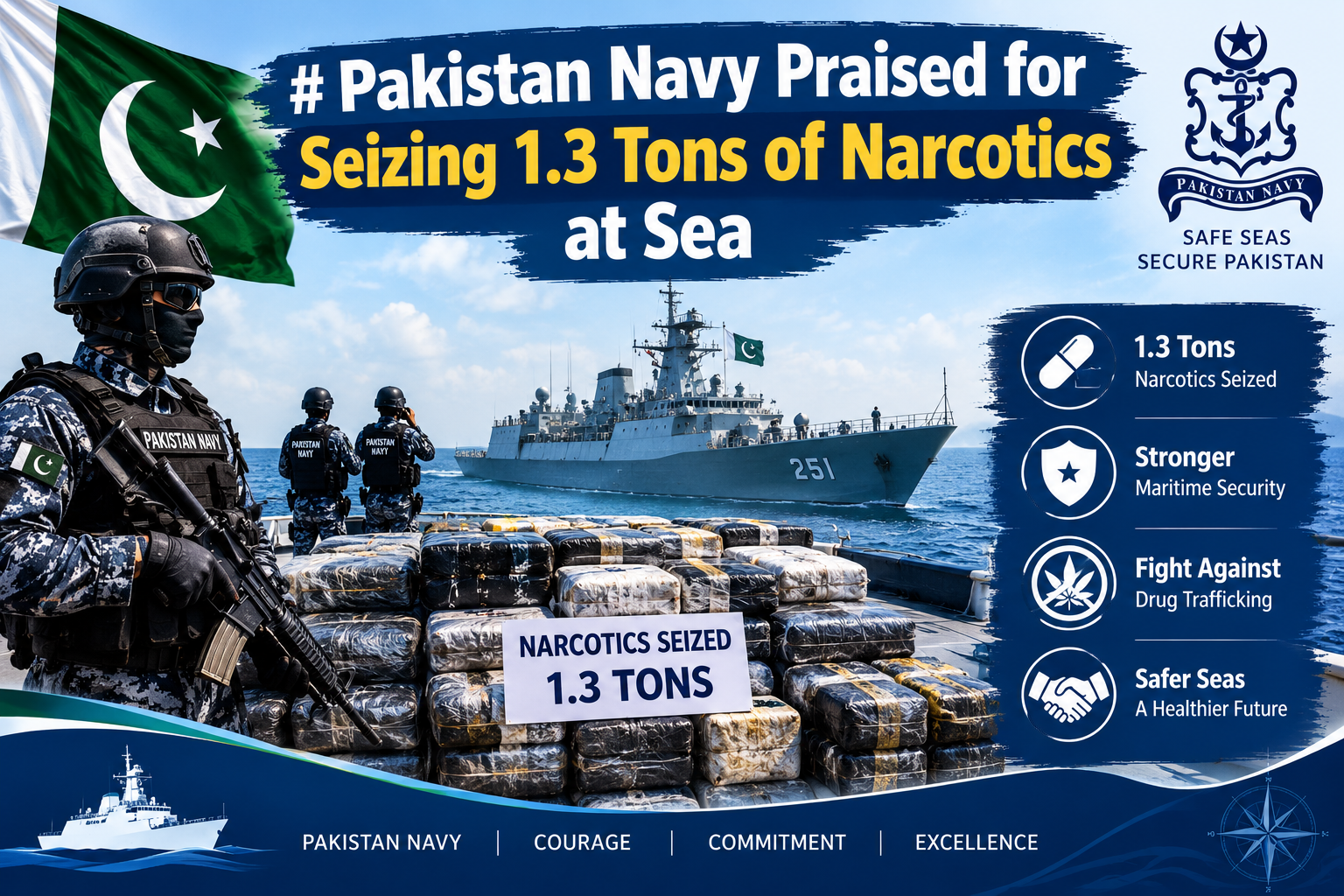
The Pakistan Navy has received recognition for a maritime operation involving the seizure of approximately 1.3 tons of narcotics at sea. The operation highlighted the importance of maritime surveillance and cooperation among the institutions responsible for securing Pakistan's maritime environment.
Drug trafficking through maritime routes is an international challenge. Criminal networks may attempt to exploit busy shipping corridors, remote coastal areas, and the complexity of international waters to transport prohibited substances.
Addressing these activities requires effective coordination, reliable intelligence, professional maritime personnel, and cooperation between relevant authorities.
For Pakistan, maritime enforcement is also important because the country's economy depends significantly on seaborne trade. Disruptions to commercial shipping, illegal trafficking, and other maritime threats can create wider economic and security concerns.
Although a single seizure cannot eliminate international trafficking, operations of this kind demonstrate the continuing role of maritime authorities in identifying suspicious activity and enforcing applicable laws.
1. Pakistan Navy's Role in Maritime Security
The Pakistan Navy is responsible for important aspects of the country's maritime defence and contributes to maintaining security in its surrounding waters.
Its responsibilities include protecting maritime interests, conducting patrols, supporting surveillance activities, and responding to threats that may affect national security.
The Navy also operates within a wider maritime environment involving commercial shipping, fishing activity, port operations, and international transportation.
Because the Arabian Sea connects several important trading regions, maritime security requires continuous attention and coordination.
Protecting Pakistan's Maritime Interests
Pakistan's maritime interests include its coastline, maritime approaches, commercial shipping routes, and the safe operation of activities connected to the sea.
Protecting these interests requires trained personnel, suitable equipment, effective communication systems, and coordination with relevant civilian institutions.
Maritime security operations can help authorities identify suspicious activity, support lawful enforcement, and respond to emerging risks.
Supporting Lawful Maritime Activity
Commercial vessels need reliable routes and a secure environment in which to operate.
When maritime authorities effectively address unlawful activity, they help support confidence in the broader shipping environment.
This is important for businesses involved in imports, exports, shipping, logistics, and port services.
The Navy's security responsibilities therefore have implications beyond defence. They are also connected to the protection of Pakistan's wider economic interests.
2. Understanding the Significance of the 1.3-Ton Narcotics Seizure
The reported seizure of approximately 1.3 tons of narcotics at sea represents a significant quantity of prohibited substances removed from circulation.
Such operations are relevant to national and international enforcement efforts because maritime trafficking can involve networks operating across multiple jurisdictions.
However, the significance of a seizure should be understood in its proper context. The quantity involved does not, by itself, establish the identity of those responsible, the intended destination, or the wider structure of a trafficking network.
Those details depend on verified information released by the authorities responsible for investigating the case.
A successful maritime operation can provide evidence of effective surveillance and enforcement, but further investigation may be necessary to determine the full circumstances.
Why Maritime Interdictions Matter
Maritime interdictions allow authorities to identify and stop suspected illegal shipments at sea.
These operations can support broader investigations into the movement of prohibited substances and the activities of criminal organizations.
They may also help authorities identify patterns that can inform future enforcement and cooperation.
The Importance of Evidence and Investigation
After a seizure, authorities generally need to establish the nature of the recovered substances, document the evidence, and follow applicable legal procedures.
Any suspects must be handled in accordance with the relevant law, and allegations should not be treated as proven without an appropriate legal determination.
Careful documentation is important because evidence may be needed for subsequent investigations and court proceedings.
3. Why Maritime Drug Trafficking Is an International Concern
Drug trafficking is a transnational problem that can affect public health, law enforcement, economic stability, and community safety.
Criminal networks may attempt to move prohibited substances across national boundaries using different transportation systems, including maritime shipping.
The international nature of these activities makes enforcement challenging. A shipment may involve several countries, different jurisdictions, and multiple individuals or organizations.
Authorities must therefore coordinate their efforts while respecting applicable national and international laws.
The Complexity of International Waters
Maritime environments cover vast areas, and vessels may travel through busy commercial routes or remote waters.
Identifying suspicious activity requires effective monitoring, information analysis, and the ability to respond appropriately when concerns arise.
No single institution can address every maritime threat independently. Cooperation between relevant authorities is an important part of a comprehensive response.
Protecting Communities
Drug trafficking can contribute to serious public health and social problems.
Reducing the availability of illegal substances is one part of a broader response that also includes prevention, treatment, education, and law enforcement.
Maritime interdictions can help disrupt trafficking activity, but lasting progress requires action throughout the supply chain and attention to the factors that make criminal markets possible.
4. Pakistan's Strategic Position Along the Arabian Sea
Pakistan's coastline gives the country an important position in regional maritime affairs.
The Arabian Sea connects Pakistan with international commercial routes serving the Middle East, Africa, South Asia, and other regions.
This geography creates economic opportunities while also requiring attention to maritime security.
Pakistan's ports support the movement of essential imports, industrial materials, agricultural products, machinery, and consumer goods.
The safe operation of these maritime connections is important for businesses and consumers throughout the country.
Supporting International Trade
A substantial portion of Pakistan's international trade moves through maritime transportation.
Shipping enables businesses to transport large quantities of goods between countries and connect domestic producers with overseas customers.
Maritime security contributes to the wider environment in which this trade takes place.
When shipping routes are considered secure and reliable, businesses can plan transportation, manage inventories, and maintain relationships with suppliers and customers.
Protecting Coastal Communities
Coastal communities depend on different activities, including fishing, transportation, port services, and tourism.
Illegal maritime activity can undermine public safety and place additional pressure on local institutions.
Effective maritime governance can help protect legitimate economic activity while ensuring that relevant laws are enforced fairly.
5. The Importance of Maritime Surveillance
Maritime surveillance helps authorities maintain awareness of activities taking place in waters under their responsibility.
It can involve information from patrols, communication systems, vessel monitoring, and cooperation with other agencies.
The effectiveness of surveillance depends on the quality of information, the ability to assess potential threats, and the coordination of appropriate responses.
Identifying Suspicious Activity
Maritime authorities may review information about vessels and activities to determine whether further assessment is required.
Suspicion alone is not proof of wrongdoing. Any enforcement action must follow applicable legal procedures and be supported by appropriate evidence.
Accurate information helps reduce the risk of mistakes and supports more effective investigations.
Coordinating Maritime Agencies
Maritime security often involves several institutions with different responsibilities.
The Navy may contribute to maritime defence and surveillance, while other authorities may be responsible for customs enforcement, criminal investigations, or legal proceedings.
Clear communication between institutions can help avoid unnecessary duplication and improve the handling of incidents.
Improving Operational Readiness
Maritime operations require trained personnel, dependable equipment, effective communication, and suitable logistical support.
Investment in these areas can help authorities maintain the ability to respond to incidents while continuing their other responsibilities.
6. Cooperation Between Pakistan's Maritime Institutions
The security of Pakistan's maritime environment is supported by cooperation among different national institutions.
Depending on the circumstances, these may include naval personnel, maritime security authorities, customs officials, law enforcement agencies, and other relevant government departments.
Each institution has its own responsibilities under the applicable legal framework.
Cooperation can help ensure that information is shared appropriately, evidence is documented, and investigations proceed through the correct channels.
Sharing Relevant Information
Maritime authorities may need to exchange information about suspicious activity, vessel movements, or potential threats.
Reliable information-sharing arrangements can improve situational awareness and support coordinated responses.
Such arrangements must also protect sensitive information and respect legal requirements.
Supporting Investigations
After a suspected trafficking incident, investigators may need to establish the origin and ownership of a shipment, identify the people involved, and determine whether other related activities occurred.
These questions cannot always be resolved at the time of an initial seizure.
Coordination among enforcement and investigative institutions can help ensure that evidence is handled properly and that relevant leads are examined.
Maintaining Public Confidence
Public confidence depends partly on transparent communication about significant operations.
Authorities can explain the general significance of an operation without releasing information that could compromise an ongoing investigation.
Accurate reporting helps the public understand the role of maritime enforcement while avoiding speculation about details that have not been established.
7. How Maritime Security Supports Pakistan's Economy
Maritime security is closely connected to Pakistan's economic activity.
International trade relies on the movement of goods through shipping routes, ports, and supporting transportation networks.
Disruptions caused by unlawful activity or insecurity can increase costs, delay shipments, and create uncertainty for businesses.
Protecting Commercial Shipping
Shipping companies need to assess risks when planning international journeys.
Effective maritime security arrangements can contribute to a more dependable operating environment.
This is particularly important for importers and exporters who rely on scheduled deliveries to maintain production and satisfy customers.
Supporting Ports and Logistics
Ports generate economic activity through cargo handling, storage, customs services, transportation, and other commercial operations.
A secure maritime environment supports the confidence of businesses involved in these activities.
Port efficiency also depends on infrastructure, administrative procedures, workforce availability, and investment. Security is an important factor, but it is not the only one.
Encouraging Investment
Businesses considering investment in logistics, shipping, storage, and port-related services assess the overall operating environment.
Clear regulations, dependable infrastructure, and effective security arrangements can contribute to investment confidence.
However, investment decisions also depend on demand, financing, costs, and the broader economic outlook.
Maritime security should therefore be viewed as one component of a larger strategy for economic development.
8. The Public Health Dimension of Drug Trafficking
Illegal drug markets can create serious health and social challenges.
The consequences may include substance-use disorders, pressure on healthcare services, family difficulties, and wider social costs.
Addressing these problems requires a balanced approach that combines lawful enforcement with prevention, education, treatment, and support for affected individuals.
Prevention and Awareness
Public education can help people understand the health risks associated with illegal substances and encourage informed decisions.
Schools, families, healthcare professionals, and community organizations may all contribute to prevention efforts.
Information should be age-appropriate, factual, and focused on health and safety.
Treatment and Support
People experiencing substance-use problems may need professional healthcare and social support.
Accessible treatment services can help individuals receive appropriate care and reduce the wider impact of substance-related problems.
Enforcement against trafficking and support for people affected by substance use address different aspects of the same broader challenge.
The Limits of Individual Seizures
A seizure can prevent a particular shipment from reaching its destination, but it does not necessarily eliminate the wider trafficking network.
Long-term progress requires continued enforcement, international cooperation, investigation of criminal finances, and measures that address demand and public health.
9. International Cooperation Against Maritime Trafficking
Maritime trafficking crosses national boundaries, making international cooperation important.
Countries may exchange relevant information, coordinate enforcement efforts, and work through established legal and diplomatic channels to address shared concerns.
Such cooperation can help authorities identify connections between incidents and improve understanding of transnational criminal activity.
Information Exchange
The timely exchange of relevant information can help authorities assess potential threats and coordinate investigations.
Information-sharing must be conducted through appropriate channels and with attention to privacy, confidentiality, and legal obligations.
Respecting International Law
Maritime enforcement operates within a framework of national laws and applicable international rules.
The authority to inspect, detain, or otherwise act against a vessel depends on the location, circumstances, and relevant legal provisions.
Following the appropriate legal framework helps protect legitimate maritime activity and supports the integrity of enforcement operations.
Building Regional Confidence
Cooperation between countries can help address shared maritime challenges and improve communication during incidents.
Regional dialogue may also support broader efforts to protect commercial shipping and prevent unlawful activity.
10. Challenges Facing Maritime Enforcement
Maritime authorities face several challenges when monitoring large areas of sea and responding to suspected illegal activity.
These challenges can include limited resources, the size of the maritime environment, the complexity of international investigations, and the need to coordinate across different jurisdictions.
Vast Maritime Areas
The sea covers extensive areas, making continuous observation difficult.
Authorities must make effective use of available personnel, equipment, and information systems.
Resource Requirements
Maritime operations require funding for personnel, equipment maintenance, training, and operational support.
Resource planning must balance immediate operational needs with long-term readiness.
Legal and Administrative Requirements
Enforcement actions must be documented and handled in accordance with applicable procedures.
Investigations may require laboratory analysis, witness statements, evidence management, and coordination with prosecuting authorities.
These steps are important for ensuring that cases are handled properly.
Changing Criminal Activity
Criminal networks may adapt their activities in response to enforcement pressure.
Authorities therefore need to review emerging risks and cooperate with relevant partners while remaining within the law.
11. The Importance of Professional Training
Maritime security depends on the knowledge and judgment of the personnel involved.
Training can help personnel understand maritime law, evidence handling, communication procedures, operational safety, and coordination with other institutions.
Technical Skills
Personnel may require training in surveillance systems, vessel identification, communications, and the interpretation of relevant information.
Technical skills can support more informed assessments and effective decision-making.
Legal Awareness
Understanding the legal requirements governing maritime operations is essential.
Personnel need to know the limits of their authority and the procedures that apply when a suspected offence is identified.
Coordination and Communication
Maritime incidents may involve multiple institutions operating under different responsibilities.
Training and joint exercises can help clarify procedures and improve communication.
Professional preparation supports both operational effectiveness and accountability.
12. Public Communication Following a Maritime Operation
Public communication is an important part of reporting significant enforcement operations.
Authorities can provide relevant information about the nature of an operation while avoiding the release of details that could compromise investigations or security.
Verifying Reported Figures
Information about the quantity of seized substances, the circumstances of an operation, and the status of any investigation should be based on reliable official statements.
Where details remain uncertain, reports should make that uncertainty clear.
Avoiding Unsupported Claims
A seizure should not automatically be described as proof that an entire trafficking network has been dismantled.
The broader impact depends on the circumstances and the results of subsequent investigations.
Responsible reporting distinguishes what is known from what remains under investigation.
Informing the Public
Clear reporting helps readers understand why maritime enforcement matters and how it relates to national security and public welfare.
Accurate information also reduces the risk of misinformation spreading through social media and other communication channels.
13. Opportunities to Strengthen Pakistan's Maritime Security
Pakistan can continue strengthening maritime security through improvements in institutional coordination, professional training, appropriate technology, and effective legal processes.
Improving Coordination
Clear procedures for sharing information and handling incidents can help institutions work together more effectively.
Regular reviews may also identify administrative gaps and opportunities to improve response arrangements.
Investing in Maritime Capabilities
Appropriate investment in equipment, maintenance, training, and communication systems can support maritime readiness.
Such investments should be evaluated according to operational needs, available resources, and long-term sustainability.
Strengthening Investigative Capacity
Effective investigations can help establish the circumstances of an incident and determine whether broader criminal activity is involved.
Laboratory services, evidence management, and cooperation among investigative institutions may contribute to this process.
Supporting Lawful Maritime Commerce
Security policies should also recognize the importance of legitimate shipping, fishing, and other maritime economic activities.
Clear rules and predictable administration can help businesses understand their responsibilities and operate with greater confidence.
14. The Broader Significance for Regional Stability
The Arabian Sea is important to international commerce and regional economic connections.
Its maritime routes support the movement of energy supplies, agricultural products, industrial goods, and consumer items.
Security incidents can therefore attract attention beyond the country directly involved.
Cooperation against maritime trafficking can contribute to a safer operating environment, although regional stability also depends on other factors, including political relations, commercial conditions, and broader security developments.
Pakistan's maritime security efforts form part of a wider international challenge that requires both national capabilities and appropriate cooperation.
A stable maritime environment benefits shipping companies, exporters, importers, coastal communities, and consumers.
Maintaining that environment requires consistent attention to security, legal compliance, infrastructure, and responsible governance.
15. The Future of Pakistan's Maritime Security Efforts
The reported seizure of approximately 1.3 tons of narcotics at sea highlights the continuing importance of maritime enforcement in Pakistan.
Future progress will depend on maintaining effective surveillance, ensuring that personnel receive appropriate training, and coordinating activities among relevant institutions.
Authorities will also need to continue adapting to changing maritime risks while respecting applicable legal requirements.
International cooperation can contribute to these efforts by supporting information exchange and coordination across jurisdictions.
At the same time, maritime security should remain connected to broader economic and public health objectives.
Protecting commercial shipping supports trade, while preventing illegal trafficking can contribute to public safety. Education, treatment, and prevention programs are also important components of the response to drug-related harm.
No single operation can resolve every maritime security challenge. Nevertheless, professional enforcement and sustained cooperation can help reduce risks and strengthen the institutions responsible for protecting Pakistan's maritime interests.
Conclusion
Pakistan's maritime security efforts are important for protecting national interests, supporting commercial shipping, and addressing illegal activities at sea.
The reported seizure of approximately 1.3 tons of narcotics highlights the role of maritime enforcement in identifying and intercepting suspected illegal shipments.
Such operations can contribute to wider investigations and demonstrate the importance of surveillance, trained personnel, and coordination among relevant institutions.
Pakistan's location along the Arabian Sea makes maritime security particularly significant because international shipping supports a wide range of economic activities.
Protecting lawful maritime commerce can help businesses plan transportation and maintain supply chains, while effective enforcement contributes to efforts against transnational trafficking.
However, long-term success requires more than individual seizures. It depends on reliable intelligence, proper evidence handling, legal compliance, international cooperation, and sustained institutional investment.
Public health education, prevention, and access to treatment are also important in addressing the wider consequences of illegal drug markets.
Through a balanced approach that combines enforcement, cooperation, and responsible governance, Pakistan can continue working to protect its maritime interests and support a safer regional environment.
FAQs
1. What was the reported maritime operation involving Pakistan?
The Pakistan Navy received recognition for an operation involving the seizure of approximately 1.3 tons of narcotics at sea.
2. Why is maritime security important for Pakistan?
It helps protect national maritime interests, supports lawful shipping, and contributes to the security of important commercial routes along the Arabian Sea.
3. How can narcotics seizures help law enforcement?
They can prevent particular shipments from reaching their destinations and provide evidence that may support further investigations into suspected trafficking activities.
4. Which institutions contribute to Pakistan's maritime security?
The Pakistan Navy and other relevant maritime, customs, law enforcement, and government institutions contribute according to their respective responsibilities.
5. Can one narcotics seizure eliminate maritime trafficking?
No. A seizure can disrupt an individual shipment, but broader progress requires continued enforcement, investigations, international cooperation, prevention, and public health measures.
Tighten repetitive maritime security sectionsAdd a stronger news-focused opening