Introduction
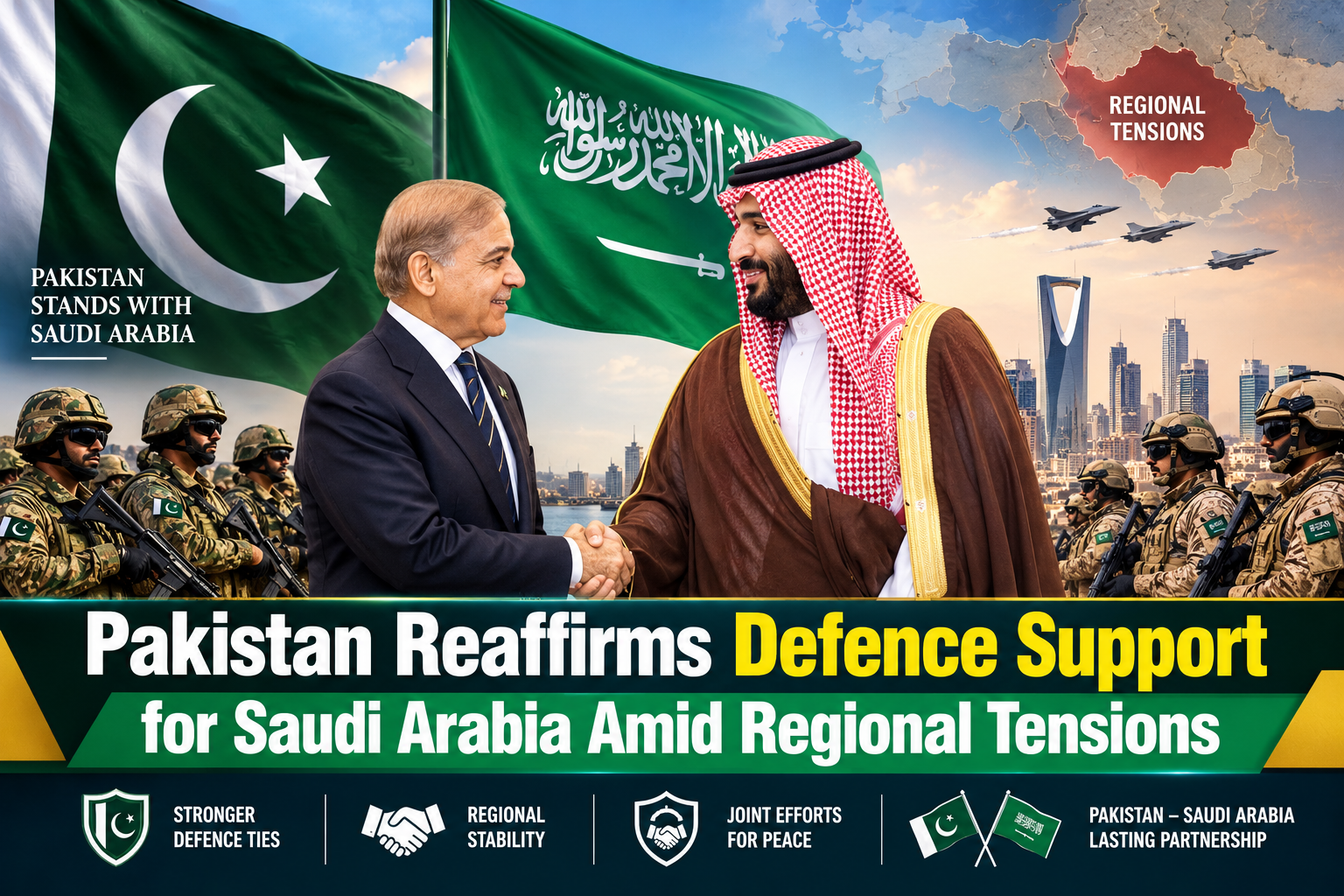
Pakistan has reaffirmed its commitment to supporting Saudi Arabia’s sovereignty, territorial integrity, and security as regional tensions and reported attacks against the kingdom continue to raise concerns across the Middle East. On October 19, 2026, Director General of Inter-Services Public Relations (ISPR) Lieutenant General Ahmed Sharif Chaudhry said Pakistan was providing the support required by Saudi Arabia and would continue to do so.
Speaking in an interview with Independent Arabia, the military spokesperson stressed that Saudi Arabia’s security and the protection of Islam’s two holiest mosques in Makkah and Madinah remained fundamental priorities for Pakistan. He also discussed the Makkah Joint Defence Alliance, describing its purpose as defensive and focused on collective deterrence, peace, and regional stability.
The announcement comes amid reported attacks by Yemen’s Houthi movement against Saudi territory and concerns about the security of airports, civilian populations, and critical infrastructure. Pakistan has condemned attacks against the kingdom and reiterated its support through official statements and defence cooperation.
The development highlights the longstanding relationship between Pakistan and Saudi Arabia, which extends beyond military affairs to include economic assistance, diplomatic coordination, religious connections, and people-to-people ties.
As regional conditions continue to evolve, Pakistan faces the challenge of supporting its longstanding partner while encouraging de-escalation and a peaceful resolution to regional conflicts. The precise nature of any operational decisions remains subject to official announcements and the relevant defence arrangements.
Pakistan Reiterates Its Commitment to Saudi Arabia’s Security
Pakistan’s military leadership has made clear that the country regards Saudi Arabia’s sovereignty and territorial integrity as important regional priorities.
According to the October 19 announcement, Lieutenant General Ahmed Sharif Chaudhry said Pakistan was already providing necessary support to Saudi Arabia and would continue to do so. He also emphasised the importance of protecting the Two Holy Mosques, which hold profound religious significance for Muslims worldwide.
The statement reflects the close relationship between Islamabad and Riyadh. The two countries have maintained diplomatic and military cooperation for decades, with their partnership shaped by shared interests, religious connections, and a history of mutual support.
Pakistan and Saudi Arabia have also strengthened their formal defence relationship through the Strategic Mutual Defence Agreement and the wider Makkah Joint Defence Alliance framework involving Türkiye.
These arrangements are intended to strengthen cooperation and deter threats to participating countries. However, the details of individual operational decisions, including the scope and timing of particular measures, should not be assumed unless confirmed by the relevant authorities.
Pakistan’s latest position sends a diplomatic message that it takes threats to Saudi territory seriously. At the same time, public statements about defence cooperation need to be distinguished from confirmation that a particular military action has been authorised or carried out.
The distinction is important because defence agreements can involve consultations, intelligence coordination, training, readiness measures, and other forms of cooperation. The precise response to a particular incident depends on the circumstances and the provisions of the applicable arrangements.
For both countries, clear communication remains essential as regional security developments continue.
Why Pakistan and Saudi Arabia Have a Close Relationship
Pakistan and Saudi Arabia have maintained close relations since Pakistan became independent in 1947. Over time, their relationship has expanded across diplomacy, defence, economic cooperation, education, labour, and religious affairs.
Saudi Arabia is home to Makkah and Madinah, the two holiest cities in Islam. Millions of Pakistani Muslims travel to the kingdom each year for Hajj and Umrah, creating strong religious and cultural connections between the two societies.
Beyond religious ties, Saudi Arabia has been an important economic partner for Pakistan. Financial assistance, investment discussions, energy cooperation, and trade have all contributed to the bilateral relationship.
Millions of Pakistani nationals have also lived and worked in Saudi Arabia, supporting their families through remittances and contributing to economic activity in both countries.
These connections help explain why developments affecting Saudi Arabia receive significant attention in Pakistan. Security concerns in the kingdom can affect diplomatic priorities, public discussion, and the confidence of Pakistani families with relatives living there.
The relationship also reflects broader regional interests. Both countries have an interest in stability, the safety of civilian populations, reliable trade routes, and cooperation among regional partners.
Nevertheless, close relations do not eliminate the need for careful diplomacy. Pakistan must assess regional developments in light of its own security, economic needs, international obligations, and commitment to peaceful relations.
A sustainable partnership therefore requires regular consultation, clear institutional arrangements, and a shared understanding of how cooperation can contribute to regional stability.
Understanding the Makkah Joint Defence Alliance
The Makkah Joint Defence Alliance has become an important part of recent discussions about cooperation among Pakistan, Saudi Arabia, and Türkiye.
The framework is intended to strengthen collective deterrence and defence coordination. Its stated purpose is defensive, with an emphasis on protecting participating countries, strengthening security cooperation, and supporting regional peace and stability.
According to Pakistan’s military spokesperson, the alliance has developed institutional structures, including a General Secretariat and a Strategic Political and Defence Committee. These arrangements are intended to provide channels for consultation and coordination.
A structured alliance can help participating countries discuss emerging threats, exchange relevant information, coordinate defence planning, and identify areas where cooperation may improve preparedness.
However, an alliance's practical effectiveness depends on more than declarations. It also requires agreed procedures, effective communication, coordination between institutions, and clarity about each member’s responsibilities.
The public should also distinguish between an alliance’s general objectives and the operational decisions taken in response to a particular incident. A public statement reaffirming collective defence does not necessarily mean that every member has authorised a specific response.
Pakistan’s officials have emphasised the defensive character of the Makkah framework. That description is significant because regional security arrangements can influence perceptions among neighbouring countries, particularly when tensions are already high.
For the alliance to contribute to long-term stability, its members will need to balance preparedness with diplomacy. Defence cooperation can help deter attacks, while communication and negotiations can reduce the risk that local incidents develop into a wider regional confrontation.
The alliance’s future significance will depend on how its members implement their commitments, manage disagreements, and maintain communication with other regional and international partners.
Rising Security Concerns in Saudi Arabia
Saudi Arabia has faced growing security concerns following reported attacks attributed to Yemen’s Houthi movement. Recent reports have described threats involving drones and missiles, including attacks affecting critical infrastructure and civilian areas.
Pakistan has publicly condemned attacks against the kingdom and expressed solidarity with Saudi Arabia. Its Foreign Office has also stated that attacks against civilian populations and essential infrastructure are unacceptable and threaten regional peace.
These developments have raised questions about the protection of airports, energy facilities, transport networks, and other important sites.
Critical infrastructure is essential to a country’s daily functioning. Airports support passenger travel and international business, while energy facilities contribute to electricity generation, transportation, industrial production, and government revenue.
Disruptions to such infrastructure can have consequences beyond the immediate location of an incident. They may affect travel schedules, commercial confidence, insurance costs, and perceptions of regional risk.
For residents, security incidents can create uncertainty and concern about personal safety. Governments must therefore communicate accurately about risks, respond to verified threats, and provide reliable information to the public.
At the same time, regional developments should be reported carefully. Responsibility for individual incidents, casualty figures, and claims about military operations must be based on credible information and appropriate attribution.
It is also important to avoid treating all people living in affected areas as participants in a conflict. Civilians, workers, families, and travellers may face consequences despite having no involvement in the hostilities.
Protecting civilian life and maintaining access to essential services should remain central priorities for all parties.
Pakistan’s Military Cooperation With Saudi Arabia
Military cooperation between Pakistan and Saudi Arabia predates the latest defence arrangements. Over several decades, the countries have maintained defence contacts and cooperation in areas such as training and military coordination.
The relationship has evolved as both countries have responded to changing regional conditions. Recent official statements have placed greater emphasis on collective deterrence and the practical implementation of defence commitments.
Pakistan’s military spokesperson has confirmed that the country is providing support to Saudi Arabia but has declined to disclose operational details. Such information may be withheld for security reasons, and unconfirmed reports about specific deployments or missions should not be treated as established facts.
Military cooperation can take several forms. These may include training, professional exchanges, institutional planning, coordination, and other activities agreed upon by the participating governments.
The exact nature of the support provided in a particular situation depends on official decisions and the relevant agreements. It would therefore be inaccurate to assume that a statement about defence cooperation confirms participation in a specific combat operation.
For Pakistan, maintaining a longstanding defence partnership also involves careful consideration of its own national interests. The country must assess regional developments, protect its citizens, manage economic pressures, and preserve diplomatic channels with neighbouring states.
Saudi Arabia, meanwhile, has an interest in maintaining dependable relationships with partners that can contribute to its security and broader regional objectives.
Both countries benefit from clear communication about their commitments, particularly when regional tensions create uncertainty about possible future developments.
The Importance of Diplomatic Coordination
Military preparedness is only one part of a comprehensive response to regional security challenges. Diplomacy is equally important in reducing tensions, preventing misunderstandings, and creating opportunities for negotiations.
Pakistan has repeatedly expressed concern about attacks against Saudi Arabia while also calling for regional peace and stability. Its diplomatic position reflects the challenge of supporting a close partner without allowing regional tensions to expand unnecessarily.
Diplomatic coordination can help governments exchange assessments, communicate their concerns, and explore ways to reduce the risk of further violence.
Regional consultations can also provide opportunities to discuss the protection of civilians, the security of transport routes, and the consequences of attacks on essential infrastructure.
In conflicts involving multiple states and non-state groups, communication is particularly important. Misunderstandings can increase the risk of escalation, while reliable diplomatic channels can help clarify intentions and reduce uncertainty.
International organisations and neutral mediators may also contribute by encouraging dialogue, supporting humanitarian efforts, and promoting compliance with applicable international law.
No single diplomatic initiative can guarantee a peaceful outcome. Progress often requires sustained engagement, compromises, and a willingness among the parties to address the concerns driving the conflict.
Pakistan’s role in the region will depend partly on its ability to combine strong diplomatic relationships with a consistent commitment to stability.
Economic Links Between Pakistan and Saudi Arabia
The relationship between Pakistan and Saudi Arabia is not limited to defence. Economic cooperation remains a central element of their partnership.
Saudi Arabia has provided Pakistan with financial support at different times, including assistance intended to help manage external financing pressures. The countries have also discussed investment, trade, energy cooperation, and opportunities for private-sector partnerships.
Such cooperation can be significant for Pakistan because access to foreign financing and investment affects economic confidence, reserves, and the ability to meet international payment obligations.
However, the effects of economic assistance depend on its structure, timing, and terms. Financial deposits, loans, investment commitments, and completed investment projects are different forms of support and should not be treated as interchangeable.
For Pakistan, long-term economic stability requires more than assistance from a single partner. Sustainable growth also depends on exports, domestic productivity, investment, public finances, and the development of competitive industries.
Saudi investment can potentially support sectors such as energy, agriculture, mining, logistics, and other commercial activities, depending on the projects agreed upon and successfully implemented.
For such investment to produce lasting benefits, projects need clear regulations, transparent procedures, viable business plans, and opportunities for local workers and businesses.
Regional instability can complicate investment decisions because businesses generally prefer predictable conditions. This gives both countries an additional reason to support stability and avoid unnecessary escalation.
Stronger economic cooperation, combined with sound domestic policies, could help Pakistan expand employment opportunities and improve its economic resilience.
The Role of Pakistani Workers in Saudi Arabia
Pakistani workers are an important part of the relationship between the two countries. Many Pakistani nationals work in Saudi Arabia in sectors such as construction, healthcare, engineering, transport, retail, hospitality, and other services.
Their employment supports households in Pakistan through remittances, which can help families pay for food, education, housing, healthcare, and other essential expenses.
Workers also contribute skills and experience to the Saudi economy. Their participation reflects the long-standing social and economic links between the two countries.
Security concerns in the region can understandably create anxiety among overseas workers and their families. People may want reliable information about travel, employment conditions, and any official safety guidance relevant to their locations.
In such circumstances, authorities should communicate verified information clearly and avoid creating unnecessary alarm through speculation.
Pakistani citizens working abroad should be able to access appropriate consular assistance and reliable information from official channels when needed.
Employers also have responsibilities to protect workers, communicate relevant workplace safety measures, and comply with applicable labour requirements.
Maintaining strong bilateral relations can help both governments continue discussions about workers’ welfare, employment opportunities, and the protection of citizens abroad.
The contribution of overseas workers is an important reminder that international relations affect ordinary families, not only governments and institutions.
Protecting the Two Holy Mosques
The protection of Makkah and Madinah holds particular importance in Pakistan’s relationship with Saudi Arabia because of the religious significance of both cities.
Muslims from Pakistan and many other countries travel to the kingdom for Hajj and Umrah. The safety of pilgrims, residents, and visitors is therefore a matter of international concern.
Security arrangements around major religious sites involve coordination among relevant authorities, emergency services, transport providers, and other institutions. Clear public guidance can help pilgrims navigate travel and follow official safety instructions.
For Pakistan, the security of the Two Holy Mosques is both a diplomatic priority and an issue of profound public interest.
However, public discussion about religious sites should remain factual and respectful. Claims about threats, incidents, or changes to pilgrimage arrangements need reliable confirmation.
Protecting religious sites also requires attention to the safety and dignity of people visiting them. Emergency preparedness, accessible information, healthcare services, and efficient crowd management can all contribute to safer pilgrimage experiences.
The emphasis on these responsibilities reflects the broader principle that security measures should protect people and enable religious activities to continue safely.
What the Latest Announcement Means for Regional Stability
Pakistan’s October 19 statement reinforces its defence relationship with Saudi Arabia at a time of heightened regional concern. It also highlights the growing significance of the Makkah Joint Defence Alliance as a framework for cooperation.
The announcement does not, by itself, establish that a new military operation has been launched or that a particular future response has been approved. Any such development would require further official information.
The immediate significance lies in the public reaffirmation of support and the message that Pakistan regards threats to Saudi sovereignty as serious.
For Saudi Arabia, statements of support from established partners can contribute to diplomatic reassurance. For Pakistan, the announcement demonstrates the importance it places on the bilateral relationship.
For the wider region, the consequences will depend on how states and other parties respond to ongoing security developments. Greater coordination may strengthen deterrence, but the management of tensions will also require diplomacy and attention to civilian protection.
A stable regional environment benefits trade, tourism, investment, and ordinary people whose lives can be affected by conflict even when they are far from the front lines.
The coming days may bring further statements from participating governments as they assess developments and clarify the practical implications of their defence arrangements.
Until more information is released, reporting should distinguish between confirmed commitments, official assessments, and speculation about possible future actions.
Conclusion
Pakistan has reaffirmed its commitment to Saudi Arabia’s sovereignty, territorial integrity, and security amid continuing regional tensions. On October 19, 2026, ISPR Director General Lieutenant General Ahmed Sharif Chaudhry said Pakistan was providing the support required by the kingdom and would continue to do so.
The statement highlights the longstanding partnership between Islamabad and Riyadh, which includes defence cooperation, economic assistance, diplomatic engagement, and strong religious and social connections.
The Makkah Joint Defence Alliance involving Pakistan, Saudi Arabia, and Türkiye has emerged as an important framework for collective deterrence and defence coordination. Its practical role will depend on agreed procedures, institutional cooperation, and decisions taken by the participating governments.
At the same time, regional stability requires more than defence commitments. Diplomatic communication, the protection of civilians, reliable public information, and efforts to prevent further escalation remain essential.
For Pakistan and Saudi Arabia, the challenge is to safeguard their national interests while contributing to a safer and more stable region. Continued cooperation, responsible decision-making, and sustained diplomatic engagement will be important as the regional situation develops.
Frequently Asked Questions (FAQs)
1. What did Pakistan announce on October 19, 2026?
Pakistan reaffirmed that it was providing necessary support to Saudi Arabia and would continue supporting the kingdom’s sovereignty, territorial integrity, and security.
2. Who made the statement about Pakistan’s support for Saudi Arabia?
ISPR Director General Lieutenant General Ahmed Sharif Chaudhry made the statement during an interview with Independent Arabia.
3. What is the Makkah Joint Defence Alliance?
It is a defence cooperation framework involving Pakistan, Saudi Arabia, and Türkiye, intended to strengthen collective deterrence and defence coordination.
4. Why are Pakistan and Saudi Arabia close partners?
Their relationship includes longstanding diplomatic and defence cooperation, economic ties, religious connections, and a large Pakistani workforce living and working in Saudi Arabia.
5. How could Pakistan-Saudi cooperation affect regional stability?
Defence coordination may strengthen deterrence, while diplomatic engagement and communication can help reduce tensions and support regional peace.