Introduction
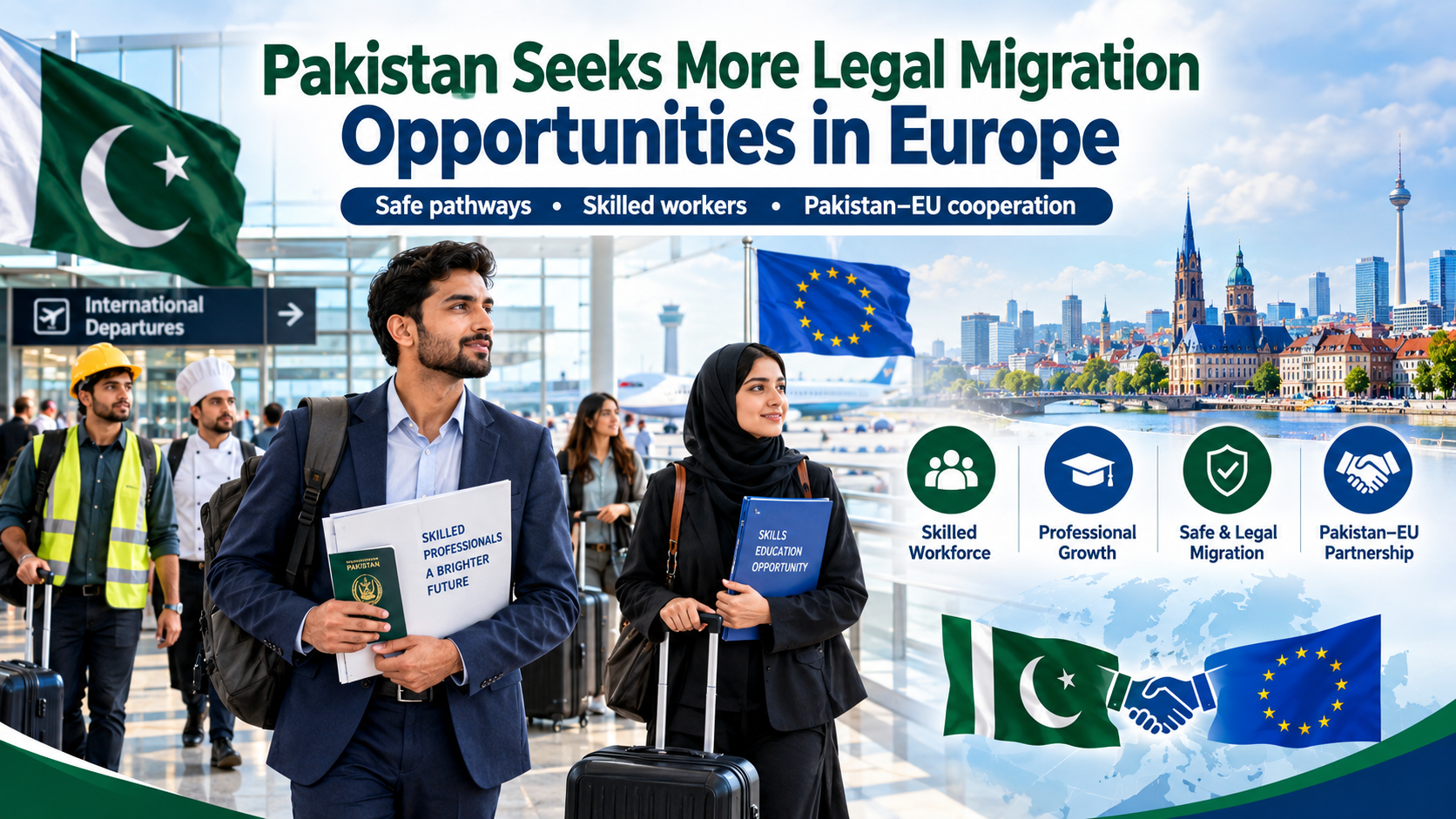
Pakistan is seeking to expand legal migration opportunities for its workers and professionals in European countries, with a focus on safer employment, skills development, and mutually beneficial labour mobility. The issue has gained attention as the government explores ways to improve employment prospects for Pakistanis while strengthening cooperation with European partners.
On October 13, 2026, Prime Minister Shehbaz Sharif emphasised the importance of creating more legal pathways for Pakistani citizens seeking work in Europe. Discussions with European representatives highlighted the potential for cooperation in areas such as skilled employment, professional training, and safe, orderly migration.
For Pakistan, overseas employment is an important part of the economy. Millions of Pakistanis work abroad and send money to their families, supporting household spending, education, healthcare, and local businesses. However, international employment opportunities also raise important questions about worker protection, recruitment costs, professional qualifications, and the risks associated with irregular migration.
Expanding legal pathways could help Pakistani workers access employment through transparent procedures while allowing European employers to recruit people with the skills they need. Achieving these benefits will require practical agreements, reliable information, and stronger support for people preparing to work abroad.
Pakistan and Europe Explore Labour Mobility Opportunities
Pakistan's interest in expanding legal migration reflects the need to connect its workforce with employment opportunities in international markets. European countries have different labour requirements, immigration systems, and professional standards. Cooperation can help identify where Pakistani workers may be suitable for available positions.
The objective is not simply to increase the number of people leaving Pakistan. Instead, a well-managed migration framework should help workers find lawful employment, protect their rights, and ensure that employers receive appropriately qualified candidates.
Legal labour mobility can also strengthen relations between Pakistan and European countries. When workers enter through recognised programmes, governments can establish clearer responsibilities for recruitment, employment conditions, documentation, and worker welfare.
For Pakistan, the challenge is to turn diplomatic discussions into practical opportunities. This could involve identifying occupations with labour shortages, improving vocational training, helping applicants understand immigration requirements, and establishing transparent recruitment procedures.
European countries would also need to communicate their requirements clearly. These may include language proficiency, educational qualifications, professional licences, work experience, and specific employer sponsorship arrangements.
Why Legal Migration Matters for Pakistan
Overseas employment can provide opportunities that may be difficult to find in a worker's local area. People with technical skills, professional qualifications, or specialised experience may be able to access international careers and improve their financial circumstances.
However, the benefits depend heavily on the quality of the employment arrangement. A lawful job with a written contract, clear wages, and appropriate protections is very different from an informal arrangement that leaves a worker uncertain about their rights.
Expanding legal migration opportunities could help Pakistan address several priorities.
First, it could widen access to international employment for qualified workers. Second, it could improve the safety of recruitment by reducing dependence on unverified intermediaries. Third, it could support remittances and household incomes. Fourth, it could create opportunities for Pakistani professionals to gain international experience and develop skills that may later benefit the domestic economy.
The government must also ensure that migration remains a choice rather than a necessity caused by a lack of opportunities at home. A strong economy needs both international employment pathways and productive jobs within Pakistan.
Potential Opportunities for Skilled Pakistani Workers
Pakistan has workers and graduates across many fields, although their qualifications and experience vary. European employment opportunities would depend on individual countries' labour-market needs and immigration rules.
Information Technology and Digital Services
Information technology is one area where skilled Pakistani professionals may find international opportunities. Software development, cybersecurity, cloud computing, data analysis, technical support, and digital systems management are examples of fields in which employers may seek qualified candidates.
Applicants generally need relevant technical knowledge, practical experience, and evidence of their abilities. Depending on the position, language skills and professional communication may also be important.
Pakistan could strengthen its preparation programmes by supporting recognised training, practical projects, and internationally understandable documentation of qualifications. Such steps would help employers evaluate candidates more confidently.
Nevertheless, opportunities should not be presented as guaranteed. Every applicant must meet the requirements of the particular job, employer, and destination country.
Healthcare and Medical Professions
Healthcare is another field in which international recruitment may offer opportunities. Nurses, healthcare technicians, and other qualified professionals may be considered for suitable positions when they satisfy the destination country's requirements.
Medical professions often involve strict licensing and registration procedures. Applicants may need to demonstrate their qualifications, complete language assessments, provide evidence of relevant experience, or undertake additional training.
Pakistan can support interested professionals by providing accurate information about these processes before they invest money in applications or recruitment services.
Clear recognition procedures would benefit both workers and employers. They would help ensure that qualified people can pursue suitable opportunities while maintaining the professional standards required for patient safety.
Engineering and Technical Trades
Engineering, construction-related occupations, manufacturing, electrical work, mechanical maintenance, and other technical trades may provide opportunities where employers require specific skills.
Workers can improve their prospects through practical training, recognised certificates, safety education, and documented experience. Employers need confidence that applicants understand the relevant equipment, workplace procedures, and technical standards.
Vocational institutions in Pakistan could play an important role by aligning training programmes with genuine labour-market requirements. Cooperation with overseas employers and training organisations may help identify skills that need further development.
Hospitality and Service Industries
Some international employment opportunities may also exist in hospitality, food services, tourism, and related occupations. Requirements differ considerably between countries and employers.
Applicants should carefully check whether a position is eligible for the relevant work permit and whether the offered salary and working conditions meet applicable rules.
A job advertisement alone does not establish that a person qualifies for a visa. Workers should verify the employer, contract, and official immigration requirements before making commitments.
The Importance of Safe and Orderly Migration
Legal migration is not only about obtaining permission to travel. It also involves ensuring that workers understand their rights and responsibilities before departure.
People considering overseas employment may face misleading advertisements, unrealistic salary promises, excessive recruitment charges, or requests to hand over important documents. Such situations can expose applicants to financial loss and exploitation.
A safer system should provide reliable information at every stage, from job searches and applications to departure and employment abroad.
Workers should be able to verify whether an employer exists, whether a job offer is genuine, and whether the proposed immigration route allows the intended work. Written contracts should explain wages, working hours, duties, accommodation arrangements where applicable, and the process for resolving disputes.
Government departments and authorised recruitment organisations can help by making verification procedures easier to understand. Public awareness campaigns could also explain common warning signs and direct applicants towards official information.
Safe migration benefits destination countries as well. Employers are more likely to find suitable workers when recruitment is transparent, qualifications are checked properly, and employment conditions are clearly documented.
Reducing the Risks of Irregular Migration
Irregular migration can expose people to serious risks, including financial exploitation, unsafe journeys, detention, removal, and difficulties accessing legal assistance. Individuals may also lose significant amounts of money when promised jobs or travel arrangements turn out to be fraudulent.
These risks underline the importance of making lawful pathways understandable and accessible to eligible applicants.
However, creating additional legal routes does not mean that every applicant will receive permission to work abroad. Immigration systems have eligibility criteria, and applications can be refused when requirements are not met.
The government can help reduce confusion by publishing clear guidance about available programmes, application conditions, costs, processing procedures, and workers' rights.
It can also strengthen cooperation with relevant authorities to investigate fraudulent recruitment practices and provide assistance to affected citizens.
Young people, in particular, need accurate information before making major decisions about their future. They should be encouraged to evaluate opportunities carefully instead of relying on social media claims or promises of guaranteed visas.
How European Countries Could Benefit
Labour mobility can create benefits for both sending and receiving countries when it is planned responsibly.
European employers may require workers in particular occupations, while Pakistan has a large population of people seeking education, training, and employment. Carefully designed programmes could connect suitable candidates with genuine vacancies.
Employers would still need to follow local employment laws, immigration requirements, and professional standards. Recruitment should be based on relevant qualifications and fair selection procedures.
European countries could also benefit from cooperation with Pakistani training institutions. Such cooperation might include vocational education, language preparation, technical certification, and information about workplace expectations.
These arrangements could make recruitment more efficient while helping workers arrive better prepared for their responsibilities.
The long-term value of labour mobility depends on more than filling immediate vacancies. It also requires fair treatment, opportunities for professional development, and effective channels for addressing workplace problems.
Skills Recognition and Professional Qualifications
One of the main challenges in international employment is ensuring that qualifications earned in one country are understood and accepted in another.
A certificate or degree from Pakistan may need to be assessed under the rules of the destination country. Requirements can differ by occupation, institution, employer, and immigration category.
This can create difficulties for applicants who have useful skills but are unfamiliar with foreign recognition procedures.
Pakistan could help by improving access to qualification records, verification services, and guidance about professional registration. Training providers could also explain how their courses relate to recognised occupational standards.
Where appropriate, partnerships between educational institutions and employers could help identify gaps between local training and international workplace expectations.
Applicants should avoid assuming that a qualification automatically permits them to work in a regulated profession abroad. They should confirm recognition and licensing requirements directly through the relevant official bodies.
Language Training and Workplace Preparation
Language ability can have a major influence on a worker's ability to find employment and adapt to a new environment.
The language required depends on the country and occupation. Some jobs may require substantial communication skills, while others may have different requirements. Healthcare and other regulated professions may impose specific language standards.
Pakistan could expand access to affordable language training linked to realistic employment goals. These programmes might cover workplace communication, interviews, safety instructions, and the vocabulary needed for particular occupations.
Preparation should also include information about workplace culture, employment contracts, local laws, and access to support services.
Such training would not guarantee a job or visa, but it could help applicants prepare more effectively and avoid preventable mistakes.
The Role of Recruitment Agencies
Recruitment agencies can connect employers with candidates, but workers need ways to distinguish legitimate services from fraudulent operators.
A trustworthy recruitment process should explain the employer's identity, the nature of the vacancy, the costs involved, and the legal requirements for employment.
Applicants should receive written documentation and enough time to review it. They should be cautious about anyone promising guaranteed visas, demanding unexplained payments, or encouraging them to provide false information.
Authorities can improve public confidence by maintaining accessible information about authorised recruiters and providing channels for complaints.
Enforcement against fraud is also important. When deceptive recruitment practices go unchallenged, workers may lose savings and become less willing to pursue legitimate opportunities.
An effective system should make it easier to verify a job before paying money or making travel arrangements.
Economic Benefits Through Remittances
Money sent home by overseas Pakistanis supports families across the country. Remittances can help households pay for education, healthcare, housing, food, and other essential expenses.
They may also support small businesses and local economic activity when families use part of their income for productive purposes.
Expanding lawful employment opportunities in Europe could contribute to these benefits if workers obtain suitable jobs and receive their wages reliably.
However, remittances should not be treated as a complete solution to Pakistan's economic challenges. The country also needs stronger domestic investment, productive industries, better education, and opportunities for people who wish to remain in Pakistan.
The most beneficial approach would combine responsible overseas employment with policies that improve livelihoods at home.
Financial education could help families plan for changing incomes, manage expenses, and make informed decisions about savings. Workers should also understand the available lawful methods of transferring money and the importance of keeping financial records.
Preventing Brain Drain While Supporting Opportunity
International migration can create a difficult balance for countries that invest in educating and training their citizens.
When skilled professionals move abroad, they may gain valuable experience and earn higher incomes. At the same time, their departure can create staffing challenges in sectors that already face shortages.
Healthcare, education, engineering, and other specialised fields may be affected if too many experienced workers leave without adequate replacements.
Pakistan can respond by improving working conditions, strengthening professional development, and creating more attractive career opportunities at home.
International cooperation can also explore ways to make migration beneficial to both countries. Professionals may contribute through knowledge-sharing, research partnerships, temporary assignments, investment, or eventual return.
The aim should not be to prevent people from pursuing legitimate careers abroad. Instead, policies should ensure that citizens have meaningful choices and that Pakistan continues developing the skills its economy needs.
Protecting Workers After They Arrive
Support should not end when a worker receives a visa or reaches the destination country.
Workers need to understand their employment rights, the conditions of their contracts, and the procedures for seeking assistance if problems arise.
Pre-departure guidance can explain how to retain copies of important documents, contact relevant authorities, and access available consular support.
Employers should provide clear information about wages, duties, working hours, and other employment conditions. Workers should also understand the legal rules governing job changes and residence status in the destination country.
Where agreements between governments establish particular protections or support arrangements, those provisions should be communicated clearly to participants.
Effective monitoring and complaint mechanisms can help identify problems early. They can also build trust in legal migration programmes and discourage exploitative practices.
Opportunities for Young Pakistanis
Young Pakistanis are increasingly interested in careers that offer professional development, financial stability, and international experience. Legal migration may be one option for eligible individuals, but it should be considered alongside local education, employment, and entrepreneurship.
Students and recent graduates can begin preparing by identifying their strengths and researching the requirements of their chosen fields.
For example, a person interested in technology might focus on recognised training, practical projects, and communication skills. Someone pursuing a regulated profession may need to understand licensing and qualification recognition well before applying abroad.
Young applicants should use reliable information and avoid making decisions based only on online success stories. Employment conditions vary, and not every international opportunity offers high wages or long-term residence.
Families and educational institutions can support young people by helping them compare options, understand costs, and identify realistic career plans.
The goal should be informed decision-making rather than pressure to leave the country.
What Pakistan Needs to Do Next
Turning discussions about legal migration into useful results will require sustained planning and coordination.
First, Pakistan needs reliable information about the skills required by potential destination countries. Labour-market assessments can help training institutions prepare people for occupations with genuine demand.
Second, the government should make information about legitimate recruitment and immigration procedures easier to access. Applicants need clear explanations of eligibility, documentation, costs, and timelines.
Third, vocational and professional training should focus on relevant standards, practical experience, and workplace safety.
Fourth, recruitment oversight should protect applicants from fraud and unfair practices. Transparent complaint procedures can help workers report problems and seek assistance.
Fifth, cooperation with European partners should identify practical areas for collaboration, including skills recognition, training, employer engagement, and worker protection.
Finally, domestic employment policies must remain a priority. Pakistan needs an environment in which people can build careers, start businesses, and contribute to economic development without feeling that migration is their only option.
Conclusion
Pakistan's push for expanded legal migration opportunities in Europe highlights the importance of connecting workers with international employment through safe and transparent systems.
The discussions taking place in October 2026 offer an opportunity to strengthen cooperation on skills, recruitment, and worker protection. However, the real value of these efforts will depend on whether they lead to clear procedures and genuine opportunities for eligible Pakistani citizens.
Legal migration can support families, increase international professional experience, and strengthen economic relationships. These benefits are most likely to be sustained when workers receive accurate information, employers follow the law, and recruitment processes remain transparent.
Pakistan should therefore combine international cooperation with investment in education, vocational training, domestic job creation, and the enforcement of recruitment standards.
With careful planning, overseas employment can become a safer and more productive option for Pakistanis while supporting mutually beneficial relationships with European countries.
FAQs
1. Why is Pakistan seeking more legal migration opportunities in Europe?
Pakistan aims to expand access to lawful employment, improve worker protection, support families through overseas earnings, and strengthen cooperation with European countries.
2. Which Pakistani workers may benefit from European employment opportunities?
Depending on each country's requirements, opportunities may be available to qualified professionals, IT specialists, healthcare workers, engineers, and people with relevant technical skills.
3. Does legal migration guarantee a European work visa?
No. Applicants must meet the relevant country's immigration rules, job requirements, and any professional licensing or qualification conditions.
4. How can Pakistani applicants avoid overseas job scams?
They should verify employers and recruitment agencies, check official immigration requirements, review written contracts, and be cautious of guaranteed-visa promises or unexplained payments.
5. How could legal migration benefit Pakistan's economy?
It may support household incomes through remittances, provide workers with international experience, and strengthen economic ties, while domestic job creation remains important.