Introduction
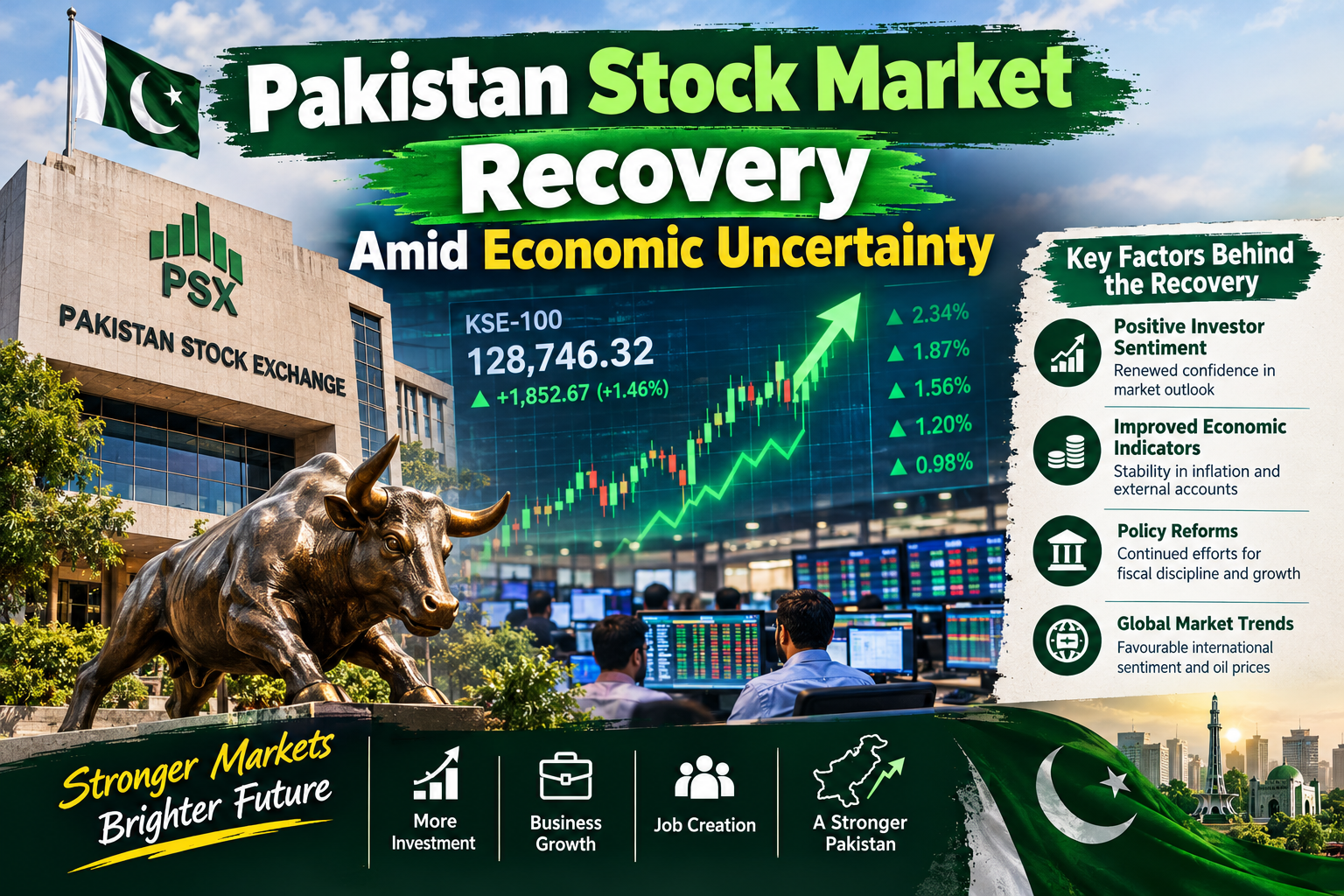
Pakistan's stock market remains an important indicator of investor confidence, business expectations and broader economic conditions. Movements in share prices often reflect a combination of domestic economic developments, government policies, corporate earnings, interest rates and international market trends. As investors assess Pakistan's economic outlook in October 2026, attention remains focused on financial stability, inflation, monetary policy and the performance of listed companies.
Reports concerning a partial recovery in Pakistan's stock market have brought renewed attention to the factors influencing investor sentiment. However, a market recovery should not automatically be interpreted as evidence that all economic challenges have been resolved. Stock prices can rise during periods of uncertainty, just as they can fall even when some economic indicators improve.
For investors, businesses and ordinary citizens, understanding the reasons behind market movements is more useful than focusing exclusively on whether share prices have risen or declined during a particular session.
Pakistan's benchmark stock index, the KSE-100, is widely followed because it represents the performance of selected major companies listed on the Pakistan Stock Exchange. Its movement provides one measure of market sentiment, although it does not represent every company or every part of the national economy.
This article examines the factors that can influence Pakistan's stock market, the importance of investor confidence, the relationship between economic policy and share prices, and the issues market participants should monitor when evaluating future developments.
Note: A precise closing index level, percentage change and trading volume for October 15, 2026, should be verified against the Pakistan Stock Exchange's official daily market data before publication. This article focuses on the broader market context and does not present unverified figures as confirmed results.
Understanding Pakistan's Stock Market
The Pakistan Stock Exchange provides a regulated marketplace where investors can buy and sell shares of listed companies. Businesses use the stock market to raise capital, while investors purchase shares in the hope of earning returns through price appreciation and, where applicable, dividends.
The exchange includes companies from several industries, such as banking, energy, fertiliser, cement, technology, telecommunications and consumer goods.
Each industry responds differently to economic developments. Banks may be influenced by interest rates, lending activity and the quality of their loan portfolios. Cement manufacturers may be affected by construction activity, energy costs and infrastructure spending. Energy companies may respond to fuel prices, government policies, exchange-rate movements and payment arrangements within the energy sector.
Because these industries have different business models, the overall market can move even when individual sectors perform differently.
The KSE-100 Index is among the most closely watched indicators of the local equity market. Investors and analysts use it to follow broad market trends and assess changes in the prices of major listed companies.
Nevertheless, an index increase does not mean that every listed company has gained value. Some shares may rise while others decline, and the performance of individual investments can differ substantially from that of the overall index.
Understanding these differences is essential for anyone following Pakistan's financial markets.
Why Stock Markets Recover After Periods of Uncertainty
Stock markets frequently experience periods of volatility. Prices may decline when investors become concerned about economic conditions, political developments, company earnings or international events. They can subsequently recover when expectations improve or selling pressure decreases.
A recovery can have several possible explanations.
First, investors may believe that earlier concerns were exaggerated or that the market has already reflected much of the negative information. When shares become more attractive relative to expected earnings, some investors may begin buying again.
Second, changes in economic expectations can influence market behaviour. Expectations of lower inflation, improved financial stability or more predictable government policies may support confidence.
Third, corporate results can affect valuations. If companies report stronger earnings or provide encouraging business outlooks, investors may reassess their expectations about future profitability.
Fourth, changes in interest rates can influence the relative attractiveness of shares and other investments.
However, a single positive trading session does not necessarily establish a lasting recovery. Markets may experience short-term gains followed by renewed volatility as investors respond to new information.
For this reason, analysts generally examine market performance over a longer period and consider the underlying reasons for changes in prices.
The Role of the KSE-100 Index
The KSE-100 Index is an important reference point for Pakistan's equity market. Financial analysts, journalists, institutional investors and individual traders regularly follow its movements.
A rising index can indicate that investors are becoming more optimistic about the companies represented in the index. A falling index may reflect concerns about earnings, economic conditions, interest rates or other developments.
However, index movements must be interpreted carefully.
A market can rise because of strong performance by a relatively small group of large companies, even if other shares perform poorly. Similarly, an index decline may be influenced by weakness in particular sectors rather than an economy-wide deterioration.
Investors should also distinguish between nominal index performance and inflation-adjusted returns. If prices rise over time while the purchasing power of money declines, the real economic value of an investment's return may be smaller than its headline percentage gain suggests.
Dividends also matter when assessing total investment performance. A share-price index may not capture all the income received by investors, depending on the methodology used.
Therefore, the KSE-100 is a useful indicator, but it should be considered alongside other market and economic information.
Inflation and Its Influence on Investor Confidence
Inflation is one of the most important economic variables affecting Pakistan's financial markets.
When consumer prices rise rapidly, households have less purchasing power, businesses face higher operating costs and investors may become more cautious about future economic conditions.
Companies can respond to inflation in different ways. Businesses with strong pricing power may pass some cost increases on to customers, while companies operating in highly competitive markets may find this more difficult.
Higher costs for electricity, fuel, transportation, raw materials and wages can reduce profit margins if selling prices cannot be adjusted sufficiently.
Inflation can also influence monetary policy. When inflation remains elevated, central banks may maintain tighter financial conditions or increase interest rates, depending on the broader economic outlook.
Lower inflation can provide relief to households and businesses, but its effect on stock prices depends on other factors as well. Investors need to assess whether falling inflation is accompanied by stable economic activity, sustainable company earnings and manageable financial risks.
Changes in inflation expectations can influence market sentiment before official economic figures fully reflect those expectations.
For this reason, investors closely monitor inflation data and announcements from the State Bank of Pakistan.
Interest Rates and the Stock Market
Interest rates influence investment decisions throughout the economy.
When interest rates are high, deposits and fixed-income instruments may offer more attractive returns relative to equities. Businesses may also face higher borrowing costs, which can reduce investment and increase financing expenses.
Lower interest rates can reduce borrowing costs and make some business projects more financially attractive. They may also encourage investors to reassess the relative appeal of shares compared with other investment options.
However, the relationship between interest rates and stock prices is not automatic.
A reduction in interest rates may support share prices if investors believe inflation is under control and economic activity can improve. If rates decline because economic conditions are deteriorating sharply, investors may remain cautious.
Similarly, higher rates can place pressure on some companies but may benefit certain financial institutions depending on their funding structures, asset quality and lending conditions.
The State Bank of Pakistan's monetary policy decisions therefore remain an important consideration for market participants.
Investors should examine the reasons behind a policy change rather than assuming that every rate cut is positive or every rate increase is negative for the market.
The Impact of the Pakistani Rupee
Exchange-rate movements can affect listed companies in different ways.
A weaker rupee increases the local-currency cost of imported goods, machinery, fuel and certain industrial inputs. Companies that depend heavily on imports may experience pressure on their costs and profit margins.
Businesses with foreign-currency liabilities may also face higher repayment costs when the rupee depreciates, depending on their financial arrangements.
On the other hand, exporters may receive more rupees for foreign-currency earnings, although their benefits depend on imported input costs, pricing arrangements and international demand.
Exchange-rate stability can help businesses plan their budgets and manage financial risks. However, the appropriate exchange-rate level and its broader economic effects depend on several factors, including productivity, trade conditions, capital flows and monetary policy.
Investors therefore examine currency movements alongside corporate earnings and the financial position of individual companies.
A stable exchange rate can improve predictability, but it does not eliminate other risks facing businesses.
Political Developments and Market Sentiment
Political developments can influence the stock market because investors value predictability in government policy and economic management.
Changes in taxation, public spending, regulations, trade arrangements and economic reform programmes can affect company earnings and investor expectations.
When political uncertainty increases, some investors may delay decisions until they have greater clarity about future policies. This can contribute to volatility, although the size and direction of the effect vary.
Conversely, clearer policy communication and progress on economic reforms may improve confidence when investors believe the measures are credible and sustainable.
Political developments should not be assessed in isolation. Markets also respond to international interest rates, commodity prices, company results and domestic economic indicators.
A positive political announcement may have little lasting effect if underlying financial conditions remain weak. Similarly, markets may remain resilient during a difficult political period when corporate earnings and economic expectations are supportive.
Investors should therefore examine how political events affect actual economic conditions rather than reacting solely to headlines.
Corporate Earnings and Business Performance
Listed companies' financial results are among the most important factors influencing share valuations.
Investors generally consider revenue growth, operating costs, profit margins, debt levels, cash flow and management expectations when evaluating a business.
A company may experience rising revenue without achieving stronger profits if expenses increase at an even faster rate. Another company may improve its financial position through better cost management despite modest sales growth.
Banks, cement producers, energy companies and consumer businesses face different economic conditions, so their results should be compared with appropriate industry benchmarks.
Corporate announcements can also influence prices when they differ from market expectations. Results that exceed expectations may support a share price, while disappointing figures can lead to selling pressure.
Investors should examine audited financial statements and relevant disclosures rather than relying entirely on social media commentary or informal market rumours.
A broad stock-market recovery becomes more meaningful when it is supported by sustainable business performance rather than short-term speculation alone.
Foreign Investment and International Financial Conditions
International investors can influence emerging equity markets through portfolio investment, direct investment and other financial flows.
Their decisions may be affected by domestic economic conditions, currency expectations, market liquidity, regulatory arrangements and the availability of attractive opportunities elsewhere.
When global interest rates are high, some investors may prefer assets that offer returns in larger developed markets. When international financial conditions become more favourable to emerging markets, investors may reconsider opportunities in countries such as Pakistan.
However, foreign investment decisions depend on more than interest-rate differences. Investors also consider economic stability, the ability to move capital, governance standards, corporate transparency and long-term growth prospects.
Foreign investment can support market liquidity and improve access to capital, but short-term portfolio flows can also change quickly when expectations shift.
For Pakistan, building investor confidence requires credible economic policies, reliable information, consistent regulations and an environment in which businesses can operate predictably.
The Importance of Market Liquidity
Market liquidity refers to how easily investors can buy or sell securities without causing a substantial change in price.
A liquid market generally allows transactions to take place more efficiently. In a less liquid market, even a relatively small order may produce a larger price movement.
Liquidity can vary across listed companies. Shares of heavily traded businesses may be easier to buy and sell than shares of smaller companies with limited trading activity.
Investors should therefore consider trading volume, bid and ask prices, company disclosures and the characteristics of individual securities.
A rise in the headline index does not necessarily mean that liquidity has improved throughout the market.
Similarly, a strong index performance may conceal substantial differences between heavily traded companies and smaller businesses.
Understanding liquidity is particularly important for investors who may need to sell their holdings within a short period.
The ability to sell a share at a reasonable price should not be assumed simply because it appears inexpensive or has experienced recent gains.
Risks Facing Individual Investors
Stock-market participation can offer opportunities, but it also involves financial risk.
Share prices can decline because of unexpected economic developments, disappointing corporate results, regulatory changes or shifts in investor sentiment. In some cases, losses can be substantial.
Investors should understand the businesses they invest in and assess whether the potential risks are consistent with their financial circumstances and objectives.
Diversification can help reduce dependence on a single company or industry, although it cannot eliminate market risk.
Investors should also be cautious about claims of guaranteed profits, confidential tips and online schemes promising unusually high returns.
A share's low price does not automatically make it a bargain. The company's financial position, earnings outlook, debt and business prospects all matter.
Similarly, a recent rise in a share price does not guarantee that it will continue rising.
Making informed decisions requires reliable information, realistic expectations and an understanding that market returns are uncertain.
What Investors Should Monitor in October 2026
Investors following Pakistan's stock market should monitor several indicators rather than relying on a single day's performance.
These include the latest KSE-100 closing level, trading volume, sector performance and disclosures from listed companies.
Economic indicators are also important. Inflation, monetary policy decisions, foreign-exchange conditions, government borrowing and fiscal developments can influence the environment in which businesses operate.
Corporate earnings announcements provide information about the financial health of listed companies. Investors should examine whether profits are supported by sustainable operations and whether businesses face significant financing or cost pressures.
International developments also matter. Changes in oil prices, global financial conditions and demand in important export markets can affect Pakistani companies.
Finally, investors should distinguish between confirmed data and market speculation. Unverified reports may spread quickly during periods of volatility, but they should not replace official announcements and reliable financial information.
A balanced assessment of these indicators can provide a clearer picture of market conditions.
Conclusion
Pakistan's stock market remains an important part of the country's financial system, connecting businesses seeking capital with investors seeking potential returns.
Reports of a partial recovery during a period of economic uncertainty highlight the need to understand the factors that influence share prices. Inflation, interest rates, currency movements, political developments, corporate earnings and international financial conditions can all affect investor sentiment.
However, a short-term market gain does not necessarily indicate a lasting improvement in the economy. Investors should examine verified trading data, company fundamentals and broader economic indicators before drawing conclusions.
For Pakistan, long-term market confidence depends on credible policies, effective regulation, reliable corporate disclosures and an economic environment that supports sustainable business growth.
The Pakistan Stock Exchange can contribute to economic development by helping companies raise capital and giving investors opportunities to participate in business growth. Achieving these benefits requires transparency, informed decision-making and an appreciation of the risks involved.
As investors assess developments in October 2026, the most useful approach is to focus on verified information and the underlying conditions shaping the market rather than treating every daily movement as a prediction of the future.
Frequently Asked Questions (FAQs)
1. What is the Pakistan Stock Exchange?
The Pakistan Stock Exchange is the country's regulated securities market, where investors trade shares of listed companies and businesses can raise capital.
2. What is the KSE-100 Index?
The KSE-100 is a benchmark index that tracks the performance of selected major companies listed on the Pakistan Stock Exchange.
3. Why does Pakistan's stock market rise or fall?
Market movements can reflect changes in corporate earnings, inflation, interest rates, currency conditions, government policies and international financial markets.
4. Does a stock-market recovery mean Pakistan's economy is improving?
Not necessarily. A market recovery may reflect changing expectations or short-term trading activity. A broader economic assessment also requires examining inflation, employment, investment and other economic indicators.
5. What should investors check before investing in Pakistani shares?
Investors should examine company financial statements, business risks, market conditions, relevant regulations and their own financial objectives. Stock-market returns are not guaranteed.