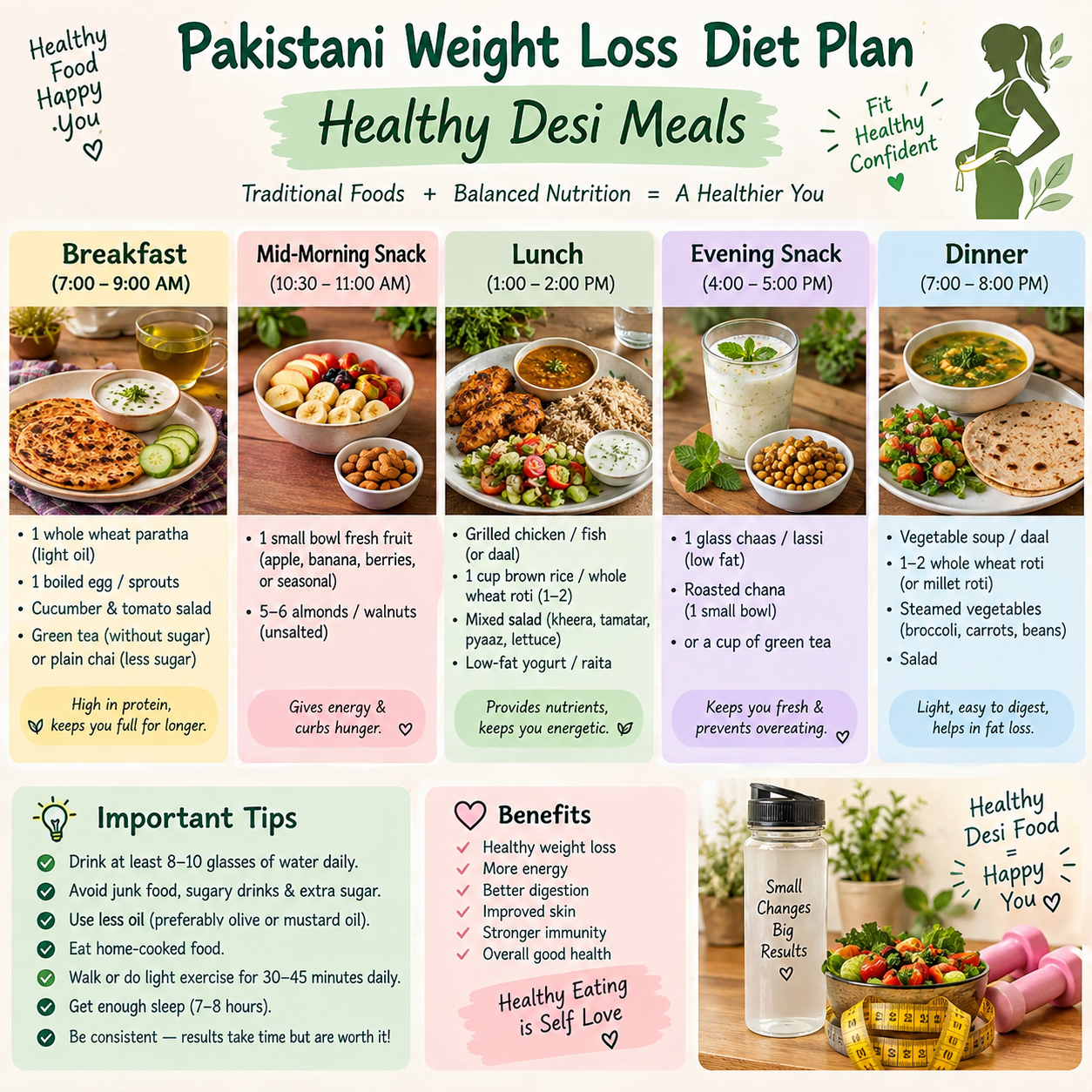
Losing weight does not always mean giving up Pakistani food or eating expensive imported products. A healthy weight-loss routine can be created with simple foods that are already common in Pakistani homes. Roti, daal, sabzi, chicken, yogurt, eggs, fruits, rice and homemade meals can all be part of a balanced diet when portions and cooking methods are managed properly.
A Pakistani weight-loss diet plan should focus on balanced meals, regular eating habits, adequate water, nutritious foods and reasonable portions rather than extreme restrictions. The goal is to develop eating habits that can be continued for a long time.
This guide presents practical Pakistani meal ideas for breakfast, lunch, snacks and dinner. It is designed as general healthy-eating information rather than a medical diet. Individual nutritional needs can vary according to age, activity level and health conditions.
Why Choose a Pakistani Diet for Weight Management?
Many people think that losing weight requires completely changing their traditional diet. In reality, familiar Pakistani foods can fit into a balanced eating pattern.
For example, instead of completely avoiding roti, you can combine a reasonable portion of roti with vegetables, lentils or a protein source. Similarly, rice can be enjoyed with vegetables, beans, chicken or yogurt while keeping portions sensible.
Homemade Pakistani meals can also make it easier to control ingredients such as oil, salt and sugar.
The main idea is not to eliminate one particular food group. It is to create balanced meals and develop healthier everyday habits.
Basic Principles of a Healthy Pakistani Diet Plan
Before creating a daily menu, it is useful to understand a few simple principles.
1. Include Protein in Meals
Protein helps make meals satisfying and supports normal body functions. Common Pakistani protein sources include:
Eggs
Chicken
Fish
Daal
Chickpeas
Beans
Yogurt
Milk
Lean meat
A meal containing vegetables and a protein source can be more balanced than a meal based mainly on refined carbohydrates.
2. Add Vegetables
Vegetables provide important vitamins, minerals and dietary fiber. Pakistani cooking offers many choices, including:
Spinach
Cauliflower
Cabbage
Okra
Bottle gourd
Bitter gourd
Carrots
Peas
Tomatoes
Cucumber
Turnip
Eggplant
Try to include vegetables regularly rather than relying only on bread or rice.
3. Choose Reasonable Portions
Even nutritious foods can contribute a lot of energy when eaten in very large quantities.
Portion control does not mean going hungry. It means learning how much food your body actually needs.
A simple meal can include a sensible serving of roti or rice, plenty of vegetables and a protein source.
4. Be Careful With Added Oil
Traditional Pakistani foods can sometimes contain significant amounts of oil or ghee. Reducing unnecessary oil can make everyday meals lighter without completely changing their taste.
Cooking methods such as grilling, baking, steaming or using moderate amounts of oil can be useful alternatives to frequent deep-frying.
5. Drink Enough Water
Water is an important part of a healthy lifestyle. Instead of depending heavily on sugary drinks, make plain water your regular beverage.
In hot Pakistani weather, staying hydrated becomes especially important.
Pakistani Breakfast Ideas
Breakfast can be simple and nutritious. There is no need for an expensive breakfast to start the day.
Option 1: Egg and Roti
A boiled or lightly cooked egg with a small roti and vegetables can provide protein and carbohydrates.
You can add cucumber or tomato for extra vegetables.
Option 2: Yogurt and Fruit
Plain yogurt with a serving of seasonal fruit can be a convenient breakfast.
Common Pakistani fruits include:
Apple
Guava
Orange
Banana
Papaya
Melon
Pomegranate
Option 3: Daliya
Daliya can be prepared with milk or water and combined with fruit. Avoid adding large amounts of sugar.
Option 4: Chana
Boiled chickpeas with vegetables and a small amount of spices can make a filling breakfast.
Option 5: Homemade Paratha in Moderation
Paratha does not necessarily have to disappear from a Pakistani diet. However, because it can contain more fat than a plain roti, portion size and preparation method matter.
A smaller homemade paratha with yogurt and vegetables can be an occasional breakfast option.
Pakistani Lunch Ideas
Lunch can be based on familiar homemade foods.
Chicken and Roti
Grilled, baked or lightly cooked chicken with vegetables and a reasonable serving of roti can make a balanced lunch.
Try to avoid making fried chicken a daily choice.
Daal and Roti
Daal is an affordable and nutritious Pakistani staple. Combine it with vegetables and a suitable portion of roti.
Different varieties such as masoor, moong and chana daal can add variety to the diet.
Sabzi and Roti
Vegetable dishes such as bhindi, tori, palak, gobhi and lauki can be included regularly.
Adding yogurt or another protein source can make the meal more balanced.
Rice and Daal
Rice can also be part of a healthy eating pattern. A sensible serving of rice with daal, vegetables and salad can make a simple homemade lunch.
The aim is balance rather than completely avoiding rice.
Healthy Pakistani Snack Ideas
Snacks can be useful when you are genuinely hungry between meals.
Instead of frequently choosing biscuits, sweets or fried snacks, consider:
Fresh fruit
Plain yogurt
Roasted chickpeas
A small handful of nuts
Cucumber and tomato
Boiled egg
Homemade fruit serving
Unsweetened milk
Snacks should complement meals rather than becoming continuous eating throughout the day.
Pakistani Dinner Ideas
Dinner can be lighter while still providing enough nourishment.
Grilled Chicken and Salad
Grilled chicken with cucumber, tomato, carrots and other vegetables can be a simple dinner.
Daal and Vegetables
A bowl of daal with cooked vegetables and a reasonable serving of roti can provide a traditional homemade meal.
Fish and Vegetables
Fish can be prepared with moderate oil and served with vegetables or salad.
Chicken and Vegetable Soup
A homemade soup containing chicken and vegetables can be a comforting dinner option, particularly during cooler weather.
Foods to Limit
A healthy diet does not require declaring foods completely forbidden. However, some foods are better consumed less frequently.
These include:
Deep-fried foods
Sugary soft drinks
Excessive sweets
Large amounts of bakery products
Very sugary tea
Frequent fast food
Highly processed snacks
Large portions of fried paratha
Excessively oily curries
Pakistani foods such as samosas, pakoras, jalebi and mithai are culturally important and can be enjoyed occasionally. The key is not to make them the foundation of everyday eating.
What About Chai?
Tea is an important part of Pakistani culture, but sugar can add unnecessary calories when several cups are consumed every day.
If you drink tea regularly, consider gradually reducing the amount of added sugar. Milk tea can still fit into a balanced routine when consumed in reasonable amounts.
A Simple 7-Day Pakistani Meal Example
Day 1
Breakfast: Egg, roti and cucumber
Lunch: Daal, roti and salad
Snack: Guava or apple
Dinner: Chicken with vegetables
Day 2
Breakfast: Plain yogurt with fruit
Lunch: Bhindi, roti and yogurt
Snack: Roasted chickpeas
Dinner: Fish with salad
Day 3
Breakfast: Daliya with milk and fruit
Lunch: Chicken curry with roti and vegetables
Snack: Orange
Dinner: Daal with vegetables
Day 4
Breakfast: Boiled eggs and roti
Lunch: Chana with salad and roti
Snack: Plain yogurt
Dinner: Chicken and vegetable soup
Day 5
Breakfast: Yogurt and seasonal fruit
Lunch: Palak with roti and a protein source
Snack: Small serving of nuts
Dinner: Fish and vegetables
Day 6
Breakfast: Daliya and fruit
Lunch: Homemade chicken pulao with salad and yogurt
Snack: Apple or guava
Dinner: Vegetable and daal combination
Day 7
Breakfast: Egg with roti and vegetables
Lunch: Homemade vegetable curry, daal and roti
Snack: Fruit
Dinner: Grilled chicken with salad
This is an example of how traditional Pakistani foods can be organized into balanced meals. Exact portions should depend on an individual's age, activity level and nutritional requirements.
Healthy Pakistani Drinks
Drinks can make a significant difference to an eating routine.
Good everyday options include:
Water
Unsweetened tea
Milk in reasonable amounts
Homemade lassi with little or no added sugar
Sugary soft drinks and heavily sweetened juices are better kept occasional.
Lassi can be nutritious, but adding large amounts of sugar can significantly change its nutritional profile.
Healthy Cooking Methods for Pakistani Food
The way food is prepared matters as much as the food itself.
Use Moderate Oil
Measure cooking oil rather than pouring large amounts directly into the pan.
Prefer Homemade Food
Homemade meals make it easier to control ingredients and cooking methods.
Add Vegetables
Vegetables can be added to curries, rice, omelets, soups and other dishes.
Avoid Frequent Deep-Frying
Grilling, baking, steaming and light cooking can provide alternatives to deep-frying.
Use Spices for Flavor
Pakistani cuisine has a wide range of spices, including cumin, coriander, turmeric, black pepper and chili. These can add flavor without requiring excessive oil.
Exercise and Healthy Eating
Diet is only one part of a healthy lifestyle. Regular physical activity can also support general health.
Walking, cycling, sports, stretching and other age-appropriate activities can help people stay active.
For teenagers, the focus should be on overall health, strength, energy and proper nutrition rather than aggressive dieting or rapid weight loss. Growing bodies need sufficient food and nutrients.
Common Mistakes in Pakistani Diet Plans
Some people make their diet unnecessarily difficult by following extreme rules.
Skipping Meals
Skipping meals may leave someone very hungry later and can make regular eating harder.
Completely Removing Carbohydrates
Roti and rice are common sources of carbohydrates in Pakistan. They do not automatically make a diet unhealthy. Overall balance and portions matter.
Drinking Too Many Sugary Beverages
Tea with lots of sugar, soft drinks and sweetened beverages can add considerable sugar to the daily diet.
Depending on Expensive Diet Foods
Healthy eating does not require imported cereals, expensive supplements or special products. Daal, vegetables, eggs, yogurt and seasonal fruits can be practical choices.
Expecting Instant Results
Healthy lifestyle changes usually require consistency. A sustainable routine is more useful than extreme short-term restrictions.
How Families Can Follow a Healthy Pakistani Diet
Healthy eating becomes easier when the whole family participates.
Instead of preparing completely separate meals, families can make small changes to regular dishes.
For example, a family can:
Use moderate oil in curry
Add vegetables to meals
Keep salad available
Serve reasonable portions
Choose water more often
Reduce frequent fried snacks
Include daal and beans regularly
Eat seasonal fruits
These small changes can make traditional family meals more balanced.
Final Thoughts
A Pakistani weight-loss diet does not require abandoning traditional food. Healthy eating can be built around familiar ingredients such as daal, vegetables, eggs, chicken, fish, yogurt, fruit, roti and rice.
The most useful approach is to focus on balanced meals, sensible portions, moderate oil, fewer sugary drinks and regular physical activity. Extreme diets and severe food restrictions are not necessary for creating healthier habits.
For teenagers and growing individuals, especially, adequate nutrition is important. Anyone with a medical condition, nutritional deficiency or specific dietary requirement should seek advice from a qualified healthcare professional or registered dietitian before making major dietary changes.
With simple adjustments and consistency, Pakistani home cooking can remain enjoyable while supporting a healthier lifestyle.
FAQs
1. Can Pakistani food be included in a healthy weight-loss diet?
Yes. Foods such as daal, vegetables, eggs, chicken, fish, yogurt, roti and rice can be included in a balanced diet when portions and cooking methods are appropriate.
2. Can I eat roti while following a healthy diet?
Yes. Roti can be part of a balanced meal. The overall meal composition and portion size are important.
3. Is rice allowed in a Pakistani diet plan?
Yes. Rice can be included in reasonable portions alongside vegetables, daal, chicken, fish or yogurt.
4. What are some healthy Pakistani snacks?
Fresh fruit, plain yogurt, roasted chickpeas, boiled eggs, vegetables and a small serving of nuts are examples of nutritious snack choices.
5. Is exercise necessary for a healthy lifestyle?
Regular physical activity supports overall health. Walking, sports, cycling and other suitable activities can be combined with balanced eating habits.