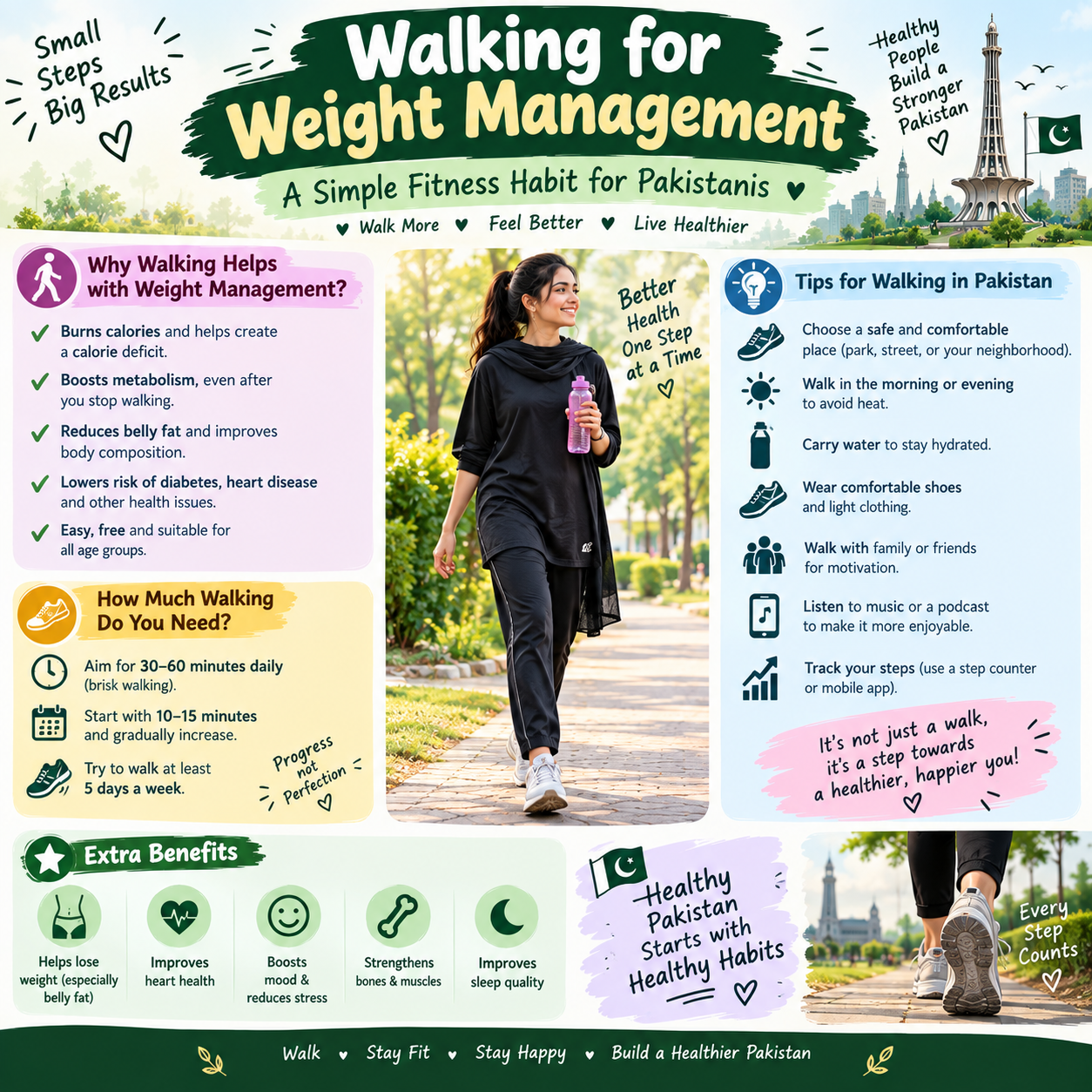
Walking alone is not a guaranteed weight-loss method, and individual results vary. However, when combined with balanced nutrition, adequate sleep, and other healthy habits, regular physical activity can support overall health and healthy weight management.
Why Walking Is a Practical Choice in Pakistan
Many people want to become more physically active but find structured exercise difficult to fit into their schedules. Walking can be easier to incorporate because it can take place in many everyday settings.
People can walk:
In a local park
Around their neighborhood where it is safe
At a suitable sports ground
On a treadmill
In a shopping area
Around their home
During appropriate breaks at work or college
The best location depends on safety, weather, and personal circumstances.
Walking Does Not Need to Be Complicated
Beginners sometimes believe they need a demanding exercise routine to become healthier. In reality, starting with manageable activity can be more practical.
Someone who currently does very little physical activity could begin with short walks and gradually increase duration or frequency according to their ability.
There is no need to compete with another person's routine.
Walking and Healthy Weight Management
Physical activity uses energy, and regular activity can contribute to overall energy balance.
However, food intake, sleep, genetics, age, health conditions, and many other factors can influence body weight.
Therefore, walking should be viewed as one part of a broader healthy lifestyle rather than a quick weight-loss solution.
Start With a Comfortable Routine
People who are new to walking can begin with a comfortable amount of time.
For example, a person might take a short walk several times during the week and gradually build a regular routine.
As fitness improves, they may choose to walk for longer periods or at a faster comfortable pace.
Anyone with health concerns should seek appropriate professional advice before starting a new exercise routine.
Walking in the Morning
Morning walks are popular among many people because the weather can be more comfortable, especially during hot months.
A morning walk can also become a positive way to start the day.
However, morning is not the only suitable time. People should choose a time that fits their schedule and local conditions.
Evening Walks
Evening walking can be convenient for students, employees, and families who are busy during the daytime.
Families can sometimes walk together after work or study hours.
Walking with a family member or friend may also make the activity more enjoyable.
During hot weather, people should choose cooler times and pay attention to hydration and heat safety.
Walking During Study Breaks
Students in Pakistan often spend long hours preparing for exams.
Long periods of sitting can be broken up with short movement breaks.
After studying for a suitable period, students can stand up, walk around, stretch gently, and then return to their studies.
These short breaks can make the daily routine more active without requiring a separate long workout session.
Walking at Work
Office workers may spend much of the day sitting.
Simple movement habits can help increase activity.
For example, workers can:
Walk during suitable breaks
Move around the workplace when appropriate
Use stairs when suitable
Walk while having certain phone conversations
Take short movement breaks
Workplace policies and personal responsibilities should always be considered.
Walking and Pakistani Weather
Pakistan experiences different weather conditions throughout the year. Summers can be extremely hot in many areas, while winters can be cold in some regions.
During very hot weather, outdoor walking may be more comfortable early in the morning or later in the evening.
People should avoid unsafe heat conditions, stay hydrated, and choose an appropriate indoor location when necessary.
During poor air-quality days, people with breathing or other health concerns should follow local health guidance.
Walking in Parks
Many Pakistani cities have parks and public recreational spaces where people can walk.
A safe, clean, and comfortable park can provide a pleasant environment for regular activity.
Walking outdoors can also provide a change from sitting indoors at home, college, or work.
Walking at Home
People who cannot easily go outside can still add movement indoors.
Depending on available space, they can walk around their home or use indoor walking routines.
People can also combine walking with household activities.
The goal is to find safe and realistic ways to remain physically active.
Comfortable Clothing and Footwear
Comfort can make walking more enjoyable.
People should choose clothing suitable for the weather and footwear that feels comfortable and provides appropriate support.
There is no need for expensive sportswear to begin walking.
Make Walking Part of Your Routine
Creating a regular routine can make walking easier to maintain.
For example:
Monday: Evening walk
Tuesday: Short walk during breaks
Wednesday: Evening walk
Thursday: Short movement breaks
Friday: Family walk
Saturday: Longer comfortable walk
Sunday: Rest or light activity
This is only an example. A person's routine should be adapted to their schedule and ability.
Walk With Family and Friends
Social support can make physical activity more enjoyable.
Parents, siblings, friends, or classmates can walk together when the environment is safe.
A walking partner can also provide encouragement and make the activity feel less like a chore.
Combine Walking With Balanced Food
Walking works best as part of an overall healthy lifestyle.
A person who walks regularly can also focus on balanced meals containing foods such as:
Vegetables
Fruits
Daal
Chickpeas
Beans
Eggs
Fish
Chicken
Yogurt
Whole grains
Traditional Pakistani foods can remain part of the diet while paying attention to portions and cooking methods.
Avoid the “All or Nothing” Mindset
Some people stop exercising completely when they miss a day.
Missing one walk does not mean the routine has failed.
If a busy day prevents exercise, simply returning to the routine the next day can be a healthier approach.
Consistency over time is more important than perfection.
Walking for Students
Students can benefit from adding movement to study-heavy schedules.
Instead of sitting continuously for many hours, students can take short movement breaks.
They can also walk to nearby places when practical and safe.
During examination periods, even brief activity breaks can help break up long study sessions.
Walking for Families
Walking can be a family-friendly activity.
Parents and children can spend time together while being physically active.
Families can choose a safe local park or another appropriate environment.
The emphasis should be on enjoying movement rather than turning every walk into a competition.
Walking and Mental Well-Being
Physical activity can also contribute to general well-being. A walk can provide a break from studying, working, or household responsibilities.
Spending some time outdoors, when conditions are suitable, can also provide a change of environment.
However, walking should not be presented as a treatment for mental health conditions. Anyone experiencing significant health concerns should seek appropriate professional support.
Keep Track of Progress Safely
Some people enjoy tracking their walks through a phone or fitness device.
Tracking can show how regularly someone is active.
However, numbers should be used as a helpful guide rather than a reason to become overly focused on exercise.
Health is more than the number of steps taken in a day.
Walking and Other Activities
Walking can be combined with other forms of suitable physical activity.
For example, people might also enjoy:
Cycling
Swimming
Recreational sports
Dancing
Strength exercises
Stretching
The right combination depends on age, health, interests, and physical ability.
Safety Should Come First
Walking should always be performed in a safe environment.
People should consider:
Traffic conditions
Weather
Lighting
Road safety
Suitable footwear
Hydration
Personal health conditions
If someone experiences unusual pain, dizziness, breathing difficulty, or another concerning symptom during exercise, they should stop and seek appropriate medical advice.
Build the Habit Gradually
A person does not need to transform their routine overnight.
A gradual approach might look like this:
Step 1: Begin with short, comfortable walks.
Step 2: Repeat them regularly.
Step 3: Gradually increase activity if comfortable.
Step 4: Add other suitable activities.
Step 5: Maintain a balanced diet and regular sleep routine.
This approach can be easier to maintain than suddenly adopting a demanding exercise schedule.
A Simple Walking Plan
A general beginner-friendly example could be:
Week 1: Short comfortable walks several days a week.
Week 2: Continue regularly and add a little more time if comfortable.
Week 3: Maintain the routine and gradually increase activity according to ability.
Week 4: Continue regular walking and consider adding another enjoyable physical activity.
This is a general example rather than a medical exercise prescription.
Conclusion
Walking is a simple and accessible physical activity that can fit into many Pakistani lifestyles. Students, office workers, parents, and older adults can potentially incorporate walking into their daily routines according to their abilities and circumstances.
It does not require expensive equipment or a gym membership. A safe neighborhood, park, indoor space, or suitable workplace environment may provide opportunities for movement.
For healthy weight management, walking should be combined with balanced nutrition, adequate sleep, hydration, and other healthy lifestyle habits. The goal should be long-term health and consistency rather than rapid results.
FAQs
1. Is walking useful for weight management?
Walking can contribute to physical activity and overall health when combined with balanced nutrition and other healthy habits.
2. Can students include walking in their daily routine?
Yes. Students can take short movement breaks between study sessions or walk at another suitable time.
3. What is the best time to walk in Pakistan?
The suitable time depends on location, weather, and personal schedule. During hot weather, cooler parts of the day may be more comfortable.
4. Do I need expensive equipment for walking?
No. Comfortable clothing and suitable footwear are generally enough to begin.
5. Can families walk together?
Yes. Walking can be an enjoyable family activity when done in a safe and suitable environment.