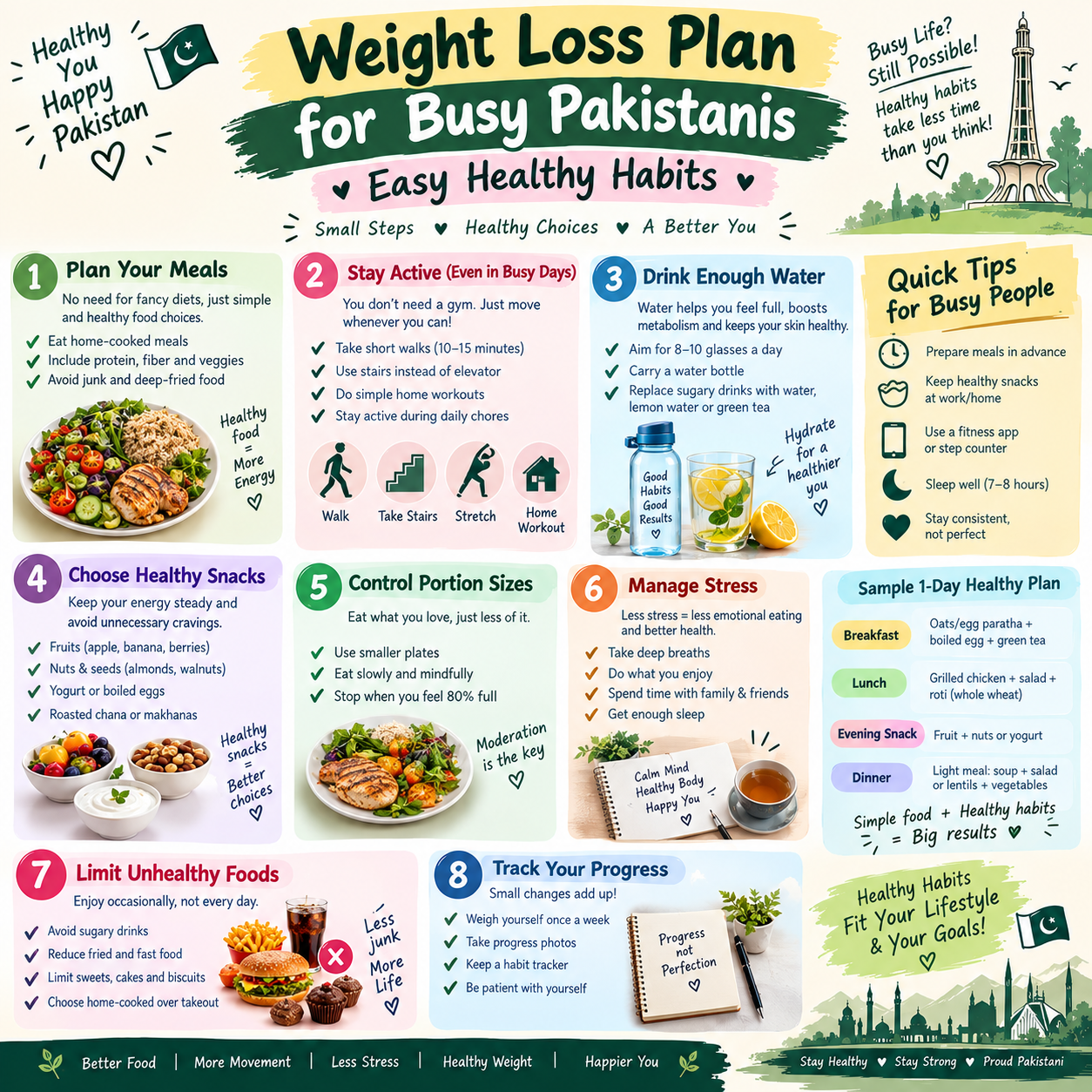
Modern life in Pakistan can be busy. Students spend long hours studying, employees work at offices, business owners manage demanding schedules, and parents handle numerous responsibilities at home. Because of these routines, finding enough time for healthy eating and physical activity can sometimes be challenging.
A healthy weight-management plan does not necessarily require spending hours in a gym or preparing complicated meals every day. Simple choices can be included in a busy Pakistani lifestyle. Planning meals, choosing balanced foods, drinking enough water, walking regularly, getting proper sleep, and reducing unnecessary sugary or highly processed foods can all support a healthier routine.
The goal should be to create habits that are realistic and sustainable rather than following extreme diets.
Why Busy People Struggle With Healthy Habits
Busy schedules can affect eating and activity patterns in several ways. People may skip breakfast, rely on fast food, order takeaway meals frequently, drink sugary beverages, or spend many hours sitting.
Students may remain seated for long periods while studying. Office workers may spend most of their working day at a desk. People working from home may also have limited movement during the day.
These challenges do not mean a healthy lifestyle is impossible. Small adjustments can make a meaningful difference.
Start With Simple Goals
A busy person does not need to change everything at once.
A practical starting point can include:
Drinking more water
Eating regular balanced meals
Adding vegetables to meals
Walking regularly
Reducing sugary drinks
Getting enough sleep
Limiting frequent fried snacks
Once these habits become easier, additional healthy habits can gradually be introduced.
Plan Meals in Advance
Meal planning can save time and reduce the temptation to choose less nutritious options when hungry.
At the beginning of the week, families can think about simple meals they can prepare using commonly available Pakistani foods.
For example:
Daal
Chicken
Vegetables
Rice
Whole-wheat roti
Eggs
Yogurt
Chickpeas
Seasonal fruits
Having basic ingredients available at home can make healthy choices more convenient.
Easy Pakistani Breakfast Ideas
Breakfast does not need to be complicated.
Some quick options include:
Eggs and Roti
An egg with whole-wheat roti and vegetables can provide a simple balanced breakfast.
Yogurt and Fruit
Plain yogurt with seasonal fruit can be prepared quickly.
Oats
Oats can be prepared with milk or yogurt and combined with fruit.
Chickpeas
Boiled chickpeas with vegetables can be a convenient option.
Simple Paratha Breakfast
A moderate portion of paratha can be combined with yogurt, vegetables, or an egg. The amount of oil or ghee used during cooking can be kept reasonable.
Prepare Lunch at Home
People who take lunch to college or work can prepare food in advance.
A simple lunch box could contain:
Roti
Daal or chicken
Vegetables
Salad
Yogurt
Another option could be rice with chicken or beans and vegetables.
Home-prepared meals can also make it easier to know what ingredients and cooking methods are being used.
Healthy Choices When Eating Outside
Busy schedules sometimes make eating outside unavoidable.
When ordering food, people can look for options such as:
Grilled chicken
Grilled fish
Daal
Vegetable dishes
Salad
Yogurt
Roti
It may also help to avoid making sugary drinks and fried foods an everyday choice.
The goal is not perfection but a generally balanced pattern.
Keep Healthy Snacks Available
Hunger between meals can make highly processed snacks more tempting.
Keeping simple options available can make better choices easier.
Examples include:
Apples
Guavas
Oranges
Bananas
Yogurt
Roasted chickpeas
Nuts
Cucumbers
Carrots
Boiled eggs
The appropriate amount depends on individual nutritional needs.
Drink More Water
Busy people sometimes forget to drink enough water.
Keeping a reusable water bottle nearby can be a simple reminder.
Water can also replace some sugary drinks during the day. People living in Pakistan may need additional fluids during hot weather or when physically active.
Reduce Sugary Drinks
Soft drinks, sweetened juices, milkshakes, and heavily sweetened tea can add substantial amounts of sugar.
Instead of completely changing the routine overnight, people can gradually reduce their intake.
For example, someone who drinks several sweetened beverages every day could begin by replacing one with water.
Small changes can become easier to maintain over time.
Walking Can Fit Into a Busy Schedule
Walking is one of the easiest physical activities to incorporate into everyday life.
People can consider:
Walking after meals
Walking during breaks
Taking stairs when appropriate
Walking short distances instead of driving
Taking an evening walk
Walking with family members
The amount and intensity should be suitable for the individual's age and health.
Take Movement Breaks While Studying
Students often spend hours sitting with books or computers.
Short movement breaks can help break up long periods of sitting.
A student can stand up, walk around, stretch gently, or perform another safe activity between study sessions.
This can also make the study routine feel less repetitive.
Office Workers Can Stay Active
Office workers may spend much of the day at a desk.
Simple habits can increase movement during the day:
Stand up regularly
Walk during suitable breaks
Use stairs when appropriate
Walk while talking on the phone when possible
Take short movement breaks
These habits do not replace structured physical activity, but they can help reduce prolonged sitting.
Home Workouts for Busy People
Not everyone has access to a gym.
Simple activities at home can be useful for people who prefer exercising privately or have limited time.
Depending on individual ability, a routine might include:
Walking
Bodyweight exercises
Gentle stretching
Dancing
Stair climbing
Recreational activities
Beginners should start gradually and choose activities appropriate for their fitness level.
Do Not Depend on Extreme Diets
Busy people may be attracted to diets promising very fast results because they seem convenient.
However, extreme food restriction can be difficult to maintain and may not provide adequate nutrition.
A sustainable plan should include a variety of foods and enough nutrients.
People with specific medical or nutritional needs should consult a qualified healthcare professional before making significant dietary changes.
Sleep Is Part of the Plan
A busy lifestyle can sometimes lead to late nights.
Students may stay awake studying, while employees may work late or spend excessive time on phones and computers.
Adequate sleep is important for overall health and can make it easier to maintain a regular daily routine.
Creating a consistent sleep schedule can be a useful lifestyle habit.
Manage Chai and Coffee
Tea is an important part of Pakistani culture, especially in homes, offices, and social gatherings.
The issue may not be tea itself but the amount of sugar and other additions.
People who drink several cups of sweet tea can gradually reduce the amount of added sugar.
Coffee drinks can also contain significant amounts of added sugar depending on how they are prepared.
Make Family Meals Healthier
Family support can make lifestyle changes easier.
Instead of preparing completely separate meals, families can make small adjustments to everyday cooking.
For example:
Add more vegetables
Use appropriate amounts of cooking oil
Keep fruit available
Include daal and beans regularly
Choose grilled or baked options sometimes
Reduce frequent sugary drinks
This allows healthy habits to become part of family life.
Avoid Eating While Distracted
Busy people may eat while working, studying, watching television, or using their phones.
When attention is focused elsewhere, it may become harder to notice how much food has been consumed.
Whenever possible, eating without major distractions can encourage more mindful eating.
Weekend Planning Can Help
Weekends can be a useful time to prepare for the coming week.
Families can:
Wash and prepare vegetables
Cook some foods in advance
Purchase seasonal fruits
Prepare boiled eggs or chickpeas
Plan simple lunches
Keep water bottles ready
This can reduce the pressure of making food decisions when the week becomes busy.
Don't Try to Be Perfect
A healthy lifestyle does not require every meal to be perfect.
There may be days when someone eats biryani at a family gathering, enjoys a dessert, or misses a walk.
One meal does not determine the entire lifestyle.
The important thing is to return to normal balanced habits rather than giving up completely.
Focus on Long-Term Habits
A weight-management plan should be realistic enough to continue for months and years.
Instead of asking, “How can I lose weight as quickly as possible?” it can be more useful to ask, “What healthy habits can I realistically maintain?”
This change in mindset can make healthy living more practical.
A Simple Busy-Day Example
A general daily routine could look like this:
Morning:
Water + eggs and whole-wheat roti.
During work or study:
Regular water intake and short movement breaks.
Lunch:
Daal or chicken + roti/rice + vegetables.
Evening:
Fruit, yogurt, or roasted chickpeas.
Physical activity:
A suitable walk or workout.
Dinner:
Vegetables + protein source + appropriate portion of roti or rice.
Night:
Relaxation and a regular sleep routine.
This is only a general example. Individual nutritional requirements vary.
Healthy Weight Management for Students
Students can face special challenges because of exams, assignments, college schedules, and long study sessions.
Instead of relying on chips, biscuits, sugary drinks, and fast food during study periods, students can keep nutritious snacks nearby.
They can also take short movement breaks and maintain regular sleep whenever possible.
A healthy routine can support general well-being while studying.
Healthy Habits for Working Professionals
Working adults can focus on practical changes rather than complicated plans.
Taking homemade lunch, walking during breaks, keeping water at the desk, reducing sugary drinks, and avoiding unnecessary late-night snacking are examples of manageable habits.
People who work from home can also schedule short activity breaks throughout the day.
Conclusion
A busy Pakistani lifestyle does not have to prevent healthy weight management. Simple habits such as planning meals, choosing balanced Pakistani foods, drinking water, walking regularly, reducing sugary drinks, taking movement breaks, and maintaining a regular sleep schedule can fit into many daily routines.
The most effective approach is one that is realistic and sustainable. There is no need to completely abandon traditional foods or follow extreme diets. Instead, small improvements can gradually become part of everyday life.
For people with specific health conditions, dietary concerns, or special nutritional needs, professional guidance from a qualified healthcare provider can help create an appropriate individual plan.
FAQs
1. Can busy people manage their weight without going to a gym?
Yes. Walking and other suitable physical activities can be incorporated into everyday routines, although individual needs vary.
2. What is an easy Pakistani breakfast for a busy day?
Eggs with whole-wheat roti, yogurt with fruit, oats, or chickpeas can be convenient options.
3. What should I eat at work or college?
A homemade meal containing a suitable portion of roti or rice, protein, vegetables, and yogurt can be a practical choice.
4. Is walking useful for a busy lifestyle?
Walking can be a convenient way to add physical activity to the day, especially during breaks or after meals.
5. Should I follow a very strict diet for quick weight loss?
Extreme diets may be difficult to maintain and may not provide adequate nutrition. A sustainable, balanced approach is generally more practical.