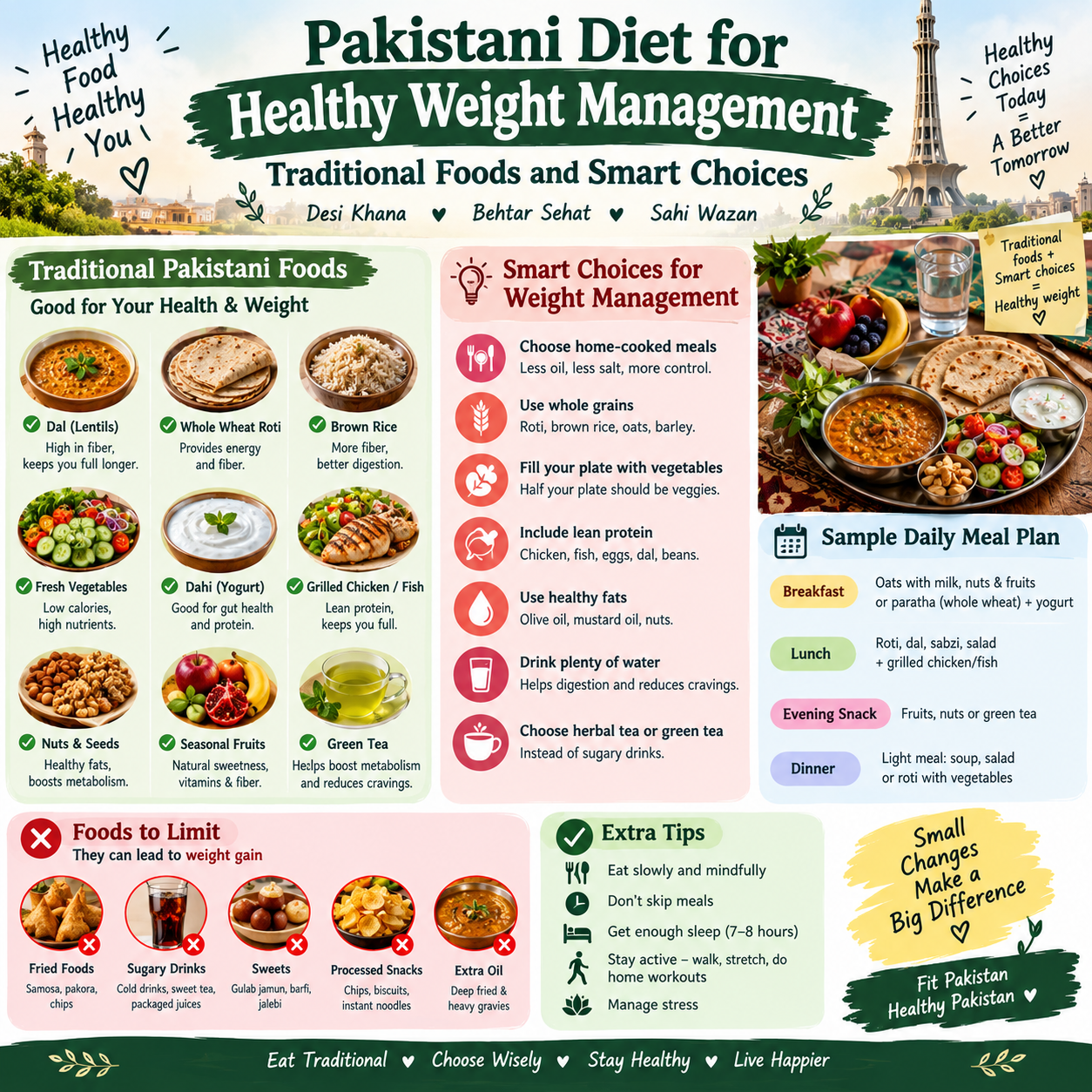
Pakistan is known for its rich food culture. From daal and roti to biryani, chicken karahi, saag, chana, pulao, yogurt, and seasonal fruits, Pakistani cuisine offers many flavorful and nutritious options. Food is also an important part of family life, celebrations, weddings, festivals, and social gatherings.
For people trying to manage their weight, the goal does not have to be giving up traditional Pakistani food. Instead, healthy weight management can involve choosing nutritious ingredients, controlling portions, reducing excessive oil and sugar, and maintaining an active lifestyle.
A balanced Pakistani diet can provide a variety of nutrients while allowing people to enjoy familiar foods.
What Is a Balanced Pakistani Diet?
A balanced diet provides different nutrients from a variety of food groups. A practical Pakistani meal can include a combination of vegetables, protein, whole grains, fruits, dairy products, and healthy fats in suitable amounts.
Common nutritious foods available in Pakistan include:
Daal
Chickpeas
Beans
Vegetables
Eggs
Fish
Chicken
Yogurt
Milk
Whole-wheat roti
Brown rice
Seasonal fruits
Nuts and seeds
The exact amount of food needed varies from person to person.
Roti Can Be Part of a Healthy Diet
Roti is a staple food in many Pakistani households. It does not automatically need to be removed from a healthy eating pattern.
Whole-wheat roti can provide carbohydrates and some dietary fiber. Instead of focusing only on removing roti, people can consider the overall meal.
For example, roti can be paired with:
Daal
Vegetable curry
Grilled chicken
Fish
Beans
Yogurt
Fresh salad
This creates a more balanced meal than eating a large amount of one food alone.
Rice and Weight Management
Rice is another important part of Pakistani cuisine. Biryani, pulao, and plain rice are enjoyed across the country.
People do not necessarily need to eliminate rice. Portion awareness can be more practical.
A meal containing rice can also include vegetables and a protein source such as chicken, fish, beans, or lentils.
Brown rice and other whole grains can also be included where available and suitable, although the overall quality and amount of the diet matter more than focusing on one particular grain.
Daal: A Useful Pakistani Food
Daal is affordable, widely available, and versatile. Lentils provide protein, fiber, vitamins, and minerals.
Different types of daal can be prepared with vegetables and spices to create nutritious meals.
However, the amount of oil or ghee added during cooking can substantially affect the calorie content of a dish. Using an appropriate amount of oil can help maintain balance.
Daal can be served with:
Whole-wheat roti
A moderate portion of rice
Salad
Yogurt
Cooked vegetables
Vegetables Should Have a Regular Place
Vegetables are an important part of a balanced diet because they provide vitamins, minerals, fiber, and other beneficial plant compounds.
Pakistani markets offer a wide range of vegetables throughout the year.
Some options include:
Spinach
Cauliflower
Cabbage
Carrots
Turnips
Peas
Okra
Tomatoes
Cucumbers
Eggplant
Pumpkin
Bitter gourd
Vegetables can be prepared as curries, salads, soups, or simple cooked dishes.
Include Protein in Meals
Protein is an important nutrient that supports many functions in the body.
Pakistani diets already contain many protein-rich foods, including:
Eggs
Chicken
Fish
Daal
Chickpeas
Beans
Yogurt
Milk
Nuts and seeds
Including an appropriate protein source in meals can help create a more balanced eating pattern.
Choose Cooking Methods Carefully
Traditional Pakistani cooking often uses oil or ghee to add flavor. However, using excessive amounts can increase the calorie content of meals.
People can experiment with different cooking methods, such as:
Grilling
Baking
Roasting
Steaming
Boiling
Air frying
This does not mean traditional cooking needs to disappear. Small changes in preparation can make everyday meals more balanced.
Pakistani Breakfast Ideas
Breakfast can be simple and nutritious.
Some options include:
Eggs and Roti
Eggs with whole-wheat roti and vegetables can provide protein, carbohydrates, and other nutrients.
Yogurt and Fruit
Plain yogurt with fresh fruit can be a convenient option.
Chickpeas
Chickpeas combined with vegetables and a suitable portion of roti can make a filling breakfast.
Oats
Oats can be prepared with milk or yogurt and topped with fruit or nuts.
Paratha in Moderation
Paratha can still be part of a varied diet. The amount of oil or ghee used in preparation and the portion size can make a difference.
Make Lunch More Balanced
A Pakistani lunch can easily become balanced with a few simple choices.
For example:
Option 1:
Roti + daal + salad + yogurt
Option 2:
Rice + chicken + vegetables
Option 3:
Roti + vegetable curry + beans + salad
Option 4:
Grilled fish + roti + vegetables
There is no single meal that everyone needs to follow.
Dinner Should Also Be Balanced
Dinner can include familiar Pakistani foods while keeping portions appropriate.
A simple dinner could contain a moderate portion of roti or rice, a protein source, and vegetables.
People who eat very large dinners may find it helpful to pay attention to hunger and fullness signals and avoid eating simply because food is available.
Healthy Pakistani Snacks
Snacks can also contribute to overall dietary balance.
Instead of always choosing highly processed snacks, people can consider:
Fresh fruit
Yogurt
Roasted chickpeas
Unsalted or lightly salted nuts
Cucumber and carrots
Boiled eggs
Homemade popcorn with limited added fat
The best option depends on individual needs and preferences.
Be Careful With Sugary Desserts
Pakistan has a wonderful variety of desserts, including:
Kheer
Gajar ka halwa
Gulab jamun
Jalebi
Barfi
Ras malai
Custard
Sheer khurma
These foods are often connected with celebrations and special occasions.
They do not necessarily need to be completely eliminated. Enjoying smaller portions occasionally can be part of a balanced lifestyle.
Reduce Sugary Beverages
Sweetened drinks can add significant amounts of sugar without providing the same nutritional value as whole foods.
Common examples include:
Soft drinks
Sweetened packaged juices
Sweetened milkshakes
Energy drinks
Very sweet tea
Water can be the main everyday beverage, while unsweetened drinks can also be considered.
Pakistani Tea and Sugar
Tea is an important part of Pakistani social life. Many people drink several cups of chai throughout the day.
The amount of sugar added to tea can become significant when multiple cups are consumed.
People who want to reduce sugar can gradually decrease the amount rather than making an abrupt change.
Milk tea can still fit into an overall balanced eating pattern depending on the ingredients and amounts consumed.
The Importance of Portion Control
Portion control does not mean eating extremely small meals.
It means becoming more aware of how much food is being consumed.
For example, instead of taking a very large serving of biryani, a person might choose a moderate serving and add salad or vegetables.
The same idea can apply to naan, paratha, rice, desserts, and fried foods.
Eating Slowly Can Help
Eating quickly can make it harder to notice fullness.
Taking time to eat and paying attention to hunger and fullness can encourage more mindful eating.
People can try:
Eating without rushing
Chewing food properly
Limiting distractions during meals
Paying attention to hunger
Stopping when comfortably satisfied
These habits can be useful regardless of the specific cuisine.
Traditional Pakistani Foods Can Be Nutritious
Not every traditional Pakistani dish is unhealthy.
Many traditional foods contain nutritious ingredients.
For example:
Daal: Lentils and spices can provide protein and fiber.
Saag: Leafy greens can provide important nutrients.
Chana: Chickpeas provide plant-based protein and fiber.
Grilled fish: Fish can provide protein and beneficial fats.
Raita: Yogurt can contribute protein and calcium.
The preparation method and portion size are important considerations.
Healthy Eating on a Pakistani Budget
Healthy eating does not always have to be expensive.
Some affordable nutritious foods include:
Daal
Chickpeas
Beans
Seasonal vegetables
Seasonal fruits
Eggs
Homemade yogurt
Whole-wheat flour
Buying seasonal produce and preparing meals at home can also help families manage food costs.
Eating at Weddings and Family Gatherings
Pakistani weddings and family events often include large amounts of food.
It can be difficult to follow everyday eating habits at such events.
A practical approach is to enjoy the occasion without feeling pressured to try everything in large quantities.
People can choose the foods they actually want, take reasonable portions, and enjoy the social experience as well.
Ramadan and Healthy Eating
Ramadan changes normal meal schedules. Meals are generally eaten at sehri and iftar, making food choices particularly important.
During iftar, people can focus on hydration and balanced foods rather than consuming very large amounts immediately.
A meal can include vegetables, protein, whole grains, fruit, and other nutritious foods.
People with medical conditions should seek individualized medical advice about fasting.
Don't Skip Meals to Compensate
Skipping meals after eating a large meal is generally not a sustainable strategy.
Instead, people can return to their normal balanced eating routine at the next meal.
Healthy weight management is about the overall pattern rather than trying to compensate for every individual meal.
Combine Food Choices With Physical Activity
Food is only one part of a healthy lifestyle.
Regular physical activity can support overall health. Walking, cycling, sports, recreational activities, and suitable exercises can all contribute to an active lifestyle.
People should choose activities appropriate for their age, health, and fitness level.
Sleep and Healthy Eating
Sleep can also influence daily routines and appetite.
People who regularly stay awake late at night may find themselves eating snacks at times when they are not truly hungry.
Maintaining a regular sleep schedule can therefore support a healthier daily routine.
Avoid Extreme Diet Trends
Social media can make extreme diets appear attractive because they sometimes promise quick results.
People should be cautious about plans involving extreme food restriction, unverified supplements, detox products, or unrealistic weight-loss promises.
A healthy eating pattern should provide adequate nutrition and be sustainable.
Focus on Health Rather Than Appearance
Weight management should not become a reason to criticize someone's body.
People naturally have different body types and nutritional needs.
A healthier approach focuses on energy, nutrition, physical activity, sleep, and overall well-being rather than trying to copy the appearance of celebrities or social media personalities.
A Simple Pakistani Daily Meal Example
A general example of a balanced day could look like this:
Breakfast:
Egg + whole-wheat roti + vegetables
Mid-morning:
Seasonal fruit
Lunch:
Daal or chicken + roti/rice + salad + yogurt
Evening:
Fruit, yogurt, or roasted chickpeas
Dinner:
Vegetables + fish/chicken/daal + suitable portion of roti or rice
This is only a general example. Individual dietary needs vary.
Conclusion
Healthy weight management does not require Pakistanis to abandon their traditional cuisine. Pakistani foods such as daal, roti, vegetables, chickpeas, yogurt, eggs, fish, chicken, rice, and seasonal fruits can all be part of a balanced diet.
The key is to pay attention to portions, choose nutritious ingredients, limit excessive sugar and oil, and maintain regular physical activity.
Rather than following extreme diets, people can make small changes that fit their culture, budget, family routine, and personal preferences. With consistency and a balanced approach, traditional Pakistani food can remain an enjoyable part of a healthy lifestyle.
FAQs
1. Can Pakistani food be included in a healthy diet?
Yes. Traditional foods can be part of a balanced diet when portions and cooking methods are considered.
2. Is roti suitable for healthy weight management?
Whole-wheat roti can be included in a balanced diet. The overall meal and portion size are important.
3. Is rice necessary to avoid for weight management?
Rice does not automatically need to be avoided. A suitable portion can be combined with protein and vegetables.
4. What are some healthy Pakistani snacks?
Fruit, yogurt, roasted chickpeas, nuts, cucumber, carrots, and boiled eggs are some options.
5. Should teenagers follow restrictive diets?
Teenagers are still growing and should not follow restrictive weight-loss diets without guidance from a qualified healthcare professional.