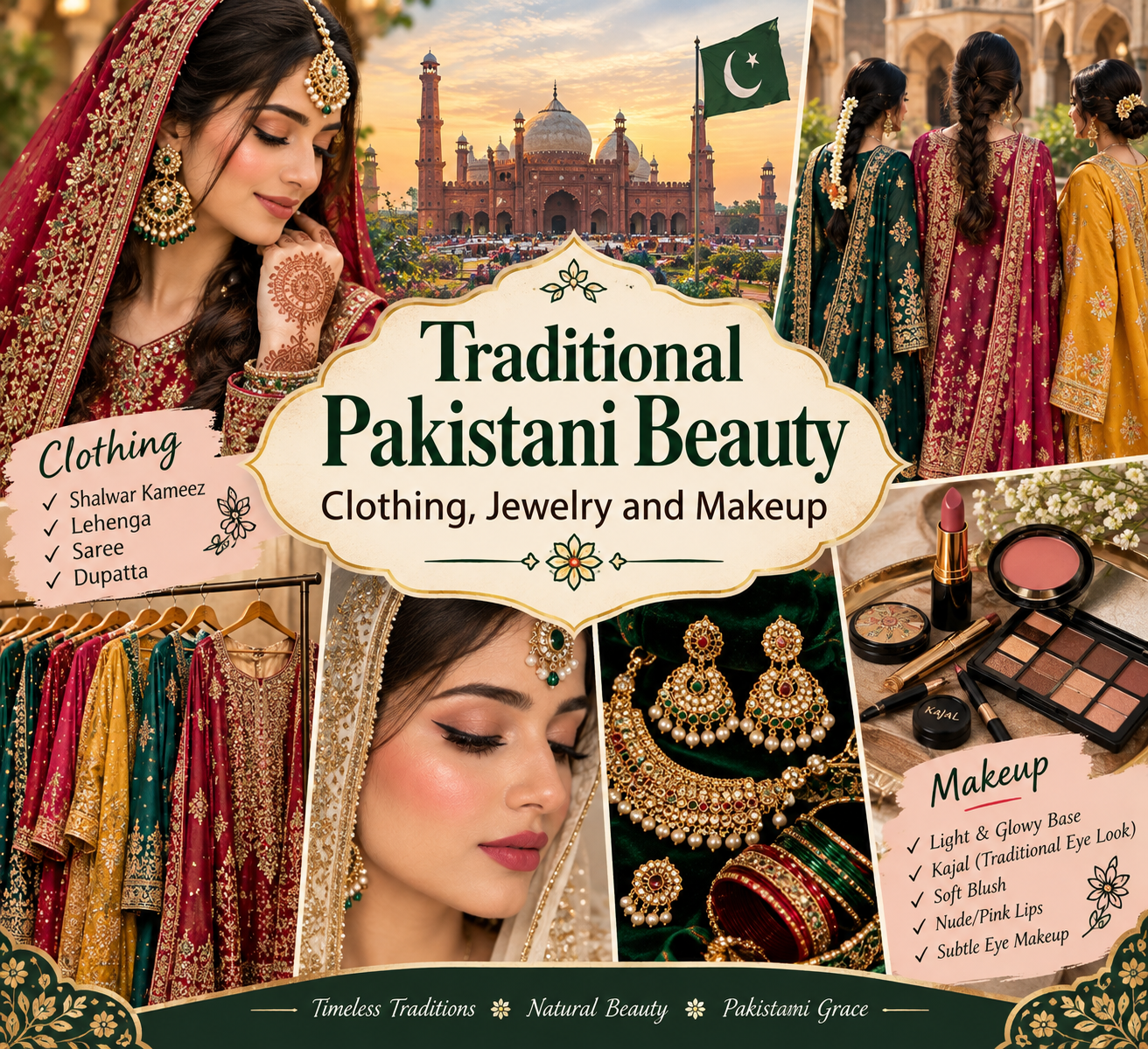
Traditional Pakistani beauty is a beautiful reflection of the country's rich culture, history, craftsmanship, and regional diversity. Pakistan has many different traditions, languages, communities, and cultural practices, and each region contributes something unique to the country's overall beauty and fashion identity.
Traditional beauty in Pakistan is not limited to makeup. It includes clothing, jewelry, hairstyles, embroidery, colors, accessories, and cultural styling. From the graceful shalwar kameez and colorful dupattas to traditional jhumkas, bangles, bridal jewelry, and classic makeup, these elements continue to influence Pakistani fashion.
Although modern beauty trends have become increasingly popular, traditional Pakistani beauty remains important. Many people combine traditional elements with contemporary fashion, creating styles that are both culturally connected and suitable for modern lifestyles.
The Cultural Meaning of Pakistani Beauty
Beauty traditions in Pakistan have developed through generations. Clothing and accessories often communicate cultural identity and are closely connected with important occasions.
Weddings, Eid celebrations, family gatherings, religious occasions, festivals, and cultural events provide opportunities for people to wear traditional clothing and jewelry.
Different regions of Pakistan have developed distinctive forms of embroidery, clothing, jewelry, and decorative arts. These traditions make Pakistani beauty particularly diverse.
Traditional beauty also emphasizes presentation and elegance. A simple outfit can be enhanced with a beautifully styled dupatta, traditional earrings, bangles, or a carefully chosen hairstyle.
Traditional Pakistani Clothing
Clothing is one of the most important parts of traditional Pakistani beauty. The shalwar kameez is perhaps the most recognizable traditional outfit in Pakistan.
The basic combination consists of a kameez, or long shirt, paired with shalwar or trousers. A dupatta is also commonly worn with the outfit.
The design can vary considerably. Everyday suits may be simple and comfortable, while formal outfits can feature detailed embroidery, lace, beads, sequins, threadwork, or other decorative elements.
Traditional clothing can be made from many different fabrics, including cotton, lawn, linen, silk, chiffon, velvet, organza, and other materials.
The Importance of the Dupatta
The dupatta is an important part of traditional Pakistani clothing. It can add color, texture, and elegance to an outfit.
A simple suit can become more decorative when paired with an embroidered or printed dupatta.
Dupattas are available in many styles, including chiffon, silk, cotton, organza, net, and embroidered fabrics.
They can be draped over the shoulders, wrapped around the neck, or styled in different ways according to personal preference and the occasion.
For formal events, heavily decorated dupattas can become one of the main features of an outfit.
Regional Pakistani Clothing
Pakistan's regional diversity can be clearly seen in traditional clothing.
Punjabi Fashion
Punjabi fashion is often associated with colorful clothing, embroidery, traditional jewelry, and lively patterns.
Traditional Punjabi outfits can include shalwar kameez, embroidered shirts, colorful dupattas, and traditional accessories.
Punjabi cultural events often feature bright colors and decorative clothing.
Sindhi Fashion
Sindhi fashion is known for distinctive embroidery, mirror work, ajrak patterns, and regional crafts.
Ajrak is particularly associated with Sindhi cultural heritage and is used in clothing and accessories.
Traditional Sindhi embroidery can feature detailed patterns and vibrant colors.
Balochi Fashion
Balochi clothing is recognized for its detailed embroidery and distinctive designs.
Traditional dresses can feature extensive handwork and decorative elements.
Balochi embroidery is an important example of traditional craftsmanship that has been preserved through generations.
Pashtun Fashion
Pashtun clothing has its own distinctive cultural identity. Traditional dresses, fabrics, embroidery, and accessories vary according to local customs.
The clothing is often designed with cultural traditions and regional climate in mind.
Northern Areas
The northern regions of Pakistan also have distinctive traditional clothing influenced by local communities, weather, geography, and history.
Traditional garments can include warm fabrics, embroidered pieces, caps, shawls, and regional accessories.
Together, these different traditions contribute to the diversity of Pakistani beauty.
Traditional Pakistani Jewelry
Jewelry has always played an important role in Pakistani beauty and fashion.
Traditional jewelry can be worn for weddings, Eid, festivals, family gatherings, and other special occasions.
Common pieces include earrings, necklaces, bangles, rings, bracelets, tikka, jhumkas, and traditional bridal jewelry.
Gold jewelry has cultural significance, especially during weddings and important family events. However, artificial jewelry and fashion accessories are also widely used.
Jhumkas and Pakistani Style
Jhumkas are among the most recognizable traditional earrings in Pakistani fashion.
They are available in many designs, from simple everyday pieces to large decorative earrings suitable for weddings.
Jhumkas can be paired with shalwar kameez, formal dresses, bridal clothing, and even some contemporary outfits.
Their popularity demonstrates how traditional accessories can remain relevant in modern fashion.
Bangles and Traditional Beauty
Bangles are another important part of Pakistani cultural styling.
They can be made from glass, metal, plastic, stone, or other materials and are available in many colors and designs.
Colorful bangles are particularly popular during weddings and Eid.
Bangles can also be matched with the colors of an outfit to create a coordinated appearance.
Tikka and Bridal Jewelry
The tikka is a traditional jewelry piece worn on the forehead and is especially associated with bridal styling.
Bridal jewelry may include a tikka, earrings, necklace, bangles, rings, and other decorative pieces.
Traditional bridal jewelry can complement heavily embroidered clothing and create a complete formal look.
Modern brides may choose traditional jewelry while combining it with contemporary clothing designs.
Traditional Pakistani Makeup
Makeup has been an important part of Pakistani beauty for generations.
Traditional makeup often focuses on the eyes, lips, and overall complexion.
Kajal and eyeliner have long been popular choices. Defined eyes can complement traditional clothing and jewelry.
Lip colors can range from natural shades to deeper reds and maroons depending on the occasion.
For weddings, makeup is usually more detailed and may include carefully blended eye makeup, foundation, blush, and lipstick.
The Role of Kajal
Kajal is a familiar beauty product in South Asian beauty traditions.
It has historically been used to define the eyes and create a distinctive appearance.
Today, eyeliner and other modern eye makeup products are often used alongside or instead of traditional kajal.
The popularity of eye-focused makeup remains strong in Pakistani beauty culture.
Traditional Bridal Makeup
Bridal makeup is one of the most elaborate forms of Pakistani beauty styling.
A Pakistani bride may have several wedding events, and each event can involve a different outfit and beauty look.
Traditional bridal makeup often includes defined eyes, carefully prepared skin, blush, lipstick, and coordinated accessories.
Makeup artists may also create different styles depending on the bride's outfit, jewelry, lighting, and event.
Modern bridal makeup has introduced techniques from international beauty trends, but traditional Pakistani elements remain visible.
Mehndi and Pakistani Beauty
Mehndi is strongly associated with Pakistani weddings and celebrations.
Intricate mehndi designs can be applied to hands and feet for wedding events and other celebrations.
Traditional patterns may include flowers, leaves, geometric shapes, paisleys, and other decorative motifs.
Mehndi is not simply a beauty accessory; it is also part of cultural celebration and wedding traditions.
The mehndi event itself is an important part of many Pakistani weddings.
Traditional Hairstyles
Hairstyles complete the overall appearance of traditional Pakistani clothing.
Braids have a long history in South Asian styling and can be decorated with flowers or accessories.
Buns are also common for formal occasions, especially when wearing heavy jewelry or traditional bridal clothing.
Loose curls and waves are popular modern choices that can also work well with traditional dresses.
For everyday wear, simple ponytails, braids, and buns are practical options.
Flowers in Pakistani Beauty
Flowers can add a traditional and festive element to hairstyles and wedding decorations.
Fresh flowers may be incorporated into buns or worn as part of bridal styling.
Jasmine flowers are especially associated with traditional South Asian celebrations.
Flowers can also be used in jewelry, mehndi events, and wedding decorations, creating a connection between beauty and cultural celebration.
Traditional Colors in Pakistani Fashion
Color is an important part of Pakistani beauty.
Red has traditionally been associated with bridal clothing and wedding celebrations.
Green is also an important cultural color and is commonly seen in festive clothing.
Gold, maroon, pink, orange, blue, yellow, and purple are frequently used in traditional clothing.
Modern fashion has expanded the color palette to include pastel shades such as peach, lavender, mint, ivory, and soft pink.
This combination of traditional and modern colors allows people to create different styles while maintaining cultural influences.
Embroidery as a Beauty Element
Embroidery is one of the most important features of traditional Pakistani clothing.
Different regions have developed their own embroidery techniques and patterns.
Threadwork, mirror work, zari, beads, sequins, and other decorative techniques can be used to create detailed designs.
Hand embroidery is particularly valued because it requires skill, patience, and craftsmanship.
Modern fashion designers continue to use traditional embroidery in contemporary clothing.
Traditional Fabrics
Traditional Pakistani beauty is also closely connected with fabrics.
Cotton and lawn are popular for warm weather because they are lightweight and comfortable.
Khaddar and wool are commonly associated with winter clothing.
Silk, chiffon, velvet, and organza are often used for formal dresses.
Fabric choice can influence how traditional clothing looks and feels.
A simple cotton suit may create a casual appearance, while an embroidered velvet outfit can look suitable for a formal winter event.
Traditional Beauty During Eid
Eid is one of the most important occasions for traditional Pakistani beauty.
People often prepare new clothes, accessories, hairstyles, and makeup for Eid celebrations.
Traditional shalwar kameez remains a popular choice, although modern cuts and designs are also common.
Women and girls may coordinate their clothing with earrings, bangles, shoes, handbags, and other accessories.
Makeup can range from very simple to more polished depending on the occasion.
Traditional Beauty at Pakistani Weddings
Weddings provide the most visible example of traditional Pakistani beauty.
Different wedding events may have different themes and styles.
The mehndi event often features colorful clothing, floral decorations, and mehndi designs.
The baraat or main wedding ceremony may involve more formal bridal clothing and jewelry.
The reception may feature elegant formal dresses and sophisticated makeup.
Guests also participate in the fashion culture by choosing traditional or modern formal outfits.
The Evolution of Traditional Beauty
Traditional Pakistani beauty has not remained exactly the same over time.
Older styles continue to influence modern designs, but new fashion techniques have changed the way traditional clothing and makeup are presented.
For example, a traditional embroidered shirt may now be paired with wide-leg trousers instead of a conventional shalwar.
Similarly, traditional jewelry can be combined with contemporary outfits.
Makeup has also changed. Traditional kajal and bold lips can now be combined with modern techniques such as soft contouring and natural-looking base makeup.
This evolution allows cultural traditions to remain relevant.
Traditional Beauty and Modern Fashion
One of the most interesting developments in Pakistan is the combination of traditional and modern fashion.
A person might wear a contemporary outfit with traditional jhumkas.
Another person might wear a classic shalwar kameez with a modern hairstyle.
Traditional embroidery can be used on contemporary cuts, while western clothing can be styled with Pakistani jewelry.
This fusion allows individuals to express both cultural identity and personal fashion preferences.
The Influence of Social Media
Social media has introduced traditional Pakistani beauty to larger audiences.
Makeup artists share bridal tutorials, hairstylists demonstrate traditional hairstyles, and designers showcase embroidered clothing through digital platforms.
Platforms such as Instagram, TikTok, and YouTube have also allowed regional fashion to become more visible.
People can discover traditional clothing from different parts of Pakistan without traveling to those regions.
Social media has therefore become an important bridge between traditional culture and modern audiences.
Traditional Beauty and Local Artisans
Many traditional fashion techniques depend on skilled artisans.
Embroidery, weaving, jewelry making, block printing, and other crafts require specialized knowledge.
Supporting traditional crafts can help preserve cultural skills and provide economic opportunities for artisans.
Modern fashion brands can also help traditional craftsmanship reach new customers by incorporating handmade techniques into contemporary collections.
Affordable Traditional Beauty
Traditional beauty does not always require expensive clothing or jewelry.
A simple plain suit can be transformed with colorful bangles, traditional earrings, a decorative dupatta, or a carefully styled hairstyle.
Artificial jewelry provides many affordable alternatives to expensive pieces.
Similarly, simple makeup products can create an elegant traditional look without requiring a large collection of cosmetics.
Creativity and styling can often make a greater difference than the price of individual items.
Traditional Beauty for Everyday Life
Traditional beauty can be adapted for everyday life.
A lightweight cotton suit with a simple dupatta can create a comfortable traditional look.
Small earrings, a simple hairstyle, and minimal makeup can complete the appearance.
During hot weather, breathable fabrics are practical, while winter allows warmer traditional clothing.
This balance between culture and comfort makes traditional fashion suitable for daily life.
Preserving Pakistani Beauty Traditions
Preserving traditional beauty does not mean refusing modern fashion.
Instead, traditional clothing, embroidery, jewelry, hairstyles, and crafts can continue to evolve.
Younger generations can learn about regional clothing and crafts while also experimenting with contemporary designs.
Fashion designers, artisans, cultural organizations, schools, families, and digital creators can all contribute to keeping these traditions visible.
The Future of Traditional Pakistani Beauty
Traditional Pakistani beauty is likely to continue changing while maintaining its cultural foundation.
Modern technology and social media will introduce new influences, but traditional clothing, embroidery, jewelry, mehndi, and regional crafts will remain important.
The future may bring even more combinations of traditional and modern styles.
Designers can reinterpret classic techniques through new silhouettes, while makeup artists can combine traditional beauty preferences with contemporary techniques.
This process can keep Pakistani beauty relevant to future generations.
Conclusion
Traditional Pakistani beauty is a reflection of culture, craftsmanship, creativity, and personal expression. Clothing, jewelry, makeup, hairstyles, embroidery, mehndi, and colors all contribute to a beauty tradition that is both diverse and recognizable.
The country's regional cultures make this tradition even richer. Punjabi, Sindhi, Balochi, Pashtun, and northern traditions each contribute unique elements to Pakistani style.
At the same time, modern fashion and social media are creating new ways to present traditional beauty.
The combination of heritage and modern creativity ensures that Pakistani beauty continues to evolve without losing its cultural roots. From a simple shalwar kameez and jhumkas to an elaborate bridal outfit, traditional Pakistani beauty remains an important and enduring part of the country's cultural identity.
FAQs
1. What is traditional Pakistani beauty?
Traditional Pakistani beauty includes cultural clothing, jewelry, makeup, hairstyles, mehndi, embroidery, and accessories influenced by the country's diverse traditions.
2. What traditional clothes are popular in Pakistan?
Shalwar kameez, embroidered dresses, lehengas, ghararas, shararas, and various regional outfits are popular examples of traditional Pakistani clothing.
3. What jewelry is traditionally worn in Pakistan?
Jhumkas, bangles, tikka, necklaces, rings, and traditional bridal jewelry are among the commonly recognized Pakistani jewelry styles.
4. What makeup is traditionally associated with Pakistani beauty?
Kajal, eyeliner, defined eyes, lipstick, and polished skin have traditionally been important elements of Pakistani beauty, particularly for formal occasions.
5. How is traditional Pakistani beauty changing?
Traditional beauty is increasingly being combined with modern clothing cuts, contemporary makeup techniques, new hairstyles, social media trends, and modern accessories.