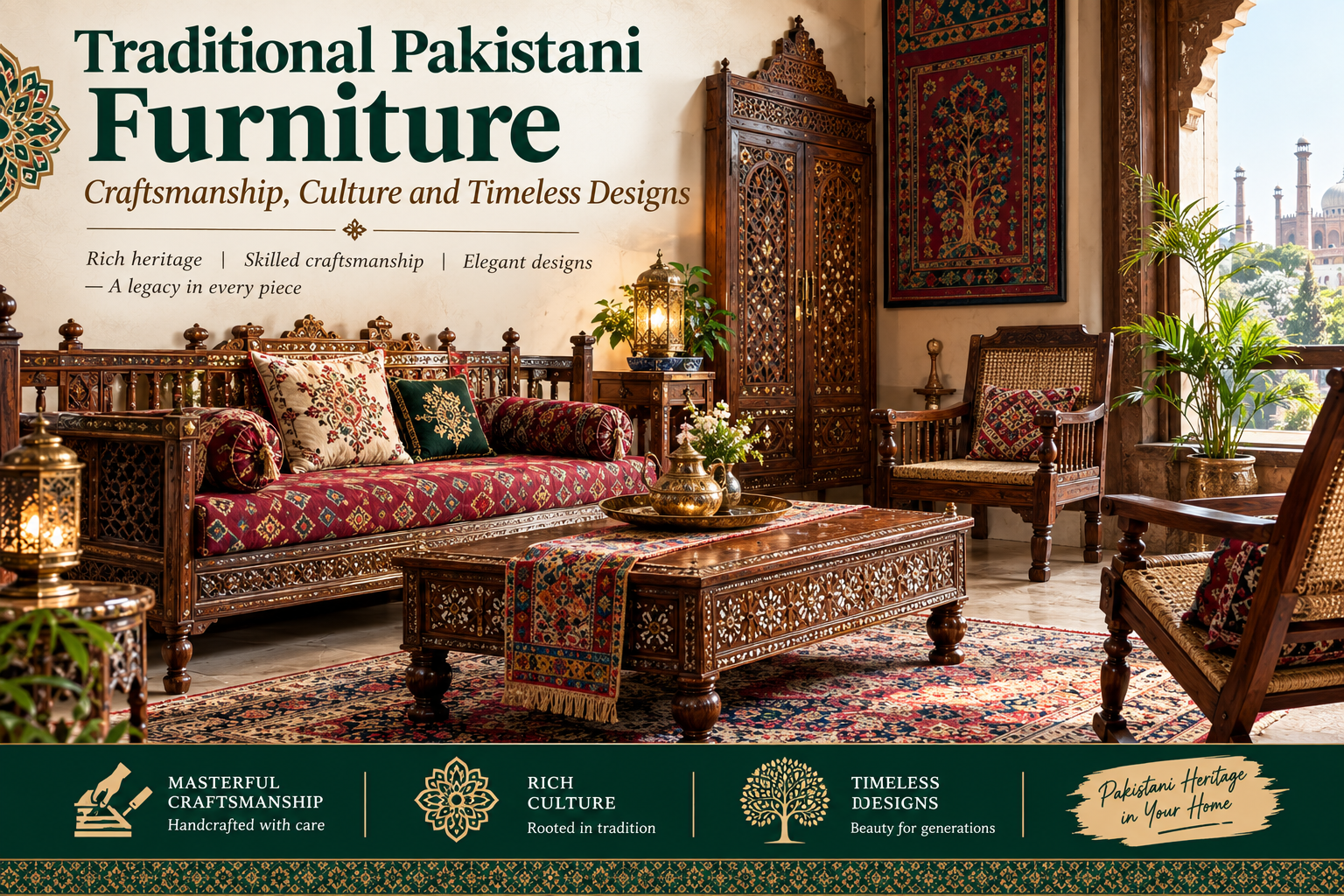
Traditional Pakistani furniture is much more than a collection of household items. It represents craftsmanship, cultural heritage, artistic expression, and the practical lifestyle of generations. From carved wooden beds and traditional charpais to decorative jhoolas, wooden chests, handcrafted chairs, and beautifully designed tables, traditional furniture continues to hold an important place in Pakistani homes.
Pakistan has a rich woodworking tradition. Skilled craftsmen have developed techniques for carving, joining, polishing, weaving, painting, and decorating furniture. Many of these skills have been passed from one generation to another. Although modern furniture has become increasingly popular, traditional designs remain relevant because they bring warmth, character, and cultural identity into interior spaces.
Traditional Pakistani furniture can be found in homes, guest rooms, courtyards, verandas, restaurants, hotels, cultural spaces, and offices. Some pieces are purely functional, while others also serve as decorative elements.
The Cultural Importance of Traditional Furniture
Furniture reflects the way people live. In Pakistan, traditional furniture has developed alongside family customs, regional lifestyles, climate, architecture, and social traditions.
Large wooden tables have historically provided space for family gatherings. Charpais have been used for sitting and resting. Wooden chests have offered storage, while swings and benches have provided comfortable seating in courtyards and verandas.
Traditional furniture therefore has a practical history as well as an artistic one.
Today, these pieces can also provide a connection to Pakistani culture. A carved wooden table or traditional charpai can introduce a familiar cultural element into a modern home.
The Role of Pakistani Craftsmen
Traditional furniture depends heavily on skilled craftsmen. Creating a handcrafted piece can require experience in selecting materials, measuring, cutting, joining, carving, sanding, and finishing.
Wood carving is particularly detailed work. A craftsman may create patterns using specialized tools, transforming a simple wooden surface into a decorative design.
Upholstery and weaving also require specialized skills. Traditional seating may combine wooden structures with woven surfaces, embroidered fabrics, or handmade cushions.
The knowledge of these craftsmen contributes to the continuation of Pakistan's furniture heritage.
Traditional Wooden Furniture
Wood has historically been one of the most important materials used in furniture making.
Wooden furniture can be designed in simple forms or decorated with detailed carving.
Common traditional wooden pieces include:
Beds
Chairs
Tables
Chests
Cabinets
Benches
Jhoolas
Side tables
Storage boxes
Decorative panels
Natural wood grain can add character to each piece. Traditional finishing techniques can further enhance the appearance of the material.
Traditional Pakistani Charpai
The charpai is one of the most recognizable traditional pieces of furniture in South Asian culture.
It generally consists of a wooden frame with a woven surface. Traditionally, charpais have been used for sleeping, resting, sitting, and social gatherings.
Modern interior designers have also found creative ways to incorporate charpais into contemporary spaces. A decorated charpai can be used as a seating piece in a courtyard, veranda, guest room, or cultural-themed interior.
Modern versions may use colorful ropes, fabrics, cushions, or updated wooden frames.
Traditional Wooden Jhoola
A wooden jhoola can bring a distinctive traditional atmosphere to a home.
Jhoolas may be placed in verandas, courtyards, living rooms, terraces, or covered outdoor areas. Traditional versions can feature detailed wood carving and decorative chains or supports.
Modern jhoolas may use simpler wooden designs combined with comfortable cushions.
A jhoola can serve both a practical and decorative purpose. It can provide a relaxing seating area while also becoming a central feature of a room.
Carved Wooden Furniture
Carving is one of the most recognizable features of traditional furniture.
Craftsmen can create floral patterns, geometric designs, borders, and other decorative motifs on wooden surfaces.
Carved designs may be found on:
Bed headboards
Sofa frames
Dining chairs
Tables
Cabinets
Doors
Chests
Mirrors
Decorative wall panels
The level of detail can vary significantly depending on the design and craftsmanship.
Traditional Pakistani Beds
Traditional wooden beds can be an important feature of a classic Pakistani bedroom.
Many designs feature high headboards with decorative carving. Some beds use natural wood finishes, while others are polished or painted.
Modern versions may combine traditional headboard designs with contemporary mattress systems and storage features.
A traditional wooden bed can become a focal point without requiring many additional decorative elements.
Traditional Sofa Sets
Traditional sofa sets often combine wooden frames with upholstered seating.
The wooden structure may include decorative carving, while the cushions can feature fabrics with traditional patterns.
Modern Pakistani homes sometimes combine traditional sofa frames with simpler fabrics to create a balance between classic and contemporary styles.
This approach allows homeowners to enjoy traditional craftsmanship without making the entire room look old-fashioned.
Traditional Wooden Tables
Wooden tables have always been useful in Pakistani homes.
Traditional tables may have carved legs, decorative borders, or patterned surfaces. Some smaller tables are designed for tea serving, while larger tables may be used for dining or family gatherings.
Modern versions can simplify traditional designs by using clean lines while retaining natural wood and selected decorative details.
Wooden Chests and Storage Boxes
Traditional wooden chests have historically provided storage for clothing, blankets, household items, and other belongings.
A wooden chest can still be useful today. It can be placed at the end of a bed, beneath a window, or in a living room.
Modern decorative chests may combine traditional carving with updated finishes and storage arrangements.
Regional Influence on Pakistani Furniture
Pakistan has diverse regional cultures, and furniture styles can reflect this diversity.
Different regions have developed their own approaches to woodworking, weaving, colors, patterns, and decoration.
Punjab
Punjabi furniture traditions often include wooden craftsmanship, colorful woven elements, charpais, stools, benches, and decorative pieces.
Sindh
Sindhi crafts are known for distinctive patterns, colorful decoration, and handmade traditions. Furniture and household items can incorporate regional artistic influences.
Khyber Pakhtunkhwa
Woodworking traditions are also important in Khyber Pakhtunkhwa, where carved wooden elements can be found in furniture and architectural decoration.
Balochistan
Balochi artistic traditions include distinctive embroidery, patterns, and handmade crafts. These cultural elements can influence decorative furniture and interior accessories.
Gilgit-Baltistan
The mountainous regions of Pakistan have their own craft traditions and woodworking practices. Local materials, architecture, and cultural styles can influence furniture design.
The diversity of these regional traditions contributes to the variety of Pakistani furniture.
Traditional Furniture and Pakistani Homes
Traditional furniture can be incorporated into many types of homes.
A large house may have space for a complete traditional furniture set, while a smaller apartment may use only one or two statement pieces.
For example, a modern living room can include a traditional carved coffee table. A contemporary bedroom can feature a wooden chest. A balcony can include a charpai or compact wooden bench.
This approach allows traditional furniture to complement modern lifestyles.
Traditional Furniture in Modern Interior Design
Traditional furniture does not have to be used in a completely traditional room.
Interior designers often combine old and new styles.
A modern sofa can be paired with a carved wooden table. Minimalist walls can provide a simple background for a detailed wooden chair. A modern bedroom can include a traditional wooden chest.
This combination can create a balanced interior where cultural details remain visible without overwhelming the space.
Traditional Furniture Colors
Natural wood colors are common in traditional furniture.
Brown, dark walnut, honey, and other natural shades can create a warm appearance.
Colorful traditional furniture can also feature painted surfaces or bright fabrics.
The choice of color depends on the room, furniture design, lighting, and surrounding décor.
For a modern home, a traditional piece with a natural or neutral finish can be easier to integrate into the existing interior.
Traditional Fabrics and Upholstery
Furniture design is not only about wood. Fabrics also play an important role.
Traditional sofas, chairs, and charpais may use colorful fabrics, embroidered cushions, patterned covers, and woven materials.
These fabrics can introduce cultural patterns into a room.
Modern homeowners can choose simpler fabrics if they want traditional furniture to look more contemporary.
Handmade vs Machine-Made Traditional Furniture
Handmade furniture is often associated with traditional craftsmanship because artisans can create customized details by hand.
Machine-made furniture can reproduce designs more quickly and consistently.
Both approaches can produce useful furniture. The important factors include material quality, construction, workmanship, design, and intended use.
Customers who want highly detailed carving or custom dimensions may prefer working directly with skilled craftsmen.
Advantages of Traditional Pakistani Furniture
Traditional furniture offers several benefits.
Cultural Character
Traditional pieces can add a strong Pakistani identity to a home.
Unique Appearance
Handcrafted pieces may have details that make them visually different from mass-produced furniture.
Craftsmanship
Traditional furniture can showcase the skills of local artisans.
Versatility
Many traditional pieces can be adapted to modern interiors.
Long-Term Use
Well-made wooden furniture can remain useful for many years when properly maintained.
Choosing Traditional Furniture for a Modern Home
When buying traditional furniture, it is useful to consider the room where the piece will be placed.
A heavily carved item may work well as a focal point, while simpler traditional pieces can blend into a room more easily.
Buyers should also consider dimensions. Large traditional furniture can require considerable space.
For small homes, a compact carved chair, side table, chest, or decorative bench may provide cultural character without taking up too much space.
Traditional Furniture for Living Rooms
A traditional living room can include carved sofas, wooden coffee tables, side tables, cabinets, and decorative chairs.
However, furniture should be arranged carefully to preserve comfortable movement.
A large sofa set should not block doors or walkways.
Using one or two traditional statement pieces can also create an attractive look without filling the entire room with heavy furniture.
Traditional Furniture for Bedrooms
A carved wooden bed can become the main feature of a traditional bedroom.
Matching side tables, dressing tables, wardrobes, and chests can complete the style.
For a modern interpretation, homeowners can combine a traditional wooden bed with plain bedding, neutral curtains, and simple lighting.
Traditional Furniture for Outdoor Spaces
Traditional furniture can work particularly well in courtyards, verandas, and terraces.
Charpais, wooden benches, swings, and small tables can create comfortable spaces for family gatherings.
Outdoor furniture should be selected carefully according to the environment. Protection from excessive moisture and direct sunlight can help preserve wooden pieces.
Furniture and Family Heritage
Some traditional furniture pieces remain in families for many years.
An old wooden chest, chair, table, or bed may have sentimental value because it reminds family members of earlier generations.
Instead of replacing such pieces, families can sometimes restore them.
Restoration may include cleaning, repairing joints, refinishing surfaces, replacing damaged fabric, or carefully preserving decorative details.
This can give an old piece renewed usefulness while maintaining its historical character.
Restoring Traditional Furniture
Furniture restoration requires care.
Before restoring an old piece, it is useful to examine its condition and determine whether the structure is still sound.
A skilled carpenter or furniture restorer can assess loose joints, damaged wood, scratches, worn finishes, and other problems.
The goal should be to improve the furniture while preserving its original character where possible.
Caring for Traditional Wooden Furniture
Traditional wooden furniture should be maintained carefully.
Dust should be removed regularly with a suitable soft cloth.
Liquids should not be allowed to remain on wooden surfaces.
Furniture should be protected from unnecessary exposure to strong sunlight and excessive moisture.
Loose joints should be repaired promptly.
Carved surfaces may require gentle cleaning because dust can collect inside detailed patterns.
Following appropriate care instructions for the specific finish is important.
Supporting Local Furniture Craftsmen
Local furniture craftsmen contribute to the preservation of traditional skills.
Buying handmade furniture can provide opportunities for artisans to continue practicing traditional techniques.
Customers can also support craftsmen by choosing customized pieces, asking about their methods, and appreciating the time required for detailed work.
Preserving these skills is important because traditional craftsmanship can become difficult to maintain if fewer people learn the techniques.
Traditional Furniture and Sustainable Use
Long-lasting furniture can reduce the need for frequent replacement.
Repairing and restoring old furniture can also extend the useful life of existing materials.
Instead of discarding a damaged wooden chair or table immediately, owners can explore whether it can be repaired or refinished.
This approach can be practical as well as environmentally conscious.
Traditional Furniture for Restaurants and Hotels
Traditional Pakistani furniture is not limited to private homes.
Restaurants, hotels, guesthouses, cultural centers, and event venues sometimes use traditional furniture to create a distinctive atmosphere.
A traditional jhoola, carved chair, wooden table, or charpai can contribute to a culturally inspired interior.
Such furniture can help create spaces that reflect Pakistani heritage.
Traditional Furniture for Gifts
Small traditional furniture and decorative wooden pieces can also be suitable as gifts.
Examples include:
Small wooden stools
Decorative chests
Carved trays
Wooden side tables
Handmade chairs
Traditional storage boxes
The usefulness of such gifts can make them meaningful additions to a home.
The Future of Traditional Pakistani Furniture
Traditional furniture is continuing to evolve.
Modern customers may want traditional craftsmanship combined with contemporary dimensions, lighter colors, multifunctional storage, and simpler designs.
This creates opportunities for craftsmen to adapt their skills while preserving important techniques.
For example, traditional carving can be incorporated into a modern TV unit, bedroom headboard, coffee table, or wall shelf.
Such combinations can keep traditional Pakistani furniture relevant for new generations.
Why Traditional Furniture Remains Timeless
Trends change, but cultural craftsmanship can remain meaningful.
Traditional Pakistani furniture has survived changing interior styles because it offers something beyond fashion. It carries artistic details, practical history, and cultural identity.
A modern home can change its curtains, paint, and decorations over time, while a well-made traditional wooden piece can continue to serve as a familiar and attractive feature.
Conclusion
Traditional Pakistani furniture is an important part of the country's cultural and artistic heritage. From charpais and wooden jhoolas to carved beds, chairs, tables, chests, and cabinets, these pieces combine practical use with craftsmanship.
Regional traditions have added variety to Pakistani furniture, while skilled artisans continue to preserve woodworking, carving, weaving, and finishing techniques.
Traditional furniture can also fit comfortably into modern homes. A carefully selected carved table, wooden chest, traditional chair, or jhoola can add cultural character without requiring an entirely traditional interior.
With proper care, repair, and thoughtful use, traditional furniture can remain useful for many years. Most importantly, it provides a connection between Pakistan's rich craftsmanship traditions and the changing needs of modern households.
FAQs
1. What is traditional Pakistani furniture?
Traditional Pakistani furniture includes handcrafted pieces such as carved wooden beds, charpais, jhoolas, chairs, tables, chests, cabinets, and traditional seating.
2. Why is traditional furniture important in Pakistan?
It reflects Pakistani craftsmanship, cultural traditions, regional artistic styles, and the practical lifestyle of earlier generations.
3. What is a traditional Pakistani charpai?
A charpai is a traditional bed or seating structure generally made with a wooden frame and a woven surface.
4. Can traditional Pakistani furniture be used in modern homes?
Yes. Traditional pieces can be combined with modern sofas, neutral colors, contemporary lighting, and minimalist décor.
5. How can traditional wooden furniture be maintained?
Regular dusting, protection from excessive moisture and direct sunlight, prompt repair of loose joints, and suitable cleaning methods can help preserve traditional wooden furniture.