Introduction
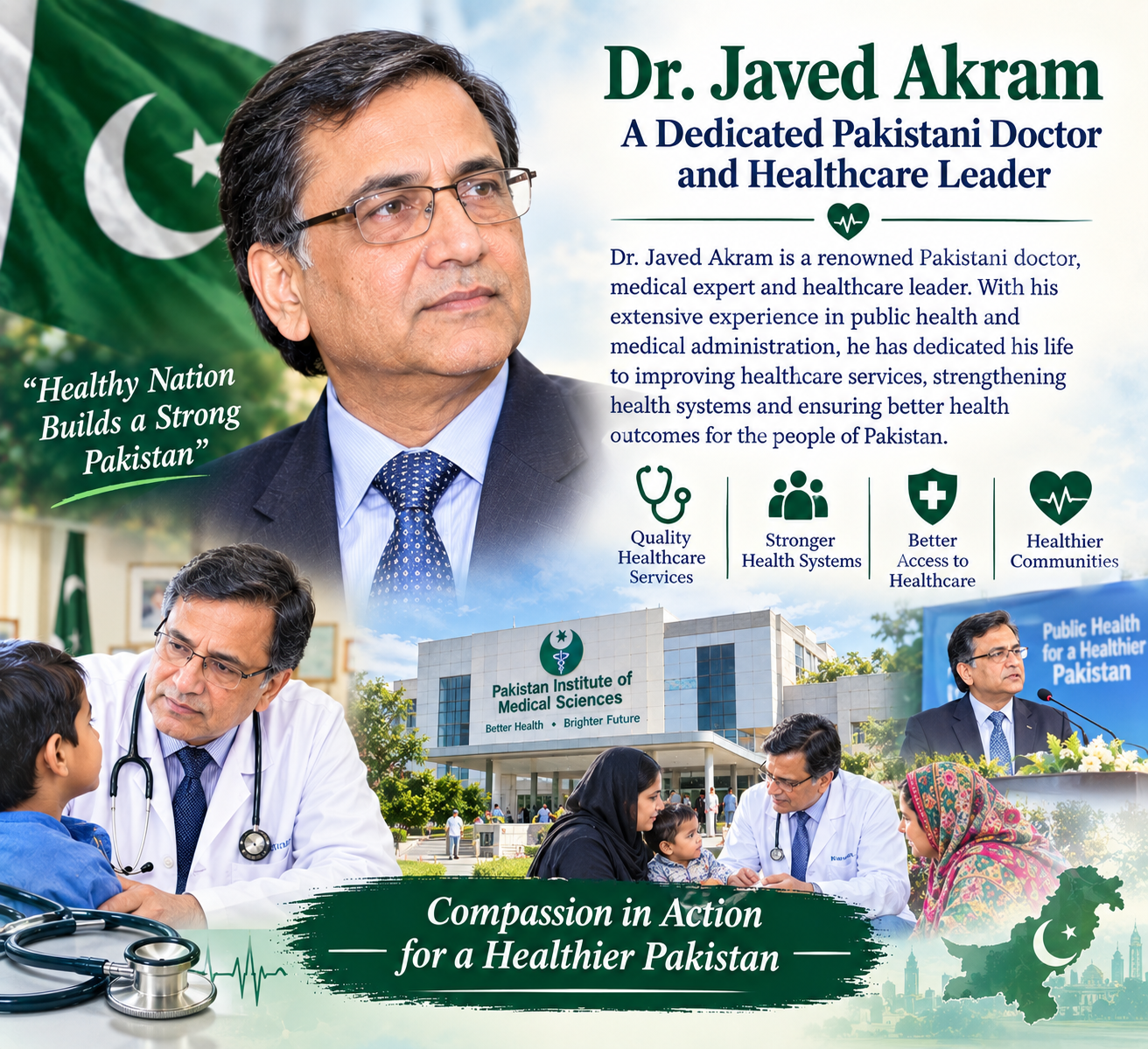
Pakistan has many talented doctors who have worked for the improvement of healthcare and medical education. Among these professionals, Dr. Javed Akram is recognized for his work as a physician, teacher, academic, and healthcare leader. His career represents the connection between medical treatment, education, research, and public service.
A doctor does much more than treat patients. Doctors also educate future medical professionals, conduct research, improve hospital systems, and help communities understand health problems. Dr. Javed Akram's professional life reflects these different responsibilities.
Healthcare in Pakistan faces many challenges. There are large numbers of patients, limited resources in some areas, increasing healthcare costs, and a need for more trained medical professionals. Doctors and academic leaders can play an important role in finding solutions to these problems. Dr. Javed Akram has spent a significant part of his professional life working in medicine and education.
His journey is also meaningful for students who want to enter the medical profession. It shows that becoming a successful doctor requires continuous learning and dedication. Medical knowledge continues to change, so doctors must keep improving their skills throughout their careers.
Early Life and Education
Education plays a central role in the life of every medical professional. Becoming a doctor requires years of study, training, examinations, and practical experience. Like other medical professionals, Dr. Javed Akram built his professional career through medical education and continued learning.
Medical education is not limited to books. A medical student must learn how the human body works, understand diseases, develop clinical skills, and learn how to communicate with patients. Practical training in hospitals is also an important part of becoming a doctor.
A strong educational foundation helps doctors make better decisions. It also prepares them to deal with difficult medical situations. Dr. Javed Akram's academic career demonstrates the importance of combining medical knowledge with teaching and research.
A Career in Medicine
Medicine is a profession based on responsibility and service. Doctors meet people during some of the most difficult moments of their lives. Patients expect doctors to listen carefully, understand their problems, and provide appropriate treatment.
As a physician, Dr. Javed Akram has been associated with clinical medicine as well as medical education. His professional experience has allowed him to understand healthcare from different perspectives.
A doctor who works in both clinical and academic environments has the opportunity to learn from patients while also teaching medical students. This creates a valuable connection between practical medicine and education.
Medical professionals must also understand that every patient is different. Two people may have similar symptoms but require different approaches. This is why proper diagnosis, medical history, examination, and professional judgment are important.
Importance of Medical Education
One of the important areas of Dr. Javed Akram's professional work is medical education. Pakistan needs well-trained doctors, nurses, pharmacists, researchers, and other healthcare professionals.
Medical teachers have a special responsibility because they prepare the next generation of doctors. Their teaching can influence how future doctors communicate with patients, make decisions, and understand professional ethics.
Good medical education should combine theory and practical experience. Students need to understand scientific concepts, but they also need opportunities to apply their knowledge.
A good medical teacher encourages students to ask questions. Medicine is a field where learning never really ends. New medicines, technologies, diseases, and treatment methods continue to develop.
For this reason, medical students should develop the habit of reading, researching, and learning throughout their careers.
Leadership in Healthcare
Healthcare leadership is different from ordinary leadership. A healthcare leader has to think about patients, doctors, nurses, hospitals, medical education, research, and public needs.
Dr. Javed Akram has contributed to healthcare leadership and academic administration. Such responsibilities require planning, communication, teamwork, and decision-making.
Hospitals and medical institutions are complex organizations. Thousands of patients may depend on them, while large teams of healthcare workers must work together. Effective leadership helps institutions provide better services.
A healthcare leader must also understand the challenges faced by doctors and patients. When leadership is connected with real healthcare experience, decisions can become more practical and patient-focused.
Patient Care
The main purpose of medicine is to improve human health. Patient care is therefore one of the most important responsibilities of any doctor.
Good patient care includes accurate diagnosis, appropriate treatment, communication, and respect. Patients often feel worried when they visit a hospital. A doctor who listens carefully can help patients feel more comfortable.
Doctors also need to explain medical information in language that patients can understand. Complicated medical terms can sometimes confuse people. Clear communication helps patients understand their condition and follow medical advice correctly.
Respect is another important part of healthcare. Every patient deserves dignity regardless of their social or financial background.
Research and Medical Knowledge
Research is an important part of modern medicine. Medical knowledge changes as scientists and doctors discover new information.
Research helps healthcare professionals understand diseases, identify risk factors, evaluate treatments, and improve patient care. Without research, medicine would not progress.
Academic doctors can contribute to research by studying medical problems and encouraging students to become involved in scientific work.
Pakistan has a growing need for medical research. Local research can help the country understand its own health challenges. Diseases and healthcare needs can vary from one population to another, so research conducted in Pakistan can provide valuable information.
Medical research also teaches students how to examine evidence instead of accepting every claim without question.
Public Health and Pakistan
Healthcare is not only about hospitals. Public health focuses on preventing disease and improving the health of entire communities.
Pakistan faces many public health challenges, including infectious diseases, chronic illnesses, maternal and child health issues, and unequal access to healthcare.
Doctors can contribute to public health by educating communities and supporting prevention.
For example, people can reduce some health risks through healthy habits, vaccination where appropriate, regular medical checkups, clean water, sanitation, and awareness.
Public health programs also require cooperation between doctors, government institutions, schools, communities, and other organizations.
The Role of Doctors in Society
Doctors have an important position in society because people trust them with their health. This trust comes with responsibility.
A professional doctor should maintain ethical standards and respect patient confidentiality. Doctors should also continue learning and should avoid giving patients false information.
The role of a doctor extends beyond the hospital. Doctors can educate people about health issues and encourage communities to seek appropriate medical care.
They can also help reduce misinformation. In the modern world, people receive health information from social media and the internet. Some information may be inaccurate or misleading.
Healthcare professionals can help people understand why reliable medical sources are important.
Medical Students and Young Doctors
Medical students often face a difficult academic journey. Medical education requires patience and consistent effort.
Students may sometimes feel overwhelmed by the amount of information they have to learn. However, medicine is a long-term profession, and students should focus on understanding concepts instead of simply memorizing everything.
The career of senior medical professionals can motivate young students. Dr. Javed Akram's involvement in medicine, education, and leadership demonstrates that a doctor can contribute to society in many ways.
Young doctors can learn the importance of professionalism, teamwork, communication, and lifelong learning.
Importance of Ethics in Medicine
Ethics is an essential part of the medical profession. Doctors have responsibilities toward patients, colleagues, institutions, and society.
A doctor should treat patients fairly and respectfully. Medical decisions should be based on professional knowledge and appropriate evidence.
Patient confidentiality is another important principle. Personal medical information should be handled responsibly.
Doctors should also understand their own limits. When a medical problem requires specialized care, referring a patient to an appropriate specialist can be an important part of good practice.
Professional ethics help maintain public trust in healthcare institutions.
Healthcare Challenges in Pakistan
Pakistan has a large population and a wide range of healthcare needs. Providing quality healthcare to everyone is a major challenge.
Some communities have better access to hospitals and specialists than others. Rural and less-developed areas may face shortages of healthcare professionals and facilities.
Healthcare costs can also create difficulties for families. Serious illness may place a financial burden on households.
Another challenge is the increasing number of chronic diseases. Conditions such as diabetes, cardiovascular diseases, and other long-term illnesses require continuous care.
These challenges show why Pakistan needs strong healthcare institutions and well-trained medical professionals.
Improving Healthcare Through Education
Education can help improve healthcare in many ways. When doctors receive good training, they can provide better patient care.
Medical education should also prepare doctors for real-world challenges. Students need clinical experience, communication skills, ethical training, and an understanding of public health.
Continuous professional development is equally important. A doctor who completed medical school many years ago still needs to keep up with developments in medicine.
Academic leaders can support this process by improving teaching methods and encouraging research.
Technology in Modern Medicine
Technology has changed healthcare around the world. Modern hospitals use advanced equipment for diagnosis and treatment.
Digital records, telemedicine, medical imaging, laboratory technology, and online education have created new opportunities for healthcare professionals.
Pakistan can also benefit from responsible use of technology. Telemedicine can help connect patients in areas with limited access to specialists with healthcare professionals elsewhere.
However, technology should support healthcare rather than replace the human side of medicine. Communication, empathy, and professional judgment remain important.
Doctors and medical institutions need to use technology carefully and responsibly.
The Importance of Teamwork
Healthcare is a team effort. Doctors cannot work alone.
Nurses, pharmacists, laboratory professionals, technicians, administrators, researchers, and other workers all contribute to patient care.
Good teamwork can improve hospital efficiency and patient safety. Healthcare professionals need to communicate clearly and respect one another's responsibilities.
Leadership can help create a professional environment where different members of the healthcare team work toward the same goal.
The example of senior healthcare leaders can encourage young professionals to understand the value of teamwork.
Serving People with Professionalism
The medical profession is often described as a service to humanity. This idea is based on the responsibility doctors have toward patients.
Professionalism means being responsible, honest, respectful, and committed to learning.
A successful medical career should not be measured only by position or recognition. The positive effect a doctor has on patients, students, colleagues, and society is also important.
Dr. Javed Akram's career in medicine and academic leadership provides an example of how professional knowledge can be used for wider social benefit.
Inspiration for Students
Students who dream of becoming doctors can learn several lessons from the careers of experienced healthcare professionals.
First, education requires consistency. Medical careers are built over many years, so students should not expect instant success.
Second, learning should continue throughout life. Medicine is constantly developing, and doctors need updated knowledge.
Third, communication matters. A doctor may have excellent medical knowledge, but patients also need someone who can listen and explain things clearly.
Finally, service should remain an important part of the profession. Healthcare is ultimately connected with improving people's lives.
Contribution to Medical Education
Medical education has a long-term impact. A doctor who teaches students may indirectly influence the lives of thousands of future patients.
Every medical student who becomes a doctor can later serve many people. Therefore, teachers and academic leaders play an important role in building the healthcare system.
Dr. Javed Akram's involvement in medical education and leadership reflects this wider responsibility.
Strong medical institutions can produce professionals who are better prepared for clinical practice, research, and public service.
The Future of Healthcare in Pakistan
Pakistan's healthcare system has opportunities for improvement. Better medical education, research, technology, preventive healthcare, and access to treatment can contribute to a healthier population.
The country also needs young professionals who are willing to work in different areas of healthcare.
Medical colleges can encourage students to think beyond examinations. Students should understand the real problems faced by patients and communities.
Research can also help Pakistan develop solutions suited to local needs.
The future of healthcare will depend on cooperation among doctors, researchers, policymakers, universities, hospitals, and communities.
A Message for Young People
Young people interested in medicine should understand that becoming a doctor requires dedication.
There may be difficult examinations, long study hours, and challenging training periods. However, students who genuinely want to serve people can find great meaning in the profession.
The journey should begin with strong basic education. Students should develop good study habits, improve their communication skills, and learn to think critically.
They should also remember that success is not only about grades. Character, responsibility, patience, and kindness are valuable qualities for healthcare professionals.
Legacy and Professional Example
The legacy of a doctor is created through years of service. It can include patients helped, students taught, research completed, and institutions improved.
Dr. Javed Akram represents the kind of medical professional whose career connects clinical medicine with education and leadership.
His professional journey can encourage future doctors to think about the wider role of medicine. A doctor can be a clinician, teacher, researcher, mentor, and leader.
This broad understanding of the medical profession is important for Pakistan because the country needs healthcare professionals who can contribute in many different ways.
Conclusion
Dr. Javed Akram is an example of a Pakistani medical professional whose career reflects the importance of healthcare, education, research, and leadership. His professional journey shows that medicine is not simply a career; it is a responsibility that requires continuous learning and service.
Doctors have an important role in improving society. They treat patients, teach students, support research, and contribute to healthcare development. Academic and healthcare leaders also help institutions become stronger and more effective.
For young people interested in medicine, the story of experienced professionals provides useful lessons. Hard work, education, professionalism, teamwork, communication, and dedication are all important qualities.
Pakistan needs more healthcare professionals who are committed to serving people and improving the medical system. The work of doctors and medical educators can help create a healthier future for the country.
Dr. Javed Akram's professional example reminds us that knowledge becomes more valuable when it is used to help others. His connection with medicine, education, and healthcare leadership makes his career an inspiring example for students and future healthcare professionals in Pakistan.
FAQs
1. Who is Dr. Javed Akram?
Dr. Javed Akram is a Pakistani physician, academic, and healthcare leader known for his work in medicine, medical education, and healthcare leadership.
2. What is Dr. Javed Akram known for?
He is known for his contributions to medical education, healthcare, clinical medicine, research, and professional leadership.
3. Why is medical education important?
Medical education prepares doctors with scientific knowledge, clinical skills, communication abilities, and professional ethics needed to care for patients.
4. How can doctors help improve Pakistan's healthcare system?
Doctors can improve healthcare through patient care, medical education, research, public health awareness, teamwork, and professional leadership.
5. What can students learn from Dr. Javed Akram?
Students can learn the importance of education, continuous learning, professionalism, teamwork, leadership, and service to society.