Introduction
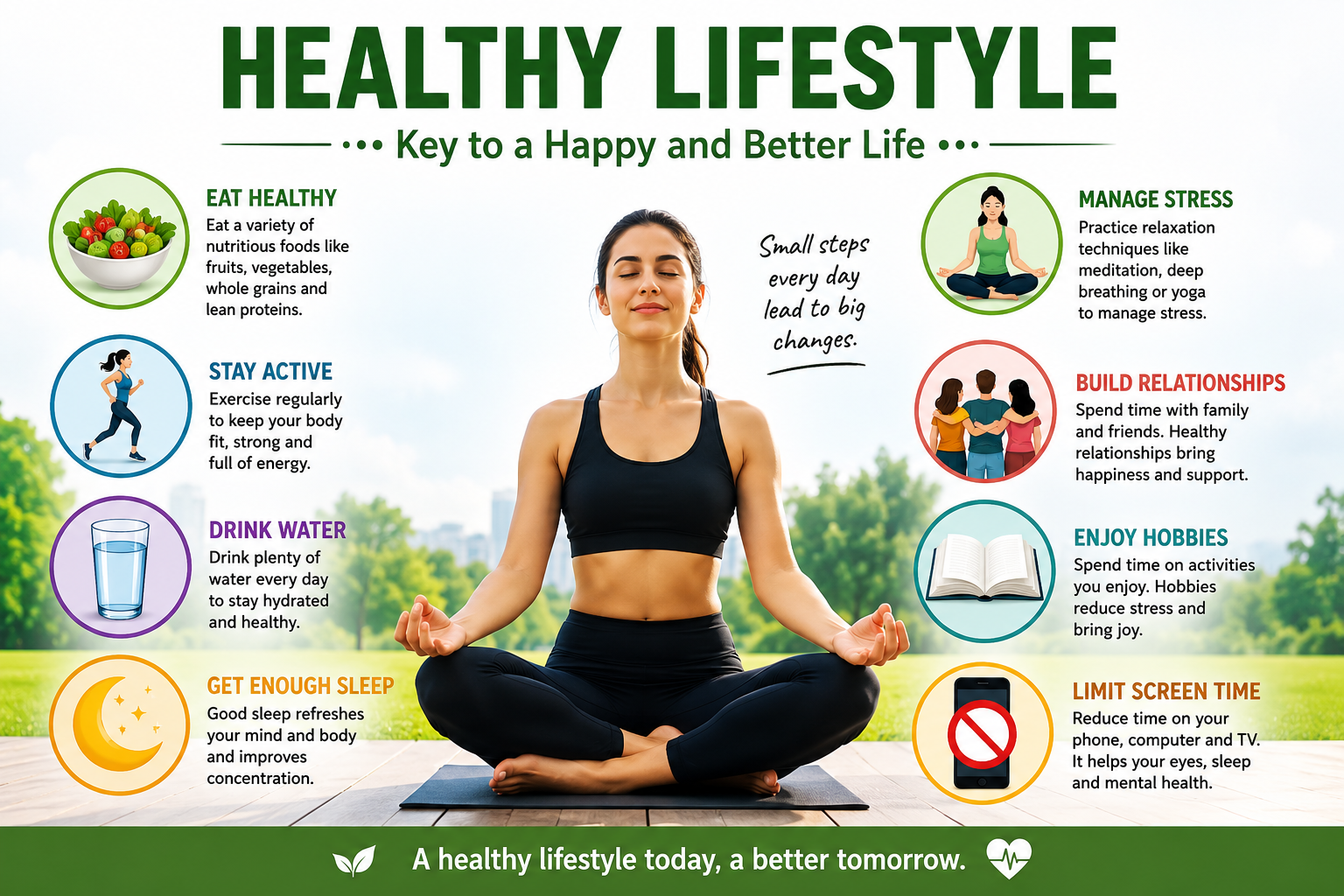
Lifestyle is the way a person lives every day. It includes our eating habits, sleeping routine, physical activity, work, studies, relationships, hobbies, and the way we manage stress. In today's busy world, people often focus so much on education, careers, money, and social media that they forget to take care of their health. A healthy lifestyle is not about living a perfect life or following strict rules. It is about making positive choices regularly and creating habits that support physical, mental, and social well-being.
A healthy lifestyle can help people feel more energetic, confident, active, and productive. According to the World Health Organization (WHO), a healthy diet helps protect against malnutrition and several noncommunicable diseases, while regular physical activity supports health and well-being. Therefore, developing healthy habits from an early age can make an important difference throughout life.
Importance of a Healthy Lifestyle
Health is one of the greatest blessings in life. Without good health, it can become difficult to enjoy education, work, family life, or other activities. A healthy lifestyle helps the body function properly and gives people the energy they need to complete their daily responsibilities.
Good lifestyle habits can also support mental well-being. Physical activity, sufficient sleep, nutritious food, relaxation, and positive relationships can all contribute to a person's overall sense of well-being. When people take care of themselves, they may find it easier to concentrate on their studies or work and deal with everyday challenges.
A healthy lifestyle is especially important for young people. Students often have busy schedules involving classes, homework, examinations, social activities, and technology. If they do not eat properly, sleep enough, or remain physically active, they may feel tired and have difficulty concentrating. Building healthy habits during youth can help establish a strong foundation for adulthood.
Healthy Eating Habits
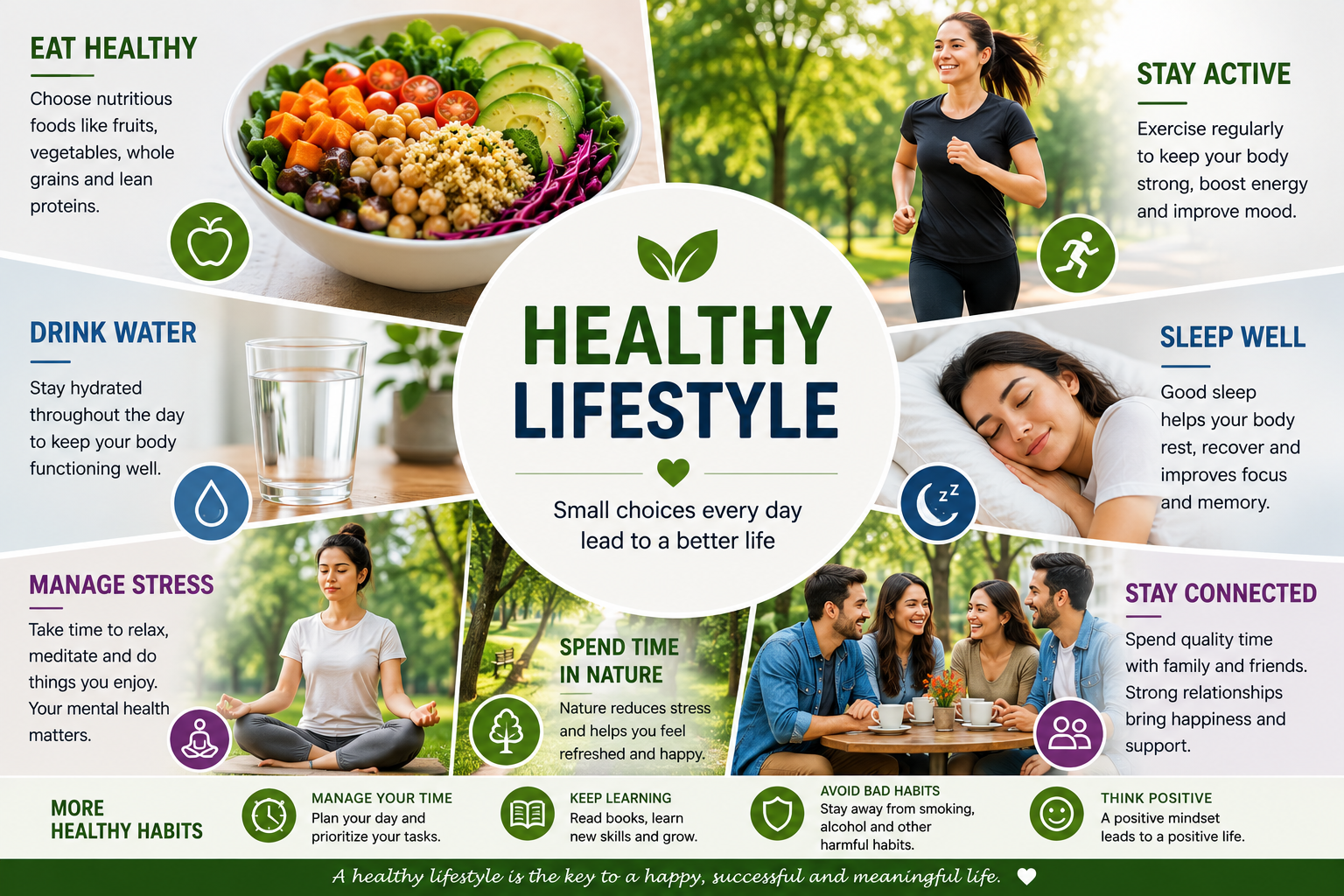
Food is one of the most important parts of a healthy lifestyle. The body needs nutrients to produce energy, support growth, and maintain normal functions. A balanced diet should contain a variety of nutritious foods rather than depending heavily on one type of food.
The WHO identifies adequacy, balance, moderation, and diversity as important principles of a healthy diet. It recommends choosing a variety of minimally processed or unprocessed foods and limiting foods high in unhealthy fats, free sugars, and sodium.
Fruits and vegetables are important sources of vitamins, minerals, and dietary fibre. Whole grains, pulses, nuts, and other nutritious foods can also contribute to a balanced diet. Protein sources such as eggs, fish, meat, beans, lentils, and dairy products can support the body's growth and maintenance.
People should also pay attention to portion sizes and avoid making fast food, sugary drinks, and highly processed snacks a major part of their daily diet. This does not mean that people can never enjoy their favourite foods. Instead, the goal should be balance and moderation.
Importance of Physical Activity
Physical activity is another major part of a healthy lifestyle. It does not necessarily mean spending hours in a gym. Walking, cycling, playing sports, dancing, gardening, household activities, and other forms of movement can also contribute to physical activity. WHO defines physical activity as bodily movement that requires energy expenditure and notes that both moderate- and vigorous-intensity activity can improve health.
Regular movement can help people maintain fitness and support heart health. It can also contribute to mental well-being. For adults, WHO guidelines recommend at least 150–300 minutes of moderate-intensity aerobic activity per week, or an equivalent amount of vigorous activity.
Students and people who spend many hours sitting should try to include movement throughout their day. A short walk, stretching, playing a sport, or doing household work can be a simple way to become more active.
The Role of Sleep
Sleep is sometimes ignored when people discuss healthy living, but it is an essential part of a balanced lifestyle. During sleep, the body and mind have an opportunity to rest and recover. Poor sleeping habits can make people feel tired and may affect their concentration, mood, and daily performance.
Students who stay awake late at night using phones or studying may struggle to concentrate the next day. Maintaining a regular sleeping schedule can help create a better daily routine.
A healthy lifestyle therefore requires a balance between activity and rest. People should not think that working continuously is always productive. Proper rest allows the body and mind to recover so that a person can return to daily activities with greater energy.
Mental Health and Stress Management
A healthy lifestyle is not only about the physical body. Mental health is equally important. Everyone experiences stress from time to time. Students may feel stressed because of examinations, assignments, relationships, or future plans. Adults may experience stress because of work, finances, family responsibilities, or other challenges.
Learning how to manage stress in positive ways is important. People can spend time with family and friends, enjoy hobbies, read books, listen to music, spend time outdoors, exercise, or practice relaxation techniques. Talking to a trusted person can also help when someone is experiencing difficulties.
It is important to understand that asking for support is not a sign of weakness. Sometimes people need encouragement or professional help to deal with serious or continuing difficulties.
Technology and Modern Lifestyle
Technology has become an important part of modern life. Smartphones, computers, and social media provide many benefits, including communication, education, entertainment, and access to information. However, spending too much time on screens can reduce physical activity and interfere with daily routines.
People can create healthier technology habits by taking regular breaks, avoiding unnecessary screen time, and making space for physical activities and face-to-face relationships. Students can also use technology for educational purposes instead of spending all their free time on social media.
The goal is not to completely avoid technology but to use it in a balanced and responsible way.
Importance of Social Relationships
Human beings need social connections. Family members, friends, classmates, colleagues, and communities can provide emotional support and companionship. Spending quality time with people we care about can make life more enjoyable.
Healthy relationships are based on respect, trust, communication, and understanding. People should try to listen to others and communicate their feelings in a respectful manner. At the same time, it is important to maintain healthy boundaries and avoid relationships that consistently create unnecessary stress.
Social activities can also make a lifestyle more active. Walking with a friend, playing a sport, gardening with family members, or participating in community activities can combine social connection with physical activity.
Hobbies and Personal Interests
Hobbies are another valuable part of a balanced lifestyle. A hobby gives people an opportunity to relax and enjoy something outside their studies or work. Gardening, cooking, painting, reading, photography, sports, music, and many other activities can provide enjoyment.
Hobbies can also help people develop new skills. For example, someone interested in cooking can learn about different cuisines and improve their cooking techniques. A person who enjoys gardening can learn about plants and nature.
Having meaningful activities outside work and studies can make daily life more interesting and satisfying.
Building Healthy Habits
A healthy lifestyle does not need to begin with dramatic changes. Small improvements can be easier to maintain. A person can begin by drinking more water, adding nutritious foods to meals, walking regularly, improving their sleep schedule, or reducing unnecessary screen time.
Consistency is more important than perfection. Missing one exercise session or eating an unhealthy meal does not mean that a person has failed. What matters is returning to healthy habits and continuing to make better choices.
People can also create a daily routine. A simple routine might include waking up at a regular time, eating breakfast, studying or working, taking breaks, doing some physical activity, spending time with family, enjoying a hobby, and getting enough rest.
Healthy Lifestyle and Productivity
A healthy lifestyle can support productivity. When people eat nutritious food, remain active, and get adequate rest, they may have more energy for their responsibilities. Physical activity is also associated with benefits for cognitive health and sleep.
For students, a healthy routine can make studying more manageable. Instead of studying continuously for many hours, students can take short breaks, move around, drink water, and maintain a regular sleep schedule.
For working people, healthy habits can support energy and concentration during the working day. This can make it easier to balance professional responsibilities with personal life.
Conclusion
A healthy lifestyle is a combination of many positive habits. It includes nutritious eating, regular physical activity, sufficient sleep, stress management, healthy relationships, meaningful hobbies, and responsible use of technology. It is not about being perfect; it is about making better choices consistently.
Modern life can make healthy living challenging, but small changes can have an important impact over time. People can start with simple steps such as eating more fruits and vegetables, walking regularly, maintaining a better sleep routine, spending time with loved ones, and taking breaks from screens.
Health should be treated as a long-term investment. Money, education, careers, and success are valuable, but good health allows people to enjoy and make the most of them. By developing healthy habits today, individuals can work toward a more active, balanced, productive, and fulfilling life tomorrow.