Introduction
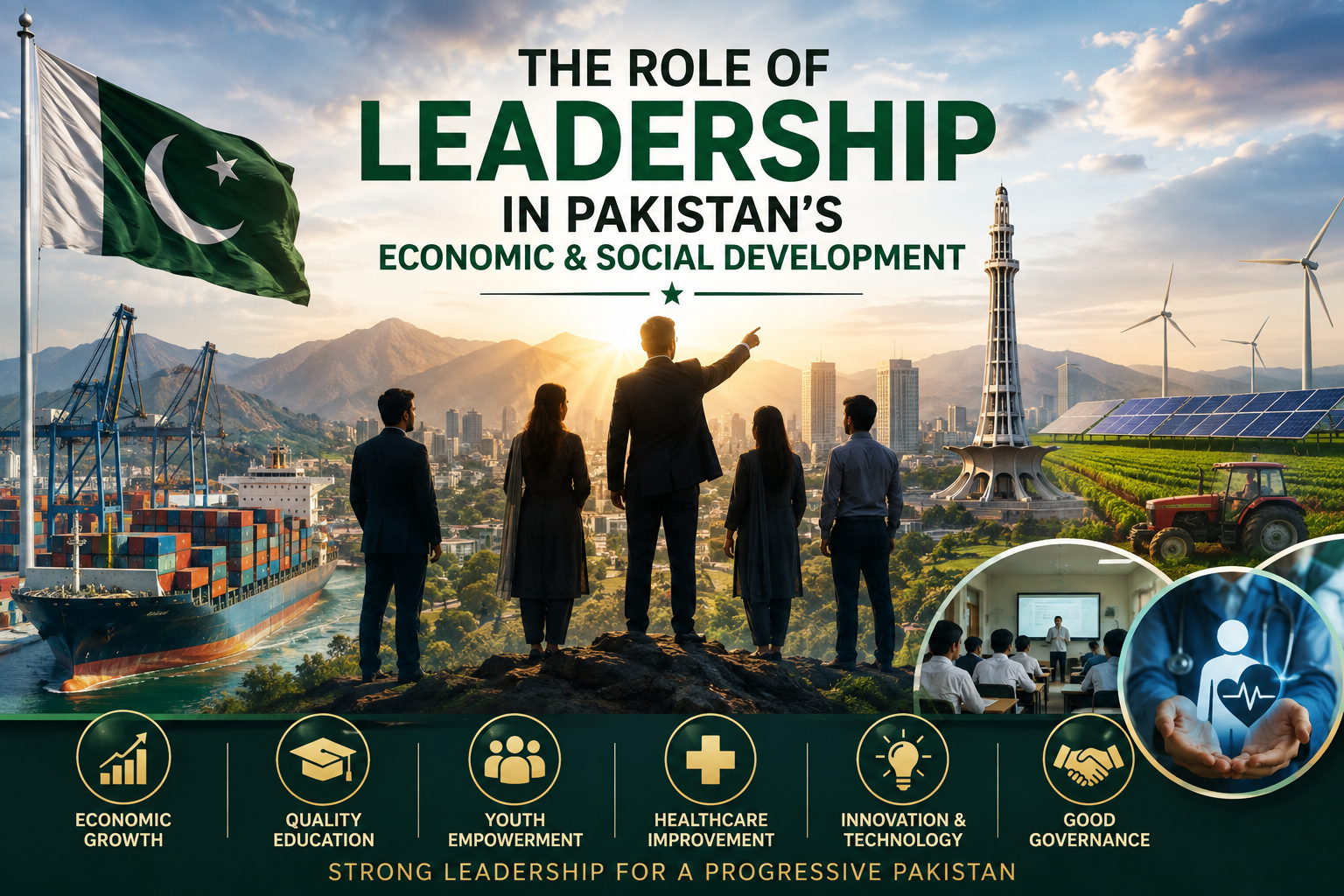
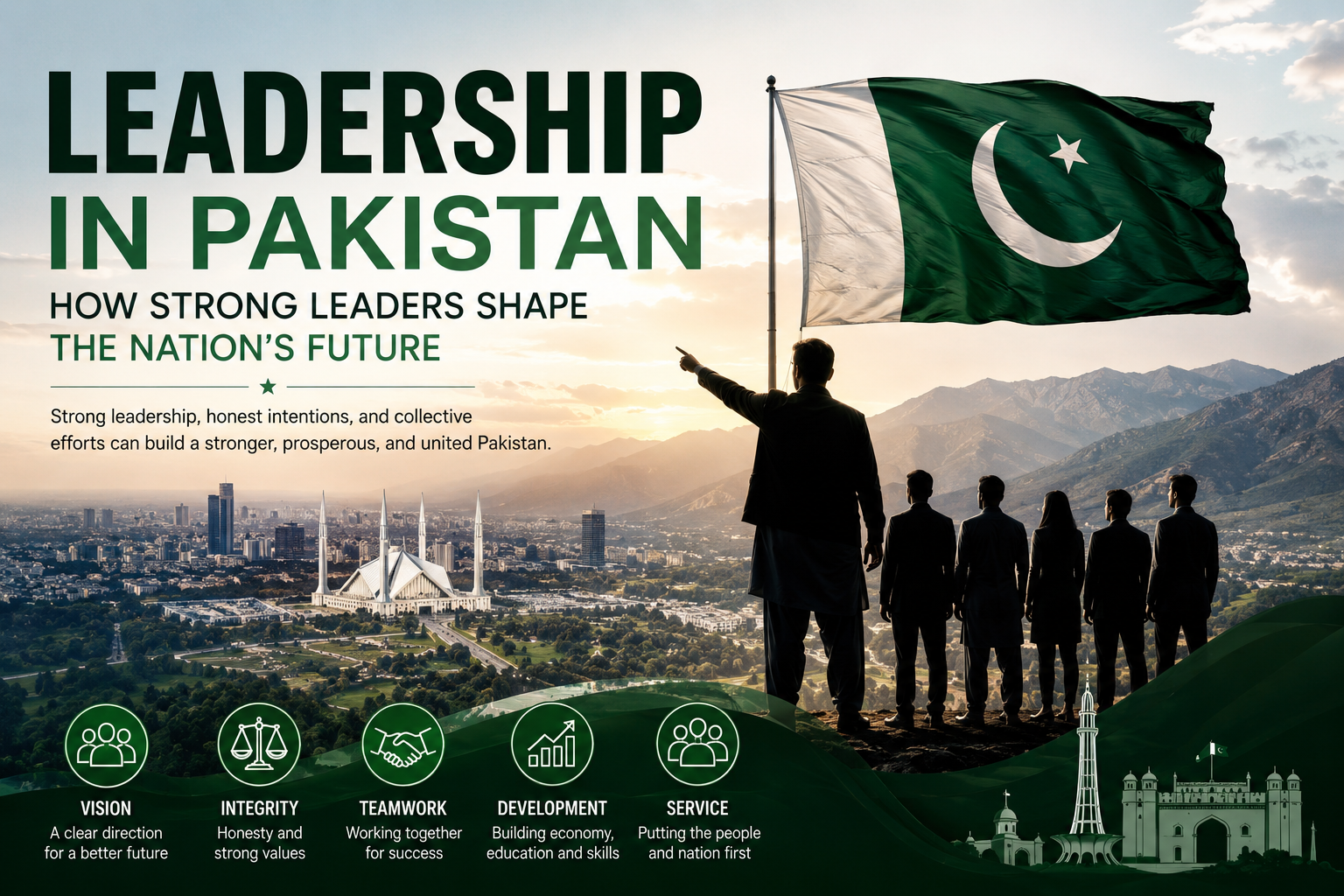
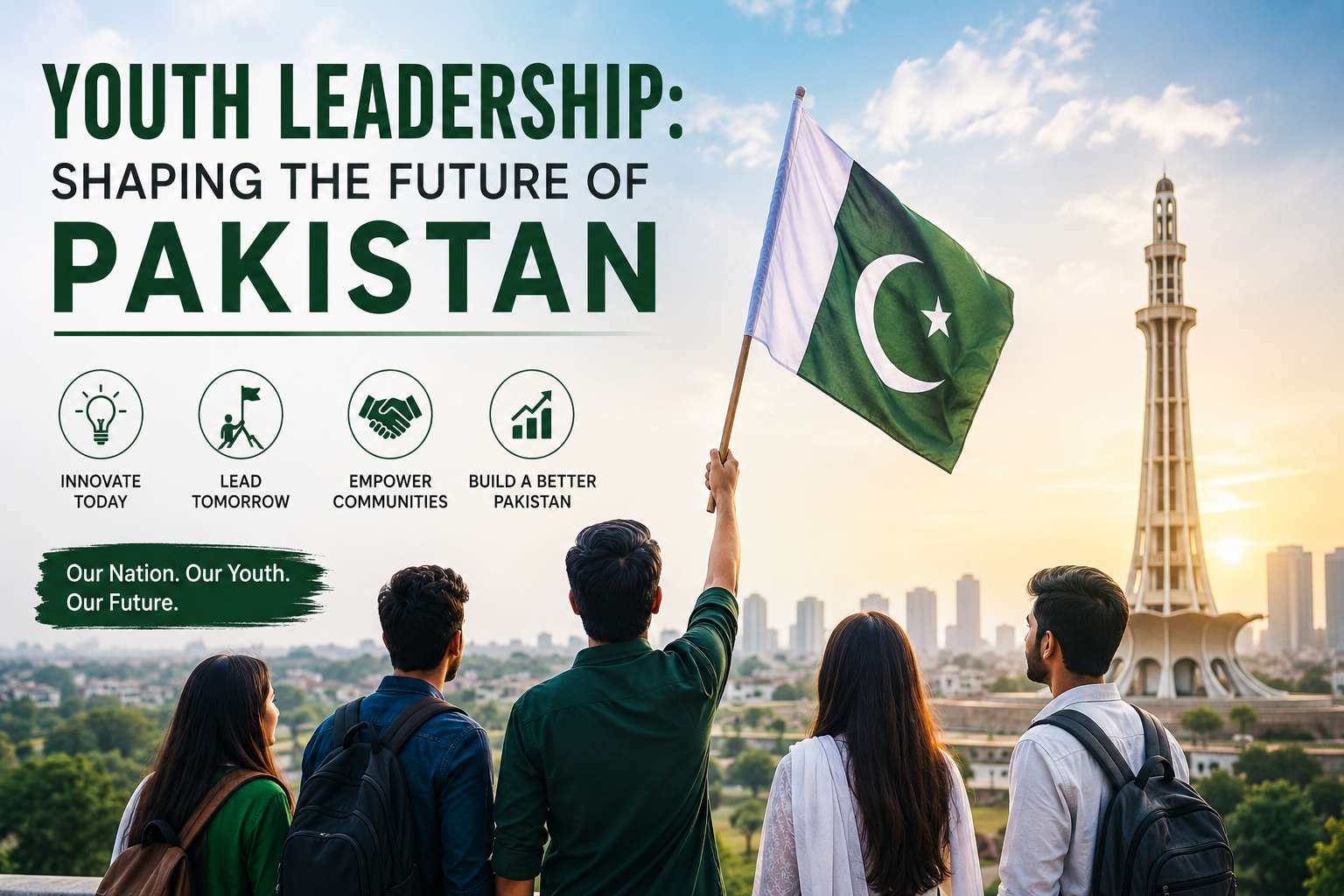
Pakistan is a country with a young and energetic population. Its youth represent one of its greatest strengths and one of its most important opportunities for national development. Young people are not merely the leaders of tomorrow; they are also active members of society today. Their ideas, skills, creativity, determination, and sense of responsibility can play a major role in shaping Pakistan’s social, economic, political, and technological future.
Youth leadership means empowering young people to take responsibility, make positive decisions, solve problems, and contribute to their communities and country. A young leader does not necessarily have to hold a political position or an important public office. Leadership can begin in a classroom, university, workplace, community, online platform, or even within a family. Whenever a young person takes initiative, inspires others, stands for a positive cause, and works toward meaningful change, leadership is taking place.
Pakistan faces many challenges, including unemployment, educational inequality, economic difficulties, environmental problems, political instability, social divisions, and the rapid transformation brought by technology. These challenges require fresh thinking and innovative solutions. Pakistan’s youth can provide that fresh perspective if they are given quality education, appropriate opportunities, ethical guidance, and platforms through which they can participate in national development.
The Importance of Youth in Pakistan
Young people form a significant part of Pakistan’s population. This large youth population can become either a powerful engine of progress or a major challenge if it remains without proper education, employment, direction, and opportunities.
The energy of youth is naturally associated with creativity, curiosity, ambition, and the willingness to explore new possibilities. Young Pakistanis are increasingly participating in education, technology, entrepreneurship, social work, sports, research, and creative industries. Many young people are learning digital skills, working online, launching small businesses, creating content, and developing innovative ideas.
However, having a large young population alone does not guarantee progress. Youth need opportunities to transform their abilities into productive contributions. This is where leadership becomes important. Leadership teaches young people how to use their abilities responsibly and how to turn ideas into action.
A young person who learns leadership skills can become more confident, disciplined, responsible, and socially aware. Such individuals can influence their friends, families, educational institutions, and communities in positive ways.
What Is Youth Leadership?
Youth leadership is the process through which young people develop the confidence, skills, knowledge, and values needed to influence others and contribute positively to society.
Effective youth leadership is not about controlling others. Instead, it is about serving others, accepting responsibility, listening to different opinions, making informed decisions, and working toward common goals.
A good young leader should possess qualities such as:
Vision and clear goals
Honesty and integrity
Confidence
Communication skills
Critical thinking
Problem-solving ability
Teamwork
Emotional maturity
Respect for others
A strong sense of responsibility
Leadership also involves learning from mistakes. No leader is perfect. Young people need an environment where they can experiment, learn, receive constructive feedback, and improve their abilities.
Education: The Foundation of Youth Leadership
Education is one of the strongest foundations of effective leadership. A well-educated young person is better equipped to understand society, analyze problems, communicate ideas, and make responsible decisions.
Pakistan needs an education system that does more than prepare students for examinations. Students should also learn critical thinking, creativity, communication, teamwork, decision-making, ethics, and civic responsibility.
Classrooms can become important training grounds for leadership. Students can be encouraged to participate in debates, presentations, group projects, student societies, community service, and problem-solving activities. Such experiences can help them develop confidence and learn how to work with people who have different opinions.
Teachers also have an important role in developing young leaders. A teacher who encourages questions, creativity, responsibility, and independent thinking can have a lasting impact on students.
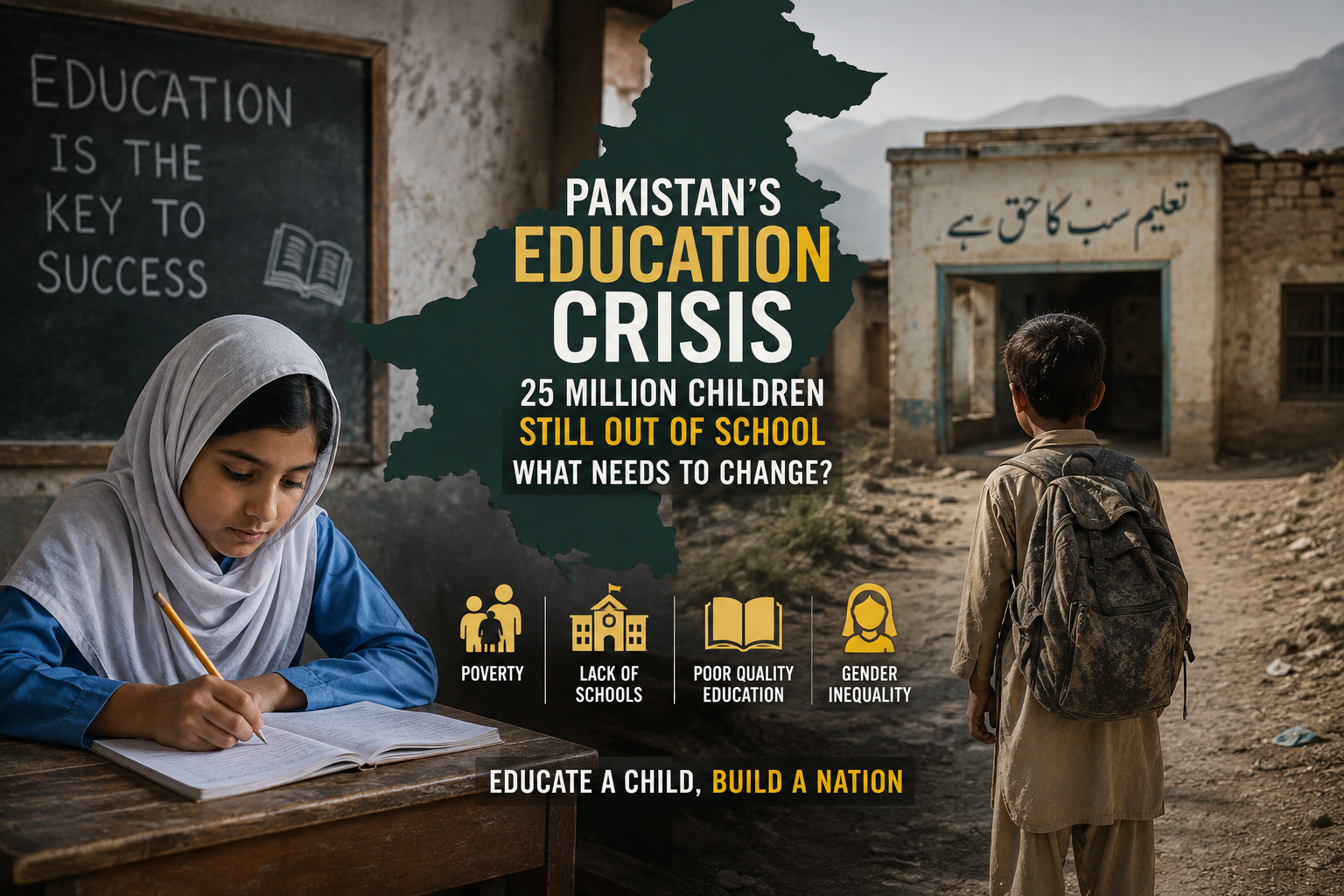
Education should also reach young people in underserved communities. When educational opportunities are limited to certain areas or social groups, the country loses the potential of many talented young people. Equal access to quality education can help Pakistan discover future scientists, entrepreneurs, teachers, lawyers, engineers, researchers, social workers, and public servants.
Youth Leadership and Economic Development
Pakistan’s economic future is closely connected with the skills and productivity of its young population. Youth leadership can contribute significantly to economic development by encouraging entrepreneurship, innovation, professional skills, and responsible employment.
Young entrepreneurs can identify problems in their communities and develop businesses around practical solutions. Technology has made it possible for young Pakistanis to work with customers and organizations beyond their immediate geographical boundaries.
Freelancing, software development, digital marketing, graphic design, e-commerce, artificial intelligence, online education, and other digital fields have created new opportunities for young people. With appropriate training and reliable access to technology, youth can contribute to Pakistan’s economy while building careers for themselves.
Entrepreneurial leadership is particularly important because it encourages young people to become problem-solvers rather than simply waiting for traditional employment opportunities.
However, entrepreneurship requires more than motivation. Young people need access to skills, mentorship, financial literacy, markets, training, and supportive policies. Universities and educational institutions can help by establishing entrepreneurship programs, innovation centers, competitions, and mentorship networks.
Youth and Technological Innovation
Technology is transforming almost every part of modern life. Pakistan’s young population has the potential to become an important force in the country’s digital transformation.
Young people are often quick to adopt new technologies. They use digital platforms for education, communication, business, entertainment, and professional development. This familiarity can become a major national advantage when combined with technical education and responsible digital citizenship.
Fields such as artificial intelligence, cybersecurity, software engineering, robotics, data science, and digital entrepreneurship are likely to remain important in the future. Pakistan can benefit from investing in these areas and preparing its youth for the changing global economy.
Youth leaders in technology can also focus on solving local problems. For example, technology can support education in remote areas, improve access to information, assist small businesses, promote environmental awareness, and make certain public services more accessible.
The goal should not simply be to consume technology but to create with it.
Youth Leadership and Social Change
Leadership also has a strong social dimension. Pakistan faces various social challenges, including poverty, unequal educational opportunities, intolerance, misinformation, environmental degradation, and discrimination.
Young people can become powerful agents of positive social change. Through volunteer work, community projects, awareness campaigns, educational initiatives, and responsible use of social media, they can contribute to their communities.
For example, a group of students can organize a cleanliness campaign, support a literacy initiative, collect books for students who need them, or create awareness about environmental protection. These activities may appear small, but they develop a culture of responsibility.
Social leadership teaches young people that national development does not always begin with large government projects. Sometimes it begins with ordinary citizens deciding to improve their own surroundings.
Youth Leadership in Politics and Civic Life
Political and civic awareness is another important part of youth leadership. Young people need to understand how democratic institutions work, why laws matter, and how citizens can participate responsibly in society.
Political participation should be based on knowledge, principles, and respect for different viewpoints rather than blind support for individuals or groups.
Young citizens should learn to evaluate information carefully, distinguish facts from rumors, and engage in respectful discussions. Social media has made it easier for young people to express opinions, but it has also increased the spread of misinformation. Responsible digital citizenship is therefore essential.
Youth participation in civic life can strengthen democratic culture. Young people can contribute through community organizations, educational societies, volunteer programs, public discussions, research, and other peaceful forms of civic engagement.
The future of Pakistan should be shaped by citizens who understand both their rights and their responsibilities.
The Role of Women in Youth Leadership
Pakistan cannot achieve its full potential without the meaningful participation of young women. Young women have the ability to contribute to education, business, technology, medicine, law, public administration, research, social development, and many other fields.
Creating opportunities for young women benefits not only individuals but also families and communities. Educated and empowered women can contribute to economic development and help create healthier and more educated communities.
Young women should have access to education, professional training, mentorship, technology, and safe opportunities to participate in leadership activities.
A strong Pakistan requires the talents of all its young citizens.
Youth Leadership and National Unity
Pakistan is a diverse country with different languages, cultures, traditions, regions, and communities. Diversity can become a source of strength when people respect one another and work toward common goals.
Youth leadership can promote national unity by encouraging young people to look beyond regional, ethnic, linguistic, and social differences.
Schools, colleges, universities, sports organizations, cultural programs, and volunteer initiatives can provide opportunities for young people from different backgrounds to interact and collaborate.
Young leaders should understand that disagreement does not have to lead to hatred. A healthy society allows people to have different opinions while maintaining mutual respect.
The youth of Pakistan can play an important role in building a culture of tolerance, cooperation, and national solidarity.
Environmental Leadership Among Youth
Environmental issues are becoming increasingly important for Pakistan. Climate-related challenges, water shortages, pollution, waste management problems, and extreme weather can affect communities and economic development.
Young people can contribute to environmental protection through awareness campaigns, tree-planting initiatives, recycling projects, clean-up activities, water conservation, and sustainable lifestyles.
More importantly, youth leaders can promote environmental education. Understanding environmental problems helps young people recognize that protecting nature is not simply an individual responsibility but also a national priority.
Universities and schools can establish environmental clubs and encourage students to develop practical solutions to local environmental problems.
Challenges Facing Youth Leadership in Pakistan
Despite their potential, young Pakistanis face several obstacles.
Lack of Opportunities
Many talented young people do not receive sufficient opportunities to develop their skills. Limited access to quality education, internships, mentorship, and employment can prevent young people from reaching their potential.
Unemployment
Unemployment can create frustration and discourage young people. Expanding skills-based education, entrepreneurship, vocational training, and digital opportunities can help address this challenge.
Educational Inequality
The quality of education varies considerably across different areas and communities. Providing better educational opportunities to underserved populations is essential for developing inclusive leadership.
Lack of Mentorship
Young people can benefit greatly from experienced mentors. Teachers, professionals, entrepreneurs, community leaders, and institutions can guide young people and help them avoid common mistakes.
Misinformation
Social media provides enormous opportunities for communication but also allows false information to spread quickly. Young leaders need strong media literacy and critical-thinking skills.
Lack of Confidence
Some young people have good ideas but hesitate to express them because they fear criticism or failure. Educational institutions and families should encourage young people to communicate their ideas respectfully and learn from mistakes.
The Role of Parents and Families
Families are the first environment in which children learn responsibility, communication, discipline, and values. Parents can encourage leadership by allowing young people to make appropriate decisions and take responsibility for their actions.
Young people should be taught that leadership is connected with honesty, service, respect, and accountability. Families can encourage children to help others, participate in community activities, respect different opinions, and develop healthy communication skills.
When families support education and personal development, they create an environment in which young people can become confident and responsible citizens.
The Role of Educational Institutions
Schools, colleges, and universities should actively promote youth leadership.
Institutions can organize:
Debates and public-speaking competitions
Student societies
Volunteer programs
Entrepreneurship competitions
Technology projects
Community service activities
Leadership workshops
Research initiatives
Environmental campaigns
Career guidance programs
These activities allow students to move beyond theoretical learning and gain practical experience.
A student who leads a project learns how to plan, communicate, delegate tasks, solve problems, and accept responsibility. These skills remain valuable throughout life.
The Role of Government and Society
Government institutions also have an important responsibility. Youth policies should focus on education, employment, entrepreneurship, skills development, technology, sports, and civic participation.
Young people need platforms where their ideas can be heard. Youth councils, innovation programs, internships, scholarships, training schemes, and entrepreneurship support can help create these opportunities.
Society should also change the way it views young people. Instead of assuming that youth lack experience and therefore have nothing valuable to contribute, adults should listen to young people's ideas while providing appropriate guidance.
Leadership is strongest when generations work together.
Social Media and Youth Leadership
Social media has transformed how young people communicate. A single idea can reach thousands or even millions of people within a short period.
This creates enormous opportunities for youth leadership. Young people can use social platforms to promote education, entrepreneurship, social awareness, creativity, and community service.
However, social media leadership requires responsibility. Young people should avoid spreading unverified information, insulting people with different opinions, or using online platforms to create unnecessary conflict.
A responsible digital leader checks information before sharing it, communicates respectfully, and uses technology to create value rather than simply attract attention.
Building a Culture of Service
One of the most important qualities of leadership is service. A leader should ask, “How can I help?” rather than only asking, “What can I gain?”
Pakistan needs a culture in which young people see community service as a responsibility. Volunteerism can develop empathy, teamwork, discipline, and social awareness.
Helping students with education, supporting elderly people, participating in environmental activities, assisting communities during emergencies, and contributing to charitable initiatives are all examples of service.
Such experiences help young people understand the realities faced by different sections of society.
How Pakistan Can Develop Future Young Leaders
Pakistan can strengthen youth leadership through a comprehensive approach.
First, education should focus on both academic knowledge and practical skills. Second, young people should have access to mentorship and career guidance. Third, entrepreneurship and innovation should be encouraged. Fourth, digital literacy should become an important part of education. Fifth, youth should be provided with opportunities for civic and community participation.
Most importantly, young people should be trusted with responsibility.
Leadership cannot be learned entirely from books. It develops through experience. If young people are never given opportunities to lead, they cannot develop leadership skills.
Small responsibilities can lead to greater ones. A student who learns to organize a school project may later lead a university society, a business team, a community organization, or a national initiative.
The Vision for Pakistan’s Youth
The future Pakistan needs young people who are educated but also ethical, skilled but also compassionate, ambitious but also responsible.
Pakistan’s youth should dream of building successful careers, but their ambitions should also include improving society. They should recognize that personal success and national progress can exist together.
A software developer can create technology that solves local problems. An entrepreneur can create jobs. A teacher can educate future generations. A lawyer can work for justice. A doctor can serve communities. A researcher can develop solutions to national challenges. A journalist can promote responsible information. A student can begin by helping classmates and contributing positively to the community.
Every profession provides an opportunity for leadership.
Conclusion
Youth leadership is not simply about preparing young people for future positions. It is about empowering them to become responsible citizens today. Pakistan’s young population represents a tremendous opportunity for national development, but that opportunity can only be realized through quality education, meaningful opportunities, ethical guidance, skills development, and active participation.
The challenges facing Pakistan are serious, but the potential of its youth is equally significant. Young Pakistanis possess creativity, energy, technological awareness, ambition, and the ability to adapt to changing circumstances. With the right support, these qualities can become powerful forces for economic growth, social progress, technological innovation, environmental protection, and national unity.
The future of Pakistan will not be shaped by one person, one institution, or one generation alone. It will be shaped by millions of citizens working together. Among them, the youth will have a particularly important role.
Therefore, investing in youth leadership is an investment in Pakistan itself. When young people are educated, empowered, responsible, and given the opportunity to lead, they can transform challenges into opportunities and ideas into action.
Pakistan’s future is not merely waiting somewhere ahead. It is being built by the choices, skills, values, and leadership of its young people today.
FAQs
1. What is youth leadership?
Youth leadership means empowering young people to take responsibility, solve problems, and contribute positively to society.
2. Why is youth leadership important for Pakistan?
It helps Pakistan benefit from the creativity, skills, energy, and innovative ideas of its young population.
3. How can young people contribute to Pakistan’s development?
They can contribute through education, entrepreneurship, technology, community service, and responsible civic participation.
4. What skills are important for young leaders?
Communication, critical thinking, teamwork, confidence, problem-solving, honesty, and responsibility are key leadership skills.
5. How can Pakistan promote youth leadership?
Pakistan can promote youth leadership through quality education, skills training, mentorship, employment opportunities, and platforms for youth participation.