Introduction
A healthy lifestyle is essential for living a happy, active, and productive life. Lifestyle includes the choices we make every day, such as what we eat, how much we exercise, how well we sleep, how we manage stress, and how we spend our free time. In the modern world, people often have busy schedules filled with work, education, technology, social media, and family responsibilities. Because of this, taking care of physical and mental health can sometimes become difficult.
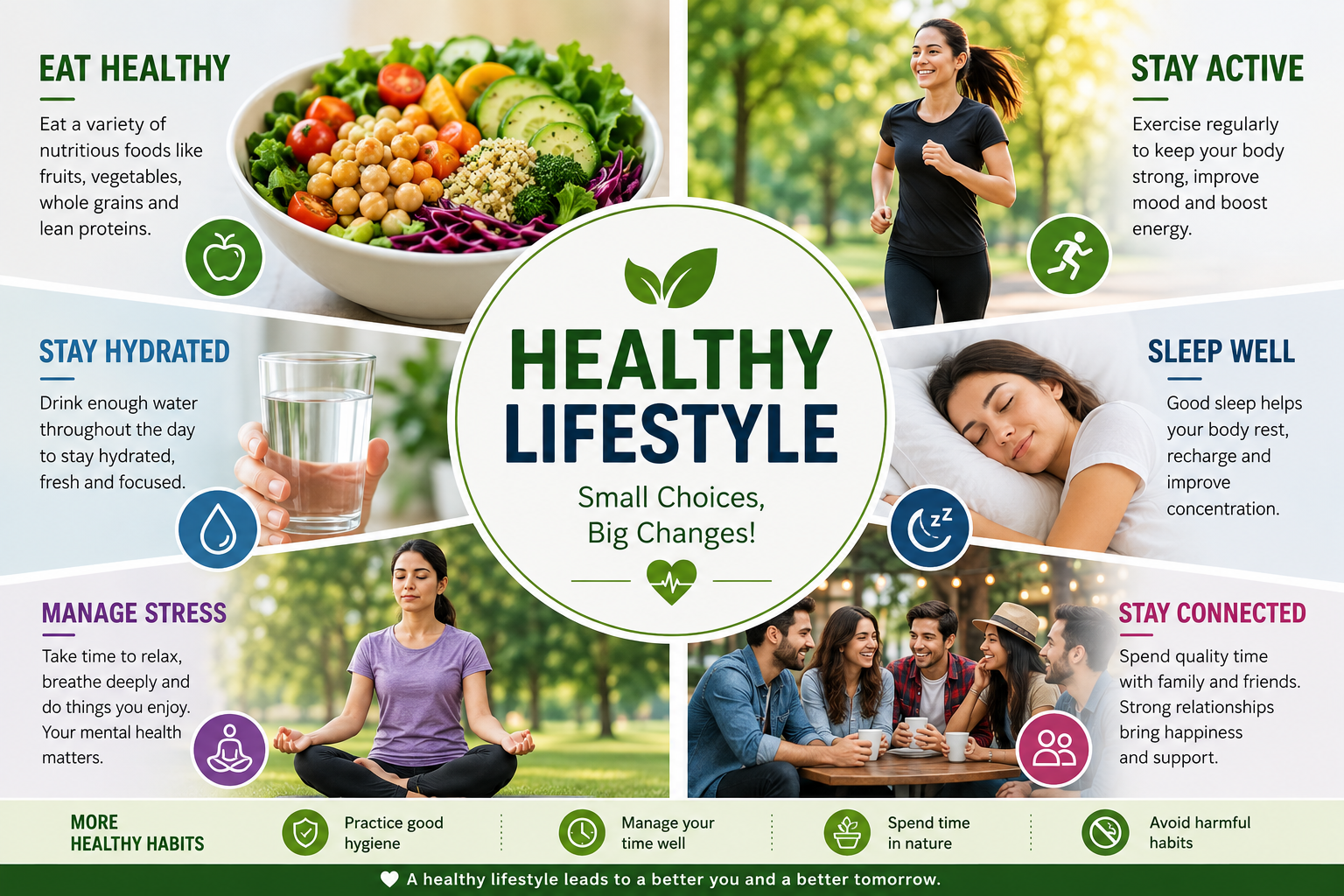
However, living a healthy lifestyle does not mean making extreme changes or following complicated routines. It means developing simple and positive habits and following them consistently. Eating nutritious food, staying physically active, sleeping well, drinking enough water, maintaining relationships, and taking care of mental health can make a major difference. A balanced lifestyle helps people feel more energetic, confident, focused, and satisfied with their daily lives.
What Is a Healthy Lifestyle?
A healthy lifestyle is a way of living that supports physical, mental, emotional, and social well-being. It involves making responsible choices that benefit the body and mind.
A healthy lifestyle may include eating balanced meals, exercising regularly, getting enough sleep, maintaining personal hygiene, managing stress, spending time with loved ones, and avoiding harmful habits. It also involves finding a healthy balance between work, study, relaxation, entertainment, and personal interests.
The goal is not perfection. Everyone has different needs, schedules, and circumstances. The most important thing is to develop realistic habits that can be maintained for a long time.
Eat a Balanced Diet
Food is one of the most important parts of a healthy lifestyle. The body needs different nutrients to produce energy, support growth, and maintain normal functions. A balanced diet should include fruits, vegetables, whole grains, protein-rich foods, and healthy fats.
Fruits and vegetables provide important vitamins, minerals, and fiber. Protein can be obtained from foods such as eggs, fish, meat, beans, lentils, and dairy products. Whole grains can provide energy and fiber, while healthy fats can be found in foods such as nuts, seeds, and certain oils.
People should also pay attention to how often they consume highly processed foods, sugary drinks, and foods containing excessive amounts of salt or unhealthy fats. These foods can be enjoyed occasionally, but they should not replace nutritious meals.
Drinking enough water is also important. Staying hydrated helps the body function properly and can help people feel fresh and energetic throughout the day.
Stay Physically Active
Regular physical activity is another major part of a healthy lifestyle. Exercise helps keep the body strong and can support heart health, muscles, bones, and overall fitness. Physical activity can also improve mood and help reduce everyday stress.
Exercise does not necessarily mean spending hours in a gym. Walking, cycling, swimming, gardening, dancing, playing sports, and doing simple exercises at home are all ways to remain active.
People who spend many hours studying or working at a desk should also take regular breaks. Standing up, stretching, or walking for a few minutes can help break up long periods of sitting.
The best form of exercise is one that a person enjoys and can continue regularly. Making physical activity part of a daily routine can turn exercise into a long-term healthy habit.
Get Enough Quality Sleep
Sleep plays an important role in maintaining a healthy lifestyle. During sleep, the body and mind have an opportunity to rest and recover. Poor sleep can affect concentration, mood, energy, and daily performance.
A regular sleep schedule can make it easier to get good-quality rest. Going to bed and waking up at similar times each day can help establish a consistent routine.
People should also try to create a relaxing environment before bedtime. Reducing unnecessary screen use at night, avoiding stimulating activities before sleep, and keeping the bedroom comfortable can support better sleep habits.
Good sleep is particularly important for students and working people because adequate rest can help them remain focused and productive during the day.
Take Care of Mental Health
Mental health is just as important as physical health. People can experience stress because of studies, work, relationships, financial concerns, or other responsibilities. Some stress is a normal part of life, but constant stress can affect overall well-being.
There are many simple ways to manage everyday stress. Reading, listening to music, exercising, gardening, spending time outdoors, practicing relaxation techniques, or talking with someone trustworthy can help people feel calmer.
Taking breaks is also important. People sometimes believe that being busy all the time means being productive, but rest is necessary for maintaining energy and motivation.
If someone is experiencing serious or persistent emotional difficulties, seeking appropriate professional support can also be an important part of taking care of mental health.
Maintain Healthy Relationships
Positive relationships can contribute greatly to happiness and emotional well-being. Family members, friends, classmates, colleagues, and supportive communities can provide encouragement and companionship.
Healthy relationships require communication, trust, respect, honesty, and understanding. People should be able to express their feelings while also respecting the feelings and boundaries of others.
Spending quality time with loved ones can provide a valuable break from daily responsibilities. Even a simple conversation, shared meal, walk, or enjoyable activity can strengthen relationships.
At the same time, maintaining healthy boundaries is important. A healthy lifestyle includes learning when to say no and protecting personal time and emotional well-being.
Limit Excessive Screen Time
Technology has become an essential part of modern life. Smartphones, computers, and social media provide many benefits, including communication, education, entertainment, and access to information.
However, excessive screen time can interfere with sleep, physical activity, studies, work, and face-to-face communication. Spending too much time on social media can also encourage unhealthy comparisons with other people.
A balanced approach is better. People can set limits on unnecessary screen use and make time for outdoor activities, hobbies, exercise, family, and friends.
Technology should be a useful tool rather than something that controls the entire daily routine.
Practice Good Personal Hygiene
Personal hygiene is another basic part of healthy living. Regular bathing, brushing teeth, washing hands, wearing clean clothes, and keeping personal surroundings clean can help protect health.
Handwashing is especially important because hands can come into contact with germs throughout the day. Maintaining cleanliness at home, school, or work can also create a more comfortable environment.
Good personal hygiene can improve confidence and help people feel fresh and comfortable when interacting with others.
Avoid Harmful Habits
A healthy lifestyle also means avoiding habits that can negatively affect health. Smoking, drug use, and excessive alcohol consumption can cause serious health problems.
Young people should be encouraged to understand the risks associated with harmful substances and make responsible decisions. Avoiding these habits can support better physical health, mental well-being, and quality of life.
Instead of unhealthy habits, people can develop positive alternatives such as exercise, hobbies, reading, learning new skills, and spending time with supportive people.
Manage Time Effectively
Time management can make a healthy lifestyle easier to maintain. People often feel stressed because they have many tasks but do not organize their time effectively.
Creating a simple daily schedule can help balance work, studies, exercise, meals, relaxation, hobbies, and sleep. Setting realistic goals is also important.
People should not try to change everything overnight. Starting with one small habit can be more effective. For example, someone can begin by drinking more water, walking every day, sleeping earlier, or reducing unnecessary phone use.
Small improvements can gradually become permanent habits.
Spend Time in Nature
Spending time in nature can be a refreshing part of a healthy lifestyle. Walking in a park, gardening, sitting outdoors, or enjoying fresh air can provide a break from busy routines.
Outdoor activities can also encourage physical movement and give people an opportunity to spend less time looking at screens. Gardening is especially enjoyable for people who like plants and want a relaxing hobby.
Even a short amount of time outdoors can make a daily routine feel more enjoyable and balanced.
Healthy Lifestyle for Students
Students need healthy habits because education requires concentration, energy, and motivation. A student who regularly skips meals, sleeps too little, or spends excessive time on screens may find it harder to stay focused.
Students should create a routine that includes nutritious meals, sufficient sleep, physical activity, study time, breaks, and relaxation. Studying is important, but health should not be sacrificed for academic performance.
A balanced routine can help students manage their responsibilities while also giving them time for hobbies, friendships, and personal development.
Benefits of a Healthy Lifestyle
Following a healthy lifestyle can provide many benefits. It can help people feel more energetic and improve their ability to perform everyday activities. Healthy habits can also support physical fitness, concentration, emotional balance, and confidence.
A healthy lifestyle can also improve productivity. When people eat well, sleep properly, stay active, and manage stress, they may find it easier to focus on their responsibilities.
Most importantly, healthy habits can contribute to a better quality of life. Good health allows people to enjoy their families, careers, education, hobbies, and other important experiences.
Conclusion
A healthy lifestyle is built through simple choices made every day. Eating balanced meals, drinking enough water, exercising regularly, sleeping well, managing stress, maintaining relationships, practicing good hygiene, limiting excessive screen time, and avoiding harmful habits can all contribute to better well-being.
There is no need to become perfect or change everything at once. The best approach is to begin with small, realistic improvements and continue them consistently. Over time, these habits can become a natural part of daily life.
A healthy lifestyle is an investment in the future. By taking care of the body and mind today, people can create a more energetic, confident, productive, and enjoyable life.
Frequently Asked Questions (FAQs)
1. What is a healthy lifestyle?
A healthy lifestyle is a way of living that supports physical, mental, emotional, and social well-being through positive daily habits.
2. Why is a healthy lifestyle important?
A healthy lifestyle can improve energy, fitness, mood, concentration, and overall quality of life while encouraging better long-term habits.
3. What foods are part of a healthy diet?
A healthy diet generally includes fruits, vegetables, whole grains, protein-rich foods, healthy fats, and sufficient water.
4. How can I start living a healthier lifestyle?
Start with small changes such as drinking more water, eating nutritious meals, walking regularly, sleeping on time, and reducing unnecessary screen time.
5. Is exercise necessary for a healthy lifestyle?
Regular physical activity is an important part of healthy living. Walking, cycling, sports, dancing, gardening, and home exercises can all help people stay active.
6. How does sleep affect health?
Good-quality sleep allows the body and mind to rest and recover. Poor sleep can affect mood, concentration, energy, and daily performance.
7. How can I manage daily stress?
Exercise, hobbies, relaxation, spending time outdoors, maintaining supportive relationships, and organizing daily tasks can help manage everyday stress.
8. Can screen time affect a healthy lifestyle?
Yes. Excessive screen time may interfere with sleep, physical activity, studies, work, and social interaction. A balanced approach to technology is healthier.
9. What is the easiest healthy habit to start?
Drinking more water, taking regular walks, improving sleep habits, and adding more nutritious foods to meals are simple ways to begin.
10. Can a healthy lifestyle improve quality of life?
Yes. Healthy habits can support physical fitness, mental well-being, energy, confidence, productivity, and enjoyment of everyday activities.