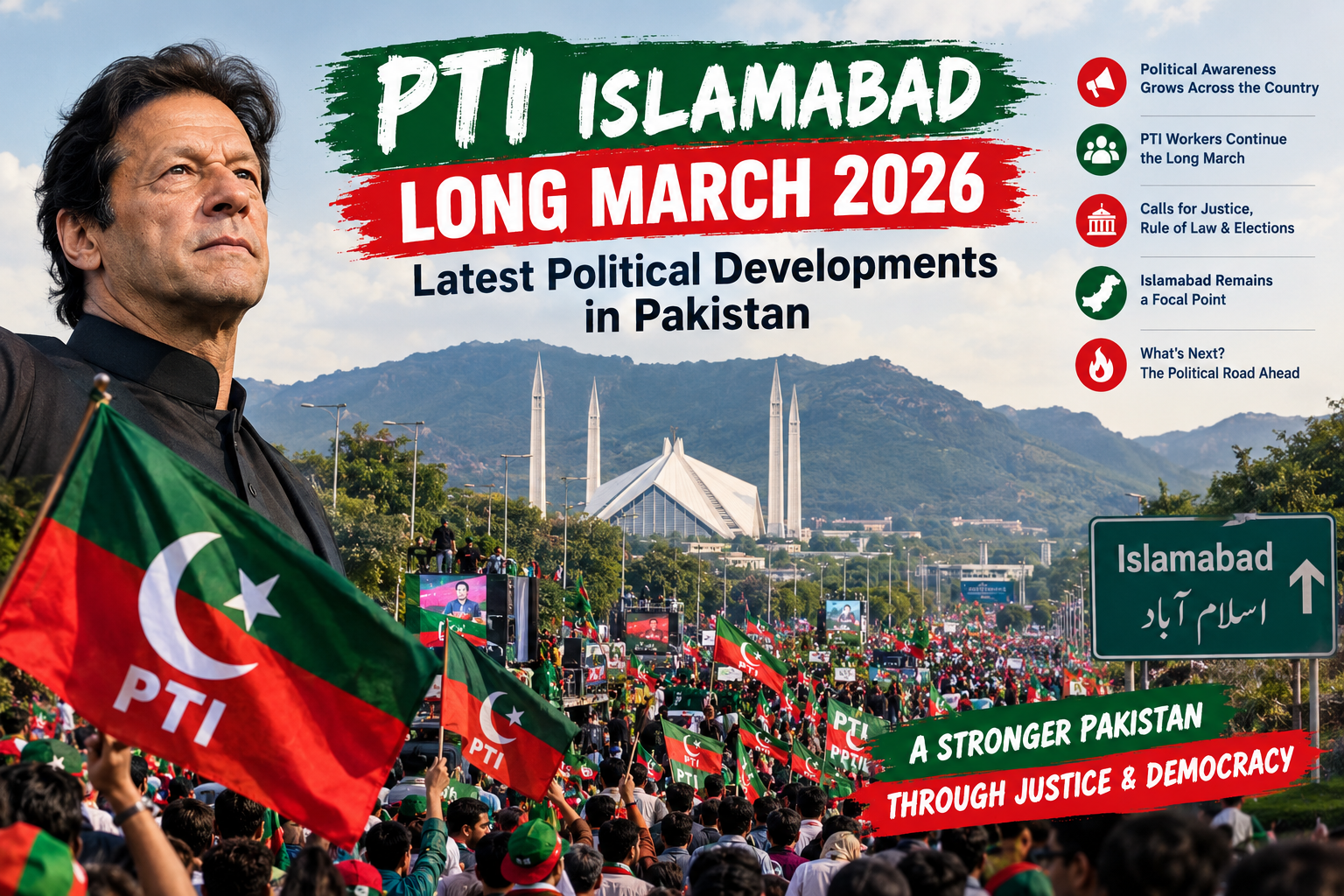
Pakistan’s political environment has become increasingly tense as the Pakistan Tehreek-e-Insaf (PTI) proceeds with its planned long march toward Islamabad on October 4, 2026. The protest has become a major point of disagreement between the opposition party and the federal government, with both sides maintaining different positions over the proposed march and the broader political situation.
The latest developments come after two rounds of talks between government representatives and the opposition. While the negotiations created hopes for a possible political solution, no final agreement was reached. Government representatives have warned that the march will not be permitted to enter Islamabad, while PTI leaders have continued to defend their right to peaceful political protest.
Background of the October 4 March
PTI had originally planned its long march for September 27. However, the party later postponed the event until October 4. Khyber Pakhtunkhwa Chief Minister Sohail Afridi announced the revised date and said the march would proceed from his province toward Islamabad.
The party says its protest is connected to political and constitutional demands, including concerns about the imprisonment of its founder, former Prime Minister Imran Khan, and what PTI describes as the need for stronger constitutional and judicial institutions.
The government, meanwhile, has emphasized maintaining public order and preventing disruption to roads, businesses and everyday life in the capital.
Government and Opposition Enter Talks
One of the most important developments before the march was the decision by the government and opposition to hold formal talks.
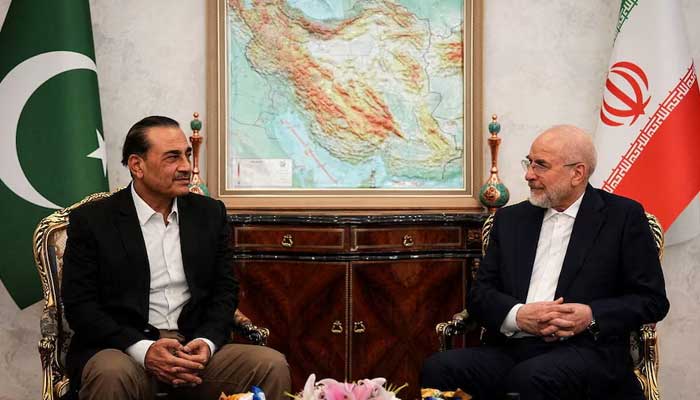
The first round of negotiations took place at the National Assembly Speaker’s Chamber. Both sides agreed to continue discussions, creating some hope that the political dispute could be addressed through dialogue rather than confrontation.
A second round of talks subsequently continued for several hours. According to reports, the discussions remained difficult, and the two sides did not immediately reach a breakthrough. Opposition representatives have linked any decision about calling off the march to progress in negotiations and a possible meeting with Imran Khan.
The talks are significant because political disagreements in Pakistan have frequently produced protests, road blockages and confrontations between political workers and authorities. Dialogue therefore offers an alternative route for resolving disagreements without creating additional disruption.
PTI Maintains Its Position
PTI leaders have continued to insist that the October 4 march should proceed. Khyber Pakhtunkhwa Chief Minister Sohail Afridi has been particularly vocal about the planned protest.
According to reports, Afridi announced that the first phase of the march would begin from Gandi Chowk in Lakki Marwat at 1pm. He also emphasized that the party considers peaceful protest a constitutional right.
The PTI leadership has also stressed that the movement should remain peaceful. Afridi said the party would not allow a repeat of the violence associated with the events of May 9.
The emphasis on peaceful political activity is important because Pakistan has experienced significant political unrest in recent years. Both political parties and government institutions therefore face pressure to prevent the current disagreement from escalating.
Government Says Islamabad Entry Will Not Be Allowed
The federal government has taken a firm position regarding the march.
Prime Minister’s Adviser on Political Affairs Rana Sanaullah said on October 4 that the PTI march would not be allowed to enter Islamabad. He also said that negotiations had failed to produce an agreement, particularly over cooperation concerning counterterrorism.
The government's position reflects concerns about security and the potential consequences of a large political gathering in the capital.
Islamabad contains major government buildings, diplomatic missions and other sensitive locations. Authorities have therefore taken additional security measures in anticipation of the protest.
Security Measures Around Islamabad
Security preparations have become one of the most visible aspects of the current political situation.
Shipping containers have been positioned at important roads and routes around Islamabad. Such measures have previously been used in Pakistan to restrict access during major demonstrations.
The presence of containers and other barriers can affect ordinary residents as well as protesters. Traffic may be diverted, commuting times can increase and businesses may experience difficulties when major roads are closed.
Recent reporting has also highlighted the impact of security preparations on Pakistan’s transportation and logistics sector. Reuters reported that the use of containers as barricades has contributed to disruptions affecting freight movement and transport operators.
This demonstrates that political protests can have effects beyond politics. When major routes are blocked, the consequences can extend to businesses, transporters, consumers and families.
Impact on Ordinary Citizens
Political demonstrations are an important part of democratic life, but large protests can also create practical difficulties for ordinary citizens.
Residents of Islamabad and Rawalpindi may face traffic diversions, delays and difficulties reaching workplaces, schools, hospitals or markets if major routes are restricted.
Transport companies can also face losses when vehicles are delayed. Businesses depending on the movement of goods may experience interruptions in deliveries.
For this reason, political parties and authorities have a shared responsibility to protect both democratic rights and public convenience.
A peaceful protest with appropriate arrangements can reduce these difficulties. Similarly, authorities can help by ensuring that necessary routes remain accessible wherever security conditions allow.
Importance of Political Dialogue
The current situation has once again highlighted the importance of political dialogue in Pakistan.
When political parties disagree over major national issues, negotiations can provide an opportunity to identify areas of agreement. Dialogue can also reduce the risk of confrontation and help political leaders communicate their concerns directly.
The recent government-PTI talks are therefore important even though they have not yet produced a final settlement.
A successful political dialogue does not necessarily require both sides to agree on every issue. Instead, it can focus on practical steps that reduce tension and allow constitutional and political processes to continue.
Constitutional Rights and Public Order
One of the central issues surrounding the march is the balance between the right to political expression and the responsibility to maintain public order.
Political parties have the right to organize and communicate with supporters. At the same time, authorities have responsibilities concerning public safety, transportation and the protection of public and private property.
Finding the right balance is particularly important during large demonstrations.
If protests remain peaceful and organized, political expression can take place without unnecessarily affecting ordinary citizens. Similarly, if security restrictions are necessary, they need to be proportionate and clearly communicated.
Role of Khyber Pakhtunkhwa
Khyber Pakhtunkhwa has become central to the current political dispute because the province is governed by PTI.
The provincial leadership has strongly supported the planned march, while the federal government has raised concerns about security and political administration.
The situation therefore also highlights the importance of cooperation between Pakistan’s federal and provincial governments.
Federalism requires different levels of government to work together even when their political affiliations are different. Political disagreements between the Centre and provinces can become especially complicated when security, administration and public demonstrations are involved.
Economic Consequences
Political uncertainty can also influence economic activity.
Businesses generally prefer a stable environment in which transportation, markets and commercial activity can continue normally. Extended road closures or uncertainty can make it harder for companies to plan deliveries and operations.
Transport businesses are particularly vulnerable because they depend on open highways and predictable travel times.
Pakistan’s economy has been working through various challenges, making political stability particularly valuable. A reduction in political tension could help businesses focus more strongly on investment, production and employment.
Why the Situation Matters
The October 4 PTI march is more than a single political gathering. It represents another chapter in Pakistan’s continuing political disagreements.
The outcome could influence relations between the government and opposition, future negotiations and the political environment in the coming weeks.
If the two sides are able to maintain communication, the current disagreement could potentially become an opportunity for broader political dialogue. If negotiations collapse completely, tensions could remain elevated.
For ordinary Pakistanis, the most important outcome is likely to be stability, peaceful political activity and the uninterrupted continuation of daily life.
Looking Ahead
The coming days will be important for Pakistan’s political landscape.
The government has made clear that it does not want the march to enter Islamabad, while PTI leaders have continued to support the protest. At the same time, negotiations have demonstrated that both sides are capable of sitting together and discussing their differences.
The possibility of further dialogue remains important.
Political disputes can take time to resolve, especially when the issues involve major parties and deeply divided supporters. However, continued communication can reduce misunderstandings and create opportunities for compromise.
Pakistan’s democratic system ultimately depends not only on elections and political parties but also on institutions, constitutional processes, dialogue and peaceful political participation.
Conclusion
The planned PTI long march toward Islamabad has created significant political tension across Pakistan. The government has strengthened security arrangements and warned that the march will not be allowed to enter the capital, while PTI leaders continue to support the protest and describe it as a constitutional political activity.
The recent negotiations between the government and opposition provide an important avenue for reducing tensions. Although the talks have not yet produced a final agreement, continued dialogue could help prevent further political confrontation.
For Pakistan, the ideal outcome would be a peaceful resolution that protects constitutional rights while also protecting ordinary citizens, businesses and public institutions from unnecessary disruption.
The situation remains developing, and further political negotiations and decisions by both sides are likely to determine what happens next.
FAQs
1. Why is PTI planning a long march toward Islamabad?
PTI says the march is connected to its political and constitutional demands, including concerns surrounding the imprisonment of its founder Imran Khan.
2. When was the PTI march originally planned?
The march was originally planned for September 27 but was postponed to October 4.
3. What is the government’s position on the march?
The government has said the march will not be allowed to enter Islamabad and has emphasized security and public-order concerns.
4. Have the government and PTI held talks?
Yes. Representatives from both sides held negotiations, but the talks have not yet produced a final agreement.
5. Why are security measures important during the protest?
Large demonstrations can affect traffic, transportation, businesses and access to sensitive areas, so authorities have increased security preparations around Islamabad.